


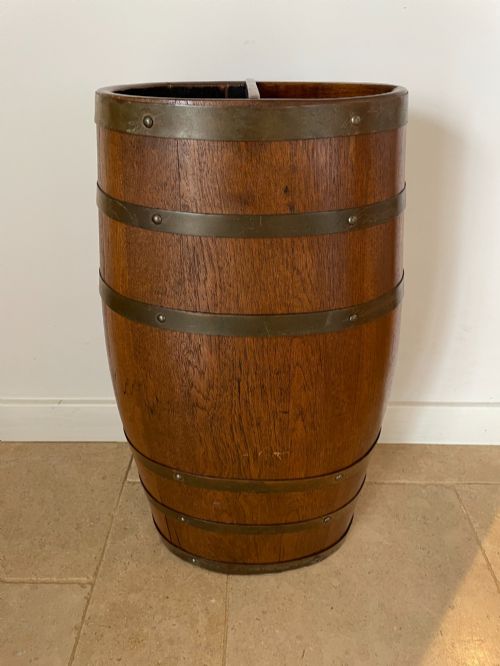


Wooden Umbrella Container
These wooden umbrella containers combine utilitarian service with handsome timber grain, offering a practical hallway home for wet weather gear.
Wooden Umbrella Container
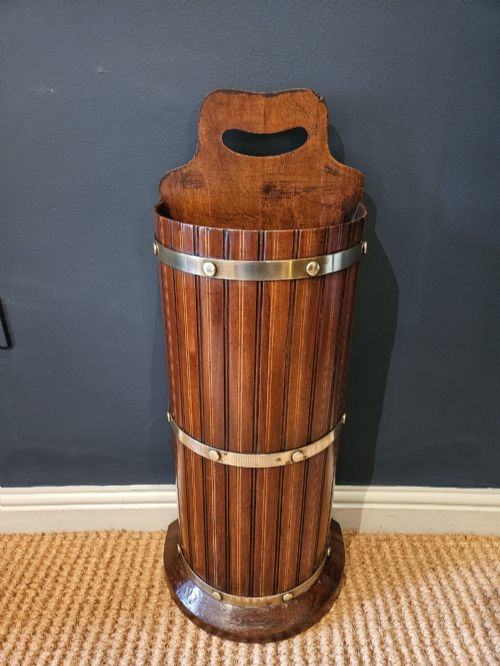
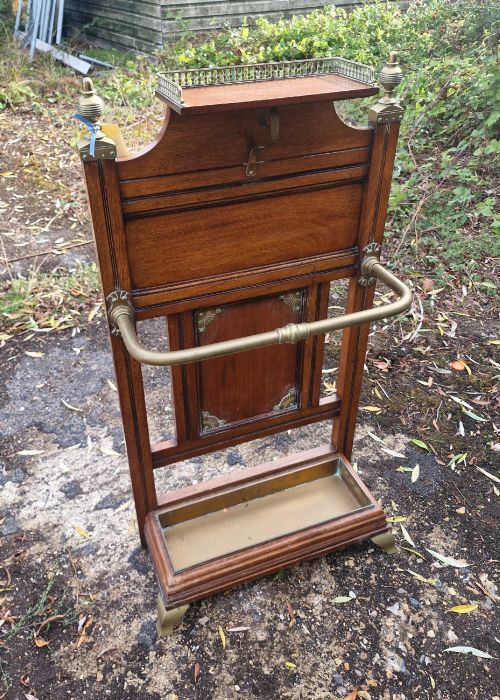
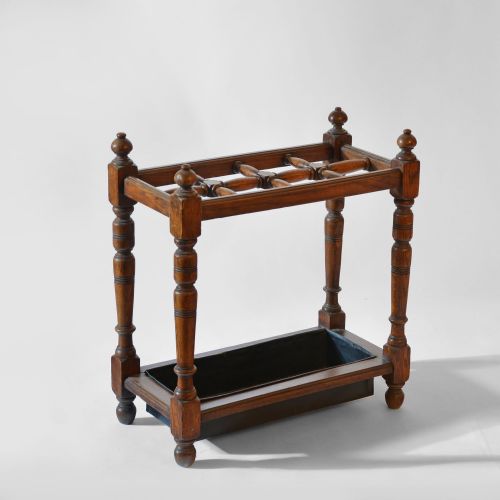
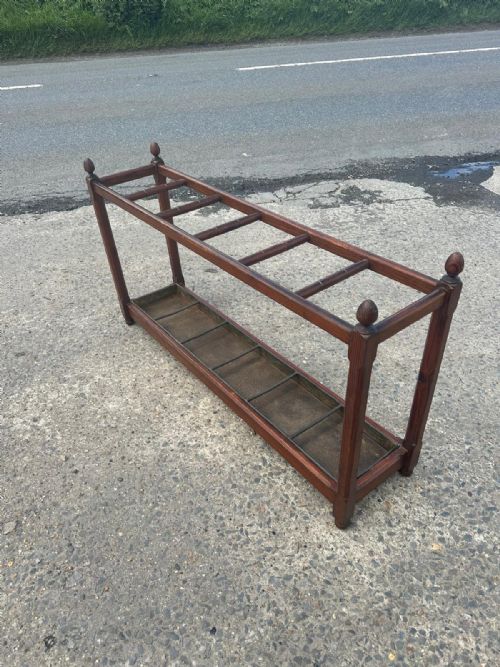
A wooden umbrella container serves to house walking sticks, parasols and wet umbrellas in hallways and entrance passages. The selection ranges from Victorian country house pitch pine to sturdy oak barrels bound in brass.
You will encounter coopered oval vessels, barrel forms and carved tree trunks spanning periods from the nineteenth century to the early twentieth century. Styles vary from rustic country pieces to formal Gothic Revival designs.
The dominant forms are umbrella stands, stick stands and coppered barrels that utilise traditional timber construction. These items bring robust utility and rich historical character into domestic interiors.
How they were made
Coopers constructed the barrel forms using staves of oak or pitch pine secured with tight metal hoops and brass bands. This method ensured the vessels could handle damp items without failing.
Other examples utilise solid timber, carved tree trunks or structured joinery in mahogany and oak. Metal liners and iron accents frequently appear to protect the internal wood from moisture.
Wooden Umbrella Container Retail Price Guide 2026
Typical asking prices for wooden umbrella container among the pieces listed under this phrase on Sellingantiques today, from the lower quarter to the upper quarter. They describe what is for sale here now, not the wider market.
Even the humblest hallway umbrella barrel once relied on the stout skills of a master cooper to keep boots and sticks contained.
What varies in quality
Quality rests upon the choice of timber and the precision of the cooperage or joinery work. Well-figured oak and rich pitch pine display superior visual depth compared to plain utility timbers.
Hardware selection marks the distinction between standard vessels and finer examples, particularly where heavy brass bands or decorative ironwork are employed. Original construction integrity dictates the standing of each piece.
The Wooden Umbrella Container Glossary
- Coopered
- Constructed from wooden staves curved and fitted together by a cooper, much like a traditional barrel or cask. This technique provided immense strength for holding wet items.
- Pitch pine
- A resinous and durable softwood frequently utilised in nineteenth-century country houses for robust furniture and utility pieces. It displays a strong, distinctive grain pattern.
- Gothic Revival
- An architectural and decorative style drawing inspiration from medieval forms, featuring pointed arches and ecclesiastical motifs. Pieces in this taste display pointed detailing and heavy presence.
- Aesthetic Movement
- A late nineteenth-century design current emphasising visual beauty over narrative function, often showing simplified lines and honest material expression. This style favoured clean timber surfaces.
- Dug out
- Formed by hollowing out a solid tree trunk to create a vessel, representing a primitive and direct method of woodworking. Such pieces retain the natural contours of the timber.
Wooden Umbrella Container: Frequently Asked Questions
How do I clean a wooden umbrella container?
Wipe the interior and exterior surfaces with a slightly damp cloth, avoiding excess moisture that could harm old timber.
Apply a traditional beeswax polish occasionally to nourish the wood and maintain a gentle sheen.
Can I put wet umbrellas inside them?
Most of these vessels feature metal linings or were designed to handle damp items through sealed wooden staves.
Placing a small modern tray or saucer inside helps protect the base of antique timber from standing water.
How do I date a wooden umbrella stand?
Examine the construction methods, the type of timber used, and the style of any metal bands or brass fittings.
Victorian and Edwardian examples often show distinct joinery traits and specific patination associated with their respective decades.
Where should I place a stick stand at home?
Position the piece in a porch, boot room or hallway where wet gear is naturally deposited upon entry.
Ensure adequate airflow around the timber to prevent dampness from accumulating in enclosed spaces.