




Victorian Oak Umbrella Rack
A victorian oak umbrella rack anchors the hallway with substance, offering a practical place for walking sticks and wet gear.
Victorian Oak Umbrella Rack
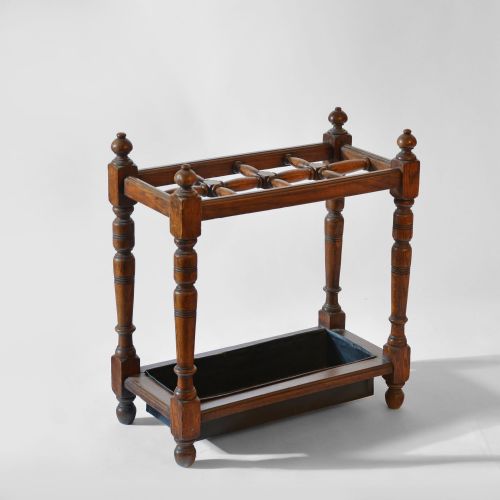
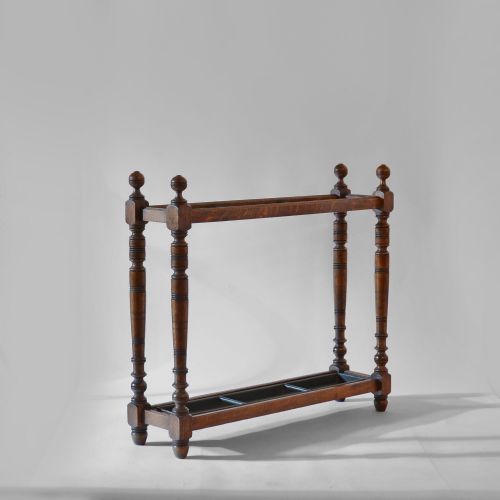
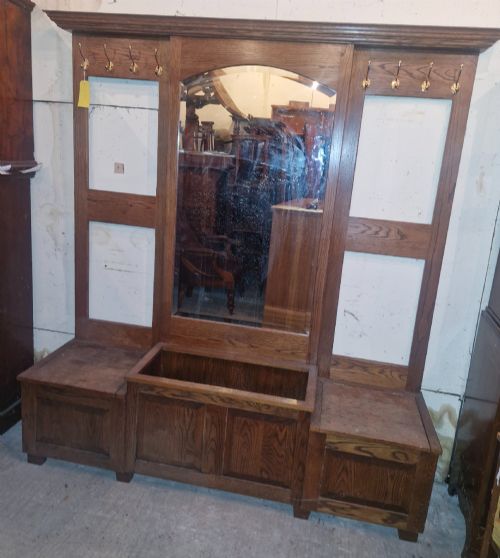
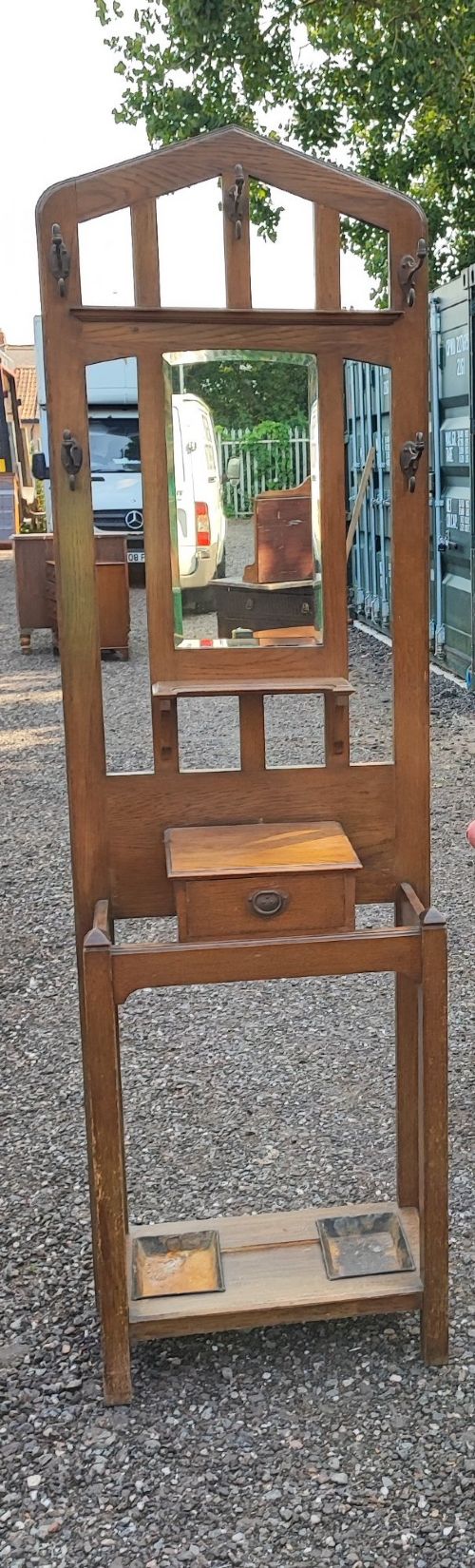
A victorian oak umbrella rack serves as a functional piece of hall furniture designed to corral walking sticks, umbrellas, and occasionally hats and coats. Buyers hunting for these items encounter various forms, ranging from dedicated stick barrels to large multi-functional hall stands.
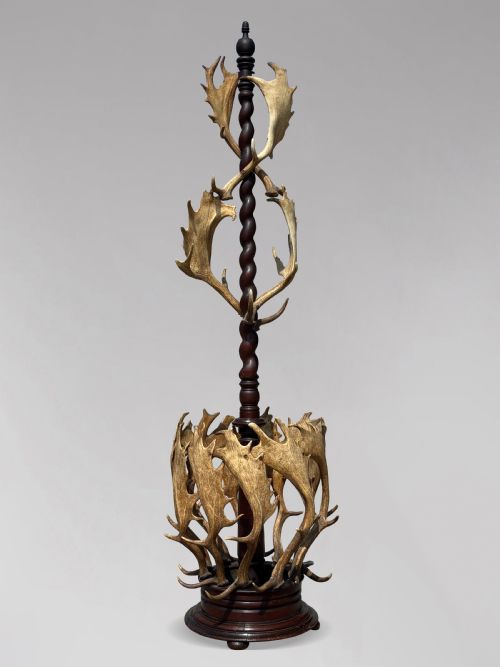
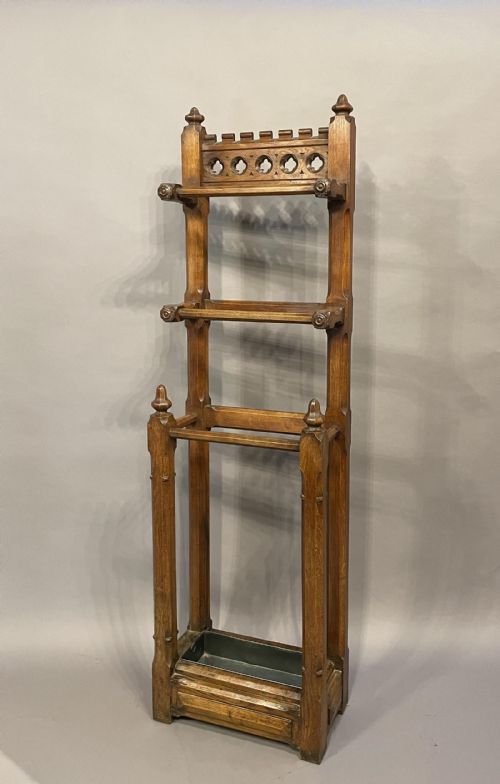
The selections span the nineteenth century and the Edwardian era, taking stylistic cues from the Aesthetic Movement, Arts and Crafts, Gothic Revival, and Black Forest traditions. Oak dominates the construction, frequently accompanied by metal trays or brass accents.
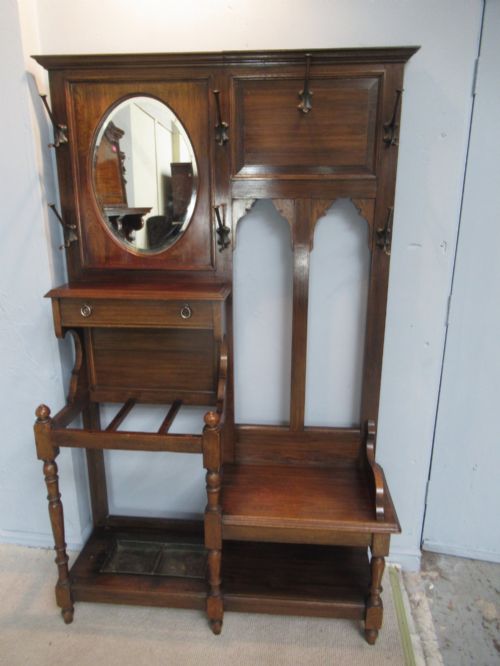
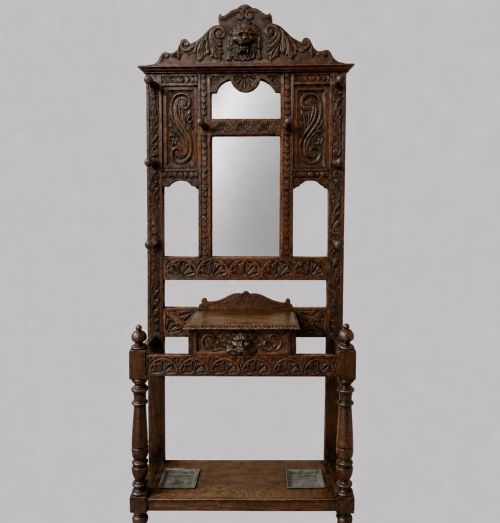
Most examples originate from English country houses or urban reception halls, built to handle daily household traffic. Forms vary from demi-lune wall racks and coopered barrels to monumental hall stands incorporating mirrors and carved panels.
How they were made
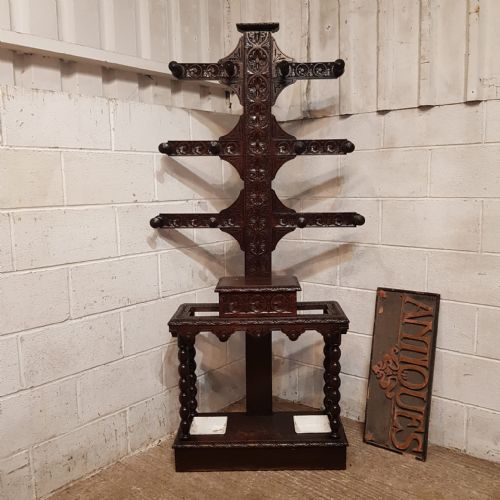
Carpenters utilised solid oak, sometimes quarter-sawn to reveal rich medullary rays, shaping panels through traditional joinery and deep relief carving. Artisans applied hand-carved motifs like the Greenman, foliage, and gothic tracery directly into the timber.
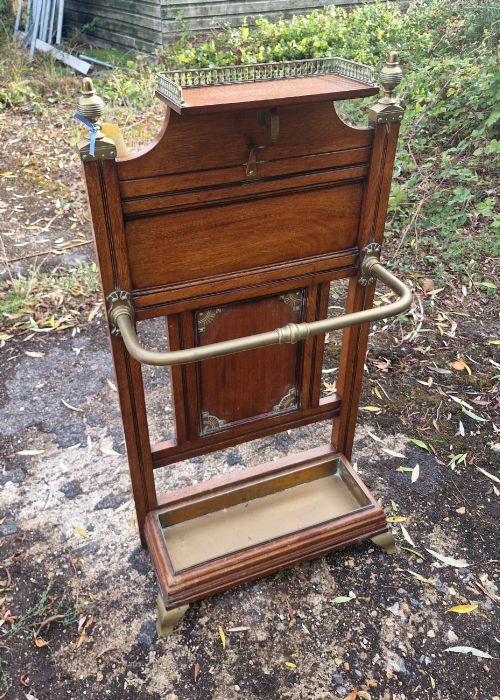
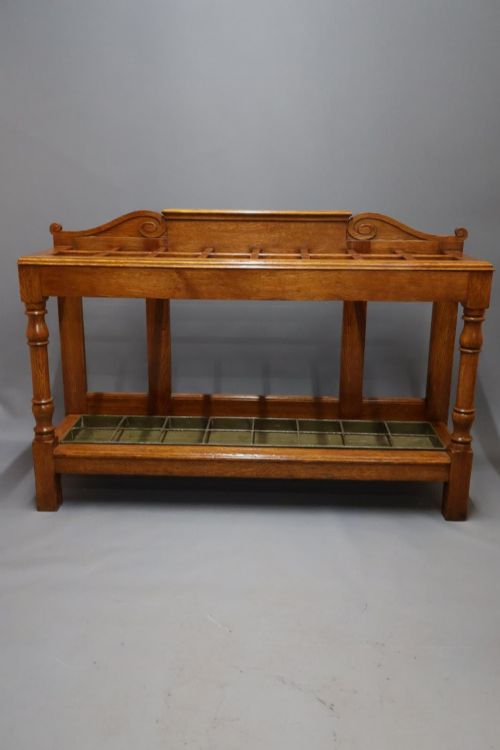
Metal components such as brass, zinc, iron, and glass inserts were integrated to catch water drips and protect the wood from moisture. Coopered barrels employed curved oak staves bound with metal hoops, mirroring traditional vat-making techniques.
The archive demonstrates that coopered barrels and multi-functional hall seats appear alongside narrow wall racks and umbrella stands.
What varies in quality
Quality rests on the depth and crispness of the carving, the selection of figured timber, and the architectural ambition of the design. Standard domestic racks offer simple utility, whereas exhibition-quality or large country house examples showcase intricate sculptural work and superior joinery.
The integrity of secondary materials dictates overall merit, distinguishing pieces retaining original brass drip pans and sturdy hardware from those with later replacements. The balance of proportions and structural cleverness, particularly in multi-functional hall furniture, marks the work of skilled makers.
J. Parker of Woodstock·Fischel·James Shoolbred
The Victorian Oak Umbrella Rack Glossary
- Coopered
- Constructed from curved wooden staves bound together with metal hoops, exactly like a barrel. This technique provided sturdy waterproof vessels for holding wet umbrellas.
- Demi-lune
- A half-moon or semicircular shape designed to sit flush against a hallway wall. This configuration saved valuable floor space in narrow Victorian corridors.
- Greenman
- A sculptural architectural motif depicting a human face disgorged from or entwined with foliage. It symbolised rebirth and appeared frequently on carved Victorian oak furniture.
- Aesthetic Movement
- A late nineteenth-century design style emphasising visual beauty over narrative meaning or moral utility. Pieces from this movement favoured clean lines and stylised natural ornament.
- Gothic Revival
- An architectural and decorative style drawing inspiration from medieval buildings. It featured pointed arches, tracery, and heavy carved details.
Victorian Oak Umbrella Rack: Frequently Asked Questions
Where should I put an oak umbrella rack?
These pieces belong in a hallway, porch, or boot room where guests arrive and coats come off. They suit high-traffic areas best, providing immediate access to walking sticks and shelter.
Ensure the floor space accommodates the footprint, particularly with larger hall stands that incorporate mirrors or seating.
How do I protect the wood from wet umbrellas?
Most authentic pieces feature original metal, zinc, or glass trays at the base designed to catch runoff water. Checking for these protective liners preserves the timber integrity.
Emptying and drying the drip trays regularly prevents moisture from damaging the lower oak framing.
What is the difference between a stick stand and a hall stand?
A stick stand focuses specifically on vertical storage for umbrellas and walking sticks, often taking a compact barrel or rack form. These concentrate purely on wet weather gear.
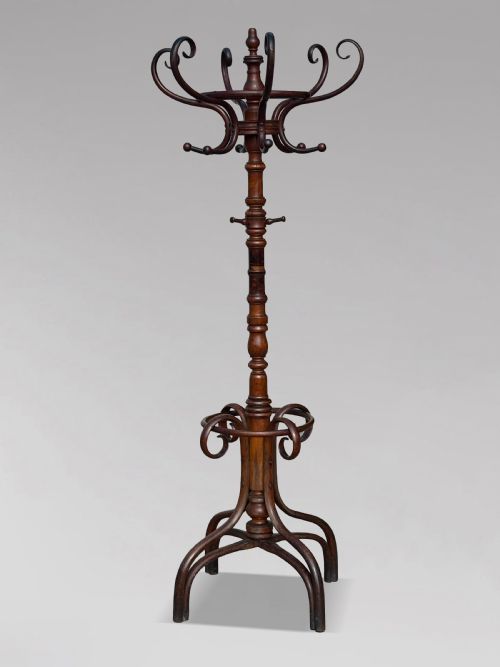
A hall stand serves a broader function by combining umbrella racks with hat hooks, coat pegs, glove drawers, and central mirrors for entryway grooming.
How do I date a Victorian oak hall piece?
Dating relies on stylistic clues, hardware construction, and timber characteristics. Pieces featuring heavy gothic tracery or elaborate Greenman carvings typically point to the later decades of the nineteenth century.
Simpler geometric lines or golden oak finishes often indicate an Arts and Crafts influence closer to the turn of the century.