




Half Moon Entry Table
A half moon entry table offers a graceful curved profile that fits neatly against narrow hallway walls.
Half Moon Entry Table
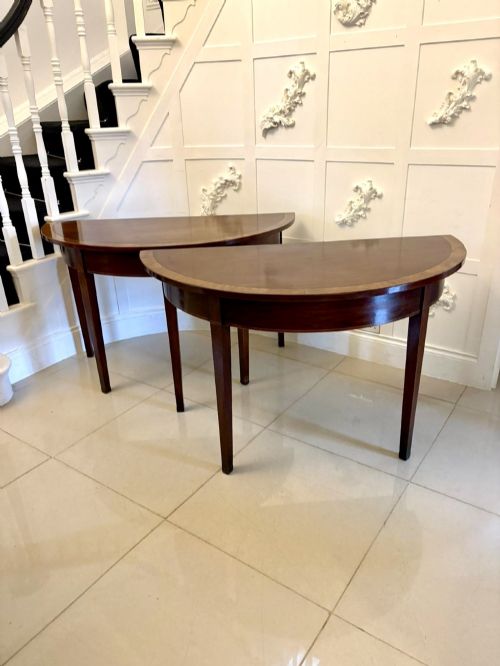
A half moon entry table, also known as a demi lune console or hall table, provides a functional surface for narrow spaces without projecting far into the room. These pieces typically sit flush against a wall, serving as a practical drop zone in hallways or reception areas.
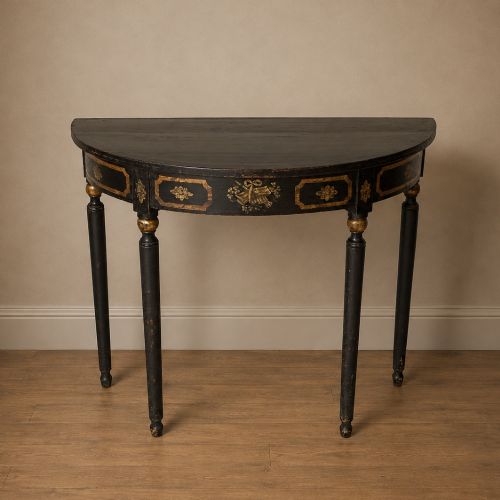
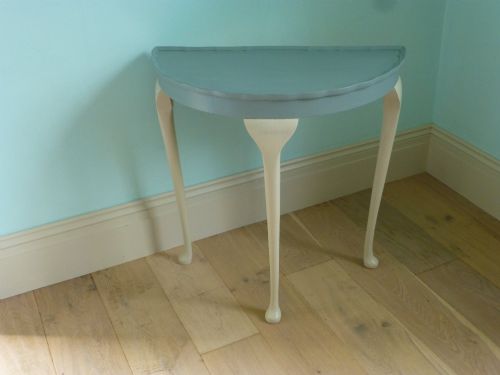
The selection ranges from George III and Regency periods to Victorian and Edwardian examples, alongside later twentieth-century iterations. Common forms include console tables, side cabinets, and occasional hall tables designed with flat backs and curved fronts.
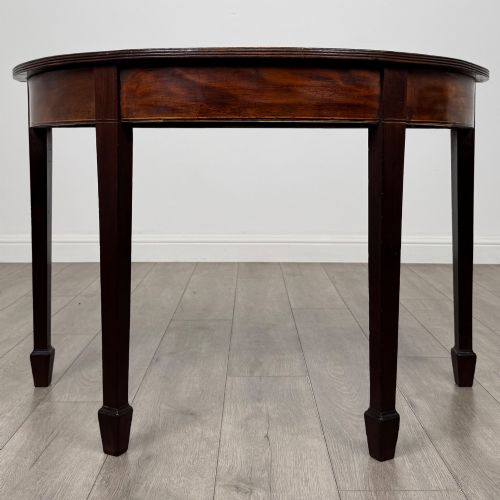
Mahogany and painted wood dominate the available selections, frequently accompanied by satinwood, pine, and marble. Many pieces incorporate subtle stylistic nods such as Adams design or Georgian revival details.
How they were made
Makers utilised solid timbers and selected veneers, relying on mahogany and satinwood for fine cabinet work. Workshops often applied painted finishes and parcel gilt highlights to enhance the curved surfaces of these tables.
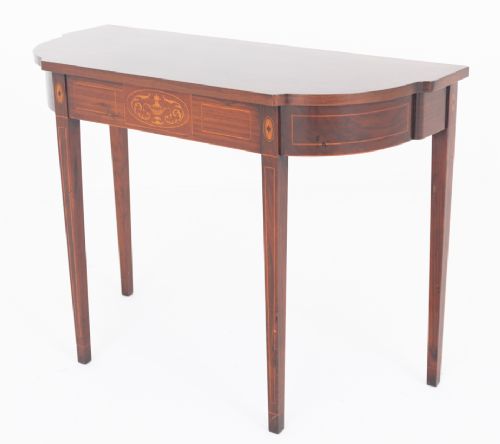
Decorative elements include marquetry inlay, boxwood stringing, and hand-painted motifs executed across the flat top surfaces and aprons. Structural integrity was achieved through traditional joinery suited to semicircular framework.
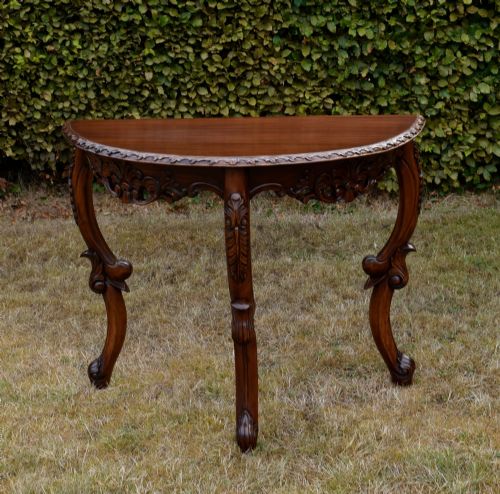
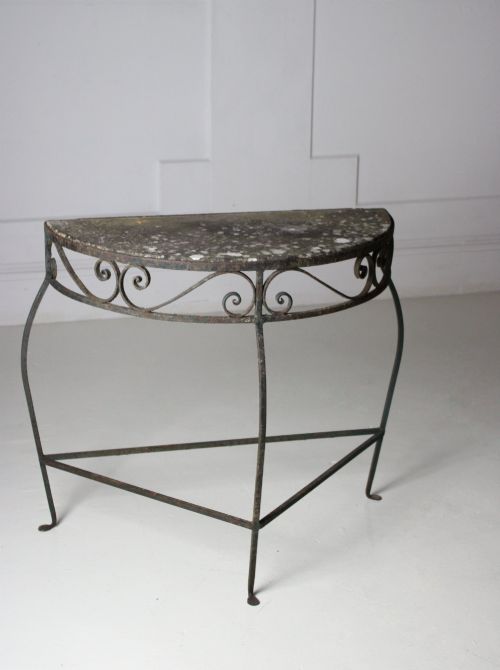
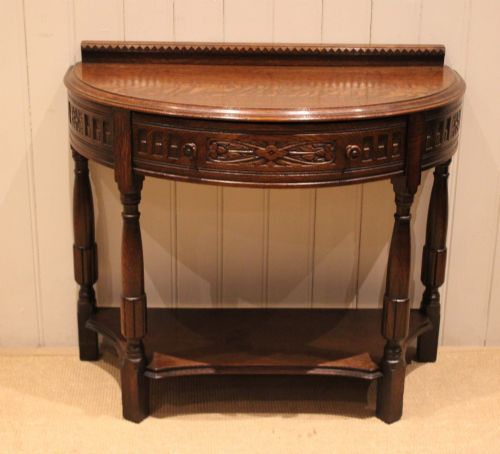
Selected examples incorporate contrasting materials, pairing carved hardwood or wrought iron frames with fitted marble tops. This combination provided a durable working surface while maintaining the distinct semicircular silhouette.
Listings span multiple periods from the eighteenth century through to the 1930s, featuring mahogany, satinwood, and marble.
What varies in quality
The refinement of the timber selection dictates the overall character of the piece, with figured mahogany and finely grained satinwood representing higher execution. Subtle variations in the crispness of marquetry inlay and hand-painted details distinguish standard production from superior workshops.
Proportion and structural balance define the better examples, particularly where curved aprons meet tapering legs. Pieces retaining their original surface finish and authentic brass or wooden mounts hold greater integrity than heavily restored counterparts.
The Half Moon Entry Table Glossary
- Demilune
- Half-moon shaped furniture designed to stand flush against a wall. This profile became particularly popular for console and hall tables during the eighteenth and nineteenth centuries.
- Console table
- A table supported against a wall by wall brackets or legs, often featuring a decorative frieze. These tables were designed primarily for display and placement in formal entryways.
- Marquetry
- Decorative veneer work forming geometric or pictorial patterns using various coloured woods. Craftsmen cut thin slices of timber to fit precisely into a prepared background.
Half Moon Entry Table: Frequently Asked Questions
Where should I place a half moon entry table?
These tables suit narrow entrance halls, corridors, and landings where floor space is limited. Their curved front allows people to walk past easily without bumping into sharp corners.
They also function effectively in reception rooms or living spaces as decorative side tables beneath a mirror or artwork.
How do I identify the period of a table?
Dating relies on examining the timber species, construction methods, and decorative styles present on the piece. George III and Regency examples often feature figured mahogany and restrained classical lines.
Later Victorian and Edwardian pieces frequently introduce marquetry inlay, painted surfaces, or revival styling that reflects the taste of those decades.
What materials are common in these tables?
Mahogany and satinwood are the predominant timbers found across these listings, often paired with boxwood stringing. Painted wood finishes and occasional marble tops also appear regularly.
Selected pieces incorporate wrought iron or carved oak, reflecting different regional traditions and stylistic periods.