
Iron Garden Table
When choosing an iron garden table, you select a durable outdoor piece that bridges Victorian utility and French bistro style.
Iron Garden Table
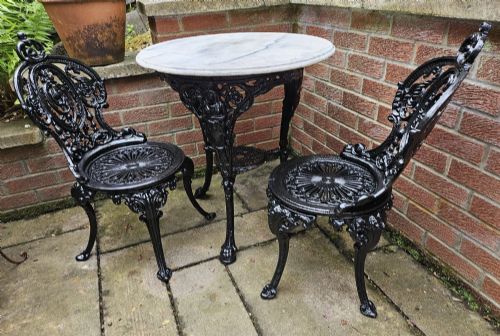
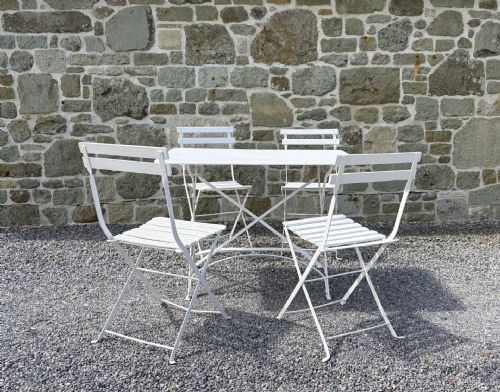
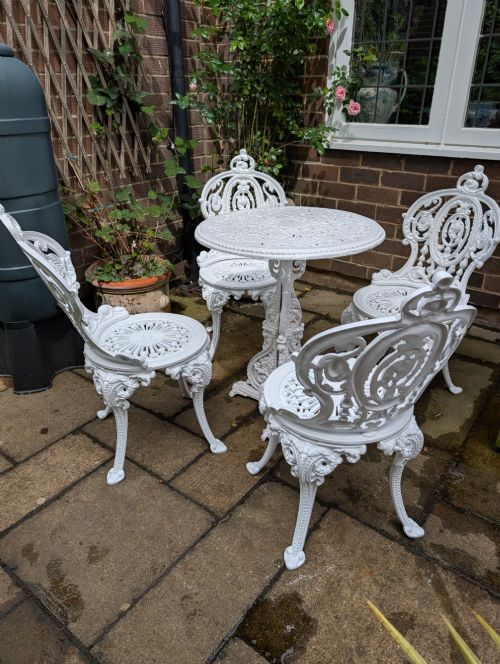
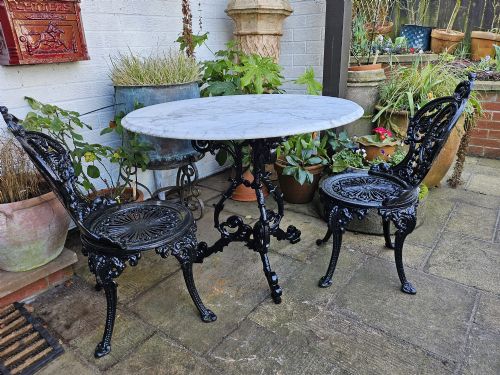
An iron garden table serves outdoor spaces, conservatories, and orangeries with resilient metal frames and functional surfaces. You encounter forms ranging from compact round bistro tables to long dining sets with matching chairs and console tables.
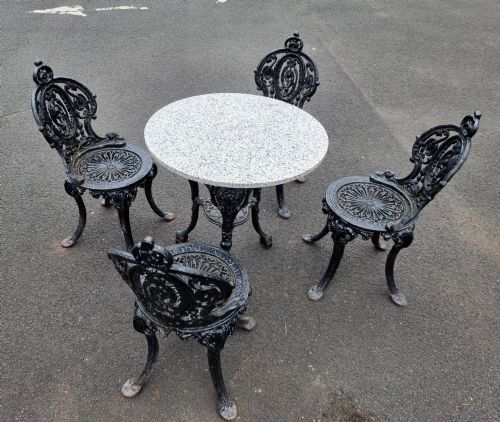
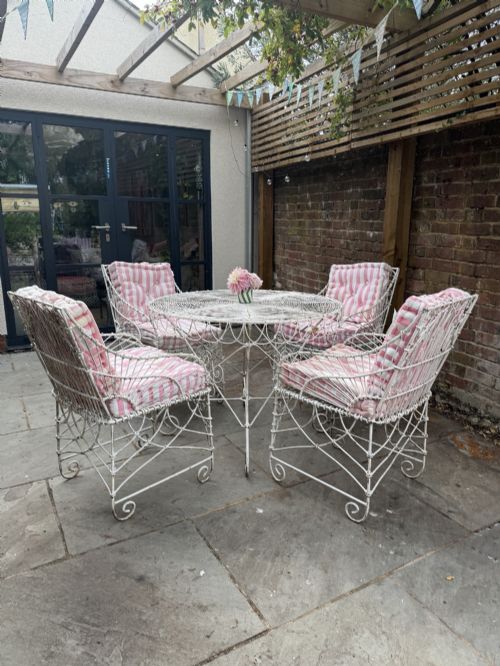
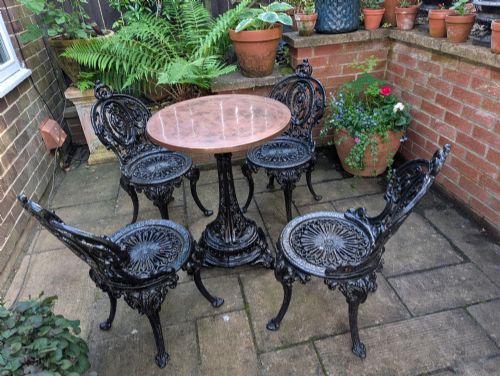
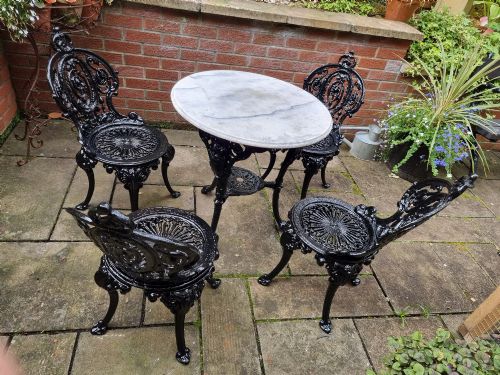
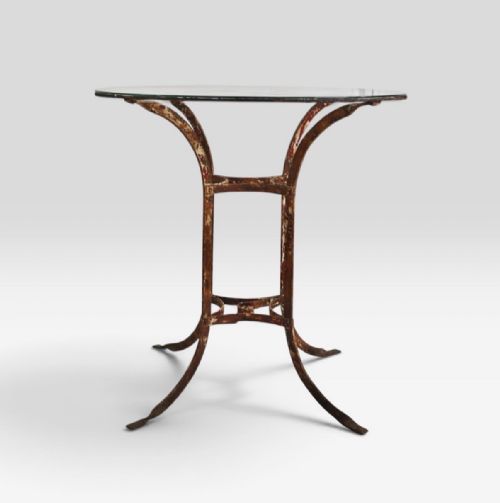
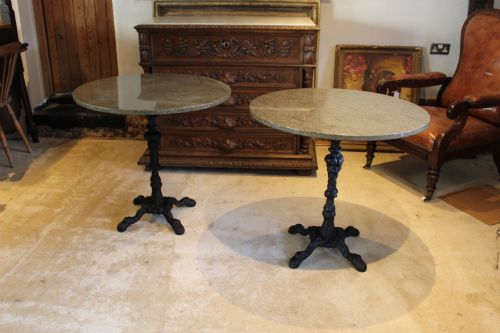
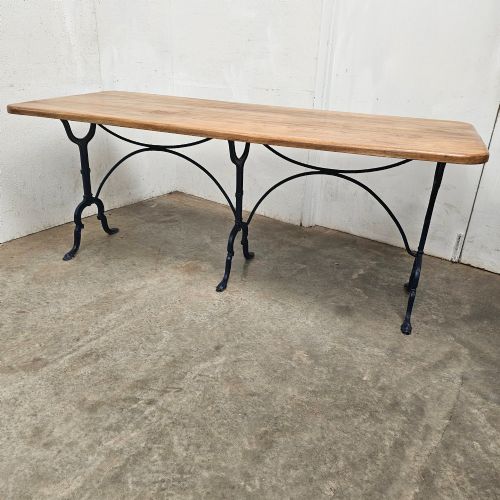
Surfaces vary widely across the inventory, pairing iron bases with marble, granite, wood, zinc, or solid iron panels. Many listings present complete garden dining sets featuring matching chairs alongside the central table.
How they were made
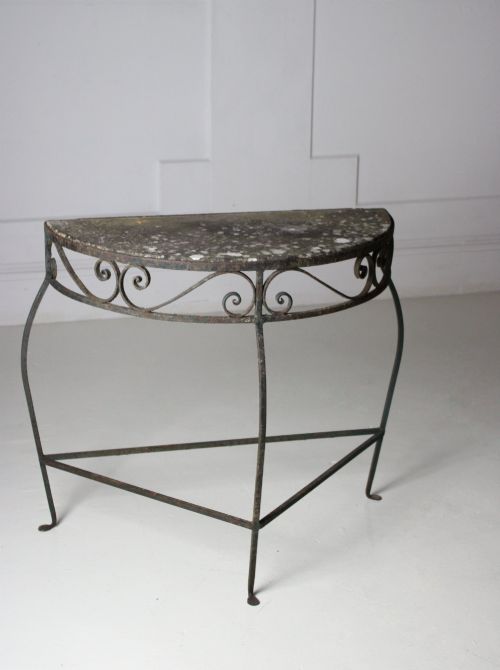
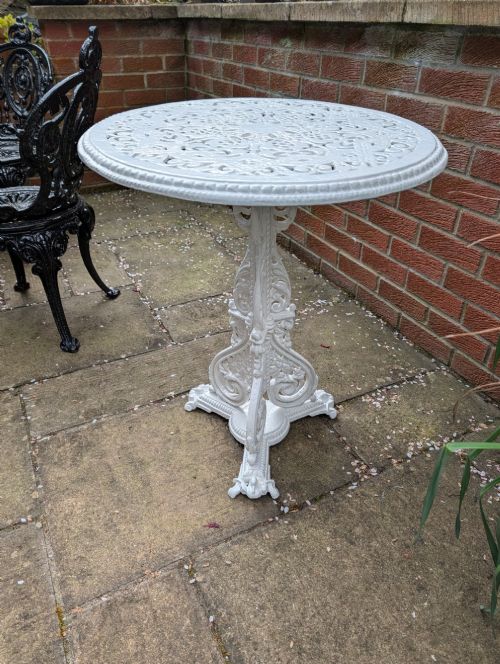
Foundries manufactured the structural bases using cast iron poured into moulds or shaped wrought iron manipulated by hand. These metal components frequently display intricate openwork patterns, pierced scrollwork, or sturdy pedestal configurations designed to withstand outdoor exposure.
Tops were constructed from heavy stone slabs like marble and granite, or native timbers including oak and elm, secured directly to the metal frames. Protective layers of paint historically applied to the iron provided essential weathering resistance while defining the visual finish.
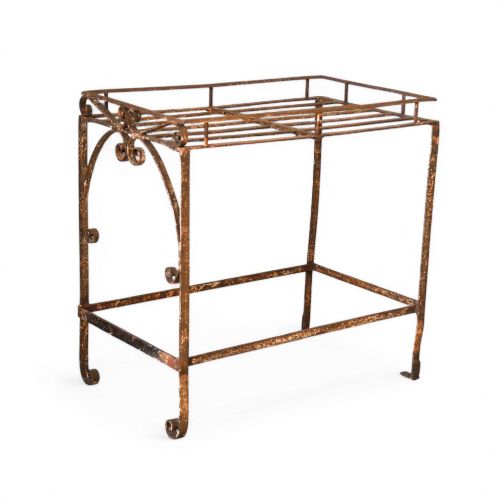
Estate workshops occasionally improvised garden racks and plant stands from leftover architectural ironwork, giving utilitarian utility a charmingly eccentric asymmetry.
What varies in quality
The refinement of the casting work dictates the distinction between standard utilitarian items and superior decorative examples. Crisp detailing in floral or geometric motifs and attribution to notable designers separate standard workshop output from exceptional foundry production.
The integrity and originality of the tabletop material influence the overall standing of the piece. Heavy marble or granite slabs fitted to original cast iron bases represent higher-tier domestic and conservatory furnishings compared to later replacements.
Christopher Dresser·Coalbrookdale
The Iron Garden Table Glossary
- Cast iron
- A strong, rigid iron alloy poured into moulds to create intricate structural frames and ornate decorative garden furniture bases. It provides the heavy weight necessary to keep outdoor tables stable in breezy weather.
- Wrought iron
- Iron heated and hammered into shape by blacksmiths to form linear supports, scrolls, and framework components. This material offers superior tensile strength compared to cast variants.
- Bistro table
- A small, portable café or garden table traditionally designed with a single central pedestal or four slender legs and a circular top. These compact surfaces suit small patios and intimate dining arrangements.
- Console table
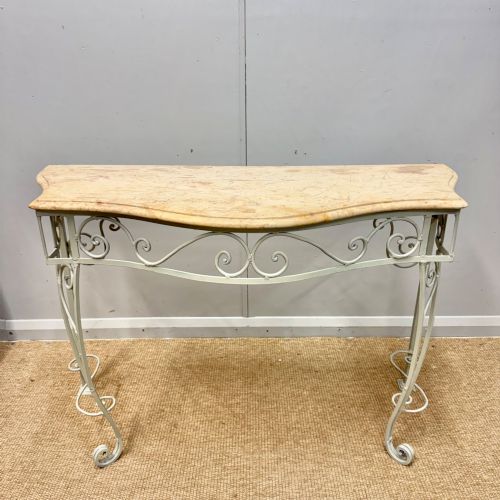
- A wall-mounted or freestanding narrow table frequently featuring a decorative iron base and a stone top. They served sheltered outdoor verandas and grand Victorian conservatories alike.
- Conservatory
- A glass-walled garden room designed for tender plants and leisure, housing decorative metal furniture such as plant stands and marble-topped tables. These spaces bridged domestic interiors and open garden landscapes.
Iron Garden Table: Frequently Asked Questions
How do I date an iron garden table?
Dating relies on stylistic clues, construction methods, and period characteristics found in the metalwork and surface materials. Victorian and Edwardian examples often feature registration marks, foundry stamps, or distinct aesthetic movement motifs.
Later twentieth-century pieces generally show simplified construction and modern fastening methods compared to nineteenth-century estate-made or foundry-cast predecessors.
Can I leave an iron table outside all winter?
Iron furniture withstands outdoor conditions due to its substantial weight and durable metallic composition. However, harsh frost can affect stone tops and painted finishes if moisture penetrates vulnerable joints.
Protecting marble or wooden surfaces during severe weather preserves the structural integrity and decorative paint layers of antique pieces.
What is a Britannia table?
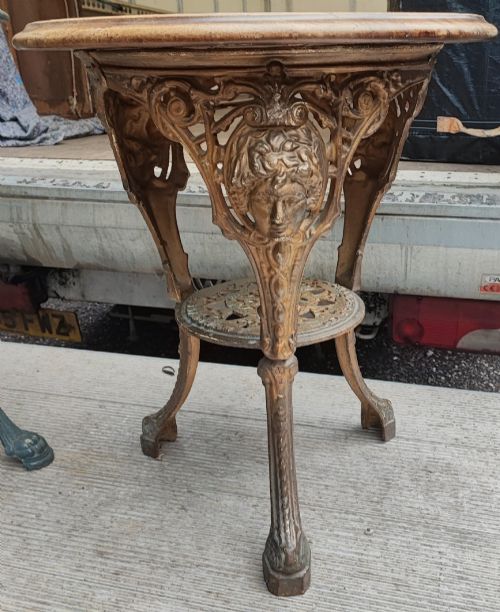
A Britannia table is a traditional pub or garden table featuring a heavy cast iron pedestal base bearing the profile or motif of Britannia. These sturdy designs provided reliable service in commercial gardens and domestic patios.
Their substantial weight prevented tipping, making them popular for nineteenth-century hospitality settings and domestic conservatories.
Are marble tops original to these tables?
Many nineteenth-century French and British garden tables paired heavy cast iron bases with fitted marble or granite slabs. These stone surfaces offered practical, weather-resistant dining and serving areas.
Original tops fit securely into the cast iron retaining rim, matching the exact proportions and period wear of the supporting base.