


Grey Top Sideboard
A grey top sideboard brings stone surfaces and warm timber together, offering solid storage and a cool, polished counter for any room.
Grey Top Sideboard
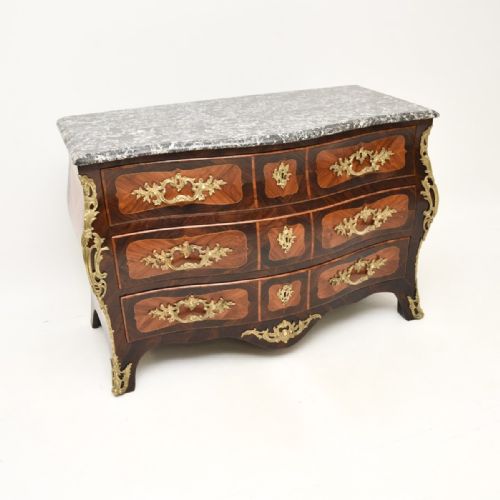
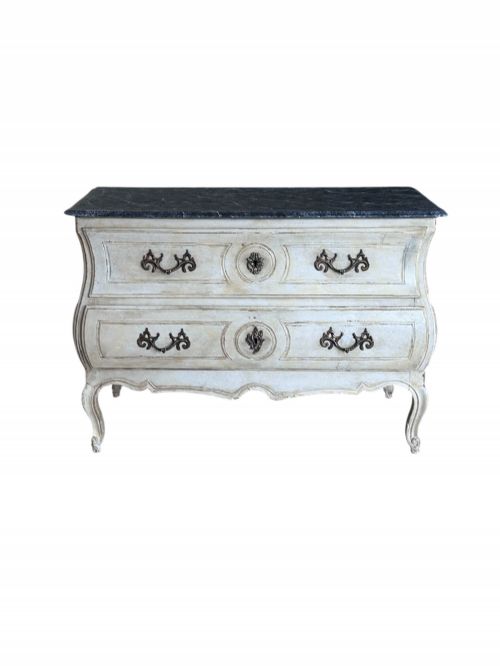
A grey top sideboard covers a variety of large storage furniture, most commonly appearing here as marble-topped commodes, washstands, and buffet pieces from eighteenth and nineteenth-century Europe. These items combine substantial wooden carcasses with durable stone tops, serving practical uses from bedroom washing to dining room storage.
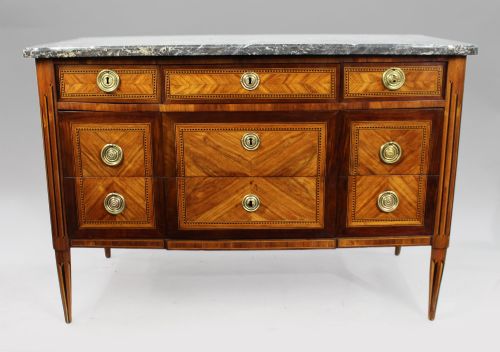
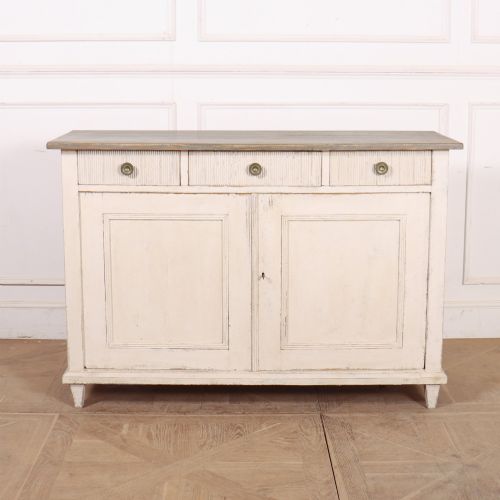
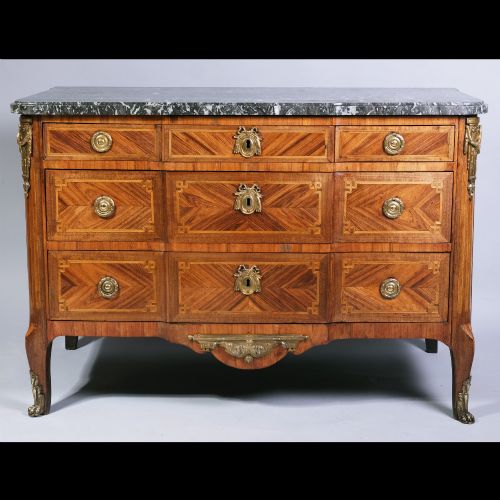
The selection leans heavily toward French and continental forms, including Louis XV and Louis XVI styles alongside English and Welsh country pieces. Buyers find everything from refined walnut and mahogany commodes with parquetry to simple painted pine servers and shop counters.
How they were made
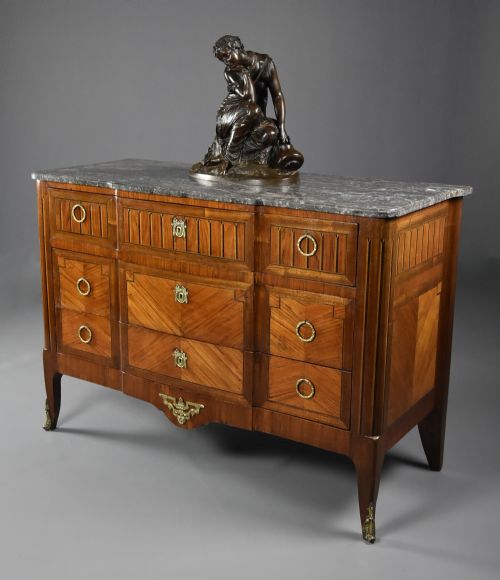
Cabinetmakers constructed these pieces using solid timbers and veneers such as walnut, mahogany, pine, and burr elm, often incorporating detailed parquetry and inlay work. Iron, brass, and ormolu mounts provide structural and decorative accents on the drawer pulls and corners.
The defining feature across the selection is the heavy stone surface, usually fitted marble, which provides a cool and resilient top above the wooden drawers and cupboards.
Even a simple pine shop counter gets a heavy stone top when the work calls for it.
What varies in quality
Quality rests in the precision of the cabinetwork, from the tightness of the drawer joints to the crispness of the parquetry patterns on the timber surfaces. Finer examples display carefully matched wood grains and subtle ormolu details that integrate naturally with the main structure.
The stone top itself marks a clear distinction, with thicker, well-veined marble slabs and intact original mouldings elevating the piece above simpler utilitarian items.
Jacques Bircklé
The Grey Top Sideboard Glossary
- Commode
- A low cabinet or chest of drawers, typically featuring decorative woodwork and a stone top. These pieces originated in France and often stood in bedrooms or formal parlours.
- Parquetry
- Geometric wood mosaic work used for decorative veneer on furniture surfaces. Craftsmen arrange contrasting timbers to create patterns across the drawer fronts and tops.
- Ormolu
- Gilded bronze mounted onto furniture as a decorative trim. This technique appeared frequently on eighteenth-century French cabinetwork.
- Enfilade
- A long sideboard or buffet designed with a series of adjoining cabinet doors. These large storage units suit dining rooms and long hallways.
- Washstand
- A small table or cabinet built to hold a basin and pitcher for personal washing. Many versions include a protective marble top and splashback.
Grey Top Sideboard: Frequently Asked Questions
What is a grey top sideboard?
A grey top sideboard typically refers to a low storage cabinet, commode, or washstand finished with a natural stone or marble surface. These pieces combine wooden storage drawers with a durable stone counter.
They appear across various European styles from the eighteenth century onward, offering practical surface space alongside traditional cabinetry.
How were marble top commodes used?
Original uses varied from bedside storage and bedroom washing to general household organisation in living spaces. The stone surface provided a water-resistant area for basins and daily items.
Today, they function well as sideboards, hallway tables, or living room storage units where a stone counter is useful.
Are these pieces made of solid wood?
Construction methods mix solid timbers like pine, walnut, and mahogany with decorative veneers applied over secondary woods. Finer examples use intricate parquetry and inlay across the surfaces.
The heavy marble or stone tops rest directly upon the timber carcasses.