


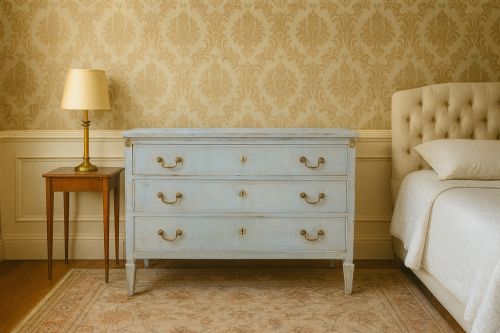


Swedish Painted Dresser
A swedish painted dresser brings calm proportion and practical storage to a room, drawing the eye with layered historic pigments.
Swedish Painted Dresser
When you search for a swedish painted dresser, you encounter pieces that range from tall cupboards and kitchen cabinets to chests of drawers and commodes built across the eighteenth and nineteenth centuries. These pieces originate predominantly from Scandinavian country workshops, embracing forms shaped by Gustavian neoclassicism and rustic folk art traditions.
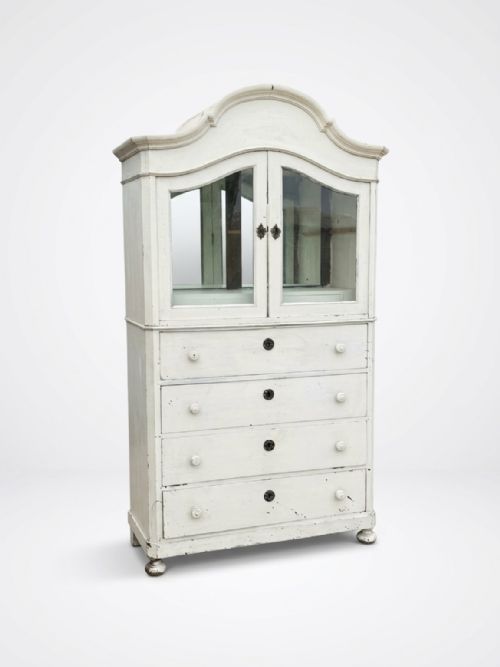
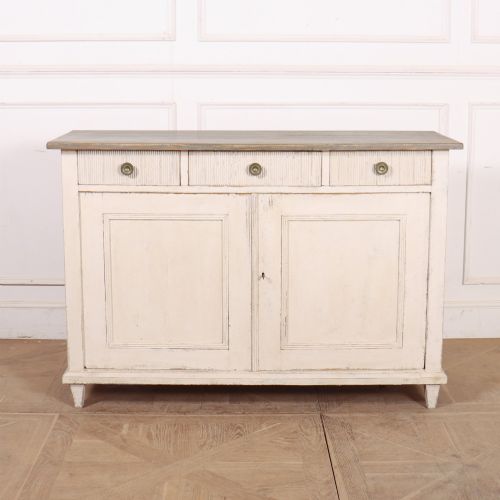
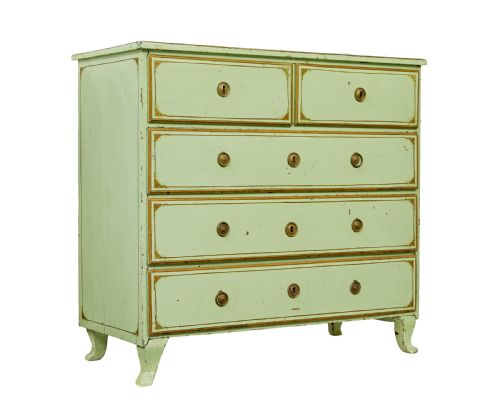
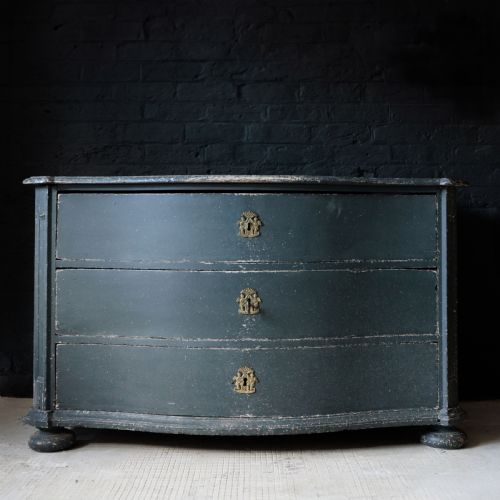
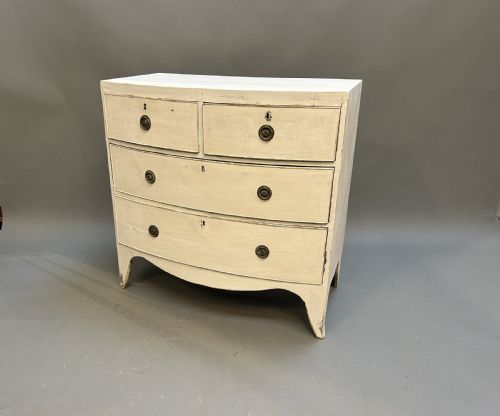
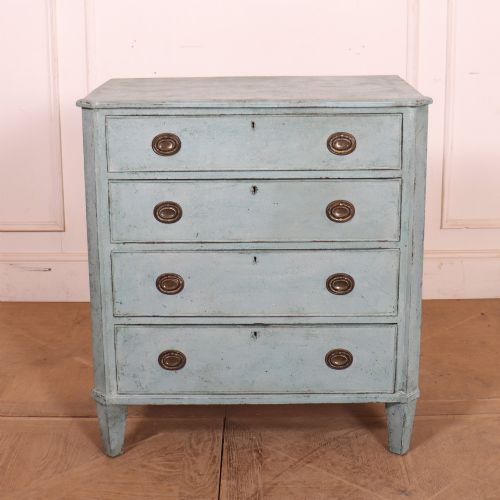
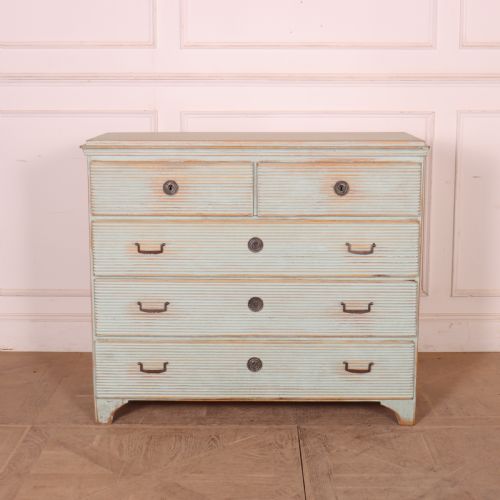
The selection on this page leans heavily towards nineteenth-century pine chests of drawers and cupboards, alongside eighteenth-century commodes and earlier provincial storage forms. You find variations featuring serpentine fronts, fluted drawer fronts, and bonnet tops that reflect both urban court influences and rural domestic needs.
How they were made
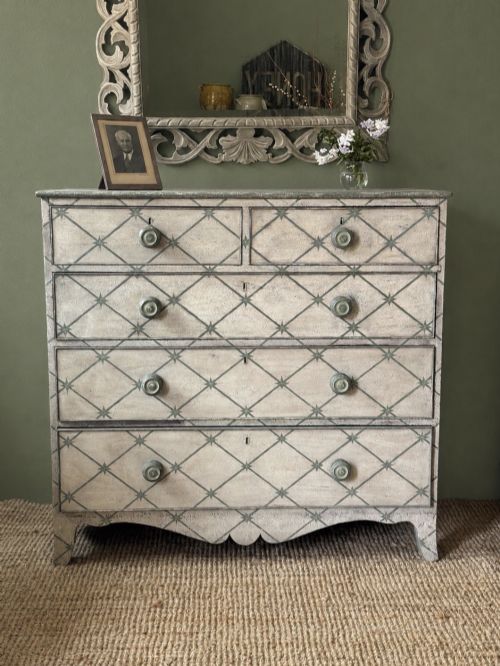
Makers constructed these pieces primarily from solid pine and native woods, utilising traditional joinery methods suited to domestic workshops. Surfaces were then prepared with coats of lead or oil-based paint, sometimes layered to create ragwork or simulated birch effects.
The finish often relied on original scraped paint or hand-applied pigments in muted tones such as Swedish grey. Iron and brass hardware completed the construction, securing doors and drawers intended for daily household storage.
Several pieces feature faux marble tops that prove timber can convincingly mimic heavy stone when painted with sufficient patience.
What varies in quality
Quality rests in the integrity of the original surface and the subtlety of the painted finish. Pieces retaining scraped original paint or deliberate folk decoration hold greater character than those with later, heavy-handed redecorating.
Proportion and the handling of carved details, such as fluted drawer fronts or serpentine shapes, distinguish standard regional output from more refined pieces inspired by Gustavian style.
Gemla Fabrikers
The Swedish Painted Dresser Glossary
- Gustavian
- The Swedish neoclassical style spanning the late eighteenth century, characterised by restrained symmetry and classical motifs. It draws inspiration from French Louis XVI design adapted to Scandinavian palettes.
- Commode
- A low chest of drawers or cabinet designed for domestic storage. These pieces often feature decorative fronts and shaped tops.
- Serpentine
- A front contour that curves outward in the centre and inward at the sides. This shape requires skilled carpentry and adds fluid movement to case furniture.
- Ragwork
- A decorative painting technique where rags or cloths are used to manipulate wet glaze or paint on a surface. It creates a textured, mottled pattern resembling patterned fabric or grain.
- Bonnet top
- An arched or hooded upper section found on tall cabinets and cupboards. This architectural feature draws the eye upward and provides extra internal height.
Swedish Painted Dresser: Frequently Asked Questions
What is a swedish painted dresser?
A swedish painted dresser or cabinet is a piece of storage furniture originating from Scandinavia, typically constructed from pine and finished with traditional painted surfaces.
These pieces range from tall kitchen cupboards and linen presses to commodes and chests of drawers, serving practical storage needs while bringing decorative rustic character to an interior.
How do I date a swedish painted piece?
Dating relies on examining the construction methods, timber types, and stylistic influences visible in the piece. Eighteenth-century examples often display baroque or early neoclassical Gustavian lines.
Nineteenth-century pieces frequently utilise native pine with folk art finishes, ragwork paint effects, or Victorian-era country adaptations. Hardware, drawer construction, and nail types also offer clues to the period of manufacture.
What colours are typical for these pieces?
Traditional palettes focus on muted, earthy tones that maximise light in northern interiors. Soft greys, off-whites, pale blues, and subtle greens dominate.
Many surfaces feature layered historic paint or simulated wood grains like birch, applied by hand to create depth and texture over the underlying pine.
How do I care for original painted surfaces?
Historic painted furniture requires gentle care to preserve the integrity of the surface. Dusting with a dry, soft cloth prevents the accumulation of dirt without risking moisture damage.
Avoid placing pieces in direct sunlight or near heat sources, as fluctuations in temperature and humidity can cause pine to shift and historic paint to flake.