

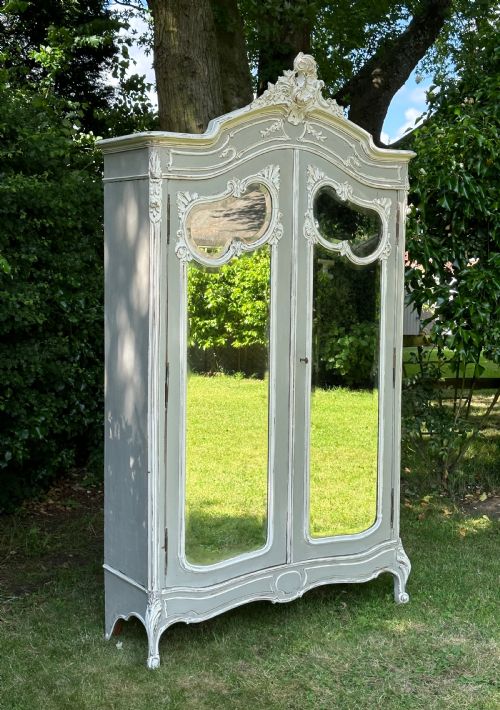
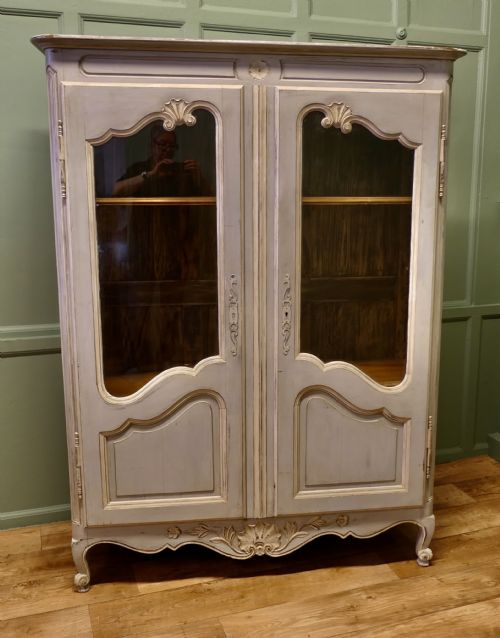
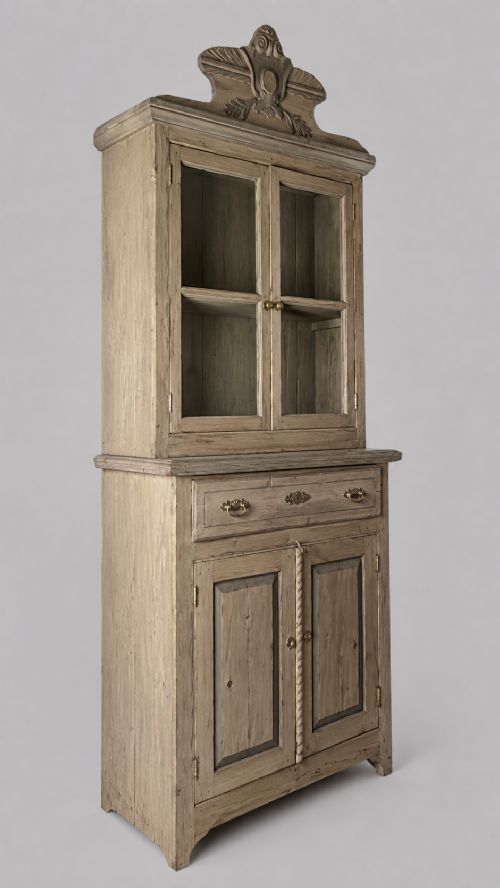
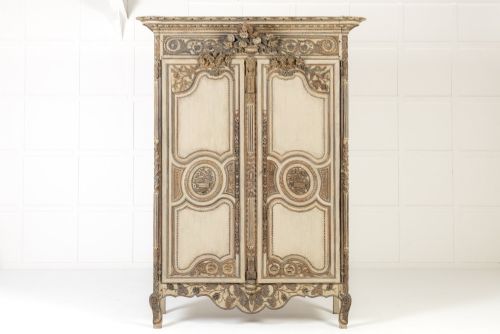


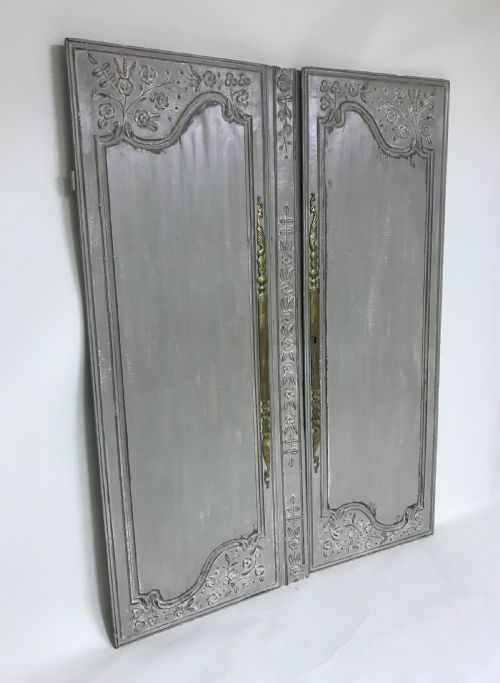

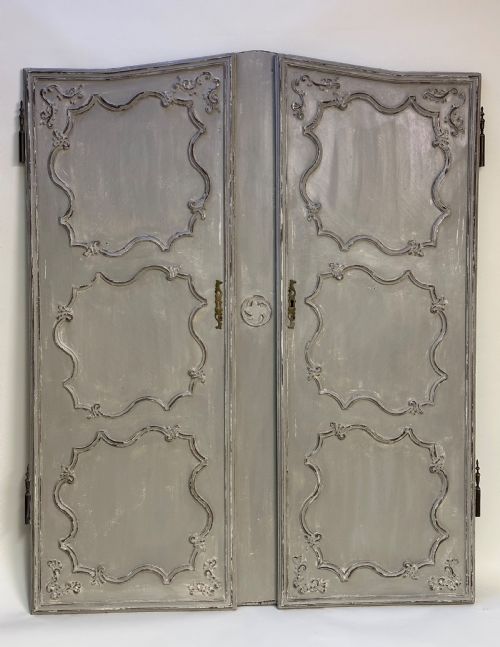


Grey Painted Carved Doors
These grey painted carved doors bring instant architectural character to a room, offering practical division with timeworn French and country charm.
Grey Painted Carved Doors
When you search for grey painted carved doors, you encounter architectural salvage and larger furniture components drawn from nineteenth-century France and country houses, alongside regional pieces from the Victorian era and Scandinavia. The selection spans structural pairs designed as actual entrances, tall armoire doors, and fitted cupboard fronts.
Most examples you meet on this page date from the nineteenth century, including specific decades from 1860 to 1900, with occasional eighteenth-century precursors and early twentieth-century interpretations. Woods such as oak, pine, cherrywood and walnut provide the substantial subframes beneath layers of old paint.
Stylistically, these pieces draw upon French provincial traditions, French chateau elegance, Gothic Revival austerity and Scandinavian country simplicity. They function equally well hung in traditional doorways or repurposed as wall decoration and room dividers.
How they were made
Carpenters constructed these doors from solid timbers like pine, oak, walnut and cherrywood, employing traditional joinery to build heavy panelled and framed structures. Hand carving added sculptural relief to the wood surfaces, creating deep mouldings and decorative motifs before any paint was applied.
The painted finishes incorporate historic pigments over wood, wearing down naturally through decades of domestic use to reveal the underlying timber and earlier layers of colour. Iron and brass hardware, such as hinges and latches, complete the construction and secure the heavy wooden leaves.
Grey Painted Carved Doors Retail Price Guide 2026
Typical asking prices for grey painted carved doors among the pieces listed under this phrase on Sellingantiques today, from the lower quarter to the upper quarter. They describe what is for sale here now, not the wider market.
Some doors arrive carrying decades of honest kitchen grease, proving they spent time protecting someone's very well-used larder.
What varies in quality
Quality rests in the depth and sharpness of the hand carving, where crisp floral motifs or architectural lines distinguish superior artisan work from simpler country production. The choice of dense hardwoods like walnut or oak also signals a higher grade of manufacture than standard softwood pine.
The integrity of the original paint layer and the natural patination of the wood dictate the visual success of the piece. Substantial proportions and well-preserved joinery ensure that the doors retain both their structural stability and their decorative presence.
The Grey Painted Carved Doors Glossary
- Architectural salvage
- Building elements removed from older structures for reuse in interior design. These items preserve historic craftsmanship and materials for modern spaces.
- Armoire
- A large wardrobe or cupboard used originally for storing clothes. French examples often feature elaborate carved panels and painted finishes.
- Gothic Revival
- An architectural and design movement drawing inspiration from medieval forms. Pieces display pointed arches, heavy mouldings and vertical emphasis.
- Vitrine
- A glass-fronted cabinet or display case designed for showing precious objects. They often combine glazed upper doors with painted wooden bases.
- Pelmet
- A decorative framework placed above a window or doorway to conceal fittings. Hand-carved wooden examples match the detailing found on period doors.
Grey Painted Carved Doors: Frequently Asked Questions
How do I hang heavy antique doors?
These wooden doors require robust structural fixings and heavy-duty hinges to support their substantial weight safely in a modern doorframe.
Consult a professional joiner to ensure the surrounding wall structure can bear the load of solid timber panels.
Can I use these doors outdoors?
Most of these pieces are intended for interior architectural salvage or furniture use within a dry home environment.
Exposing historic painted wood and iron hardware to damp exterior conditions will accelerate the degradation of the finish.
How do I clean painted wooden doors?
Dust the carved surfaces gently with a soft, dry cloth to remove everyday debris without harming the historic paint.
Avoid harsh modern chemical cleaners or excessive water, which can strip the aged pigments and damage the underlying wood.
What is French provincial style?
This regional design tradition balances rural practicality with refined decorative carving suited to country homes.
Pieces from this tradition typically feature softer painted surfaces and accessible, everyday proportions.
How can I date these wooden doors?
Examine the type of wood used, the style of the hand carving, and the tool marks left behind by the joiner.
Comparing the wear of the paint layers against known Victorian and nineteenth-century construction methods helps narrow the period.