

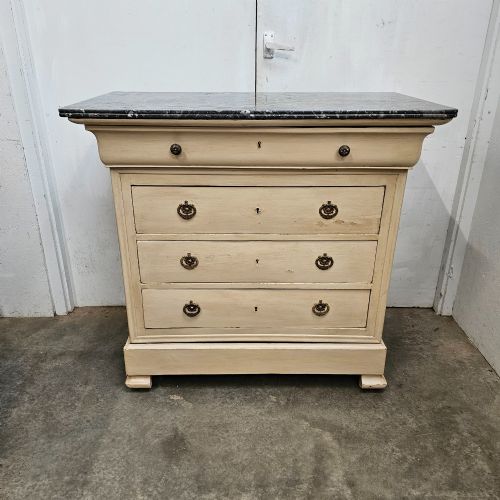
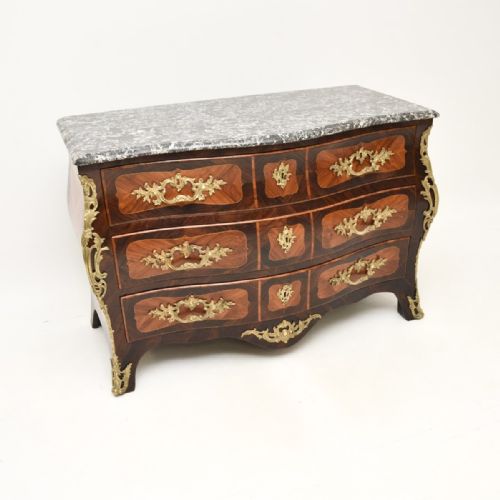
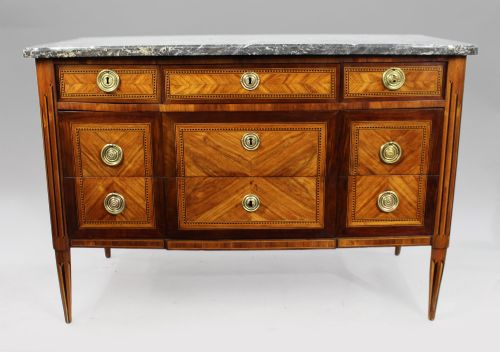
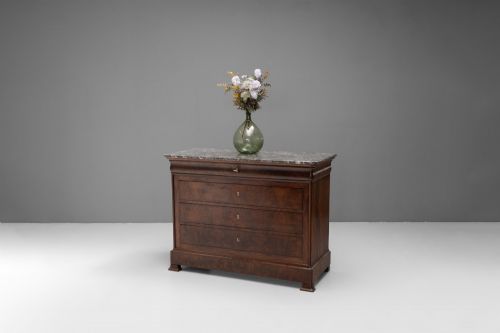
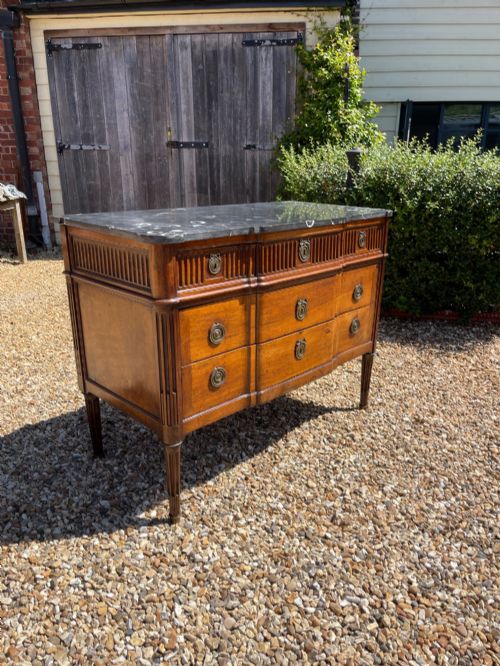
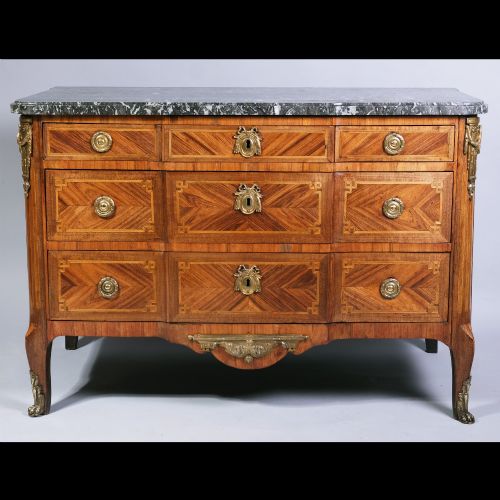
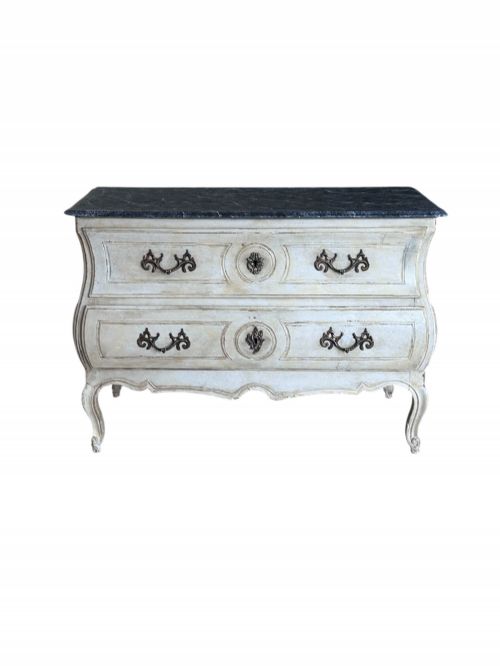

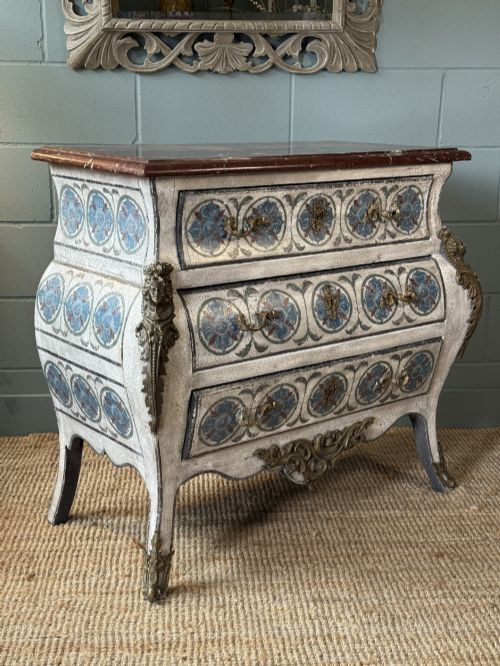


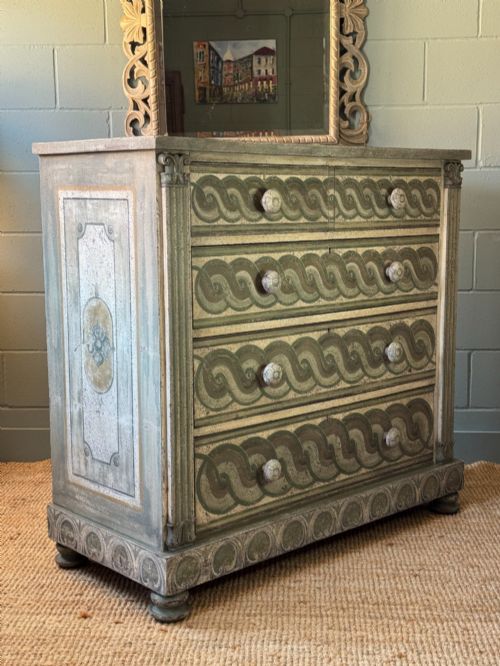
Grey French Commode
A grey french commode brings provincial elegance and stone-topped practicality to a room, offering deep storage beneath classic regional proportions.
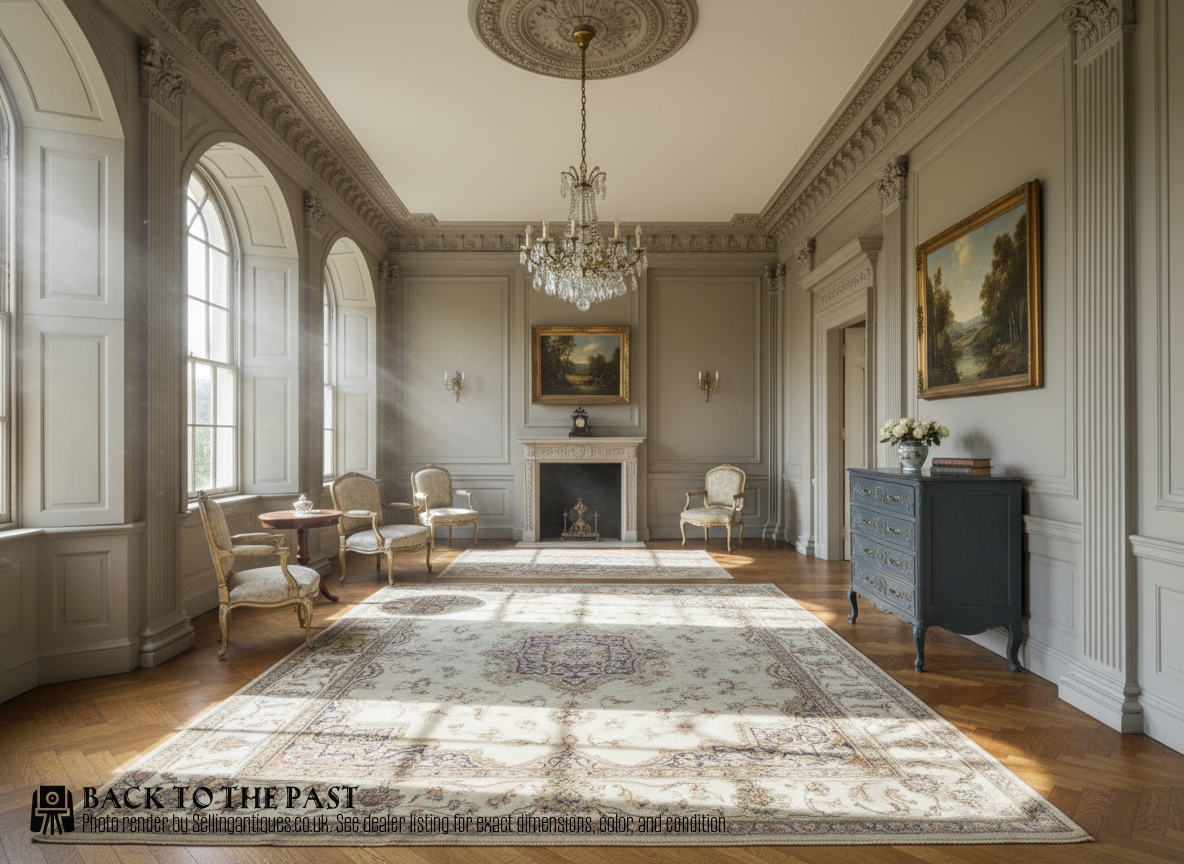
Grey French Commode
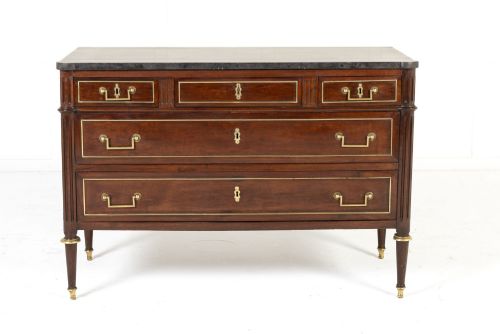
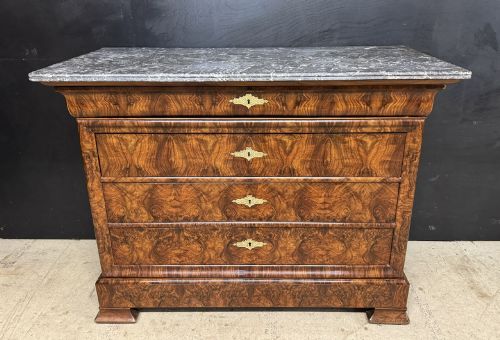
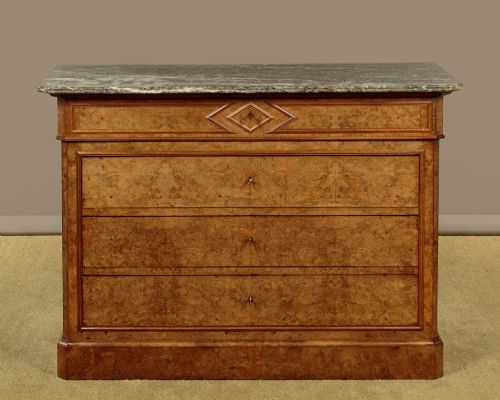
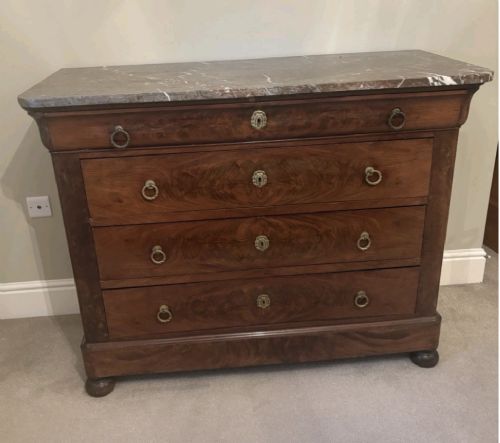
A grey french commode appears in several distinct regional and formal variations across this selection, spanning the eighteenth century through to the early twentieth century. Buyers encounter classic chests of drawers, bedside tables, and robust sideboards that reflect provincial workshops or metropolitan court styles.
The dominant forms include Louis XV and Louis XVI silhouettes, along with Louis Philippe and French Provincial designs. Many examples feature fitted stone surfaces, while others present painted wooden finishes or rich natural grains in walnut, oak, and cherrywood.
How they were made
Cabinetmakers constructed these pieces using solid timbers such as oak, walnut, cherrywood, and mahogany, frequently applying decorative veneers like tulipwood and parquetry patterns. Structural frames relied on traditional joinery methods, housing multiple drawers designed for domestic storage.
Surface treatments range from hand-applied paint and gilt details to polished wood finishes. Many cabinets incorporate heavy marble tops, brass mounts, and ormolu hardware to accent the timber and stone construction.
Grey French Commode Retail Price Guide 2026
Typical asking prices for grey french commode among the pieces listed under this phrase on Sellingantiques today, from the lower quarter to the upper quarter. They describe what is for sale here now, not the wider market.
Several chests arrive with secret drawers hidden beneath the main moulding, built to guard family currency and love letters.
What varies in quality
Quality separates through the crispness of carved wooden details, the precision of parquetry inlay, and the structural integrity of the timber drawers. Superior examples display careful matching of grain patterns and well-fitted marble surfaces that sit flush with the frame.
The sophistication of the painted finish or patination dictates the tier of the piece. Authentic period hardware and original stone tops distinguish higher-grade items from later adaptations.
Jacques Bircklé·Edwards and Roberts
The Grey French Commode Glossary
- Commode
- A low chest of drawers, typically standing at waist height. In continental Europe, it served as principal bedroom or reception room storage.
- Ormolu
- Gilded bronze mounts applied to furniture for decoration. This technique adds metallic contrast to the timber and stone structure.
- Parquetry
- Geometric wood mosaic patterns assembled from small veneer tiles. It forms decorative geometric floors and cabinet fronts.
- Bombe
- A swelling, convex furniture profile that curves outward toward the base. This shape requires advanced cabinetmaking skill.
- Provincial
- Furniture made in regional areas outside the capital. These pieces adapt high-style court designs using local materials and simpler construction.
Grey French Commode: Frequently Asked Questions
What is a grey french commode?
A grey french commode is a continental chest of drawers featuring either a painted finish in shades of grey or a natural wood body paired with a grey marble top. These items originate from various periods including the eighteenth and nineteenth centuries.
They function primarily as storage furniture for bedrooms and living spaces while providing a decorative surface for lamps and ornaments.
How were these chests used?
Original owners used these cabinets in bedrooms and formal salons to store clothing, linens, and personal valuables. The flat top surface also supported candlesticks, mirrors, and decorative objects.
Today, they serve similar storage functions in modern homes while acting as prominent decorative focal points in hallways or reception rooms.
How do I identify the period?
Period identification relies on stylistic cues such as the straight tapered legs of Louis XVI designs versus the curved cabriole legs of the Louis XV era. Construction techniques, secondary woods, and hardware styles also help date the piece.
Examining the drawer linings and backboards reveals hand-tool marks that correspond to eighteenth or nineteenth-century manufacturing methods.
Are the marble tops original?
Marble tops on these cabinets vary between original matching stone and later replacements fitted during subsequent restorations. Inspecting the underside of the stone and the seating rebate on the wooden frame helps determine originality.
Original marble often shows appropriate wear patterns and fits the exact contours of the moulding profile beneath it.