





Green Wine Glass
A green wine glass brings rich colour and depth to the table, combining historic glassmaking craft with vibrant tones.
Green Wine Glass
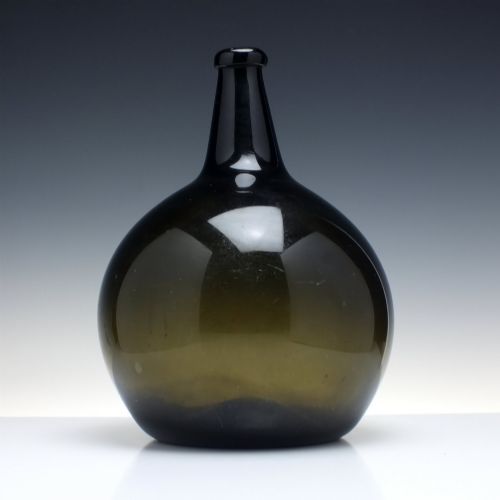
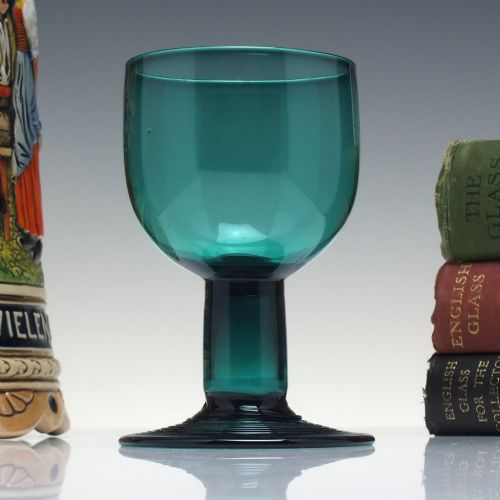
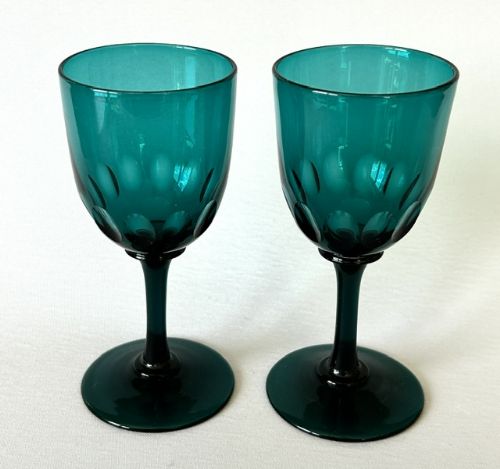
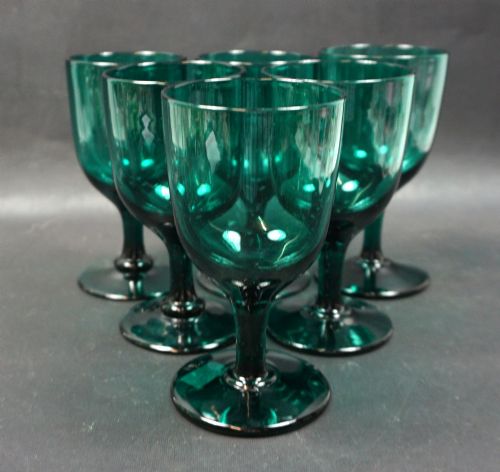
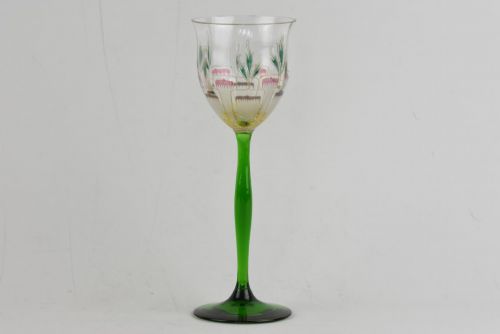
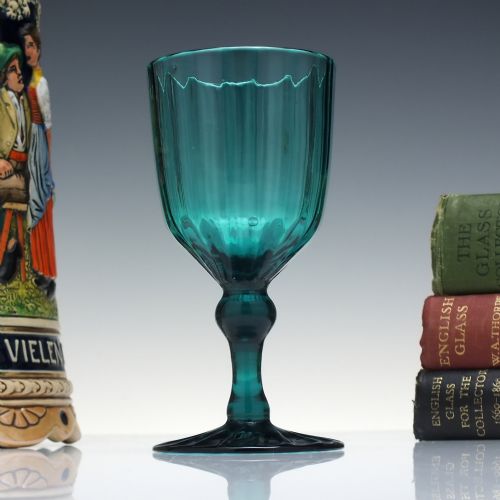
A green wine glass encompasses a broad span of drinking vessels, from Georgian export roemers to Victorian service sets and Continental hock glasses. Buyers searching for a green wine glass typically encounter Georgian Bristol types, Victorian bowl glasses, and later Edwardian or Art Nouveau specimens. Forms range from simple plain stems and hollow stems to cut crystal, tulip shapes, and enamel-decorated hock goblets.
The material identity shifts across periods, moving from lead glass and heavy blown metal in the eighteenth century to pressed, vaseline, and coloured-over-crystal variations in the nineteenth and twentieth. Alongside standard wine glasses, related forms such as rummers, dram glasses, and decanters frequently appear in the same palette.
How They Were Made
Makers produced these pieces using free-blowing, mould-blowing, and lead glass formulation, often integrating rib-moulded or hammer-moulded bowls. Coloured effects were achieved either through mixing metallic oxides into the molten metal or by casing a clear core in green glass before cutting.
Decoration involved wheel-cutting, engraving, and polychrome enamel painting, particularly on Bohemian and continental roemers. Pewter mounts and silver additions complete the construction of specific jugs and decanters from the Arts and Crafts and Victorian eras.
Listings feature green glass items spanning the Georgian, Victorian, Art Nouveau, and Art Deco periods, executed in lead glass, hand-blown forms, and enamel-painted crystal.
What Varies in Quality
Quality rests upon the depth and uniformity of the green hue, the crispness of the rib moulding or wheel-cutting, and the elegance of the vessel's proportions. Pieces featuring hand-painted enamel work or armorial details demonstrate superior craftsmanship compared to plain utility items.
The integrity of the metal, whether heavy lead glass or delicate crystal, together with the balance of the stem and foot, dictates the standing of an individual piece within its period.
Baccarat·Theresienthal·Archibald Knox for Liberty Co·St Louis Massenet·Lobmeyer·Frits Hechert·Richardson·Faberge
The Green Wine Glass Glossary
- Roemer
- A traditional Germanic drinking vessel featuring a wide bowl sitting on a cylindrical hollow stem with raspberry prunts. These glasses frequently appear in green glass during the Georgian and Victorian eras.
- Hock glass
- A tall wine glass traditionally utilised for white wine, often characterised by an elongated coloured bowl and stem. Continental makers frequently produced these with elaborate enamel decoration or cased crystal.
- Rib-moulded
- A technique where hot glass is blown into a ribbed dip-mould to create vertical flutes or patterns on the body. This method appears widely on eighteenth-century and Georgian pieces.
- Vaseline glass
- A type of glass coloured with uranium oxide that exhibits a distinct yellowish-green fluorescence under ultraviolet light. Victorian makers utilised this material extensively for decorative tableware.
- Over-crystal
- A method where a layer of coloured glass is overlaid onto clear crystal and subsequently cut away to reveal patterns. This technique produces striking contrast on nineteenth-century hock glasses and decanters.
Green Wine Glass: Frequently Asked Questions
What is a Bristol green wine glass?
A Bristol green wine glass refers to deep green English glassware produced around the Bristol area during the Georgian period. These pieces often feature bucket bowls, knopped stems, or roemer forms.
Makers utilised rich mineral oxides to achieve the characteristic dark tone, which became popular for serving white wines and cordials.
How do I identify a Georgian green wine glass?
Georgian examples typically display pontil marks on the underside, heavier lead metal, and simpler hand-blown or rib-moulded forms without modern machine seams. Look for hollow stems and traditional roemer shapes.
Earlier pieces from the eighteenth century often exhibit irregular bubble inclusions and deeper tonal variations within the glass.
Were green wine glasses used for regular dining?
In the eighteenth and nineteenth centuries, coloured glassware served wealthy households during formal dinners and dessert courses. They added visual contrast to tables laden with silver and white porcelain.
Specific forms like dram glasses and rummers were designated for spirits, while larger goblets held wines.
Can I use antique green wine glasses today?
Many collectors enjoy using antique and vintage stemware for special occasions, provided they receive careful hand washing. Avoiding dishwashers and sudden temperature changes protects the historic glass.
Displaying them in cabinet collections also preserves enamelled or gilded surfaces from wear.