


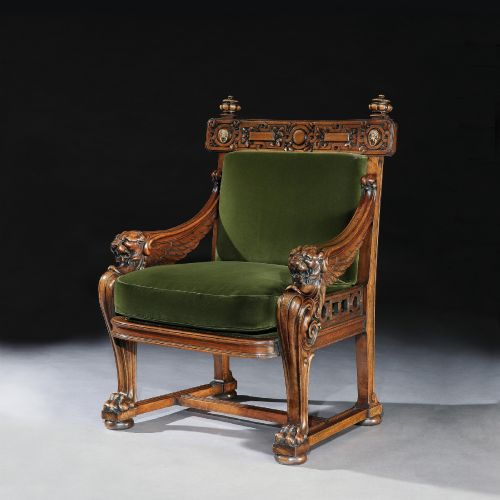
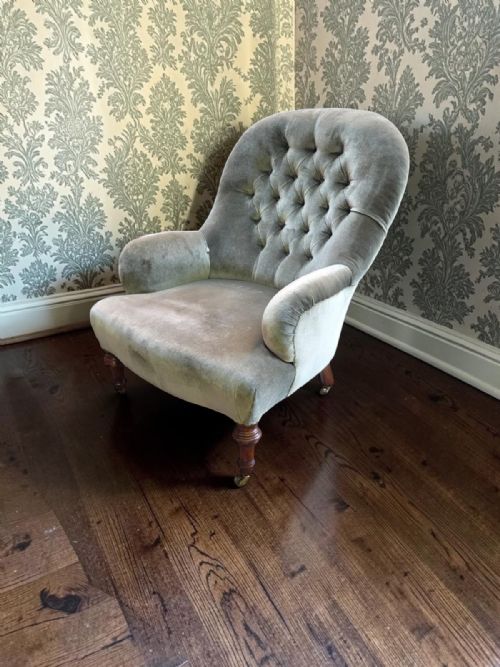
Green Velvet Chair
A green velvet chair brings rich texture and enduring comfort to a room, ranging from mahogany frames to walnut supports across several centuries.
What these pieces are
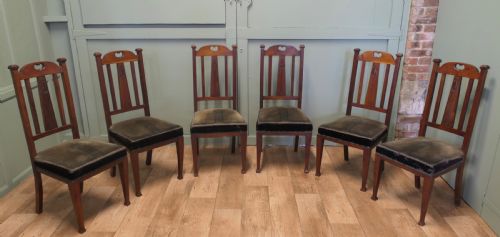
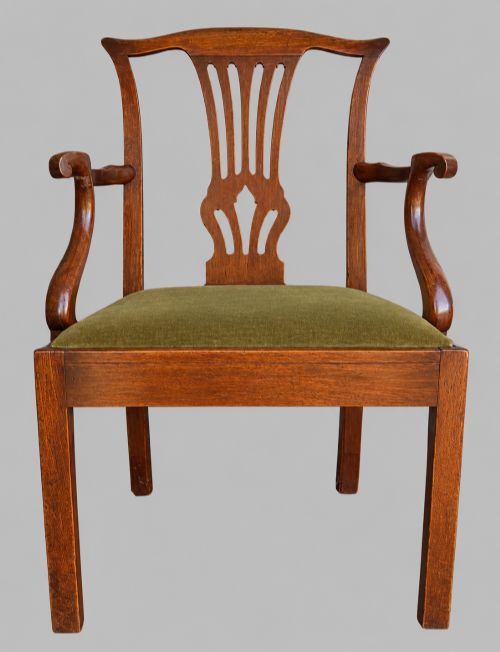
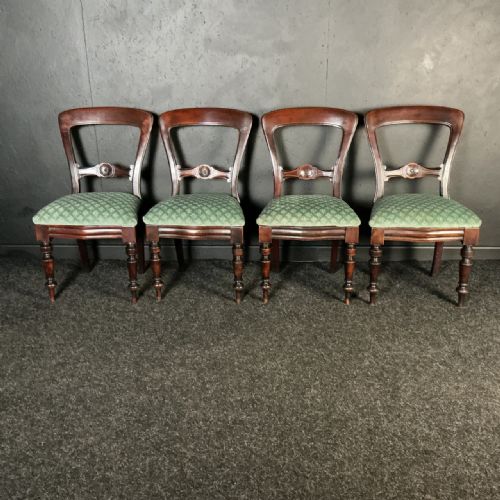
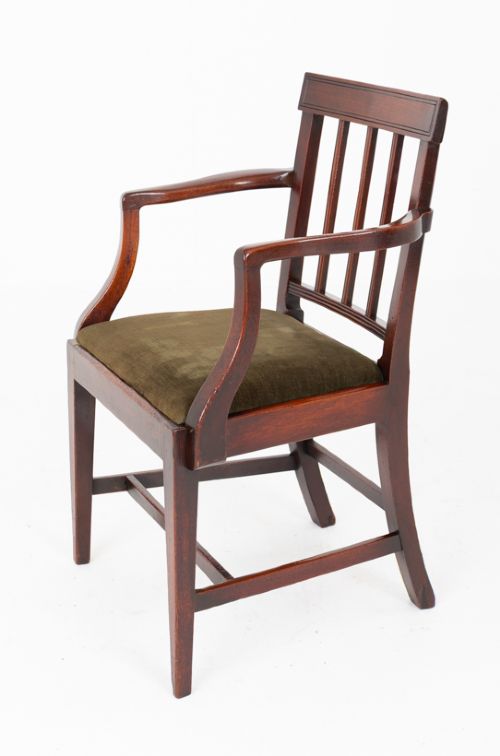
A green velvet chair spans multiple centuries of craftsmanship, covering the Georgian, Victorian, and nineteenth-century periods. These seating options include armchairs, side chairs, and dining chairs built to serve various domestic functions.
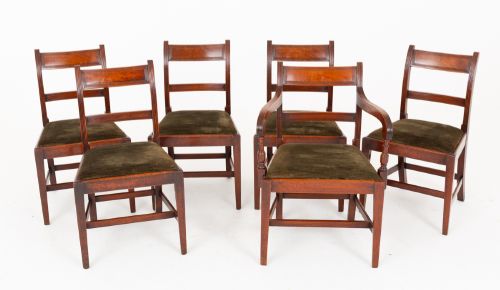
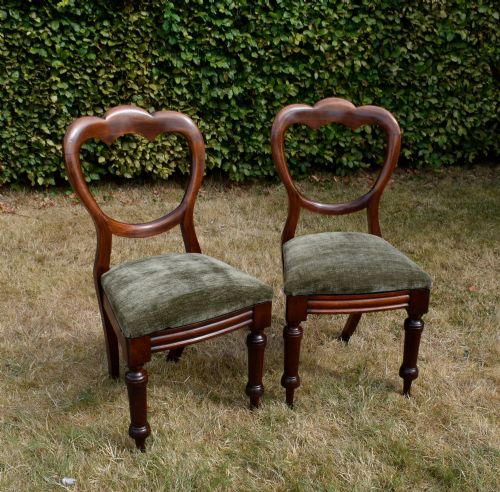
The materials paired with the velvet upholstery include mahogany, walnut, oak, and brass. Frames range from substantial study armchairs to slender bedroom fireside chairs and bar back dining chairs.
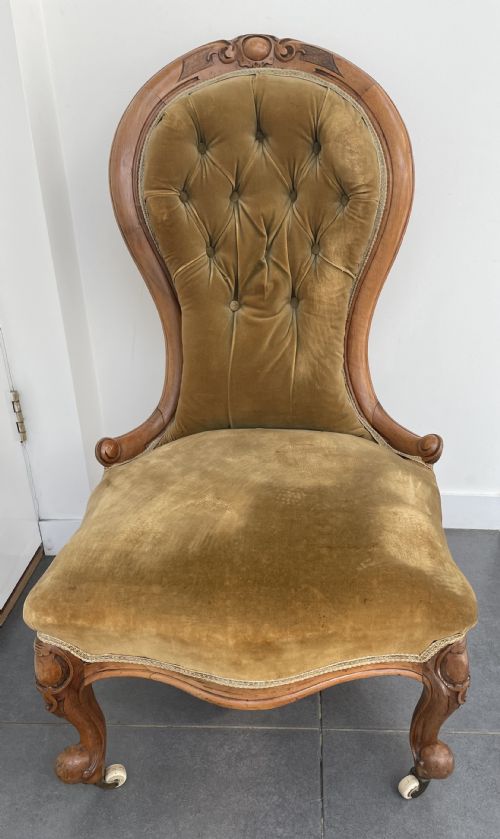
Buyers encounter styles such as Regency, Queen Anne, and Victorian designs alongside George III style wing chairs. Open armchairs and tub armchairs appear frequently alongside button back and wingback variants.
How they were made
Frames are constructed from dense hardwoods like mahogany and walnut, frequently utilising traditional joinery and carved details. Iron framing also supports specific Victorian button back armchair constructions.
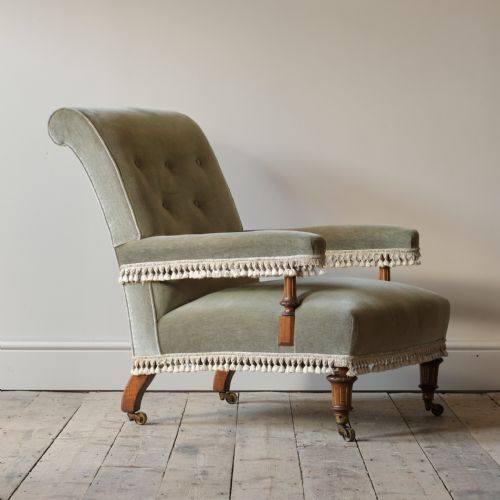
Upholstery relies on velvet fabrics, occasionally described as sage green, crushed green, or green cut velvet. Some examples incorporate tassel trim alongside standard textile application.
Retail Price Guide 2026
Typical UK retail prices for green velvet chair, calculated from the Sellingantiques database of over a million retail prices indexed since 2003. This retail price guide relies exclusively on Sellingantiques data; no external sources or auction records are used, so the figures do not describe the wider market.
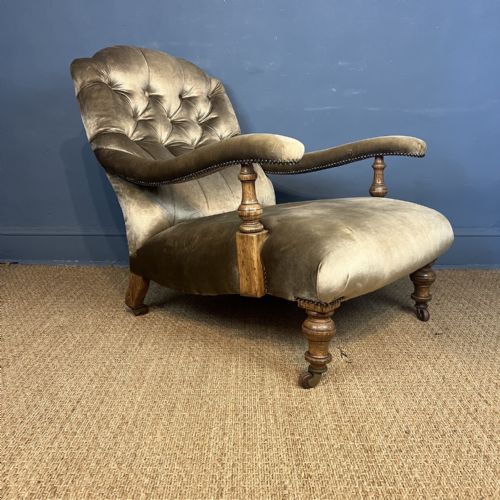
Some nineteenth-century armchairs include the tactile addition of tassel trim alongside deep button backing.
What varies in quality
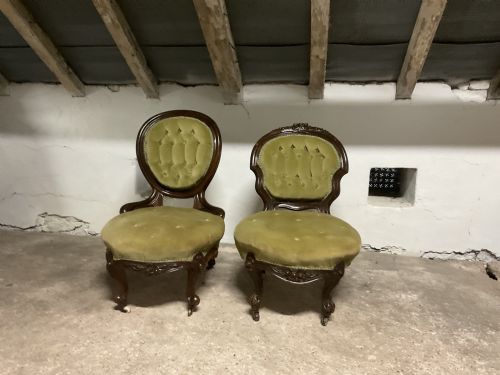
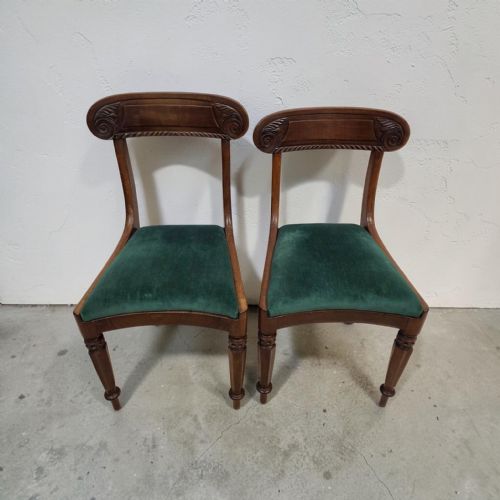
The refinement of the wooden frame separates standard seating from superior examples, seen in carved walnut details or reeded legs. Proportions and the grace of the arm supports dictate the visual weight of the piece.
Upholstery execution alters the character of the chair, distinguishing simple fabric application from complex button-backed work or tailored tassel trims.
Howard and Sons·Holland and Sons·Gillows
The Green Velvet Chair Glossary
- Armchair
- A chair with supports for the arms or elbows. These include study armchairs and open armchairs.
- Side chair
- A chair without arms, intended for dining or occasional placement.
- Bar back dining chair
- A dining chair featuring a horizontal top rail shaped like the rail of a traditional pub or Windsor seat.
- Wingback armchair
- A tall armchair with side panels designed to shield the sitter from drafts.
- Slipper chair
- A low-seated chair traditionally used in bedrooms for dressing.
Frequently Asked Questions
What periods do these chairs come from?
The available selection spans the eighteenth century, the Georgian era, the nineteenth century, and the Victorian period.
Individual pieces demonstrate specific stylistic traits associated with these eras, such as Regency or Queen Anne influences.
What woods were used for the frames?
Makers utilised dense timbers including mahogany, walnut, and oak to construct the supportive framework.
Some Victorian iterations also incorporated iron frames to support button-backed upholstery.
How do armchairs differ from side chairs?
Armchairs feature structural side supports for the arms, making them suitable for studies, firesides, and parlours.
Side chairs omit armrests and are typically encountered as dining chairs or occasional seating.
What types of velvet upholstery appear?
Upholstery ranges from standard green velvet to sage green, crushed green velvet, and green cut velvet.
Certain pieces also feature decorative additions like tassel trim or deep button-backed padding.