



Green Jadeite Pendant
These green jadeite pendant pieces combine vibrant mineral green with precious metal mounts, offering collectors wearable history across several distinct historical periods.
Green Jadeite Pendant
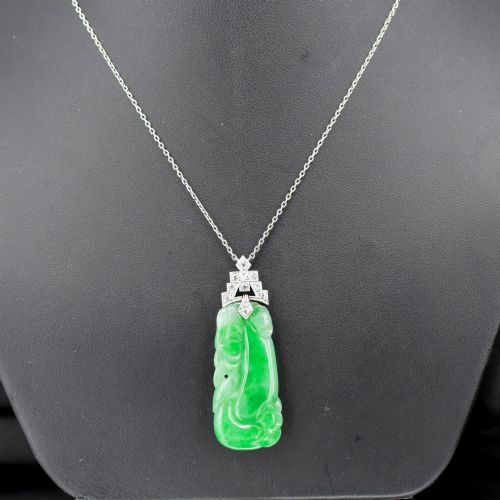
A green jadeite pendant represents a specific intersection of traditional carving arts and precious jewellery design, drawing on influences from the Qing Dynasty through to the Art Deco era. Buyers examining these items encounter forms ranging from simple carved plaques to elaborate compositions paired with diamonds.
The versions most commonly met on this page span the Edwardian period and the 1930s, reflecting both traditional Chinese motifs and Western geometric settings. These pieces utilise hardstone materials shaped into amulets, double dragon designs, and geometric drops.
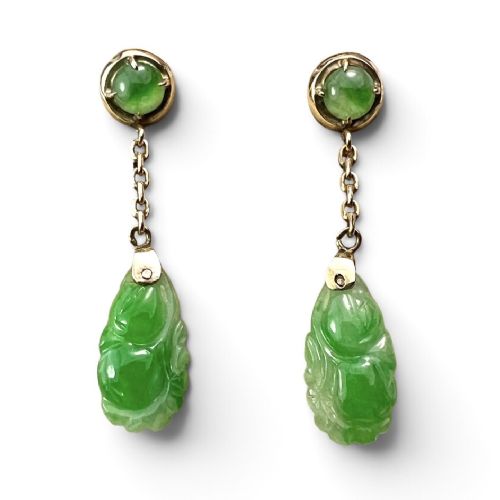
Makers and artisans across the nineteenth and twentieth centuries adapted natural jadeite into both pendant and earring formats, frequently integrating platinum and gold. The selection mirrors a global trade in carved hardstone objects designed for both decorative and amuletic purposes.
Materials and construction methods
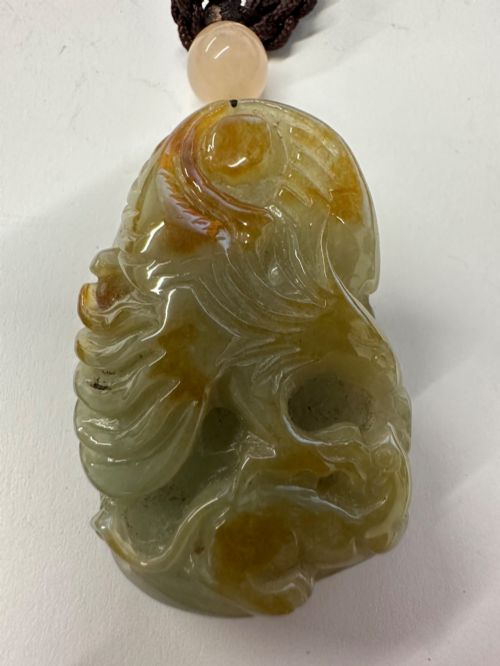
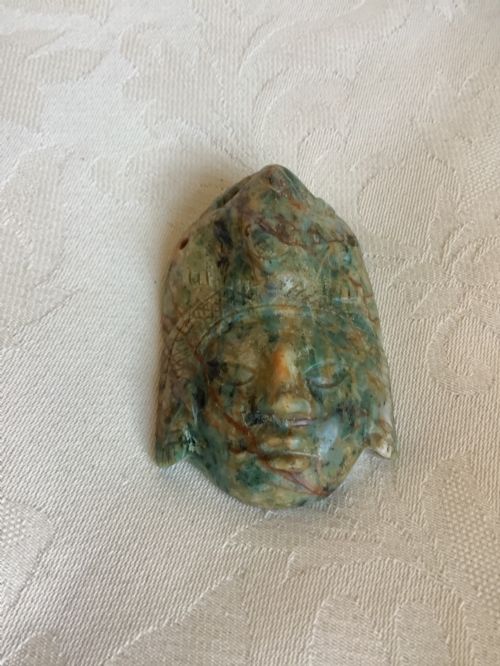
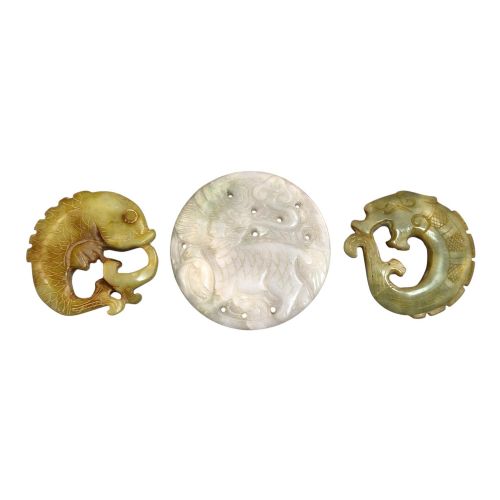
The primary material is natural jadeite or jade, shaped through intensive carving techniques to reveal intricate motifs such as dragons, qilin, and carp. Artisans exploited the natural colour variations within the hardstone to emphasise specific elements of the design.
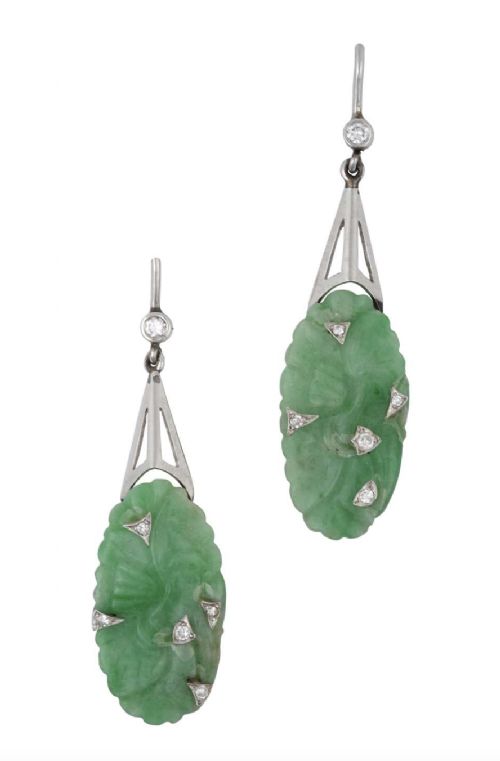
Precious metals including platinum, gold, and fourteen-carat gold provide structural mounts, often enhanced with diamond accents. These metals are worked into Edwardian filigree or Art Deco linear geometry, securing the carved stone while complementing its natural tone.
Green Jadeite Pendant Retail Price Guide 2026
Typical asking prices for green jadeite pendant among the pieces listed under this phrase on Sellingantiques today, from the lower quarter to the upper quarter. They describe what is for sale here now, not the wider market.
Fish and mythical beasts quietly share drawer space with geometric diamonds, proving past carvers had a deep fondness for swimming creatures.
Distinctions in craftsmanship and materials
Quality separates pieces through the depth and precision of the carving, where superior examples exhibit sharp relief and intricate detail in motifs like dragons and figures. The translucency and even distribution of the green colour within the jadeite also dictate the visual impact of the item.
The integration of the mount influences the overall standard, as finer works pair the carved hardstone with well-balanced platinum or gold settings containing matched diamonds. The refinement of the metalwork relative to the stone determines whether a piece achieves a harmonious finished aesthetic.
The Green Jadeite Pendant Glossary
- Jadeite
- A pyroxene mineral and one of the two minerals recognised as jade, known for its vibrant green hues and crystalline structure. It forms the primary material for many carved Asian and Art Deco ornaments.
- Bi Disc
- A traditional flat jade circular object with a circular hole in the centre, often associated with ancient Chinese ritual and status. Later periods adapted this form into decorative amulets and pendants.
- Qilin
- A mythical hooved Chinese creature symbolising good omens, prosperity, and longevity. Carvings of this subject appear frequently on traditional hardstone amulets and plaques.
- Art Deco
- A design style prevalent in the nineteen-twenties and nineteen-thirties characterised by sleek geometric shapes, stylised motifs, and streamlined elegance. In jewellery, it often pairs jadeite with platinum and diamonds.
- Edwardian
- A stylistic period spanning the early twentieth century defined by delicate platinum work, lace-like filigree, and diamond settings. Pieces from this era often feature high-contrast combinations of white metal and green stone.
Green Jadeite Pendant: Frequently Asked Questions
What is a green jadeite pendant?
A green jadeite pendant is a carved hardstone ornament suspended from a chain or cord, frequently mounted in gold or platinum.
These pieces range from traditional Chinese export carvings to geometric Art Deco designs produced during the early twentieth century.
How do I date a pendant?
Dating relies on the mounting style, metal type, and carving technique present in the piece.
Edwardian items typically feature platinum and delicate filigree, while nineteen-thirties pieces often showcase bolder Art Deco geometries or specific Republic Period motifs.
What is the difference between jade and jadeite?
Jade is a term encompassing two distinct minerals: jadeite and nephrite, both prized for toughness and carving potential.
Jadeite generally exhibits a brighter, more crystalline green appearance and was frequently utilised in twentieth-century jewellery mounts.
How should I care for jadeite jewellery?
Jadeite is a durable mineral but requires gentle cleaning with warm soapy water and a soft cloth to preserve the surface polish.
Avoid harsh chemical cleaners and ultrasonic devices, storing the piece separately to prevent scratching against other jewellery.