


Chinese Carved Jade Pendant
A chinese carved jade pendant carries centuries of lapidary skill, offering tactile depth and symbolic motifs that elevate everyday wear.
Chinese Carved Jade Pendant
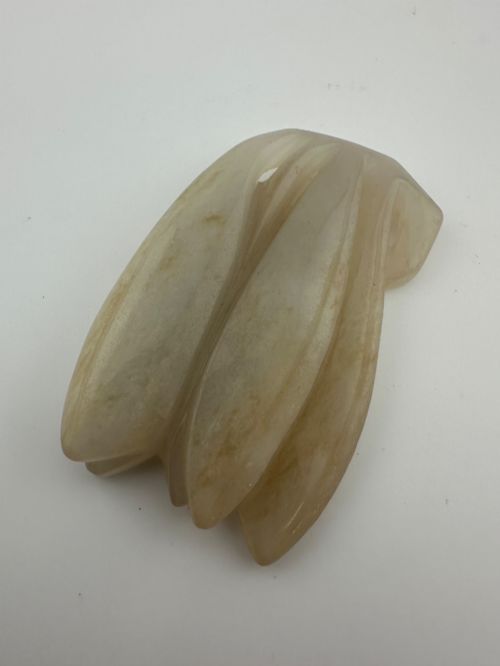
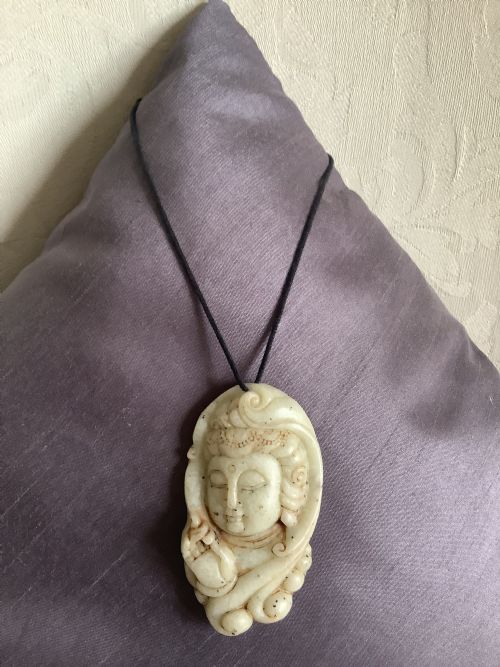
A chinese carved jade pendant takes several forms across the selection, ranging from nineteenth century Qing Dynasty cicada carvings and double sided dragon plaques to Republic Period jadeite double dragon and auspicious pieces. Buyers frequently encounter Edwardian and 1920s examples mounted in gold or paired with diamonds and platinum.
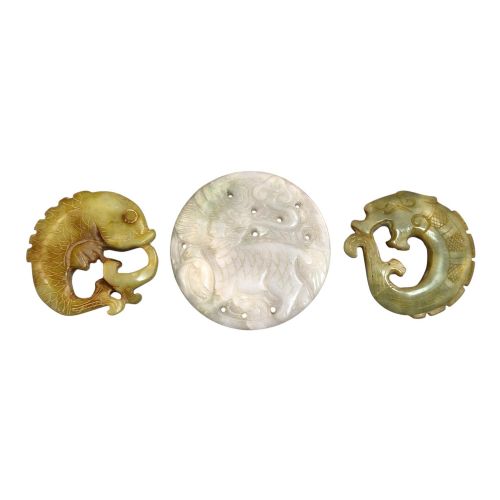
The objects span diverse cultural and decorative motifs, including mythical creatures like the Qilin and Chilong dragon, alongside carp, lotus flowers, and lingzhi fungus. These pieces function both as amulets and decorative pendants, reflecting traditional Chinese symbolism alongside later export market tastes.
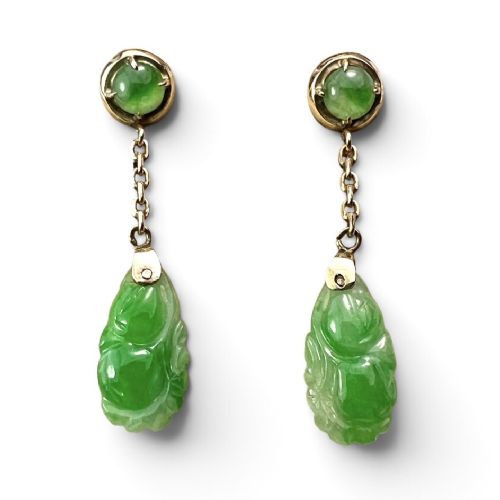
Dating across the selection stretches from the mid nineteenth century through the 1940s, capturing late Qing Dynasty craftsmanship, the Chinese Republic Period, and Art Deco design influences. Pendants appear alongside related items such as drop earrings and hardstone carvings.
How they were made
Carvers shaped the material using traditional abrasive techniques applied to hard minerals, achieving intricate pierced work and relief carving on subjects like dragons, deities, and foliage. The stone itself encompasses jade, nephrite jade, jadeite, and pale celadon jade.
Precious metals such as gold, fourteen carat gold, and platinum provide structural mounts, occasionally set with diamonds or pearls, particularly in Edwardian, Art Deco, and 1930s pieces.
Squirrels and mythical beasts share carving space on nineteenth century jade, proving that ancient lapidary artists appreciated a touch of wildlife comedy.
What varies in quality
Lapidary execution defines the upper tier, where depth of relief and clarity of undercut motifs such as dragons, squirrels, and deities display exceptional hand dexterity. The natural translucence and tone of the jade, from pale celadon to vibrant green jadeite, also influence the visual hierarchy.
The sophistication of the mounting work separates standard artisan pieces from high end jewelled creations incorporating platinum and diamonds. Integration between the carved stone and its gold setting reveals the standard of design integration.
The Chinese Carved Jade Pendant Glossary
- Jadeite
- A pyroxene mineral and one of the primary materials used in Chinese carving, known for its crystalline structure and vibrant colour range. It differs mineralogically from nephrite.
- Nephrite
- An amphibole mineral comprising a dense, tough aggregate of microscopic fibres, historically utilised for Chinese carvings and weapons due to its durability. It forms the substance of many earlier artefacts.
- Bi disc
- A flat circular jade artefact with a circular hole in the centre, often associated with ancient ritual and traditional Chinese cosmology. These discs frequently incorporate carved mythical beasts.
- Qilin
- A mythical hooved chimerical creature known in Chinese mythology, symbolising good omen and prosperity. It appears frequently in carved jade iconography.
Chinese Carved Jade Pendant: Frequently Asked Questions
How do I date a jade pendant?
Dating relies on stylistic markers, such as the distinct geometric geometry of Art Deco mounts or the traditional iconography associated with the Qing Dynasty and Republic Period.
Material analysis and mounting techniques also provide clues, as Edwardian and 1930s pieces often incorporate specific gold alloys and diamond cuts that anchor them to a particular era.
What is the difference between jade and jadeite?
Jade is an umbrella term encompassing two distinct minerals, nephrite and jadeite, both traditionally carved into ornaments and pendants in China.
Nephrite tends to have a greasy lustre and extreme toughness, while jadeite often displays a more crystalline structure and a wider spectrum of bright colours.
How were jade pendants worn historically?
Historically, jade carvings functioned as personal talismans, amulets, or status symbols, often suspended from silk cords or robes as protective items.
In later export and Western markets, particularly during the Edwardian and Art Deco eras, these carvings were repurposed or designed specifically to be worn as necklaces and drop earrings set in gold.
What do the carved animal motifs mean?
Motifs such as dragons, carp, and the lingzhi fungus carry traditional symbolic meanings related to longevity, prosperity, wisdom, and auspicious fortune.
The inclusion of specific creatures helps identify the cultural context and period of the carving, as certain symbols gained prominence during particular dynasties.