
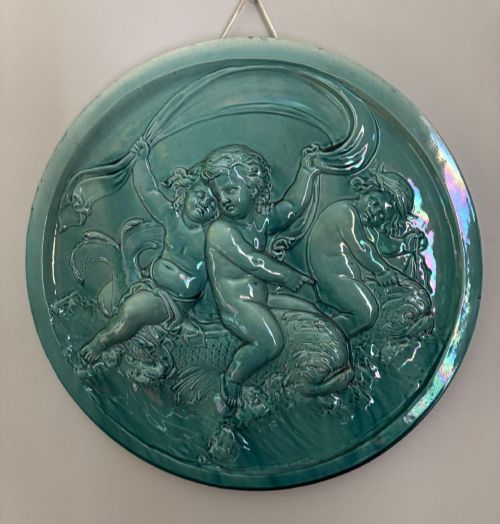
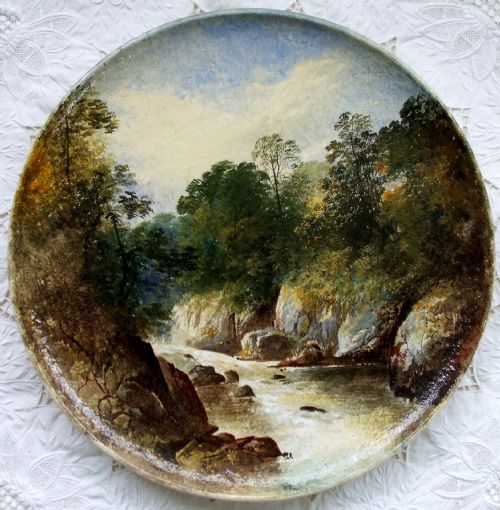

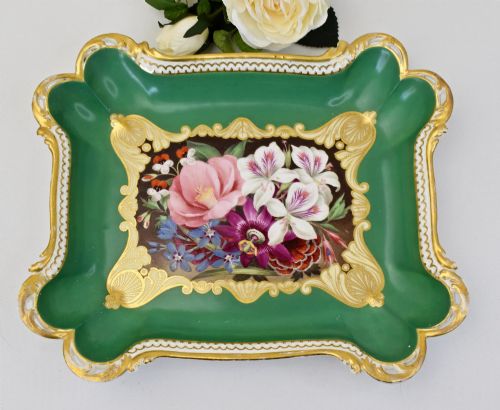


Green Ceramic Plaque
A green ceramic plaque brings rich colour and modelled detail to a wall, taking forms from nineteenth-century earthenware and porcelain.
Green Ceramic Plaque
A green ceramic plaque encompasses decorative wall tiles, chargers, and framed hand-painted porcelain panels from the nineteenth and early twentieth centuries. These pieces span Victorian, Edwardian, and Art Nouveau styles, reflecting varied domestic tastes in Britain, France, Germany, and Japan.
The buyer most frequently meets nineteenth-century earthenware and porcelain wall pieces on this page, including Copeland pottery landscapes and Wedgwood cameos. These items range from small framed panels to large chargers designed for interior display.
Makers such as William Yale, Clement Messier, and Sherwin and Cotton dominate the ceramic plaque selection. Their works demonstrate the shift from classical revival scenes to botanical and naturalistic motifs.
Materials and construction
Potters shaped these objects from earthenware, porcelain, and ceramic bodies, applying glaze and enamel paint to build surface depth. Techniques such as pate-sur-pate involve building up layers of slip in low relief on a contrasting ground.
Japanese examples utilise cloisonne over ceramic bodies, combining wirework with enamel glazes to create textured tree bark effects. Copeland and Worcester pieces rely on hand-painted pigments fired onto a glazed white ground.
Framing often incorporates wood and painted finishes to support heavier ceramic tiles and porcelain plaques. Signatures and impressed factory marks are frequently present on the reverse or lower edge.
Several Victorian plaques faithfully record the rugged scenery of North Wales, bringing misty Welsh valleys indoors onto British walls.
Factors of quality
Quality rests in the precision of the hand-painting and the complexity of the glaze effects. Superior pieces display finely rendered landscape details or delicate figure work rather than flat, stencilled colour.
The reputation of the pottery and the presence of a named artist's signature elevate a piece above standard factory production. Well-known decorators like William Yale or firms like Minton achieve greater definition in their relief and painted work.
Clement Messier·Copeland Pottery·Doe and Rogers·Sherwin and Cotton·Wedgwood·Minton·H. Desprez
The Green Ceramic Plaque Glossary
- Earthenware
- Porous pottery fired at lower temperatures, commonly used for Victorian tiles and wall plaques. It requires a glaze to become impermeable to water.
- Pate-sur-pate
- A ceramic technique where wet white slip is applied layer upon layer to a dark body to create a low-relief cameo effect. Minton utilised this method on plaques.
- Cloisonne
- Enamel work where metal wire creates cells to hold coloured pastes before firing. Japanese examples use this technique on ceramic bases.
- Jasperware
- A fine-grained, unglazed stoneware developed by Wedgwood, typically featuring white classical reliefs applied to a coloured ground.
- Charger
- A large decorative plate intended for display on a wall or sideboard rather than for dining use.
Green Ceramic Plaque: Frequently Asked Questions
How were green ceramic plaques displayed?
These pieces were typically hung on Victorian and Edwardian walls using fitted wire brackets or framed in wood for domestic display.
Larger chargers and plaques served as focal points in drawing rooms and parlours, often complementing patterned wallpapers and heavy drapery.
Are these plaques signed by artists?
Many fine pieces bear the signature of the painter or the mark of the pottery on the front or reverse. Signatures by artists such as William Yale indicate individual hand-decoration.
Factory marks often provide clues to the production date and the specific ceramic body used.
What subjects appear on these plaques?
Motifs range from Welsh river landscapes and floral studies of lilies to classical revival figures and neoclassical cameos. Japanese examples feature natural themes like bamboo and textured bark.
Art Nouveau pieces introduce stylised botanical lines and flowing forms typical of the early twentieth century.
How do I care for an antique plaque?
Dust gently with a dry, soft cloth and avoid using liquid cleaners on painted or enamelled surfaces. Keep the pieces away from direct sunlight to preserve the green glazes and painted pigments.
Ensure wall mounts are secure, as ceramic and porcelain panels carry considerable weight.