




Grape Shears Sterling
Grape shears sterling are purpose-made dining implements designed to snip small bunches of fruit at the table.
Grape Shears Sterling
Grape shears sterling represent a specialised category of dining silver created to serve fruit cleanly during formal meals. When you browse this selection, you encounter forms ranging from early nineteenth century examples to mid-twentieth century designs.
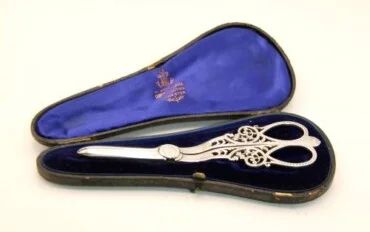
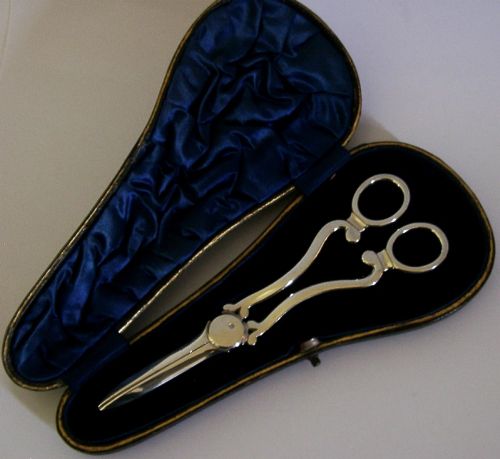
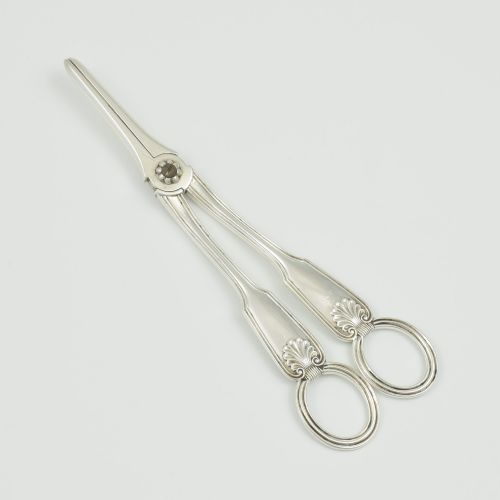
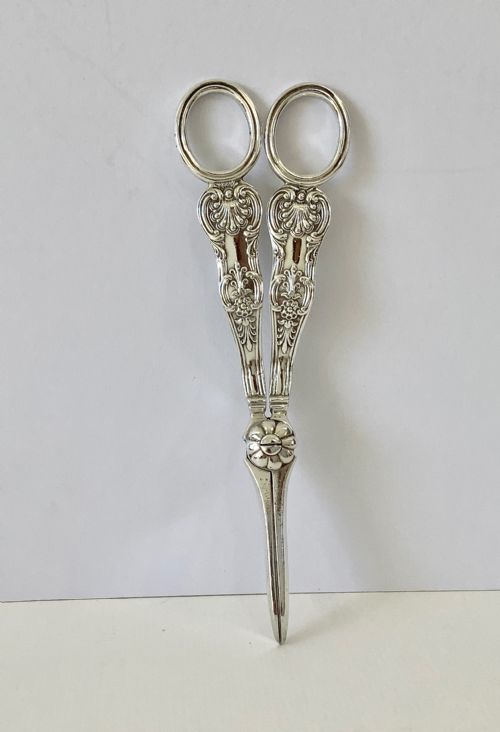
The pieces on this page predominantly date from the Victorian and Edwardian eras, alongside Georgian and later twentieth-century iterations. They frequently appear as dedicated scissors with decorated handles, sometimes accompanied by fitted presentation cases lined in velvet or silk.
How they were made
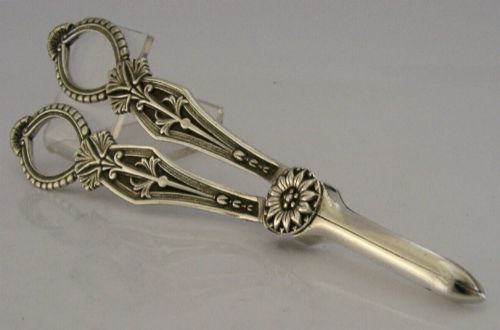
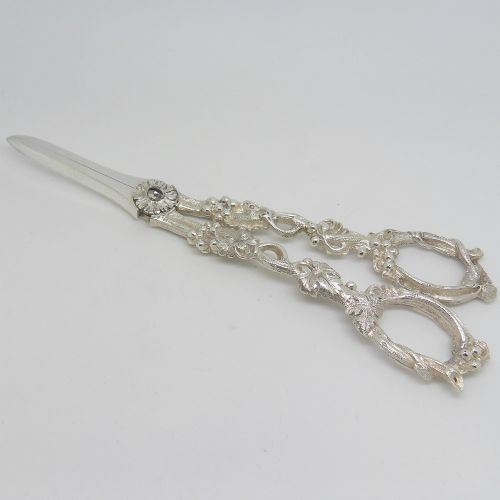
Makers fashioned these implements primarily from sterling silver, occasionally applying silver gilt for a richer surface finish. Many examples utilise cast silver techniques to achieve sturdy, ornate handles shaped as vines, beads, or figural motifs.
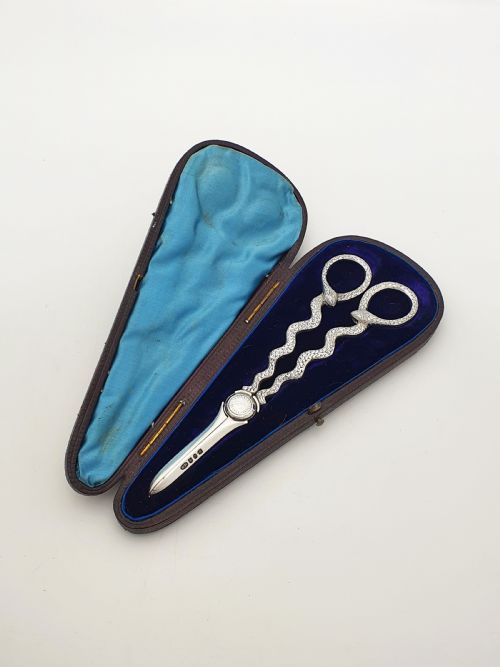
Construction methods involved shaping the cutting blades and handles separately before joining them at a central pivot. Fitted storage boxes lined with leatherette, satin, and velvet provided secure housing for the implements.
Some Victorian examples feature writhing snake handles, turning a simple fruit knife into a miniature gothic drama.
What varies in quality
The distinction between standard examples and exceptional pieces rests upon the heaviness of the metal and the intricacy of the cast decoration. Heavier gauges of silver provide a substantial feel in the hand, while detailed chasing and figural motifs such as snakes or trailing vines indicate higher craftsmanship.
Maker attribution also influences standing within the range, with workshop marks from established silversmiths marking out notable production standards. The presence of a matching fitted case adds another layer of completeness to the surviving set.
Goldsmiths & Silversmiths Co·Gibson & Langman·Charles Reily & George Storer·Paul Storr·Chawner & Co·C.J. Vander·Elizabeth Eaton·Charles Boyton
The Grape Shears Sterling Glossary
- Sterling silver
- A standard alloy consisting of ninety-two point five percent silver by mass, with the remainder composed of other metals for durability. This material forms the primary substance of the items listed here.
- Silver gilt
- Sterling silver that has been coated with a thin layer of gold on its surface. This technique produces a warm, dual-tone appearance.
- Gothic Revival
- An architectural and decorative style drawing inspiration from medieval forms. Pieces bearing this aesthetic display pointed arches and ecclesiastical ornamentation.
- Cast silver
- Molten metal poured into a mould to create three-dimensional decorative elements. This method allows for high relief patterns on handles.
Grape Shears Sterling: Frequently Asked Questions
What are grape shears used for?
These implements serve to cut individual portions of fruit from a larger bunch during dining. They allow guests to take fruit neatly without damaging surrounding stems.
Their design prevents bruising the fruit and keeps fingers clean at the table.
How do I date a pair of shears?
Dating relies upon examining the hallmarks stamped into the metal by the assay office. These marks indicate the specific year of manufacture and the maker.
Stylistic cues such as bead patterns or Gothic Revival motifs also point to specific eras like the Victorian period.
Were they stored in cases?
Many pairs were originally retailed inside fitted boxes lined with materials like velvet, satin, and silk. These cases protected the delicate silver blades when not in use.
Surviving cased examples retain their original presentation boxes from the nineteenth or early twentieth centuries.
What is the difference between shears and scissors?
The terms are often used interchangeably in antique listings to describe these fruit-cutting implements. Both refer to the hinged cutting tool used at the dining table.
Grape shears frequently feature ornamental cast handles shaped as vines or animals rather than standard finger loops.