


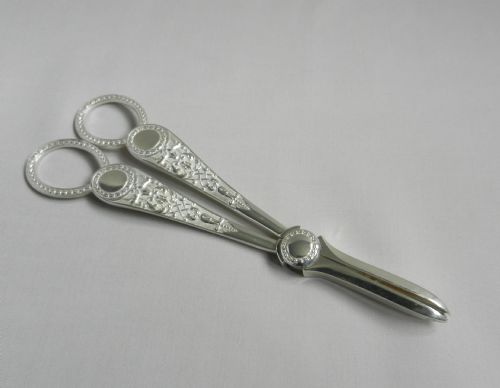
Victorian Fruit Scissors
Victorian fruit scissors are specialised silver and plated dining implements designed for the ceremonial service of grapes at nineteenth-century dessert tables.
Victorian Fruit Scissors
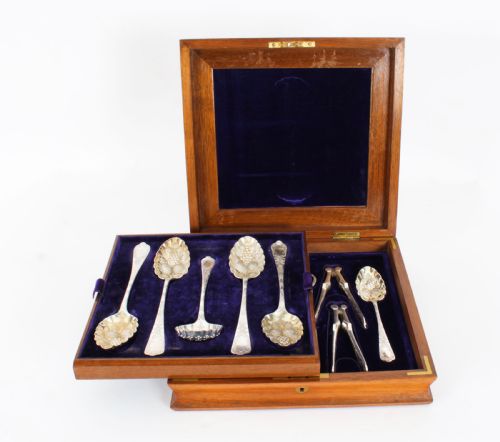
When you search for victorian fruit scissors, you encounter specialised implements intended specifically for severing clusters of grapes at the dining table rather than general utility cutting. The examples appearing on this page span the nineteenth century, including specific dates such as 1872 and 1895 alongside broader Victorian and William IV periods. These pieces often present as grape scissors or grape shears, and occasionally appear within fitted boxes alongside fruit serving sets, spoons, and nutcrackers.
Origins represented in this selection include pieces hallmarked in Sheffield alongside works bearing the marks of prominent silversmiths. You will find both sterling silver and silver plate constructions, sometimes heightened with gold gilt finishes. The historical span covers early Victorian designs through to the closing decades of the nineteenth century.
Materials and manufacture
The primary metal employed for these dining implements is sterling silver, frequently accompanied by silver plate alternatives. Certain examples receive an additional layer of gold gilt to enrich the interior surfaces of the handles or the blades.
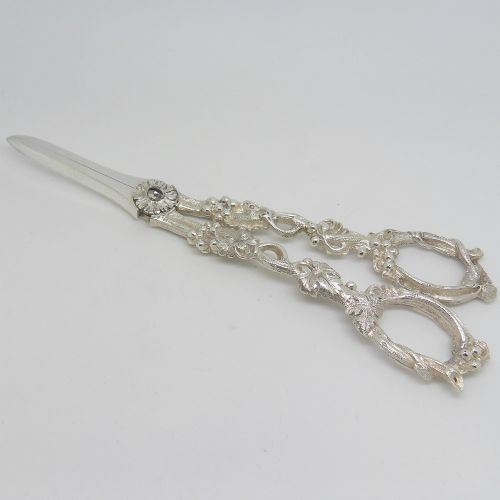
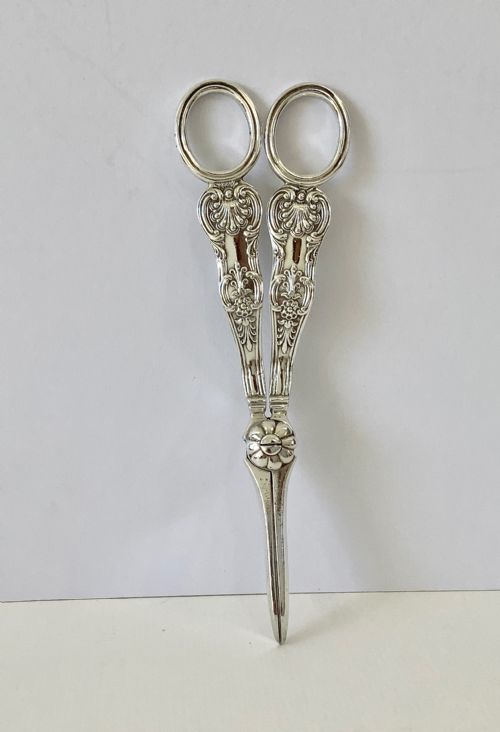
Craftsmen decorated the handles using detailed engraving techniques, often shaping the metal into realistic grape vine motifs that wrap around the finger loops. Production relied on traditional silversmithing methods, combining cast handles with steel-edged blades where necessary for functional cutting.
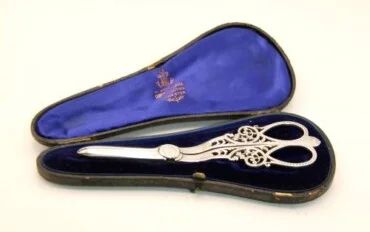
Finer sets required dedicated storage solutions, utilising fitted cases lined with velvet and silk and covered in leatherette to protect the polished metal surfaces from tarnishing and abrasion during storage.
Listings for victorian fruit scissors incorporate pieces dated across the nineteenth century, featuring sterling silver, silver plate, and gold gilt materials.
Assessing quality and execution
Quality in these implements rests upon the crispness of the cast or engraved vine decoration and the overall weight of the metal utilised in the handles. Superior examples display deep, three-dimensional detailing that remains sharp and clear across the entire length of the bows.
The reputation of the maker plays a defining role in distinction, with pieces originating from established workshops commanding greater attention from collectors. Maker marks from prominent silversmiths indicate higher standards of design and more meticulous finishing of the metal surfaces.
The presence of the original fitted case lined in silk and velvet elevates the standing of a set, particularly when the interior contours match the silhouette of the scissors and associated cutlery precisely.
Goldsmiths & Silversmiths Co·Gibson & Langman·Paul Storr·Chawner & Co·Reilly & Storer·Hukin & Heath
The Victorian Fruit Scissors Glossary
- Sterling silver
- A standard alloy consisting of silver and other metals, predominantly copper, ensuring durability while maintaining a high purity level. This material forms the primary body of many higher-quality nineteenth-century dining implements.
- Silver gilt
- Sterling silver that has been coated with a thin layer of gold, often applied to the interior bowls or blades for decorative contrast. This finish adds a warm, luminous tone to the worked metal.
- Hallmark
- An official stamp applied to precious metal items to indicate the standard of purity, the place of assay, and the maker. These marks provide essential evidence for dating nineteenth-century silver.
- Grape shears
- An alternative term for grape scissors, featuring specialised long handles and short blades designed for severing fruit stems. They form a distinct category within Victorian dining silver.
- Leatherette
- A simulated leather material used to cover protective presentation cases during the Victorian period. It often houses boxed fruit sets alongside silk and velvet linings.
Victorian Fruit Scissors: Frequently Asked Questions
What are Victorian fruit scissors used for?
These implements were specifically designed to cut small clusters of grapes from a larger bunch at the nineteenth-century dessert table. Using dedicated scissors prevented guests from having to handle the fruit directly with their fingers.
They formed part of the formal dining ritual, often presented alongside fruit knives and forks in matched sets. The long handles allowed the user to reach into deep crystal or ceramic fruit bowls with ease.
How do I identify the date of grape scissors?
Dating relies heavily upon the stamped hallmarks found on the metal, which record the assay office and the specific year letter for sterling silver pieces. Stylistic clues such as the depth of the grape vine engraving also help narrow down the period.
Design characteristics shifted from the heavier neoclassical influences of the William IV era towards the more naturalistic ornamentation popular in the later decades of the nineteenth century.
Are silver plated grape scissors authentic?
Silver plate was a common and accepted alternative to solid sterling silver during the Victorian era, particularly for larger dining sets intended for middle-class households. Manufacturers produced durable plated wares that offered the same decorative appeal as solid silver at a different cost level.
Examination of the wear patterns and any underlying base metal exposure helps distinguish plated items from solid silver pieces bearing official assay marks.
How should I store antique grape scissors?
Keeping these implements in a dry environment helps prevent the natural tarnishing process that affects silver over time. If an original fitted case of leatherette, velvet, and silk is present, it provides ideal protection against accidental scratches.
Avoid wrapping silver in ordinary household paper or rubber bands, which can cause chemical reactions and surface discolouration on the metal.