


Vintage Grape Cutters
These vintage grape cutters are purpose-made silver implements designed for slicing fruit at the dining table with proper care.
Vintage Grape Cutters
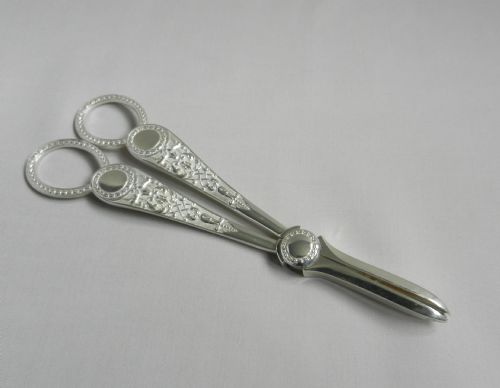
Vintage grape cutters, also known as grape shears or scissors, are specialist tableware items designed to sever small bunches of fruit without bruising the skin or crushing the stem. The pieces available here span from the nineteenth century through the Edwardian era up to the mid-twentieth century, capturing shifts in domestic dining habits over several generations.
How they were made
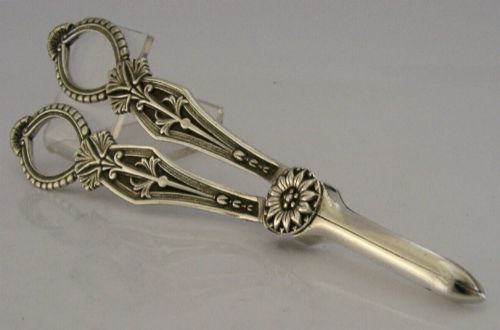
The primary material across these pieces is sterling silver, occasionally finished with silver gilt to provide a richer surface texture and protect the metal from fruit acids. Smiths shaped the handles and blades using traditional metalworking techniques, sometimes incorporating cast decorative motifs or pierced designs into the grips.
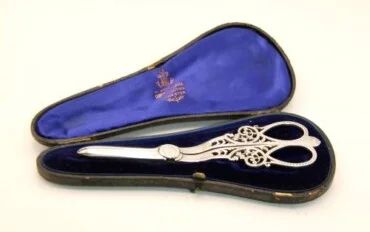
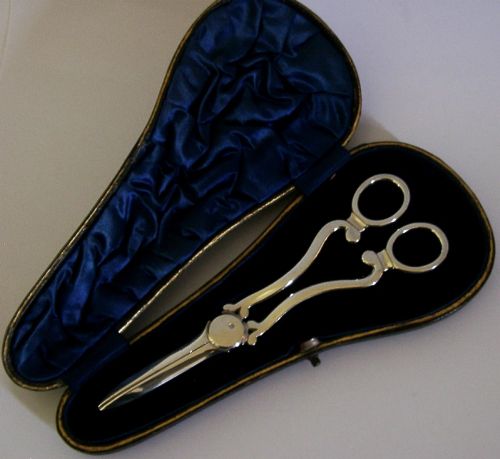
Fitted storage cases utilise protective exterior coverings in leather, leatherette, or similar textiles, paired with internal beds of satin, silk, or velvet to cradle the scissors securely. These presentation boxes reflect the high standards of nineteenth and early twentieth-century retail and craftsmanship.
Listings feature items from the Victorian, Edwardian, and William IV periods, executed in sterling silver and silver gilt with textile-lined cases.
What varies in quality
Quality in these implements rests on the weight of the metal and the balance of the handles in the hand, separating utilitarian items from workshop pieces bearing maker marks. Heavier gauges of silver and intricate cast or pierced ornamentation indicate superior manufacturing effort.
The presence of an original fitted case lined in silk or velvet adds significantly to the completeness and desirability of an individual set. Execution of decorative styles, from restrained Victorian curves to elaborate Gothic Revival detailing, dictates the distinction between standard production and exceptional examples.
Charles Reily & George Storer·Paul Storr
The Vintage Grape Cutters Glossary
- Grape shears
- A specialised pair of scissors with short, angled blades used at the dining table for cutting small portions of fruit. They prevent the handling of the main bunch by guests.
- Silver gilt
- Silver that has been coated with a thin layer of gold on its surface. This technique provides a warm golden sheen and offers added resistance to tarnishing from fruit juices.
- Gothic Revival
- An architectural and decorative style popular during the nineteenth century. It draws inspiration from medieval forms, featuring pointed arches, heavy tracery, and ornate surface patterns.
- Fitted case
- A storage box custom-made to house a specific item. These containers usually feature internal contours lined with soft textiles such as velvet, silk, or satin.
Vintage Grape Cutters: Frequently Asked Questions
What are vintage grape cutters used for?
These implements were designed for use at the formal dining table to snip individual clusters of grapes from a larger bunch. Using shears prevented guests from handling the fruit directly with their fingers.
They remained a standard accessory for nineteenth and early twentieth-century dessert service before dining customs shifted toward more casual presentations.
How do I care for silver grape scissors?
Silver implements require gentle cleaning with a specialist silver cloth to remove natural tarnishing without scratching the metal surface. Avoid harsh chemical dips, particularly on pieces with silver gilt or delicate ornamentation.
Store the scissors in a dry environment, preferably within their original fitted case lined with velvet, satin, or silk to protect them from dust and moisture.
How can I tell the period of grape shears?
The style of decoration often provides the clearest indication of age, with ornate Gothic Revival motifs pointing to the nineteenth century and cleaner lines appearing in later Edwardian and mid-century examples. Hallmarks stamped into the silver offer precise clues regarding the year of assay and the workshop of origin.
Examining the materials of any accompanying fitted case, such as leatherette or silk, also helps narrow down the manufacturing era.
Why do some grape scissors have fitted cases?
Many nineteenth and Edwardian silver items were retailed as presentation pieces or luxury wedding gifts housed in protective boxes. These cases feature internal mouldings lined in materials like velvet or satin to hold the blades firmly in place.
Survival of the original leather or leatherette case indicates that the item has been carefully kept together since its original purchase.