


Grand Tour Souvenir Urn
A grand tour souvenir urn brings the architectural triumphs and classical sculptures of Italy directly onto the nineteenth-century mantelpiece.
Grand Tour Souvenir Urn
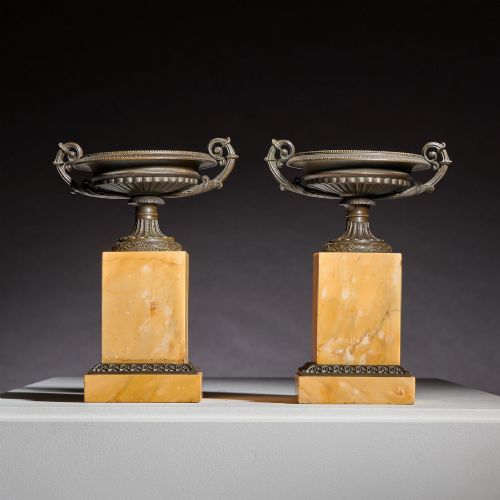
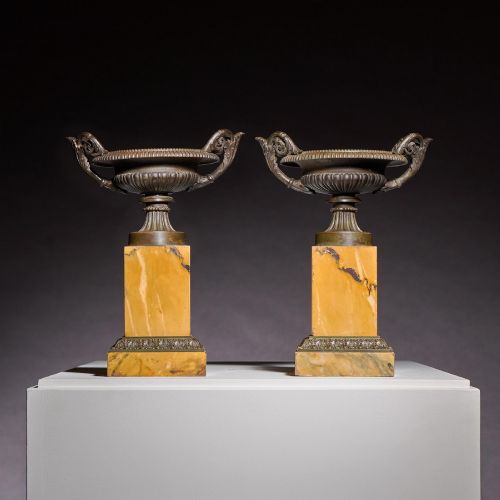
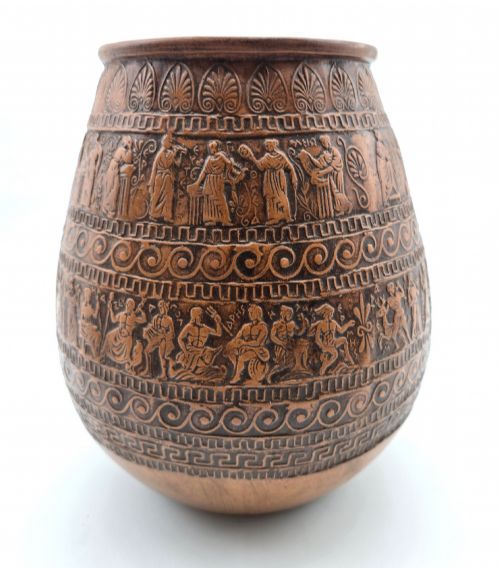
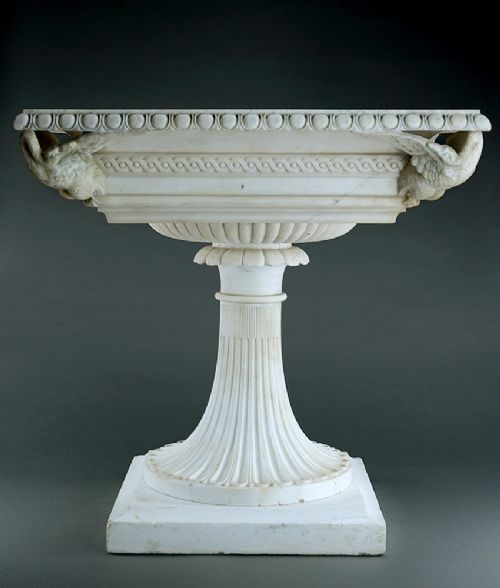
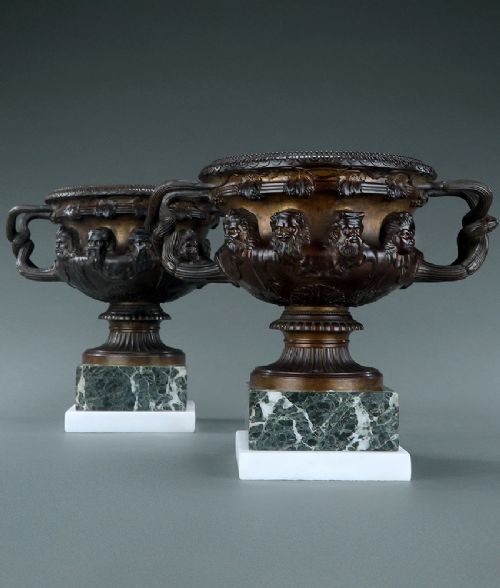
A grand tour souvenir urn is a decorative vessel, tazza or reduction modelled on classical antiquities encountered by travellers abroad during the nineteenth century. These objects include miniature bronze vases, marble tazzas, and campana urns designed to commemorate visits to historic European sites.
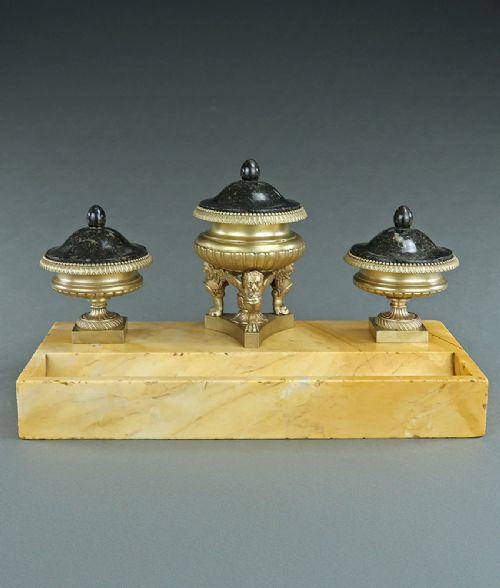
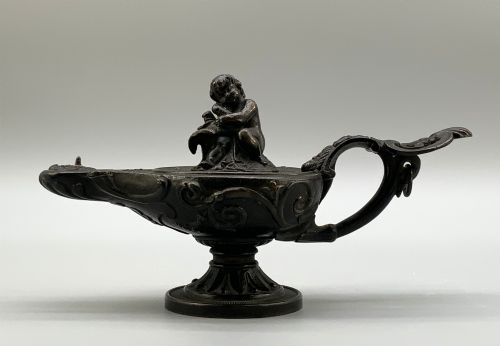
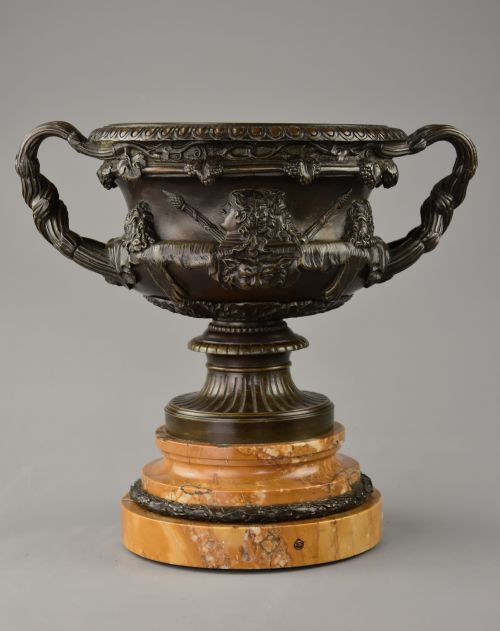
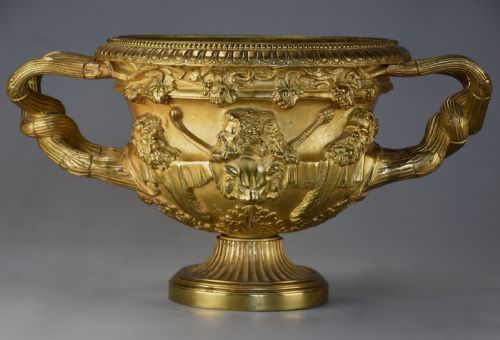
Pieces originating from this tradition frequently draw upon celebrated ancient prototypes such as the Warwick Vase or the Albani Vase. They span forms ranging from inkwells and oil lamps to monumental marble vessels set upon distinct pedestal bases.
The materials reflect the eclectic tastes of Victorian collectors, combining natural stones with cast metals to recreate the appearance of excavated ruins. Surviving examples demonstrate the nineteenth-century desire to domesticate ancient sculptural forms for refined domestic interiors.
How They Were Made
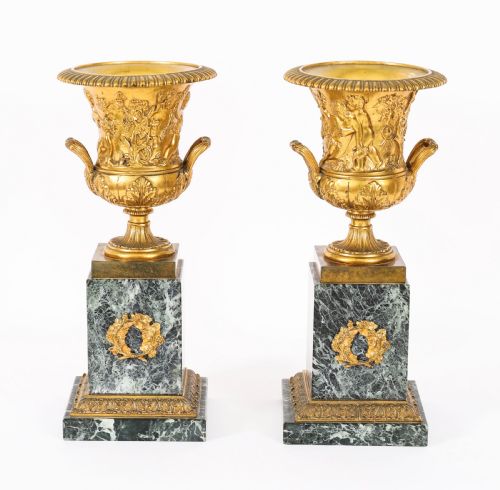
Foundry workers produced the metal components using traditional lost-wax or sand-casting methods to achieve detailed reductions of classical monuments in bronze, brass, and gilt bronze. Artisans then applied patination or gilding to simulate the aged surfaces of excavated antiquities.
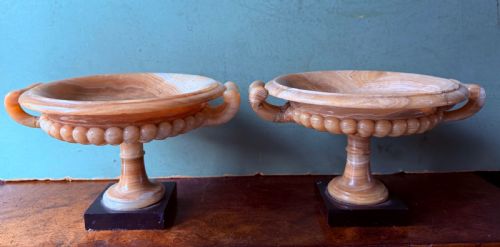
Stone carvers shaped native and exotic minerals including alabaster, Siena marble, green marble, and serpentine on lathes or by hand. These turned stone bodies were frequently mounted onto contrasting black or coloured marble plinths to provide structural stability.
The material record shows extensive use of Italian mineral specimens including alabaster, Siena marble, and green serpentine.
What Varies in Quality
The definition and crispness of the cast ornamentation distinguish superior bronzes from ordinary commercial souvenirs. Master founders captured subtle relief details in handles, friezes, and classical figures, whereas lesser pieces exhibit softer contours and visible seam lines.
Selection of raw materials heavily dictates the standing of a stone vessel, with finely figured alabaster and rich Siena marble commanding greater visual presence. The precision of the turning and the harmonious integration of metal mounts with stone bases further separate workshop standards.
The Grand Tour Souvenir Urn Glossary
- Tazza
- A shallow saucer-like dish or cup mounted on a stem and foot, commonly produced in marble or bronze during the nineteenth century. These decorative vessels were modelled closely after classical drinking vessels.
- Campana Urn
- A bell-shaped vessel with sweeping handles, derived from ancient Roman garden vases. This form is frequently encountered in patinated bronze among nineteenth-century cabinet pieces.
- Reduction
- A scaled-down copy of a famous monumental sculpture or architectural antiquity. Foundries created these reduced versions to allow travellers to transport classical art home.
- Ormolu
- Gilt bronze produced by applying a mercury-gilding amalgam to cast brass or bronze. The technique yields a rich, warm golden surface finish seen on nineteenth-century mounts.
- Serpentine
- A compact magnesium silicate mineral exhibiting a mottled green appearance resembling snake skin. It was prized by lapidaries for turning decorative vases and tazze.
Grand Tour Souvenir Urn: Frequently Asked Questions
What is a grand tour souvenir urn?
A grand tour souvenir urn is a nineteenth-century decorative object modelled after ancient Greek and Roman antiquities. Travellers purchased these miniature bronzes and marble vessels as mementos of their travels across Europe.
These pieces typically replicate famous archaeological finds seen in Italian museums and excavation sites. They served as scholarly ornaments for libraries, studies, and drawing rooms.
How were these urns used?
These vessels functioned primarily as decorative ornaments intended to display classical taste and education in Victorian homes. Some forms, such as tazzas and campana urns, also served as small floral vases or posy holders.
Other variations incorporated functional elements like inkwells or oil lamps while retaining their classical architectural silhouette. They were positioned prominently on mantelpieces, pedestals, and library tables.
How do I identify the materials?
Makers utilised a combination of cast metals and turned decorative stones to replicate ancient artefacts. Bronze and brass provided durable foundations for detailed figural friezes and handles.
Stones such as alabaster, Siena marble, and malachite were turned on lathes to form smooth bodies and pedestals. Examining the weight, coldness to the touch, and natural veining helps differentiate genuine mineral compositions from synthetic substitutes.
How can I date these pieces?
Dating relies upon stylistic markers and the manufacturing techniques visible in the metal casting and stone turning. The majority of these souvenir items originate from the nineteenth century, aligning with the peak of European travel and classical revival movements.
Patination styles, mounting hardware, and the specific marble types used for plinths offer further clues to chronology. Pieces referencing specific exhibitions or dated archaeological discoveries provide helpful benchmarks.