


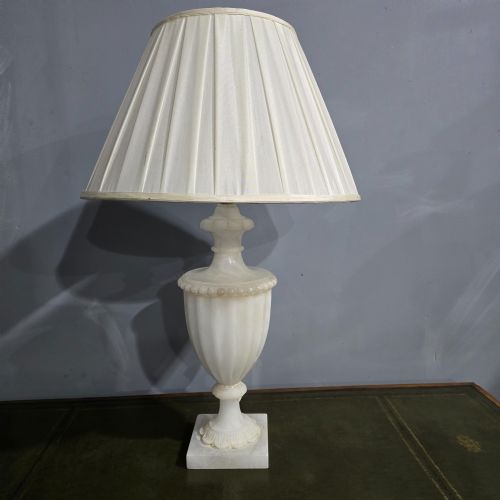

Carved Stone Urns
These carved stone urns bring architectural gravity to a room or garden, shaped from classical prototypes by generations of masons.
Carved Stone Urns
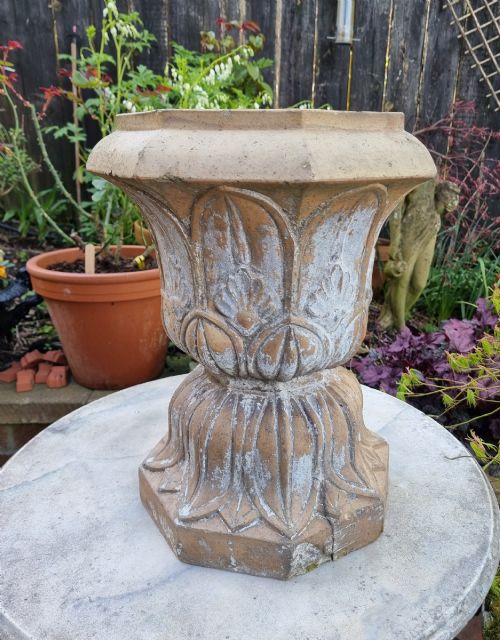
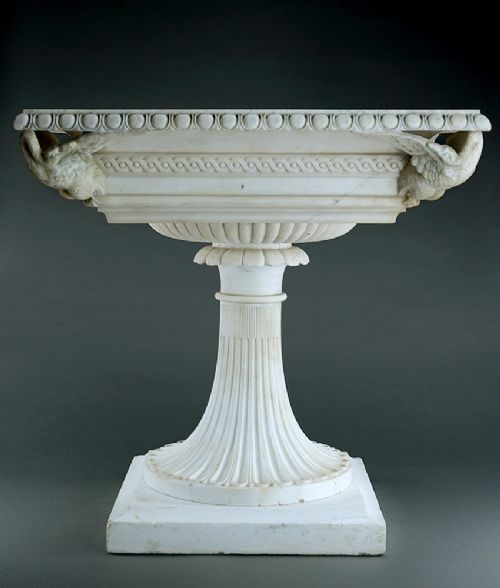
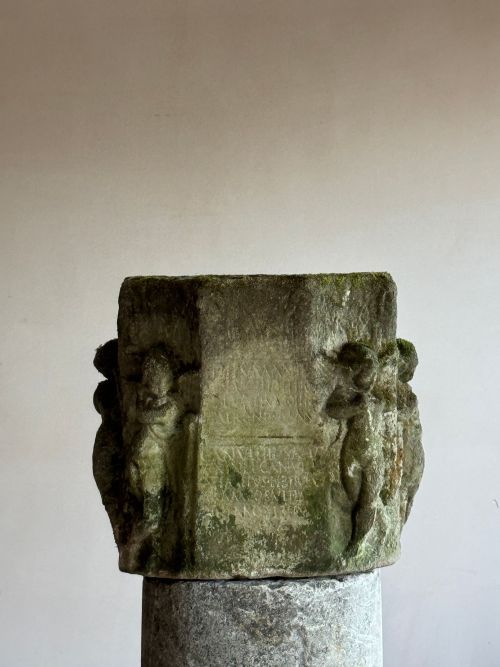
When buyers search for carved stone urns, they encounter a range of forms spanning indoor decorative objects and garden ornaments. The selection draws heavily on nineteenth-century Grand Tour souvenirs, classical revival pieces, and heavier garden planters from the Victorian and Edwardian eras.
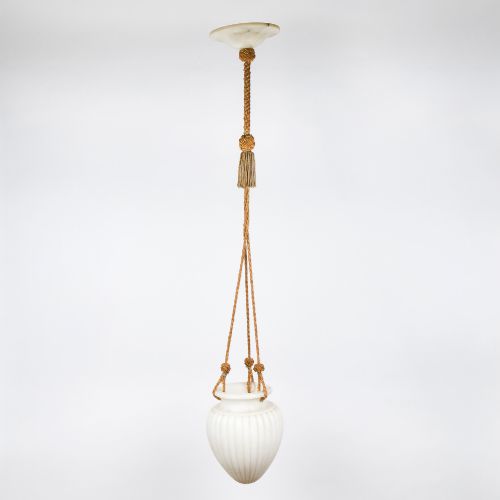
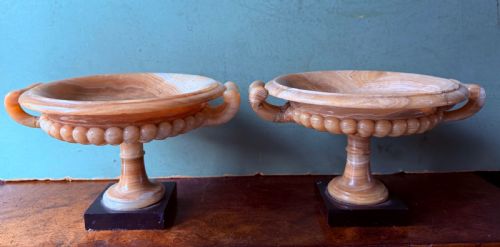
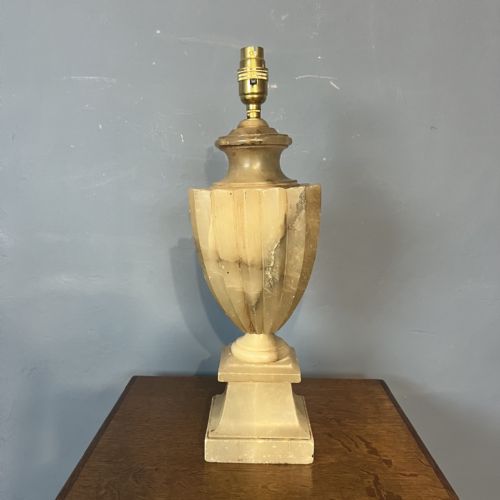
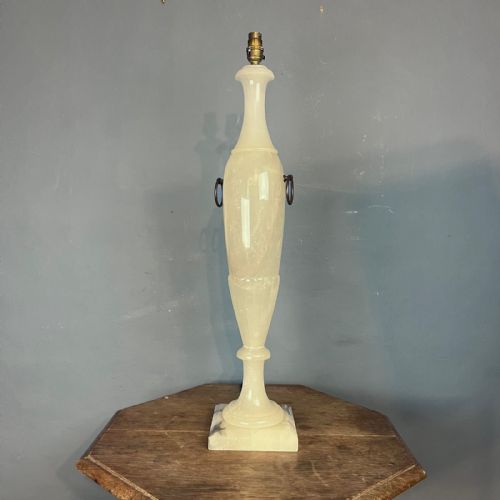
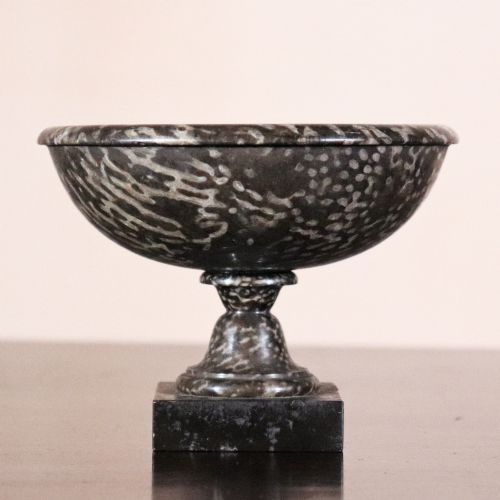
Indoor examples often take the form of alabaster table lamps, tazzas, and smaller decorative vessels, while outdoor variants utilise durable cast stone, limestone, and terracotta. These objects echo antiquity, channeling Neoclassical and Italian Renaissance design principles into domestic and landscape settings.
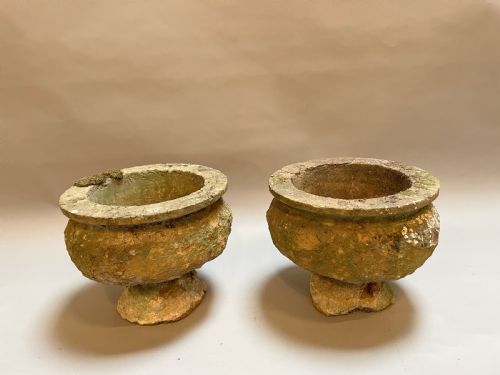
Many of the pieces recorded here date from the nineteenth and early twentieth centuries, reflecting a sustained period of classical revival interest. Buyers will find both diminutive mantel ornaments and substantial garden vessels designed to weather the elements.
How they were made
Masons shaped these vessels from materials such as alabaster, marble, limestone, and cast stone, using hand chisels and lathes to achieve precise classical profiles. Softer stones allowed for intricate detailing on tazzas and lamps, while harder marbles provided smooth surfaces for Grand Tour souvenirs.
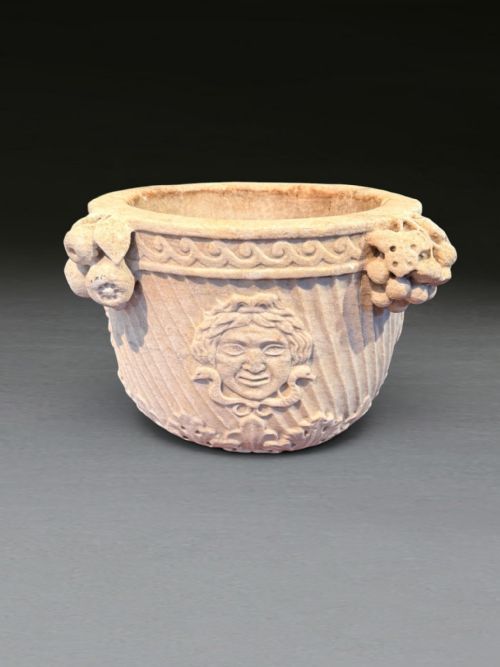
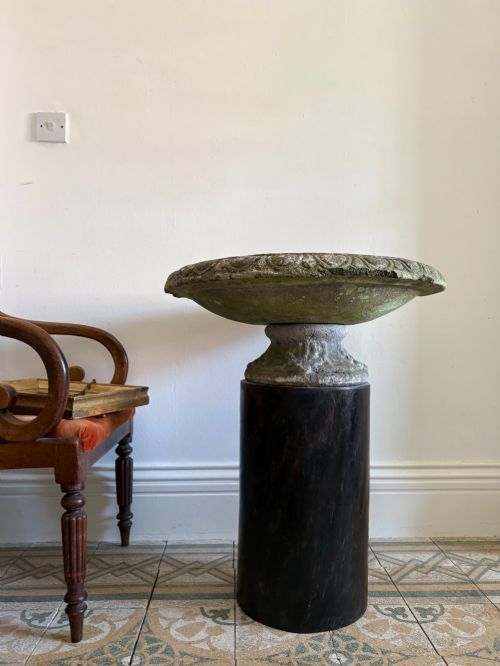
Outdoor forms frequently employ cast stone, terracotta, or weathered limestone designed to withstand exposure. The construction balances structural heft with ornamental carving, often incorporating separate bases and plinths to elevate the main vessel.
One extraordinary garden planter was reclaimed using stone salvaged directly from the Houses of Parliament after damage sustained in the Blitz.
What varies in quality
Quality rests in the crispness of the carving and the quality of the mineral substrate, such as heavily figured alabaster or distinct marble varieties like Breccia Medicea and Antico Rosso. Superior pieces exhibit confident proportions and clean lines that stay true to their classical models.
The degree of hand-finishing distinguishes standard production items from exceptional Grand Tour souvenirs and early workshop pieces. Natural patination and weathering on outdoor stone also add character, provided the structural integrity of the vessel remains sound.
The Carved Stone Urns Glossary
- Tazza
- A shallow bowl or vase set on a pedestal foot, frequently encountered in carved alabaster and marble.
- Grand Tour
- A cultural journey undertaken by nineteenth-century travellers who acquired souvenir antiquities and classical copies.
- Campana Urn
- A bell-shaped vessel with a flared rim and foot, originating in classical pottery and translated into stone.
- Alabaster
- A soft, fine-grained stone used for interior lamps and vases, prized for its translucency.
- Pietra Dura
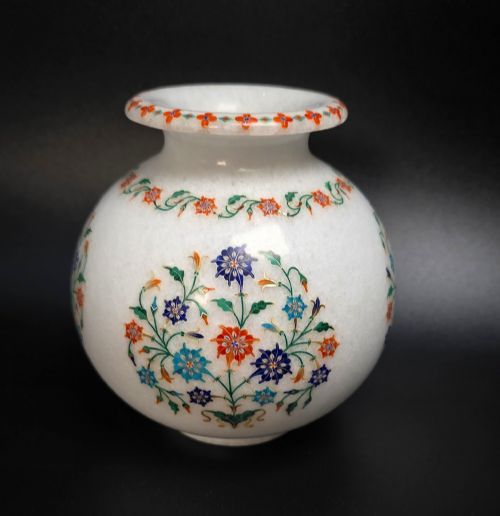
- An inlay technique utilising polished coloured stones to create geometric or floral designs on marble.
Carved Stone Urns: Frequently Asked Questions
Where should I place a stone urn?
Indoor alabaster and marble versions suit table lamps or mantel displays, while limestone and cast stone pieces belong in gardens or hallways.
Heavier garden planters require solid footings to support their weight safely over time.
How do I care for alabaster urns?
Alabaster is a soft and water-sensitive stone, so it requires dusting with a dry cloth rather than wet cleaning.
Keep these indoor pieces away from direct moisture and damp environments to protect the polished surface.
What is a Grand Tour urn?
These are nineteenth-century souvenirs carved in Italy for travellers visiting classical ruins and museums.
They scale down ancient architectural forms into cabinet-sized alabaster or marble tazzas and vases.
How can I tell cast stone from natural stone?
Cast stone is composed of aggregate and binder moulded into shape, often showing uniform texture and weathering.
Natural stone reveals natural veining, mineral inclusions, and the distinct tool marks of the mason.