





Neoclassical Alabaster Urn
A neoclassical alabaster urn brings the disciplined symmetry of antiquity into a room, offering tactile, softly translucent stone shaped after classical models.
Neoclassical Alabaster Urn
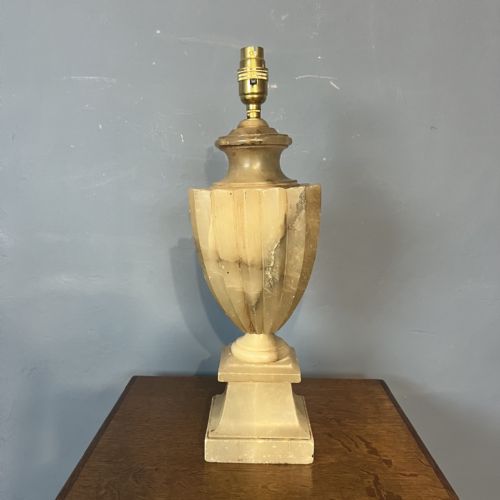
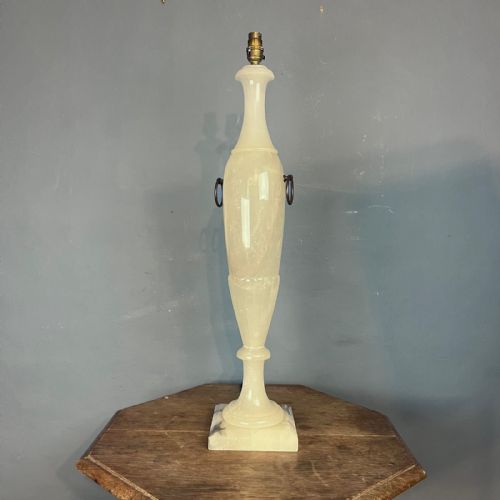
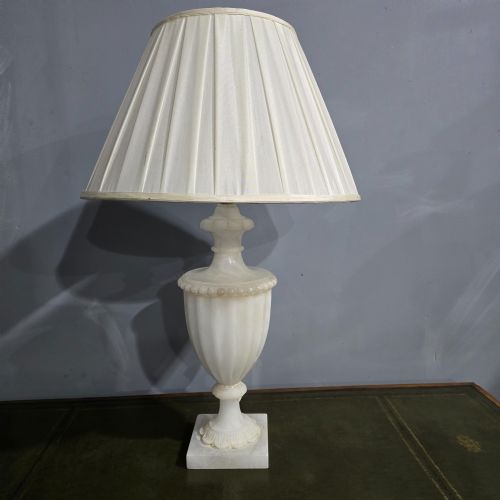
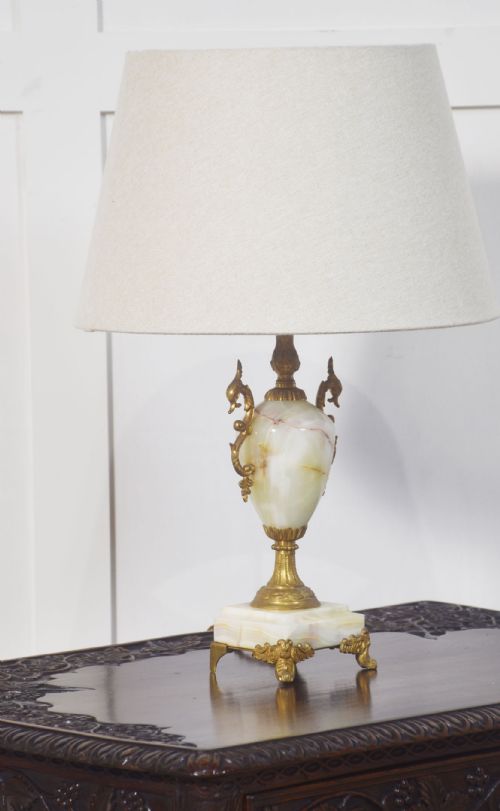
A neoclassical alabaster urn represents the enduring appeal of classical antiquity, frequently encountered here as decorative vessels, Grand Tour souvenirs, or converted table lamps. These pieces draw upon ancient Greek and Roman forms, translating architectural dignity into domestic objects.
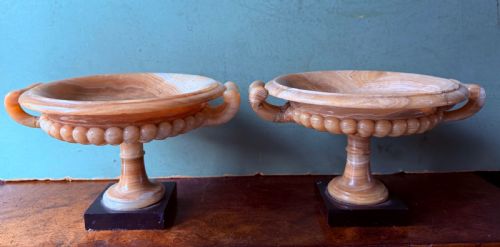
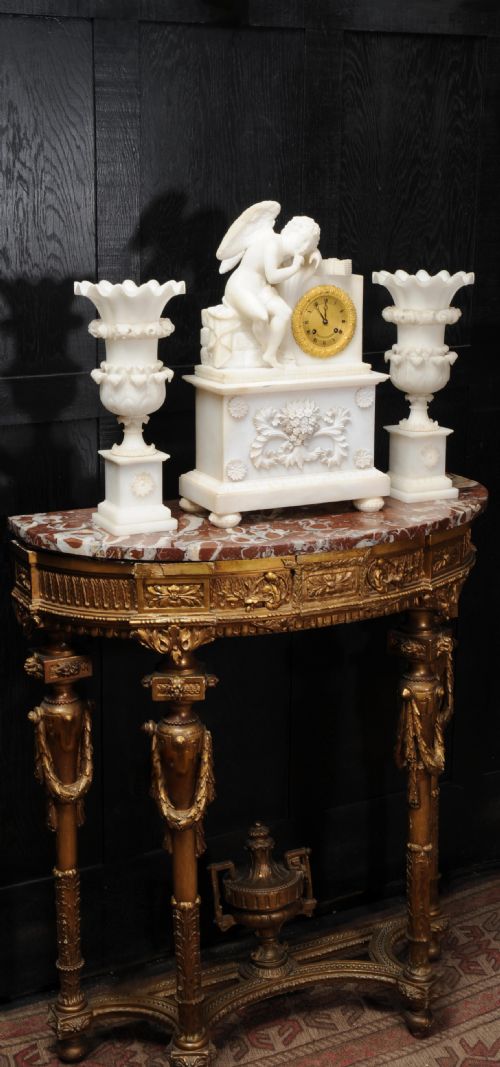
The selection ranges from nineteenth-century Grand Tour souvenirs and Victorian mantel clocks to twentieth-century iterations, including Edwardian and Art Deco table lamps. Buyers will frequently find pairs of carved tazze, classical design vases, and monumental lamps executed in pale stone.
Originating largely from Italian workshops catering to travellers and collectors, these objects combine functional utility with sculptural presence. They bridge the gap between ancient inspiration and nineteenth- or twentieth-century interior decoration.
How They Were Made
Carved from natural stone, these pieces rely on the softness of alabaster and marble, which allows artisans to achieve deep relief and smooth, rounded profiles. Many incorporate contrasting materials such as brass, gilt bronze, and metal mounts to secure the stone elements and accentuate the classical lines.
Lamps and clocks integrate electrical or mechanical workings into the carved body, sometimes pairing the stone with fabric or velvet shades. The stonework itself demonstrates skilled turning and hand-finishing, capturing the highly-figured grain of the mineral.
The listings span the nineteenth and twentieth centuries, incorporating Victorian, Edwardian, and Art Deco periods.
What Varies in Quality
Quality rests in the crispness of the carving and the liveliness of the stone's natural figuring, which separates ordinary turned cylinders from deeply sculpted, expressive forms. The subtlety of the polish and the weight of the material dictate the visual depth of the object.
The integration of metal mounts, whether brass or gilt bronze, also distinguishes superior examples, showing precision in casting and a secure fit against the stone body. Proportion and adherence to classical proportions govern the overall elegance of the piece.
James Ritchie And Son
The Neoclassical Alabaster Urn Glossary
- Alabaster
- A fine-grained, translucent stone prized for its softness and ability to take a smooth polish. It transmits light gently, making it particularly popular for lamps and decorative vessels.
- Grand Tour
- A nineteenth-century tradition where wealthy travellers collected souvenirs across Europe, particularly Italy. These objects often replicated ancient sculpture or architecture in miniature.
- Tazza
- A shallow cup or bowl set upon a stem and foot, originating in classical antiquity. They were frequently produced as decorative ornaments during the nineteenth century.
- Neoclassical
- A style spanning the eighteenth and nineteenth centuries that revived the motifs and proportions of ancient Greece and Rome. It emphasises straight lines, symmetry, and classical restraint.
- Gilt Bronze
- Bronze metal coated with a thin layer of gold, providing a durable and decorative metallic finish. It often appears as mounts on stone clocks and lamps.
Neoclassical Alabaster Urn: Frequently Asked Questions
How do I care for alabaster?
Alabaster is a soft and water-soluble stone, meaning it requires gentle dusting with a dry, soft cloth rather than liquid cleaners. Keeping these pieces away from moisture and direct heat preserves the polished surface.
Because the stone is porous, oils from the skin can mark the surface over time. Handling them with clean hands ensures the natural translucency remains clear.
Were these originally lamps?
Many alabaster table lamps began life as decorative urns or vases before being converted for lighting in the twentieth century. The conversion process often involved drilling the stone or fitting mounts to house electrical wiring.
Unconverted nineteenth-century examples retain their solid stone interiors without electrical fittings. Examining the base and internal mounts usually reveals whether the lighting function is later than the stone body.
How do I distinguish nineteenth-century pieces?
Nineteenth-century examples, particularly those associated with the Grand Tour, often feature high-figure carving and specific Italian labelling or grey marble bases. They tend to display hand-turned precision combined with the heavier patination expected of earlier stone.
Later twentieth-century versions, such as Edwardian or Art Deco pieces, often show simpler silhouettes or standardised mounting hardware. Comparing the depth of the carving helps separate earlier souvenir pieces from later revivals.
Where were these pieces made?
The majority of nineteenth-century carved alabaster pieces originated in Italy, particularly around stone-working centres like Volterra, which supplied the European tourist market. Artisans there utilised local quarries to produce copies of classical antiquities.
Clock sets and mounted items were also assembled in France and Britain, utilising imported Italian stone alongside domestic metalwork. This international collaboration defined much of the production across the Victorian period.