

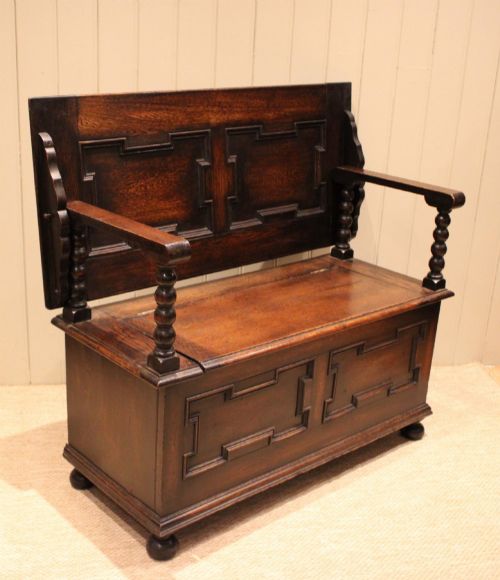
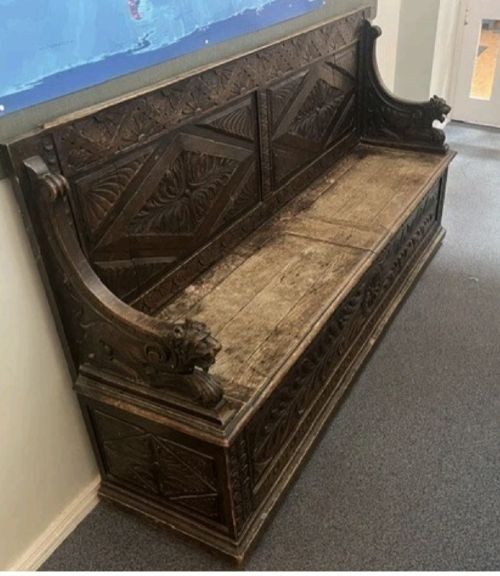
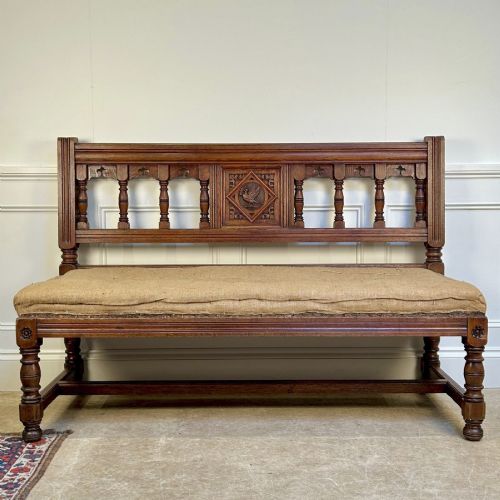
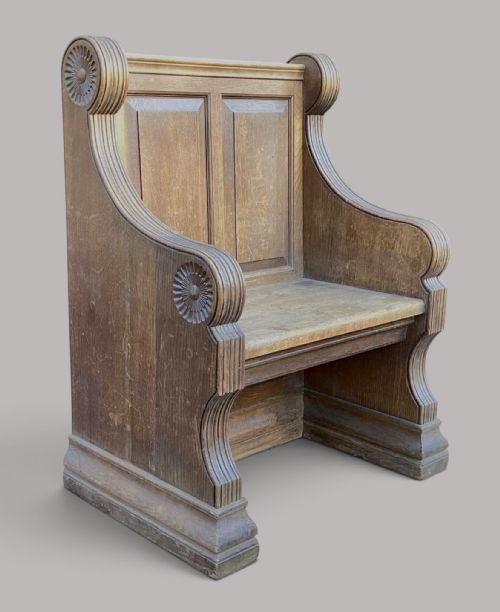




Gothic Wooden Settle
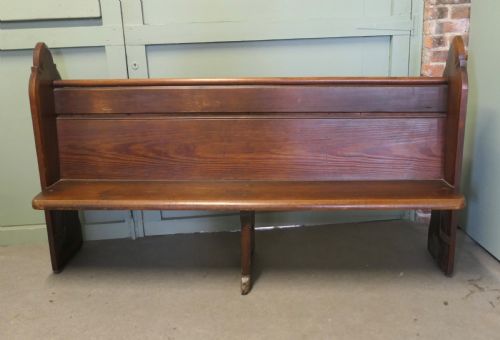
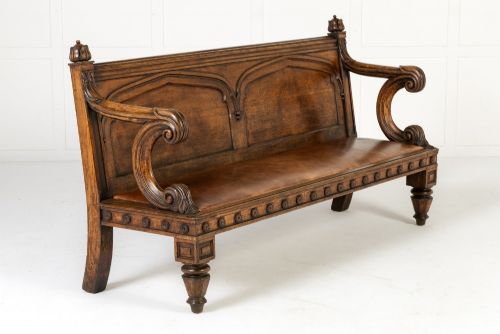
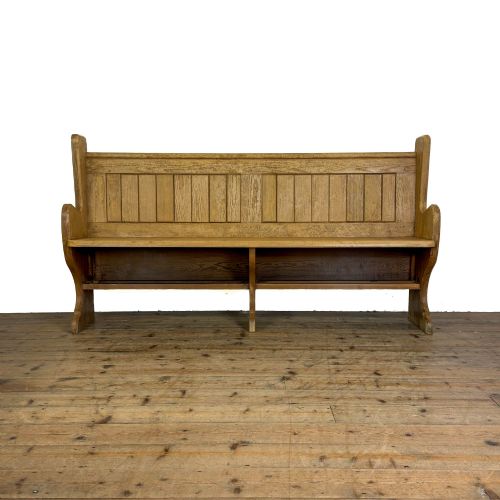
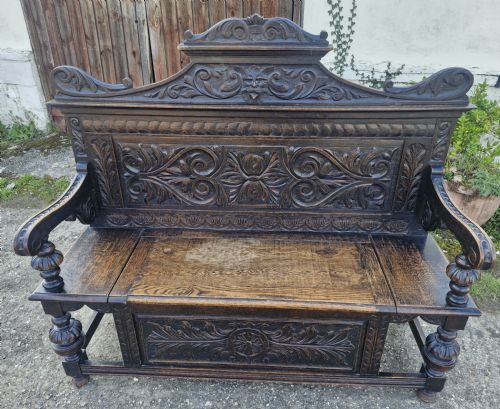
These gothic wooden settle examples bring imposing architectural presence and dark timber character to an entrance hall.
Gothic Wooden Settle
A gothic wooden settle is a substantial seating form designed with high backs and solid panel construction, originating primarily in the nineteenth century during the Victorian Gothic Revival movement. These pieces frequently manifest as hall benches, church pews, and monks benches intended for large reception spaces.
Buyers meeting this search phrase encounter numerous examples fashioned from solid oak, pitch pine, and walnut, often displaying elaborate architectural carvings. The selection spans straightforward chapel pews to heavily carved Victorian baronial and Arts and Crafts iterations.
Materials and construction methods
Craftsmen built these pieces predominantly using solid oak, pitch pine, and walnut, frequently selecting timbers that accommodated deep linenfold or figural carving. Secondary materials such as iron, brass, and leather appear in structural reinforcements and upholstery elements.
Joinery methods rely on heavy framing, pegged mortise and tenon joints, and three-panelled backrests designed to withstand heavy daily use in ecclesiastical and domestic settings.
Gothic Wooden Settle Retail Price Guide 2026
Typical asking prices for gothic wooden settle among the pieces listed under this phrase on Sellingantiques today, from the lower quarter to the upper quarter. They describe what is for sale here now, not the wider market.
A few resilient souls occasionally squeeze a massive medieval-style bench into a tiny modern hallway just to watch guests gasp.
Determining quality in a settle
Quality rests upon the crispness and depth of the architectural carving, particularly on high-backed panels and arm supports, where skilled hands distinguished bespoke commissions from simpler vernacular pews. The integrity of the timber, whether figured oak or clean pitch pine, dictates the physical presence of the piece.
Proportion and scale separate standard church seating from monumental reception hall settles, with superior examples exhibiting well-balanced architectural forms and intact original patination across the wood surfaces.
GIllows
The Gothic Wooden Settle Glossary
- Settle
- A wooden bench with a high back, solid arms, and often a box base, designed to block cold draughts in large halls. This form has centuries of history in British domestic interiors.
- Monks Bench
- A convertible furniture form featuring a hinged top that folds down to transform the high-backed seat into a table. These pieces became particularly popular during the Victorian period.
- Gothic Revival
- An architectural and design movement drawing inspiration from medieval ecclesiastical styles, characterised by pointed arches, tracery, and heavy carved ornamentation. This aesthetic dominates the nineteenth-century examples found here.
- Pitch Pine
- A dense, resinous softwood utilised extensively in nineteenth-century ecclesiastical joinery and church pews. It provides a distinct grain pattern and considerable structural durability.
Gothic Wooden Settle: Frequently Asked Questions
Where should I place a settle?
These pieces suit large entrance halls, boot rooms, or long corridors where their high backs provide a striking architectural anchor. They function effectively as primary seating areas in spacious period properties.
Ensure adequate wall clearance for the high panelled backs before positioning the furniture in domestic settings.
How do I identify a Victorian Gothic piece?
Look for characteristic design motifs including pointed arches, linenfold panelling, quatrefoils, and heavy carved ornamentation. The presence of dark stained oak or pitch pine further points towards nineteenth-century revival craftsmanship.
Construction details like machine-sawn timber or modern fixings indicate later dates or subsequent restorations.
Are church pews different from hall settles?
Church pews generally lack the integrated solid arms and high panelled end settles typical of domestic hall seating. Pews were constructed in long runs for ecclesiastical use rather than standalone reception rooms.
Many church pews were later shortened or adapted for domestic hallway placement during the nineteenth century.
How do I care for antique oak furniture?
Maintain the wood by applying traditional beeswax sparingly and buffing gently with a soft cloth to preserve the natural lustre. Avoid placing timber pieces near direct heat sources or strong sunlight to prevent splitting.
Dust intricate carvings regularly using a soft bristle brush to prevent dirt accumulation in the recessed areas.