
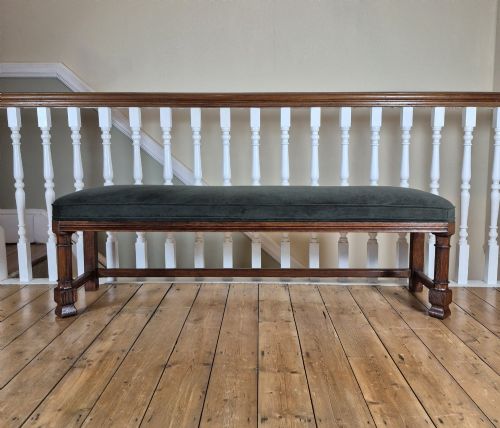


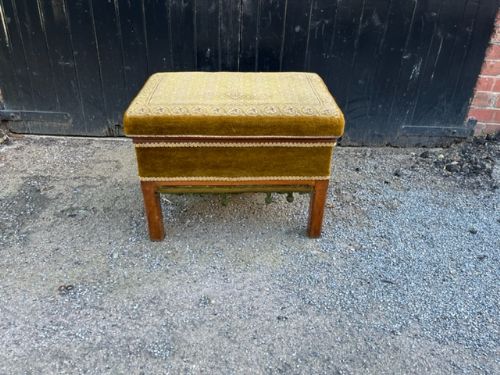


Gothic Upholstered Bench
A gothic upholstered bench brings heavy timber and rich textiles together, offering a sturdy seat rooted in revivalist design.
Gothic Upholstered Bench
A gothic upholstered bench combines solid structural timber with padded textile seating, drawing upon historical revivalist aesthetics. These pieces typically take the form of hall benches, window seats, or settles intended for prominent placement in corridors and reception rooms.
Most examples found here date from the nineteenth century, spanning early Victorian production through to the later decades of the century. Oak and walnut serve as the primary woods, often decorated with carving that reflects architectural motifs of the period.
Makers of the era drew heavily on medieval design principles, reinterpreting ecclesiastical and domestic forms for contemporary Victorian interiors. The resulting furniture balances functional seating with a distinct decorative presence.
Materials and construction
Construction relies heavily on durable hardwoods such as oak, walnut, and occasional burr elm, joined using traditional cabinetmaking techniques to ensure stability. Timber surfaces are often heavily carved with linenfold panels, tracery, or figural details.
Upholstery incorporates period textiles including velvet, leather, and woven fabrics, secured over padded foundations. Brass details and turned elements sometimes supplement the main wooden framework, particularly on seating from the later Victorian period.
Understanding quality in these pieces
Quality rests upon the crispness of the timber carving and the architectural proportion of the frame. Pieces that demonstrate deep, confident hand-carving and careful selection of figured woods stand apart from simpler utilitarian items.
The integrity of the structural joinery and the appropriateness of the textile selection dictate the overall standard. Superior examples maintain a harmonious balance between the heavy gothic woodwork and the upholstered elements.
Awn Pugin
The Gothic Upholstered Bench Glossary
- Gothic Revival
- A nineteenth-century design movement that revived medieval architectural forms, pointed arches, and heavy ornamentation in furniture and buildings. This style heavily influences the proportions and decorative schemes of these benches.
- Reformed Gothic
- A later nineteenth-century iteration of gothic design that favoured simplified construction, structural honesty, and planar surfaces over heavy historicist carving. It represents a more rationalized approach to medieval revivalism.
- Settle
- A high-backed wooden bench with solid arms and often a storage compartment beneath the seat, designed to keep out drafts. In gothic contexts, these feature panelled backs and architectural crestings.
- Burr Elm
- A highly figured timber burl showing swirling grain patterns, prized for small decorative panels and accent areas on nineteenth-century seating. It adds visual texture to plain oak and walnut structures.
- Prie Dieu
- A devotional chair featuring a low seat and a tall, padded kneeling rail designed for private prayer. These pieces frequently appear in nineteenth-century ecclesiastical and domestic revival interiors.
Gothic Upholstered Bench: Frequently Asked Questions
Where should I place a gothic upholstered bench?
These benches suit long hallways, wide landings, or beneath large windows where their architectural frames can anchor the room. Their substantial wooden construction requires adequate floor space to look balanced.
Keep them away from direct heat sources to protect the historic timber and textile upholstery from drying out or fading over time.
How do I care for the wood and upholstery?
Dust the carved wooden frames regularly with a dry cloth and apply a traditional beeswax polish sparingly to nourish the oak or walnut. Avoid modern silicone sprays that can damage older finishes.
Vacuum upholstered velvet or fabric gently using a soft brush attachment to lift surface dirt without abrading the textile fibres.
Are these benches comfortable for daily use?
Nineteenth-century seating priorities often favoured upright posture and structural presence over modern lounging comfort. The padded seats provide firm support rather than deep cushioning.
They function best as places to sit briefly while putting on shoes or as architectural focal points within a room.
How can I tell the period of a gothic bench?
Examine the timber preparation, tool marks on concealed surfaces, and the specific style of the gothic revival ornament. Mid-nineteenth-century pieces often display heavier ecclesiastical detailing, while later examples incorporate aesthetic movement or reformed gothic influences.
Wear patterns on the wood and the construction methods used for the frame joints also help indicate nineteenth-century manufacture.