




Oak Padded Footstool
These oak padded footstools span centuries of craftsmanship, offering practical comfort and rich timber character to any interior.
Oak Padded Footstool
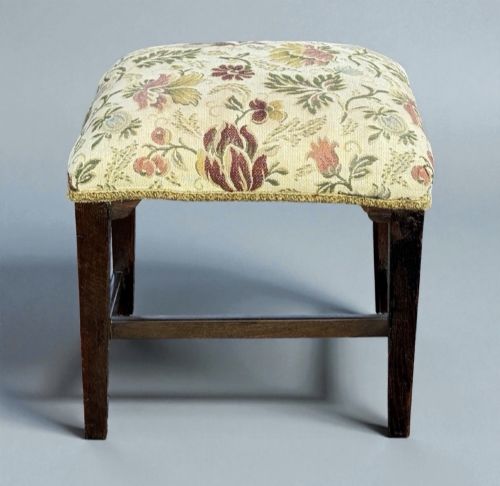
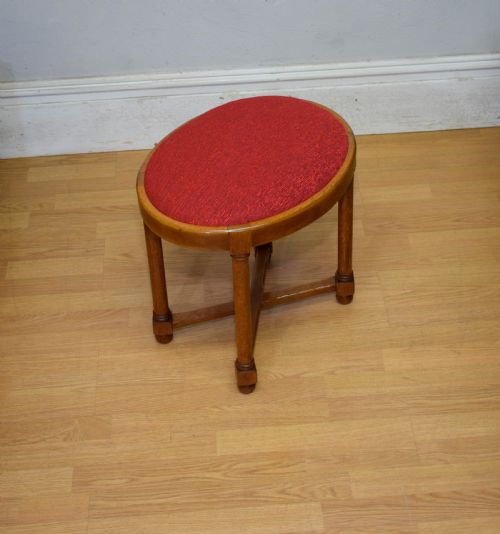
An oak padded footstool brings together solid timber and upholstered comfort across several distinct periods, including the Georgian era, the Edwardian period, and the seventeenth century. These pieces function as low seating or rests, often appearing with joined frames, turned legs, or carved details.
The versions most commonly met on this page range from simple joint stools fitted with pads to elaborate revival pieces displaying Gothic, Jacobean, or Arts and Crafts influences. Makers utilised sturdy native timber alongside various textiles, leather, and velvet to finish the tops.
Examples stretch from early seventeenth century forms through to twentieth century interpretations, demonstrating how domestic seating evolved while retaining oak as the primary structural material. Each piece reflects the aesthetic preferences of its decade, from spare Arts and Crafts lines to ornate revival carving.
Materials and construction
Makers constructed the frames using solid oak, frequently employing traditional joinery techniques such as mortise and tenon joints to ensure stability. Timber surfaces were often polished, waxed, or carved to highlight the grain and figure of the wood.
Upholstery methods varied from early stuffed pads secured with brass tacks to later sprung or webbed tops covered in leather, velvet, linen, or tweed. Secondary materials like walnut and brass occasionally appear in stretchers, fittings, or decorative hardware.
Listings span multiple eras from the seventeenth century through to the Edwardian period, incorporating oak, leather, velvet, and brass.
Distinctions in quality
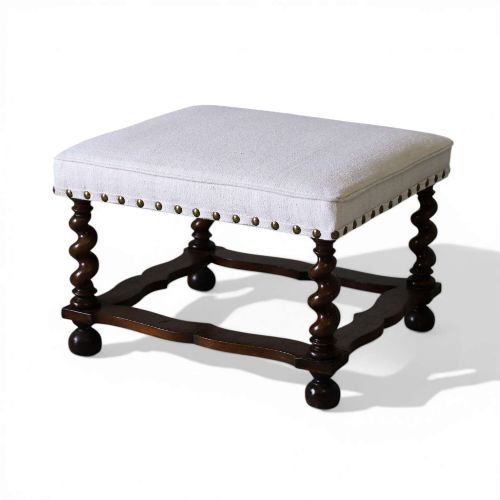
The standard of an oak padded footstool depends largely on the crispness of the timber carving, the integrity of the original joints, and the appropriateness of the upholstery materials used for its period. Finer examples display well-proportioned turnings, such as barley-sugar legs, and retain substantial portions of their early or original framing.
Construction details like pegged joints and high-grade timber selection elevate certain pieces above simpler utility items. The integration of period-appropriate textiles and careful attention to structural proportion separate exceptional examples from standard workshop production.
The Oak Padded Footstool Glossary
- Joint stool
- A sturdy wooden stool constructed with pegged mortise and tenon joints rather than turned legs alone. These pieces served versatile domestic purposes in early households.
- Barley-sugar twist
- A form of woodturning resembling a spiralling rope or barley sugar stick. This decorative technique appears frequently on seventeenth century and revival leg supports.
- Oyster veneer
- Slices of branch wood cut transversely to reveal circular patterns resembling oyster shells. This decorative veneering technique enhances stretcher and panel surfaces.
Oak Padded Footstool: Frequently Asked Questions
What periods do these footstools come from?
The selection includes pieces originating from the seventeenth century, the Georgian era, and the Edwardian period, alongside various revival styles from the nineteenth and twentieth centuries.
Each period imparts distinct characteristics to the timber frame and upholstery, reflecting the prevailing design sensibilities of its time.
How were these stools used historically?
These items served as moveable seating, foot rests, piano benches, and dressing table seats in domestic settings. Their sturdy construction accommodated everyday use in chambers and parlours.
Over time, many adapted to changing household roles while maintaining their primary function as low supports.
Are the upholstery coverings original?
Upholstery materials on antique stools frequently date to later restorations rather than the original date of manufacture. Common covering fabrics include leather, velvet, linen, and tweed.
Original fabric remains scarce due to natural wear, but period-appropriate textiles are often chosen for re-covering.
How do I identify a revival piece?
Revival items, such as those made in the Gothic or Jacobean taste during the nineteenth century, often combine earlier decorative motifs with contemporary construction methods. Tool marks, timber conditioning, and secondary woods help distinguish these later interpretations from genuine early examples.
Examining the underframe and joinery usually clarifies the exact age of the piece.