

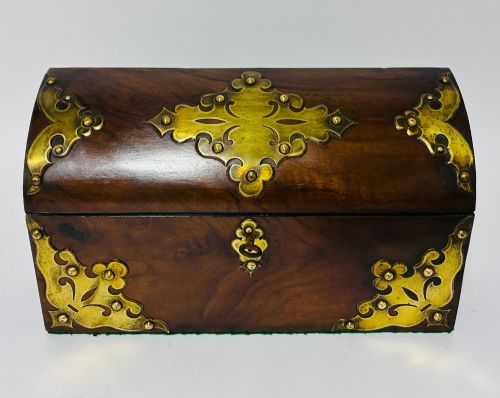
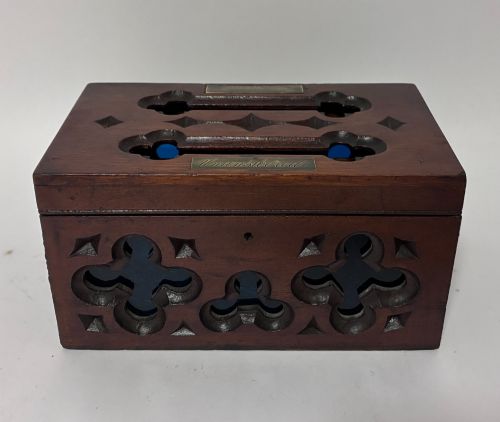
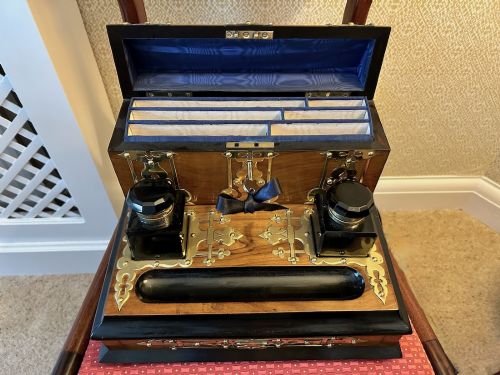


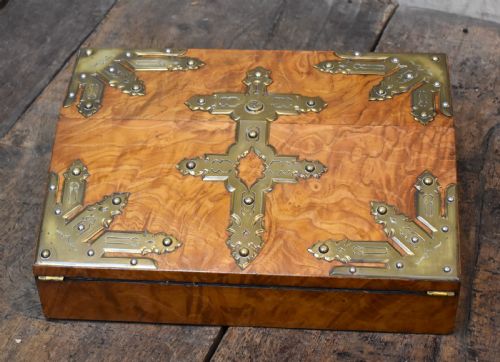

Gothic Revival Stationery Box
A gothic revival stationery box organises correspondence with architectural flair, bringing Victorian ecclesiastical design straight to the desk.
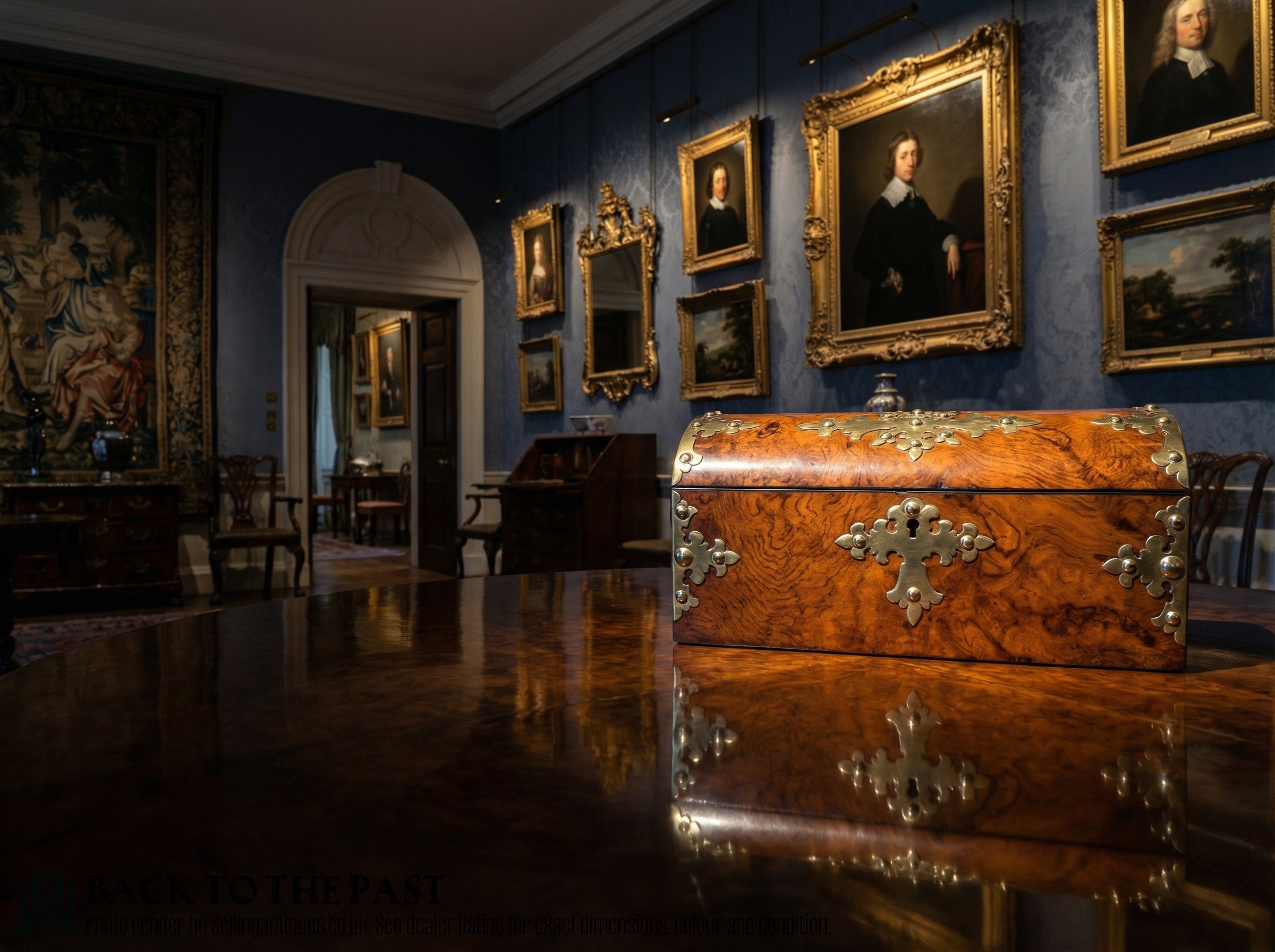
Gothic Revival Stationery Box
A gothic revival stationery box is a desk accessory designed to hold writing paper, envelopes, and correspondence. These pieces belong to the Victorian and Edwardian eras, spanning the nineteenth century up to nineteen hundred.
The most common formats on this page include correspondence boxes, letter caskets, and desk cabinets. Many examples incorporate sloping lids, dome tops, and drop fronts to access fitted compartments.
The aesthetic borrows heavily from medieval architecture, translating pointed arches, lancet windows, and structural ironwork into desktop companions. Examples frequently align with Victorian Gothic styles and Arts and Crafts principles.
Materials and Construction
Cabinet makers built the carcass from dense hardwoods such as coromandel, burr walnut, mahogany, and pollard oak. These timbers provided a stable foundation capable of supporting heavy mounts and intricate surface carving.
Metalwork played a defining role in the construction, utilising brass, ormolu, and gilt brass strapwork. Metal hinges, lock escutcheons, and corner brackets reinforced the joints while echoing medieval metal smithing.
Interiors often featured velvet linings, glass inkwells, and agate cabochons to add colour and texture. Drop fronts and hinged lids required precise carpentry to ensure the compartments aligned seamlessly.
Gothic Revival Stationery Box Retail Price Guide 2026
Typical asking prices for gothic revival stationery box among the pieces listed under this phrase on Sellingantiques today, from the lower quarter to the upper quarter. They describe what is for sale here now, not the wider market.
Some stationery boxes include secret drawers requiring hidden spring latches to reveal private compartments for clandestine correspondence.
Judging Quality
The standard of a gothic revival stationery box depends heavily on the choice of timber and grain pattern. Pieces featuring figured coromandel or burr walnut sit at the higher end of the scale compared to plain oak or mahogany.
The complexity and integration of the metal mounts determine the overall visual impact. Heavy cast brass strapwork, ormolu mounts, and semi-precious stone cabochons demonstrate superior craftsmanship over simpler, unmounted versions.
Internal arrangement and mechanical execution distinguish finer cabinets from basic utilitarian boxes. Smoothly operating drop fronts, secure locking mechanisms, and complete fitted stationery dividers reflect the original maker's investment in time and materials.
Rodman and Co of Belfast·Pugin
The Gothic Revival Stationery Box Glossary
- Coromandel wood
- A dense, heavily figured timber imported from Asia, prized for its dark brown colour and contrasting black stripes. Cabinet makers used it extensively for luxury Victorian desk accessories.
- Strapwork
- Ornamental metal bands or straps applied to the exterior of a box for reinforcement and decoration. This technique mimics medieval ironwork found on church doors.
- Ormolu
- Gilded bronze or brass applied to furniture and boxes as decorative mounts. It adds metallic lustre and highlights architectural details.
- Stationery box
- A desk cabinet designed to store writing paper and envelopes upright. These boxes often feature tiered partitions.
- Desk set
- A coordinated collection of desktop items sharing matching materials and decorative motifs. Components typically include inkstands, letter boxes, and blotters.
Gothic Revival Stationery Box: Frequently Asked Questions
What is a gothic revival stationery box?
A gothic revival stationery box is a nineteenth century desk container built to hold writing paper and envelopes. They utilise architectural motifs from medieval buildings.
Cabinet makers constructed them from hardwoods like coromandel and walnut, fitted with heavy brass mounts. They served both a practical and decorative function in Victorian studies.
How were stationery boxes used?
These boxes kept private correspondence, envelopes, and stamps organised on writing tables. The tiered interiors separated different sizes of paper.
Drop fronts and hinged lids allowed easy access while keeping contents dust free. Many doubled as display pieces when closed.
How do I date a stationery box?
Dating relies on combining the wood type, construction style, and metal hardware. Mid nineteenth century pieces often feature elaborate brass strapwork and coromandel.
Later Victorian and Edwardian examples lean towards simpler Arts and Crafts oak cabinets. Stamped locks and maker marks also help narrow the timeline.
How do I care for coromandel wood?
Coromandel requires stable humidity and protection from direct sunlight to prevent splitting. Dust gently with a dry microfibre cloth.
Avoid liquid cleaners and wax buildup. Occasional application of a suitable cabinet wax preserves the natural lustre of the grain.