
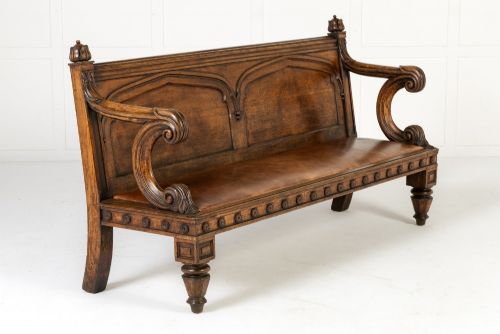


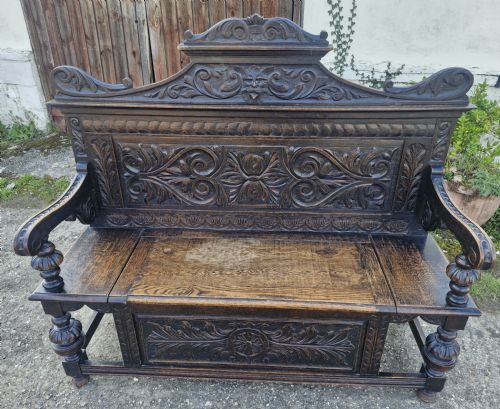


Gothic Revival Settle
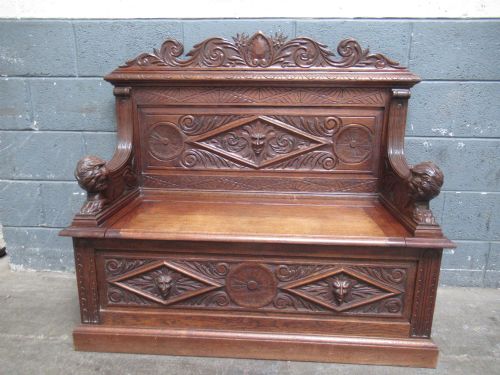
Gothic revival settle pieces are robust wooden seats carrying medieval architectural motifs, built for substantial reception spaces and hallways.
Gothic Revival Settle
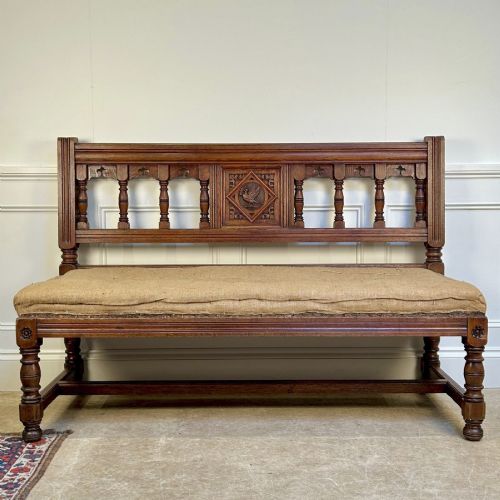
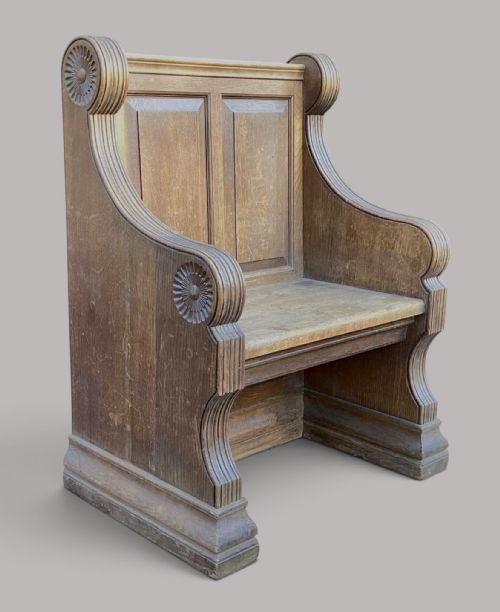
A gothic revival settle is a heavy wooden bench designed with high backs and enclosed sides, originating to keep out draughts in large halls. When you search for this phrase, you find Victorian and later pieces taking inspiration from medieval architecture, often classified across listings as hall benches, monks benches or settles.
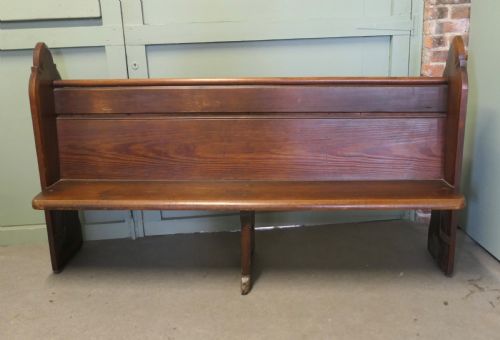
The versions most commonly met on this page are constructed from solid oak, featuring carved panels, linenfold details or architectural proportions. Examples span from the mid nineteenth century into the early twentieth century, alongside related forms in pitch pine and elm.
What separates the finest pieces
Quality rests upon the depth and crispness of the carving and the architectural ambition of the timber frame. Pieces displaying refined proportions, such as those executed in the Reformed Gothic manner or associated with named cabinet makers, command attention through superior joinery.
Listings span from the nineteenth century into the twentieth, with oak appearing as the dominant material alongside pitch pine and elm.
GIllows
The Gothic Revival Settle Glossary
- Settle
- A wooden bench with a high back, solid arms and enclosed storage or base, designed to block cold draughts in entrance halls.
- Monks bench
- A convertible form of seat featuring a back that pivots down to form a flat table surface.
- Reformed Gothic
- A nineteenth-century design movement promoting simpler, structural medieval forms over ornate revivalism.
- Green Man
- A sculptural architectural motif depicting a face carved from or entwined with leaves and vines.
- Linenfold
- A style of wood carving representing vertical folds of fabric, commonly found on sixteenth-century and revival panelwork.
Gothic Revival Settle: Frequently Asked Questions
Where were settles placed in historic homes?
These large wooden seats were traditionally positioned in entrance halls, reception rooms or large corridors where draughts needed deflection from doorways.
They served as practical seating for visitors waiting to be received into the main rooms of the house.
What is the difference between a settle and a hall bench?
A settle typically incorporates a high solid back and enclosed sides to shelter the sitter, whereas a hall bench may have an open framework or simpler panelled back.
Both forms utilise robust timbers and architectural carving suited to heavy domestic traffic.
Are these seats comfortable for daily sitting?
Historic settles and benches were built with rigid upright wooden backs and solid seats intended for formal posture rather than lounging.
Many owners add loose cushions or pads upholstered in fabric or leather to soften the seat for modern use.