
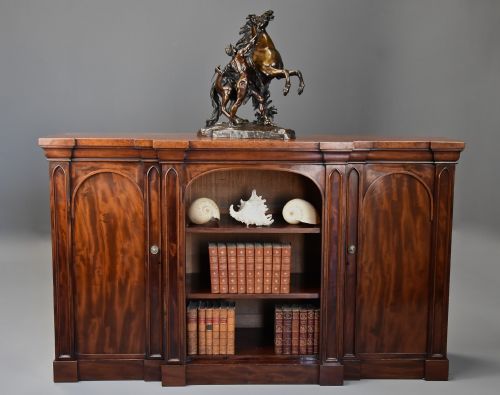
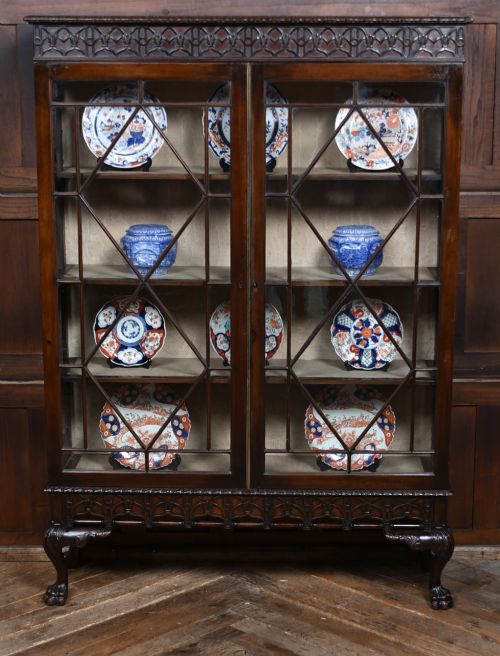

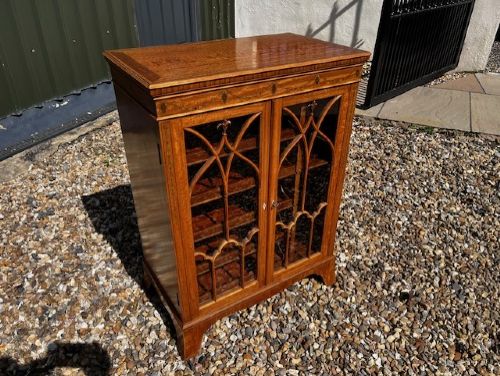
Gothic Revival Display Cabinet
A gothic revival display cabinet brings architectural drama and rich timber texture to a room, offering glazed protection for cherished objects.
Identifying a gothic revival display cabinet
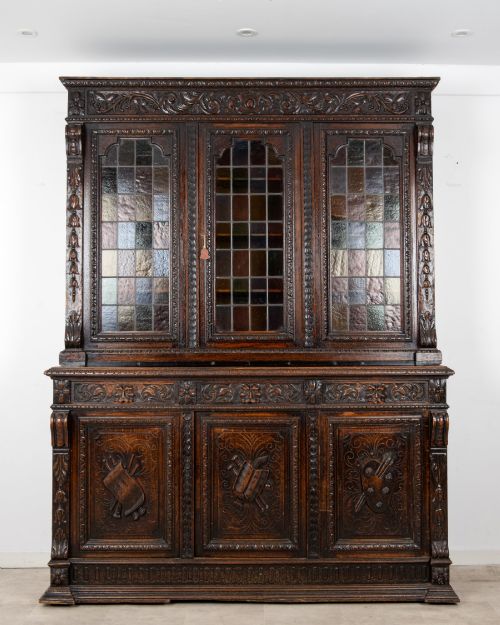
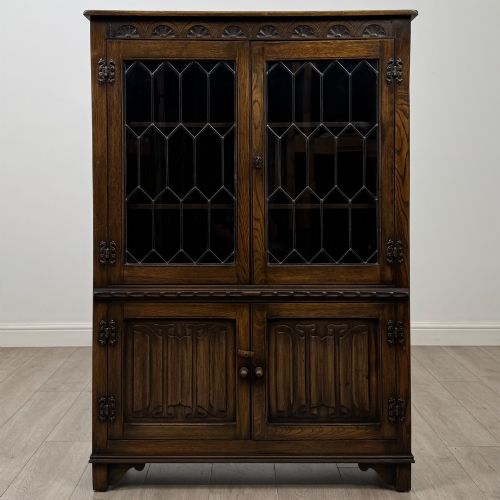
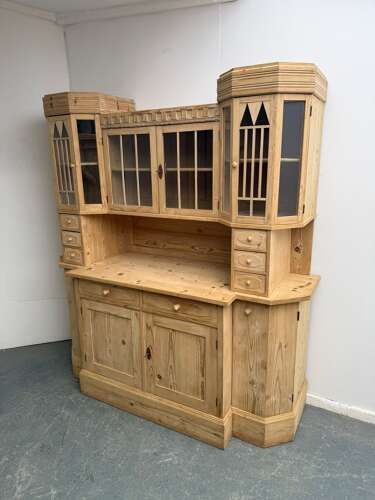
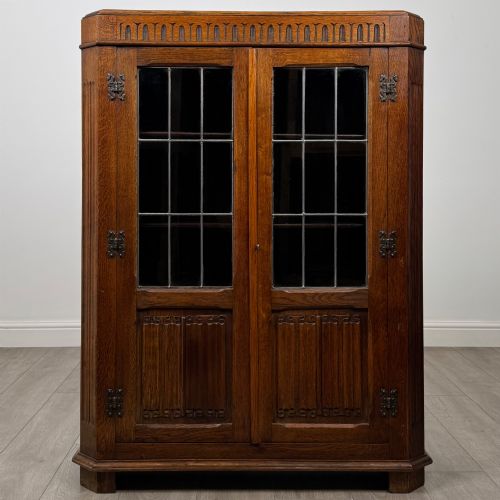
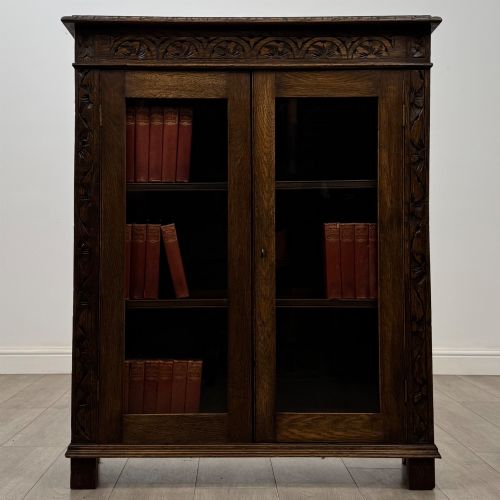
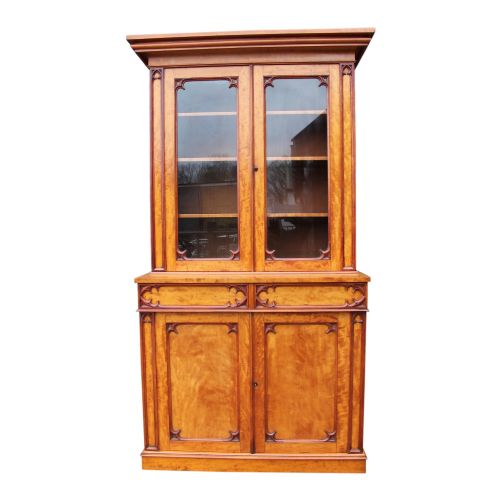
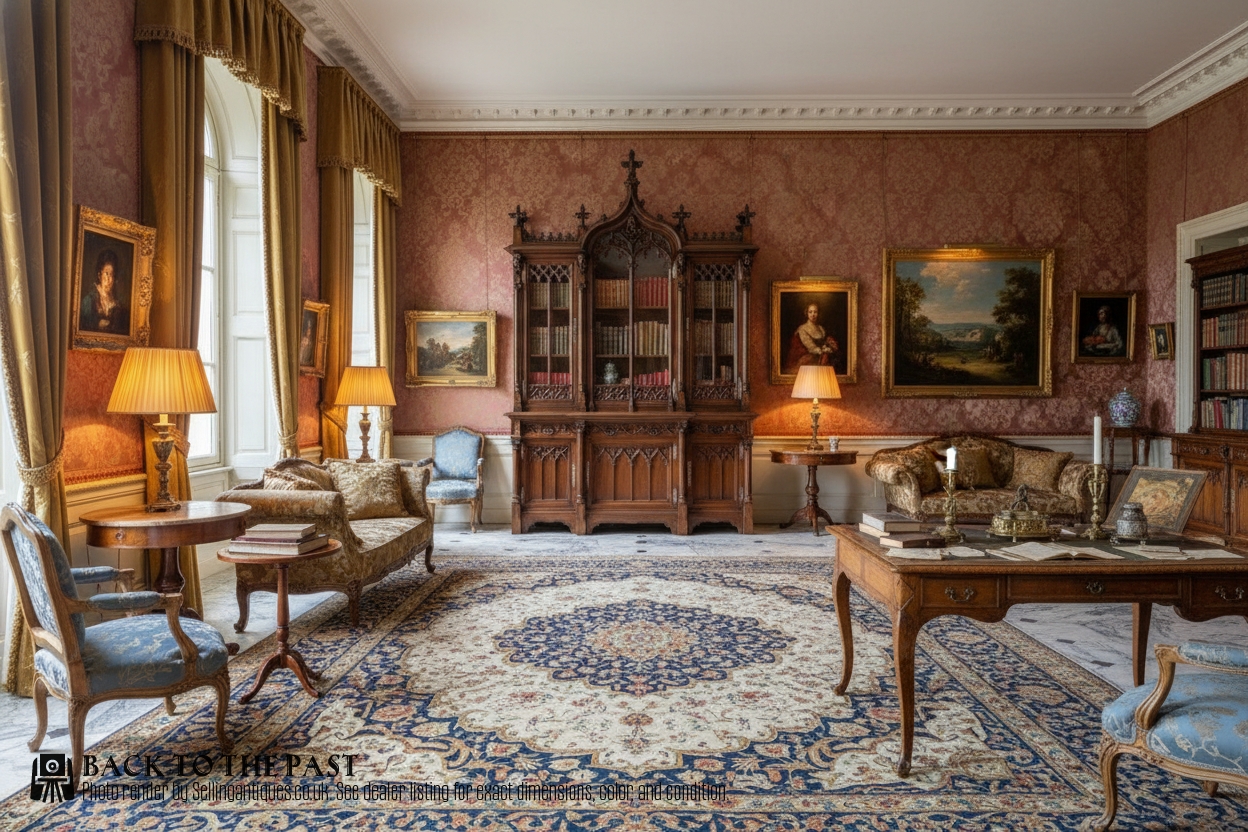
A gothic revival display cabinet takes its cues from medieval architecture, translating pointed arches, tracery, and linenfold panelling into domestic storage. These pieces combine glazed display space with enclosed shelving, serving as both bookcase and cabinet.
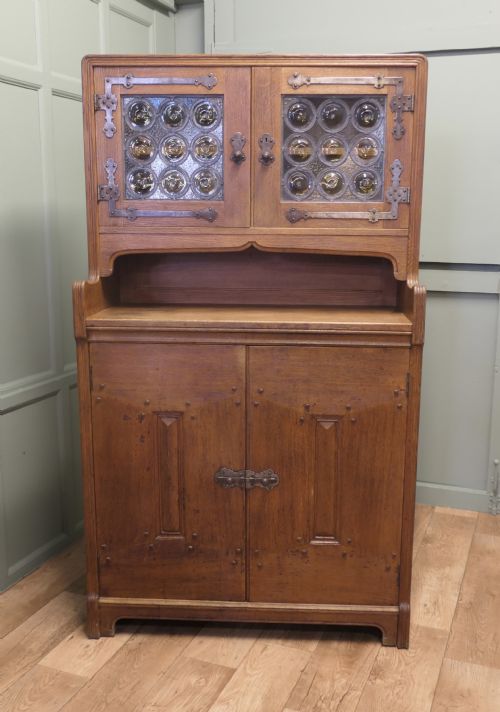
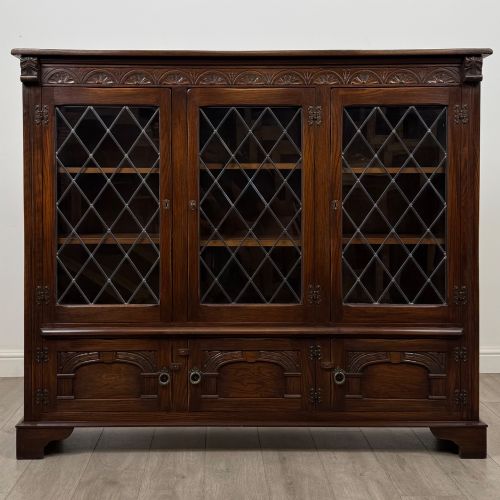
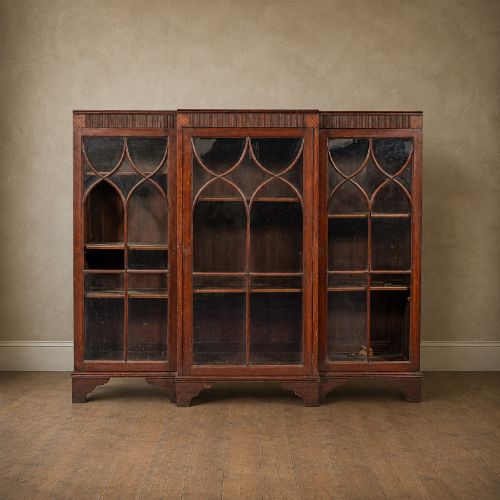
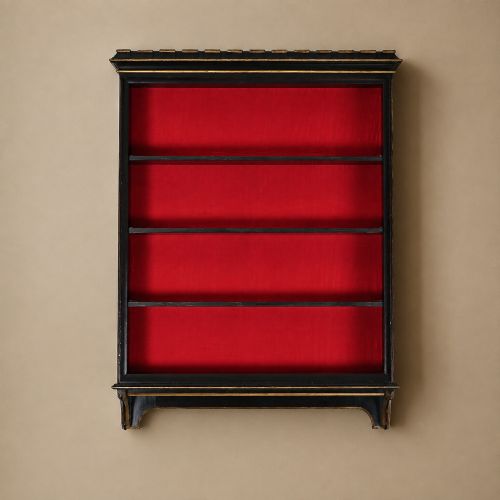
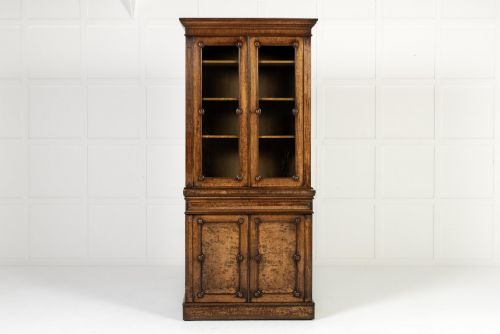
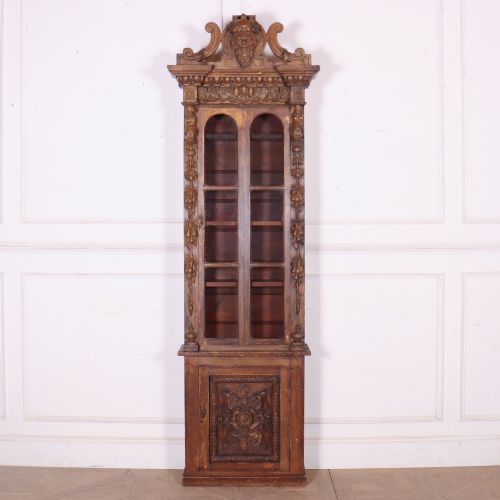
The examples found here range across the nineteenth century and the Edwardian period, drawing on both gothic revival and Tudor revival vocabularies. Forms vary from wall-mounted bookcases to substantial breakfront structures.
Timbers such as oak, pollard oak, ebonised timber, and walnut provide the heavy foundations typical of the style, often augmented by lead and iron hardware.
Materials and construction
Cabinet makers utilised robust timbers including solid oak and pollard oak, sometimes applying ebonising to create a dense, dark surface reminiscent of medieval church joinery. Construction relies on traditional framing methods to support heavy glazed doors and substantial cornices.
Glazing often incorporates lead came to form intricate geometric or arched panes, held securely within timber rebates. Brass hinges, iron handles, and fabric linings complete the interior and exterior detailing.
Retail Price Guide 2026
Typical UK retail prices for gothic revival display cabinet, calculated from the Sellingantiques database of over a million retail prices indexed since 2003. This retail price guide relies exclusively on Sellingantiques data; no external sources or auction records are used, so the figures do not describe the wider market.
Some nineteenth-century makers drew inspiration so deeply from medieval churches that opening the cupboard door feels like entering a damp parish vestry.
Distinguishing quality
Quality reveals itself in the crispness of the carved ornament and the selection of figured timber, such as pollard oak or rich walnut. Superior pieces display thoughtful integration of architectural motifs like barley twists or linenfold carving, rather than superficial applied decoration.
The proportion of the glazing bars and the weight of the hardware distinguish ambitious architectural cabinets from more utilitarian workshop production. Finer joinery ensures that heavy doors hang true and internal shelving remains stable over time.
George Edmund Street
The Gothic Revival Display Cabinet Glossary
- Linenfold
- A style of relief carving imitating folded linen, frequently used on panels in these pieces. It creates a subtle, textured surface across wooden doors.
- Breakfront
- A cabinet design where the central section projects forward from the flanking wings. This architectural arrangement adds depth and shadow to large bookcases.
- Ebonised timber
- Wood treated to resemble ebony through staining or painting. This dark finish gained popularity in the nineteenth century for its dramatic contrast against glazed interiors.
- Pollard oak
- Timber taken from trees that have been pollarded, producing dense wood with intricate, mottled grain patterns. It provides a highly decorative surface for prominent cabinet doors.
- Barley twist
- A carved wooden column or moulding resembling a twisted rope. This detail appears frequently in nineteenth century furniture joinery.
Frequently Asked Questions
What periods do these cabinets come from?
The pieces span the nineteenth century and the Edwardian era, encompassing dates around eighteen-hundred and eighteen-ninety.
Design influences range across gothic revival and Tudor revival traditions, reflecting evolving nineteenth-century tastes in domestic architecture.
How were these cabinets used originally?
They served primarily as bookcases and display units for treasured volumes, curiosities, and fine tableware in Victorian and Edwardian homes.
Glass doors protected delicate contents from dust while allowing full visibility of the owner's collections.
What woods should I look for?
Oak forms the primary structural material, often appearing as pollard oak with highly figured grain or as plain timber with linenfold carving.
Walnut and ebonised timber also feature among the listings, providing contrasting dark tones and varied surface textures.
How do I care for an ebonised finish?
Keep the timber away from direct sunlight and excessive heat sources to prevent the dark finish and wood from drying out.
Dust gently with a dry, soft cloth and avoid chemical polishes that might damage the historic surface.