

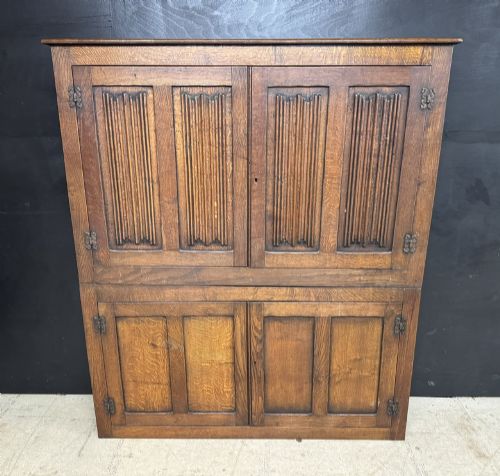
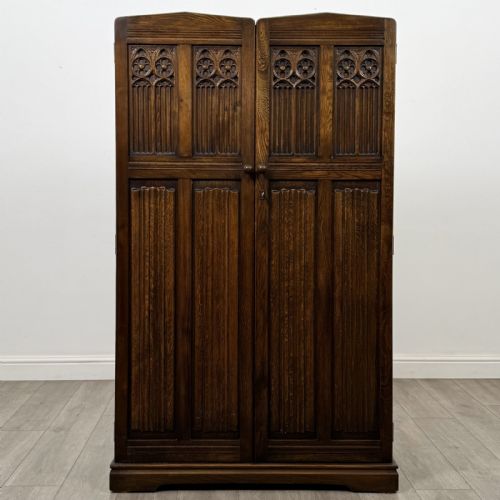
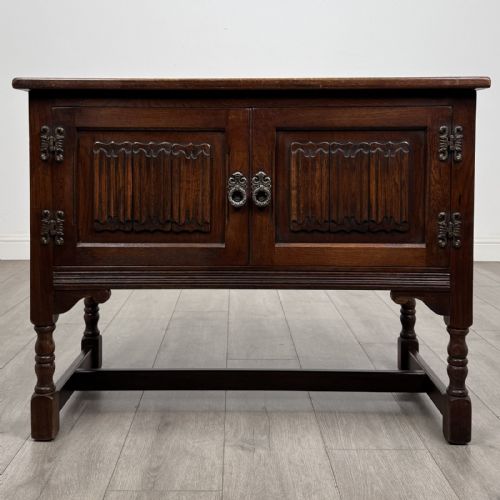
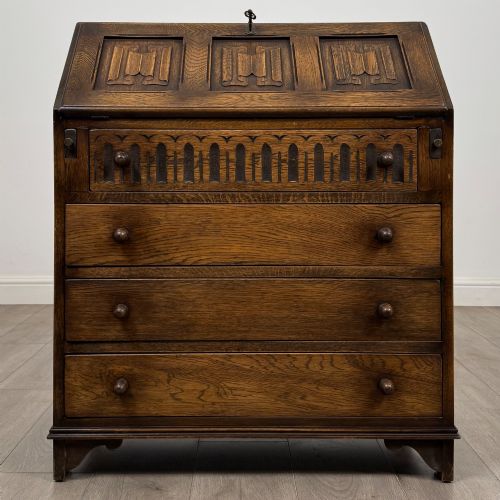




Linenfold Carved Cabinet
A linenfold carved cabinet brings solid oak timber and centuries of textile imitation into your room.
Linenfold Carved Cabinet
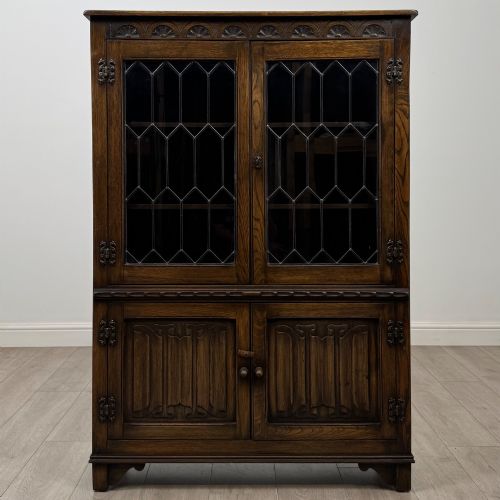
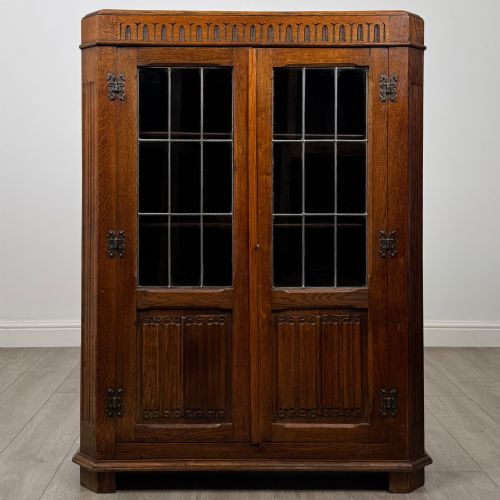
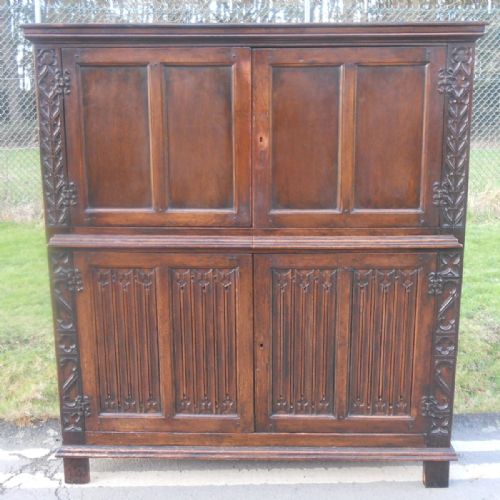
A linenfold carved cabinet presents vertical wooden panels styled to resemble folded parchment or folded cloth. These pieces appear across Edwardian, Victorian, and nineteenth century periods in forms such as writing bureaus, display cabinets, storage cupboards, and chests of drawers.
The version most commonly met on this page is the Edwardian or twentieth century oak piece, often shaped in Tudor revival, Gothic revival, or Renaissance revival styles. Buyers select these items for their heavy timber construction and historical carved detailing.
The forms range from large storage cupboards and open bookcases to corner cabinets and hanging display units. Each piece relies on solid oak construction to carry the deep relief of the linenfold carving.
How they were made
The makers relied primarily on solid oak, shaping the dense timber with hand tools to carve the intricate folds of the panels. Iron, brass, and lead hardware such as hinges and handles were fitted to secure doors and drawers.
Joinery techniques matched the revival styles of the periods, incorporating panel and frame construction to allow the solid oak to move naturally with changes in humidity. Glass panels were integrated into the doors of display cabinets and bookcases.
Linenfold Carved Cabinet Retail Price Guide 2026
Typical asking prices for linenfold carved cabinet among the pieces listed under this phrase on Sellingantiques today, from the lower quarter to the upper quarter. They describe what is for sale here now, not the wider market.
Listings feature solid oak across Edwardian, Victorian, and nineteenth century periods, spanning Tudor revival and Gothic revival styles.
What varies in quality
The depth and crispness of the carved linenfold panels separate standard examples from finer work. Sharp, well-defined folds show the hand of a skilled carver rather than a mechanical router.
The choice of timber grain and the integrity of the solid oak frame determine the durability and visual weight of the piece. Superior hardware in brass and iron adds longevity to doors and drawers.
The Linenfold Carved Cabinet Glossary
- Linenfold
- A style of wood carving that imitates vertical folds of fabric or parchment. It is typically seen on panels in Tudor revival and Gothic revival furniture.
- Bureau
- A desk featuring a sloping flap that opens to reveal a writing surface and small compartment drawers. These often incorporate carved wooden panels.
- Tudor Revival
- An architectural and decorative style popular in the nineteenth and twentieth centuries that mimics sixteenth century English design. It frequently utilises dark oak and heavy carved panels.
- Gothic Revival
- A design movement drawing inspiration from medieval architecture and ornament. Pieces from this period often feature pointed arches, tracery, and linenfold motifs.
Linenfold Carved Cabinet: Frequently Asked Questions
What is a linenfold carved cabinet?
A linenfold carved cabinet is a piece of wooden furniture decorated with panels carved to resemble folded cloth. These items are built predominantly from solid oak.
They appear across various historical periods, frequently associated with Tudor revival and Gothic revival aesthetics.
How do I date a cabinet?
Dating relies on examining the timber, construction methods, and revival styles present in the piece. Edwardian and nineteenth century examples show distinct joinery techniques.
Hardware materials like brass and iron also help place the furniture within its specific period of manufacture.
Where should I place one?
These cabinets suit studies, living rooms, and hallways where their solid oak presence can anchor the room. Display versions hold books and objects behind glass.
Storage cupboards and bureaus provide functional utility while maintaining historical character.
What styles are common?
Tudor revival, Gothic revival, and Renaissance revival dominate the aesthetic of these carved oak pieces. Each style brings specific historical motifs to the furniture.
Arts and crafts influences also appear among the twentieth century listings on the page.