




Tudor Revival Cupboard
These pieces for a tudor revival cupboard bring heavy timber and sixteenth-century style into rooms that need weight and presence.
Tudor Revival Cupboard
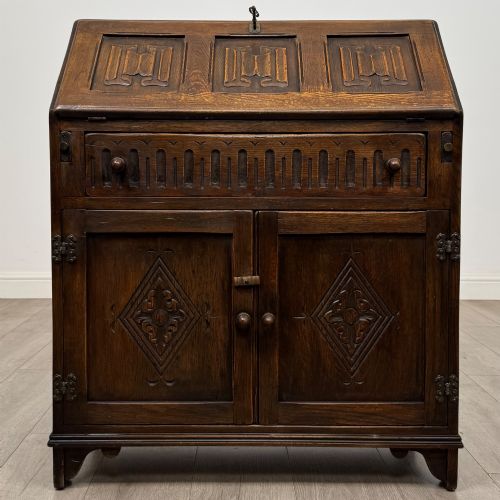
A tudor revival cupboard draws on the architecture and joinery of the sixteenth century, reinterpreted across the nineteenth and twentieth centuries. Buyers searching for a tudor revival cupboard encounter court cupboards, side cabinets, linenfold bureaux, and wardrobes.
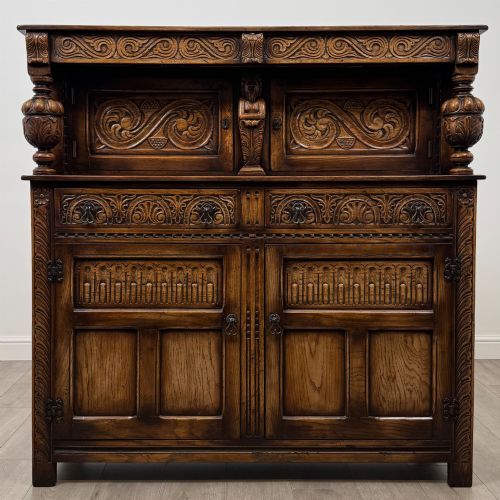
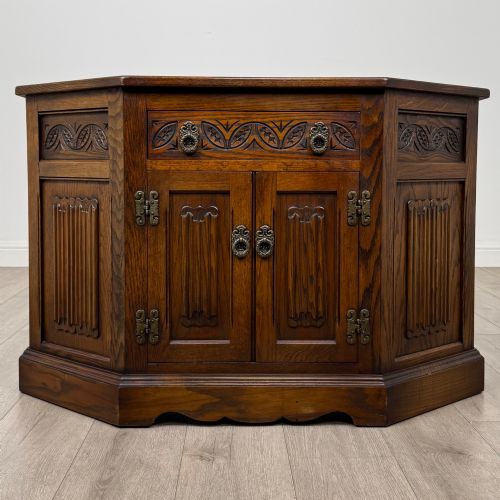
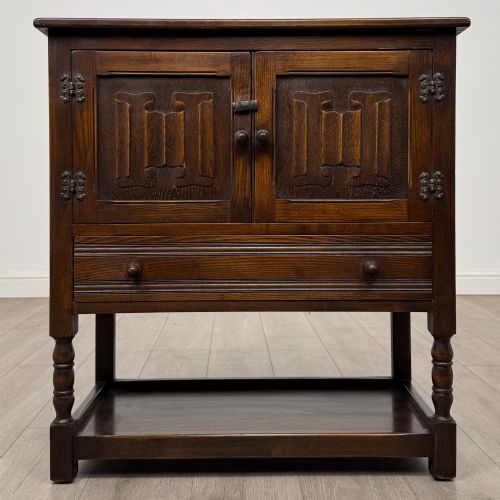
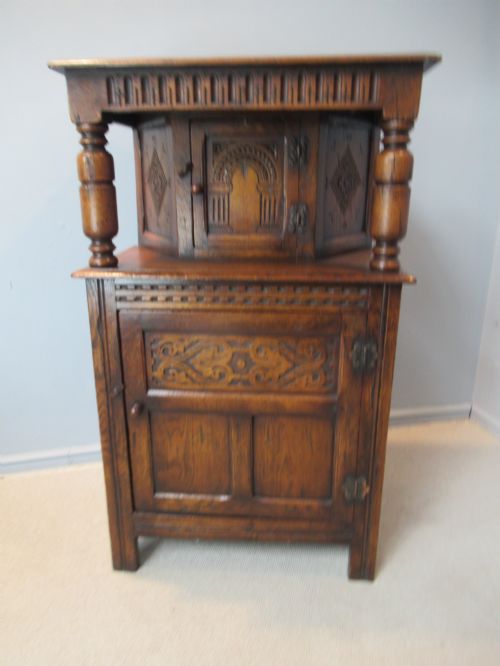
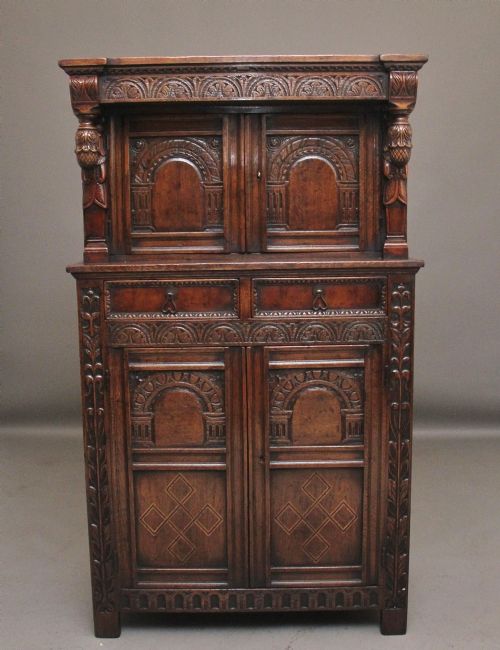
The pieces on this page span from the mid-nineteenth century through the Edwardian era and into the nineteen-thirties. Court cupboards with carved details and linenfold panels dominate the selection, offering traditional storage in solid timber.
Materials and Construction
Solid oak serves as the primary material across these pieces, frequently finished with carving and linenfold panels. Iron and brass hardware appear on doors and cabinets, providing functional hinges and handles.
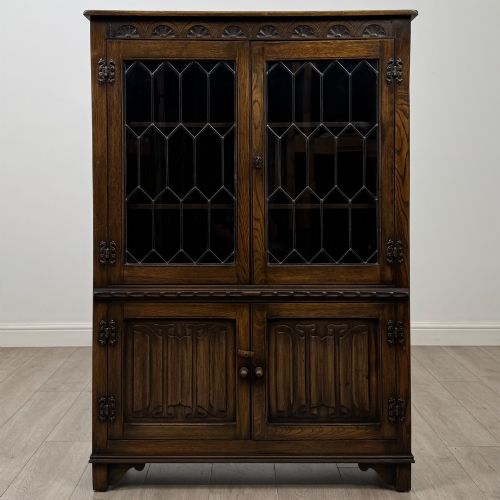
Glass and lead feature in display cabinets to enclose shelving while referencing historic glazing techniques. Joinery relies on traditional framing methods suited to heavy timbers.
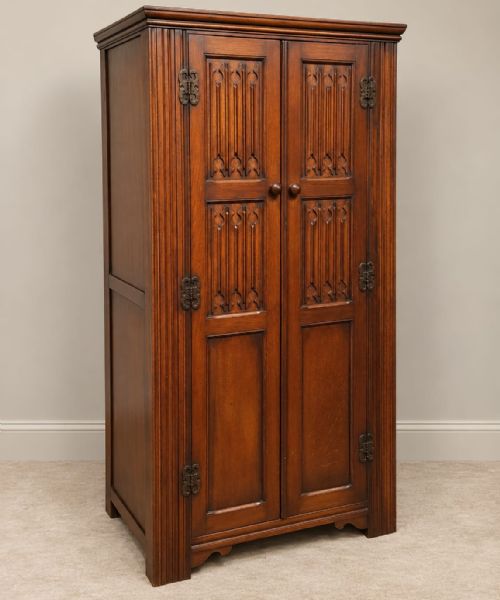
Even a simple hallway wardrobe manages to look like it belongs in a medieval great hall.
Judging Quality
Quality rests on the depth and crispness of the timber carving and the weight of the solid oak used in the frame. Pieces with well-defined linenfold panels and balanced proportions stand apart from simpler storage boxes.
The integration of period-appropriate brass and iron hardware influences the overall character. Heavy, solid construction without excessive modern alterations defines the better examples.
The Tudor Revival Cupboard Glossary
- Court cupboard
- A traditional English sideboard or storage cabinet featuring stacked tiers, often with recessed upper sections supported by carved columns.
- Linenfold
- A style of woodcarving that imitates folded fabric, commonly seen on panels of cupboards and wardrobes from this tradition.
- Jacobean Revival
- A decorative style mimicking early seventeenth-century English architecture and furniture, characterised by geometric moulding and turning.
- Gothic Revival
- An architectural and furniture style drawing on medieval forms, featuring pointed arches and tracery.
- Solid oak
- Timber cut directly from the oak tree rather than veneered onto a lesser core, providing structural weight and durability.
Tudor Revival Cupboard: Frequently Asked Questions
What is a court cupboard?
A court cupboard is a traditional form of storage furniture featuring tiered compartments and carved supports. They were originally used to display plate and store provisions in great houses.
In later revival pieces, the form provides heavy, characterful storage for modern rooms while retaining its historical silhouette.
How do I date an oak cupboard?
Dating relies on construction methods, timber treatment, and the specific style of revival ornament applied. Nineteenth-century pieces often show different internal fixings and timber milling compared to nineteen-thirties examples.
Examining the hinges, locks, and backboards helps clarify the period of manufacture.
Are these pieces made of solid wood?
The listings here feature solid oak construction, sometimes paired with iron and brass for hardware components. Glass and lead also appear in specific display formats.
This heavy timber build gives the furniture its characteristic weight and durability.
Where does linenfold carving come from?
Linenfold is a type of relief carving that mimics stiff cloth folded in vertical pleats. It became popular on oak panelling and furniture during the Tudor period.
Revival pieces adopt this motif to evoke sixteenth-century domestic interiors.