



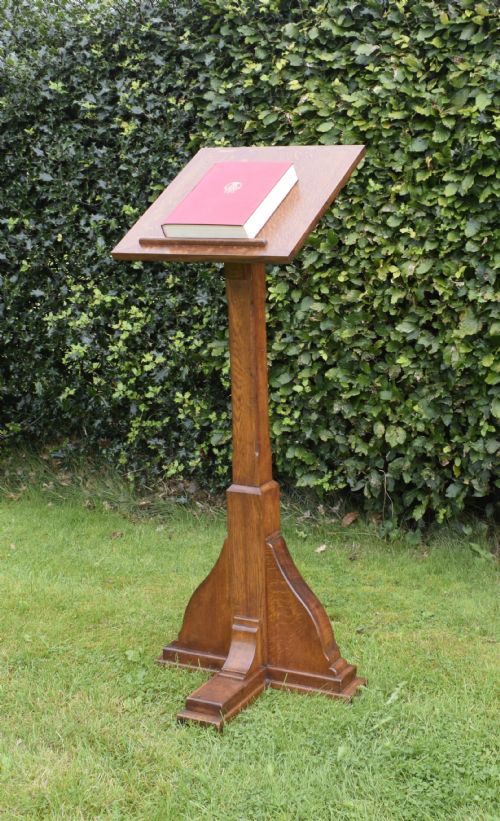


Gothic Revival Book Stand
These gothic revival book stand pieces bring ecclesiastical timber and brasswork into domestic libraries with architectural conviction.
Gothic Revival Book Stand
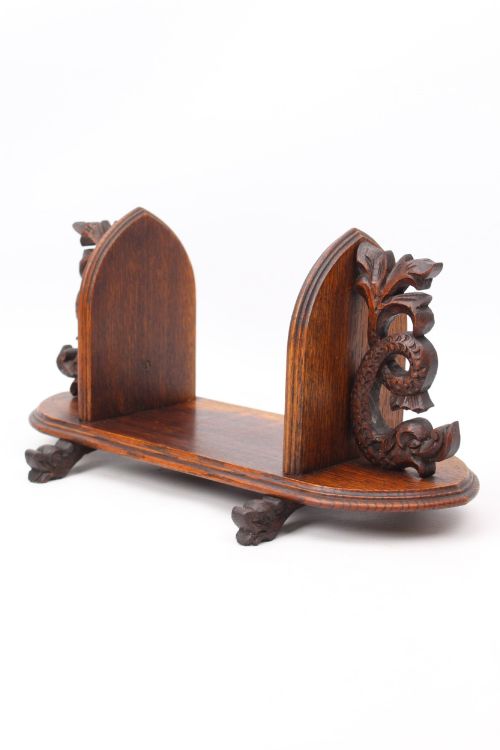
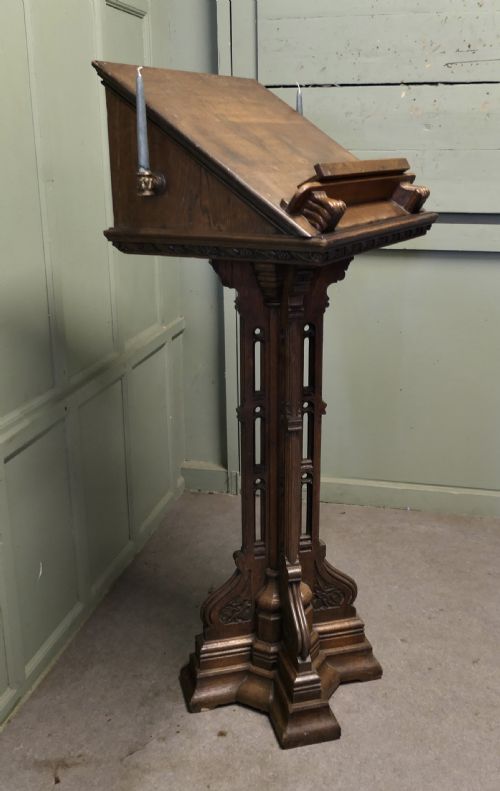
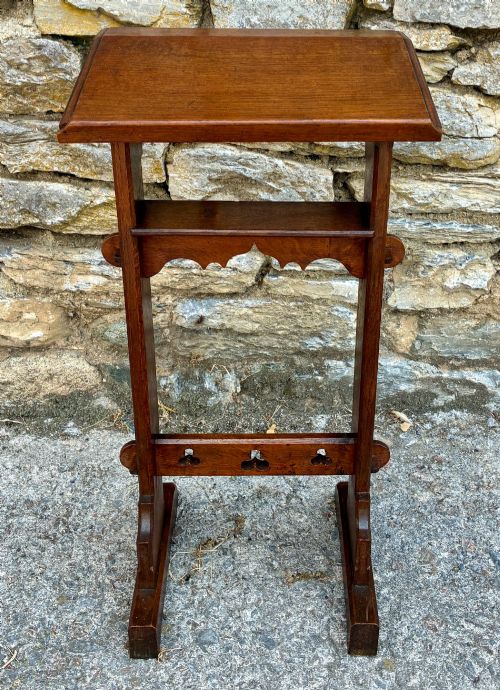
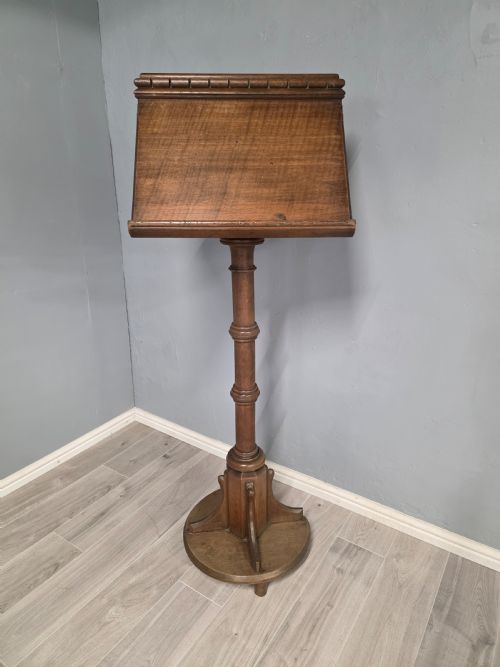
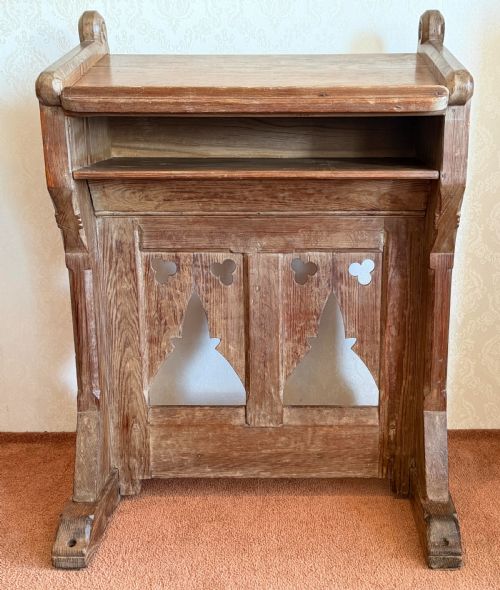
A gothic revival book stand encompasses heavy oak church lecterns, extending walnut book slides, and tabletop reading desks rooted in nineteenth century design. You will most frequently encounter carved oak lecterns and extending desk book slides finished with brass mounts.
The selection ranges from tall ecclesiastical church furniture down to compact desk accessories designed for home libraries. Smaller pieces often utilise expanding actions to hold a row of volumes between upright ends.
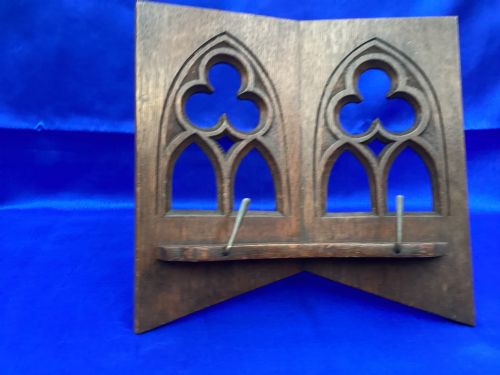
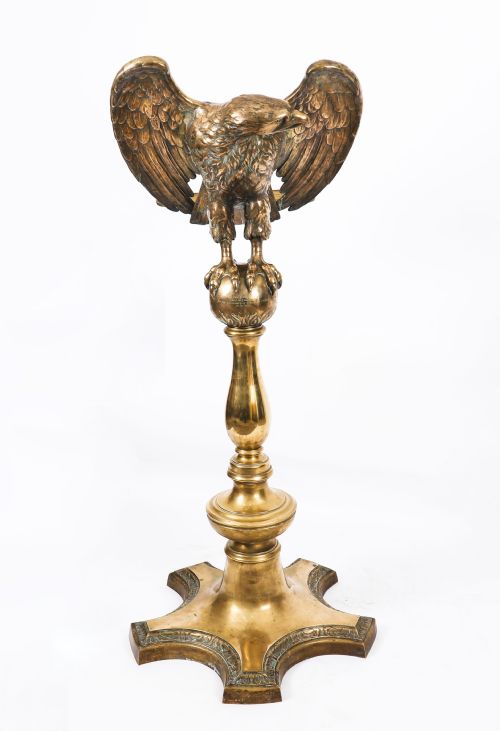
Originating largely from the Victorian and Edwardian eras, these items reflect the widespread revival of medieval architectural motifs. Makers applied pointed arches, tracery, and carved eagles to everyday reading furniture.
Materials and Construction
Solid oak, walnut, and pine form the primary structural timbers, frequently shaped with deep chisel carving. Ebonised wood and exotic veneers such as coromandel also appear among the more decorative examples.
Brass serves as a key mounting and hinge material, reinforcing corners and providing mechanical action for extending book slides. Metal elements are frequently cast and chased with geometric or Gothic patterns.
Gothic Revival Book Stand Retail Price Guide 2026
Typical asking prices for gothic revival book stand among the pieces listed under this phrase on Sellingantiques today, from the lower quarter to the upper quarter. They describe what is for sale here now, not the wider market.
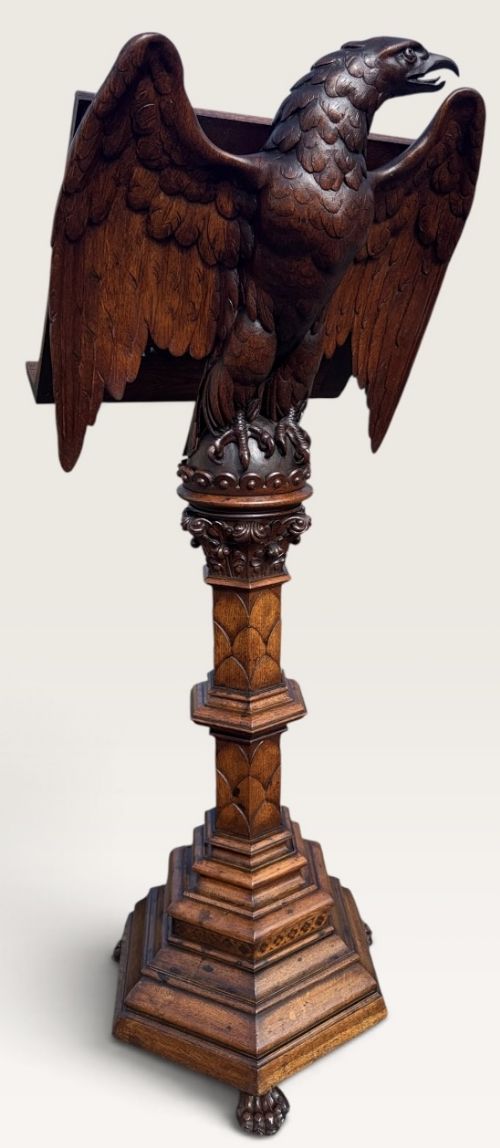
Carved wooden eagles feature prominently as reading desks, holding heavy volumes upon their outstretched wings.
Judging Quality
Depth and crispness of the timber carving dictate the visual standard of a piece, moving from mechanical factory work to hand-chiselled tracery. The integration of structural brasswork with dense hardwoods indicates superior workshop execution.
Proportion and architectural integrity separate simpler utility stands from ambitious library furniture. Pieces that retain their original extending mechanisms and matching brass mounts command greater consideration.
The Gothic Revival Book Stand Glossary
- Lectern
- A tall desk with a sloping top designed to hold a book for reading aloud. These are frequently carved from solid oak with architectural supports.
- Book slide
- An extending desk accessory featuring two ends that pull apart on a base to hold varying lengths of books. They often incorporate brass mounts and sliding mechanisms.
- Ebonised
- Wood treated with a chemical stain or finish to imitate ebony. This dark surface finish appears frequently on nineteenth century desk pieces.
- Coromandel
- A dense, heavily figured timber imported from Asia and used for luxury Victorian desk accessories. Its rich grain patterns elevate smaller book stands.
- Ecclesiastical
- Design elements derived from church architecture and furnishings. This style defines the pointed arches and religious motifs seen across the category.
Gothic Revival Book Stand: Frequently Asked Questions
What is a gothic revival book stand?
A gothic revival book stand is a reading accessory or lectern built in the nineteenth century style inspired by medieval architecture. They utilise pointed arches, tracery, and heavy timber construction.
These items range from small desk book slides to tall church lecterns. They bring distinct ecclesiastical character into domestic studies and libraries.
How do extending book slides work?
Extending book slides feature a base track that allows the two ends to slide outward or inward. This mechanism adjusts the capacity to fit a varying number of volumes.
Brass mounts often reinforce the sliding joints and provide decorative contrast to woods like walnut, oak, or coromandel.
Where were these pieces used originally?
Larger lecterns originated in churches, chapels, and institutional reading rooms for holding heavy service books. Smaller desk stands served private home libraries and studies.
Domestic versions held working volumes on writing desks or displayed favourite texts on side tables.
How do I care for antique oak and walnut?
Keep wooden book stands away from direct heat sources and strong sunlight to prevent timber splitting. Dust regularly with a dry cloth and apply occasional wax polish.
Brass mounts can be cleaned gently with a soft cloth, avoiding abrasive cleaners that might damage the surrounding wood.
How can I tell Victorian from Edwardian pieces?
Victorian pieces typically display heavier proportions, deeper carving, and more overt ecclesiastical gothic detailing. Walnut, coromandel, and ebonised woods are common in this earlier period.
Edwardian items often present slightly lighter constructions in oak or mahogany, occasionally incorporating Arts and Crafts simplicity alongside traditional motifs.