




Antique Church Podium
These antique church podium pieces bring honest timber and centuries of ecclesiastical gravity straight into modern rooms.
Antique Church Podium
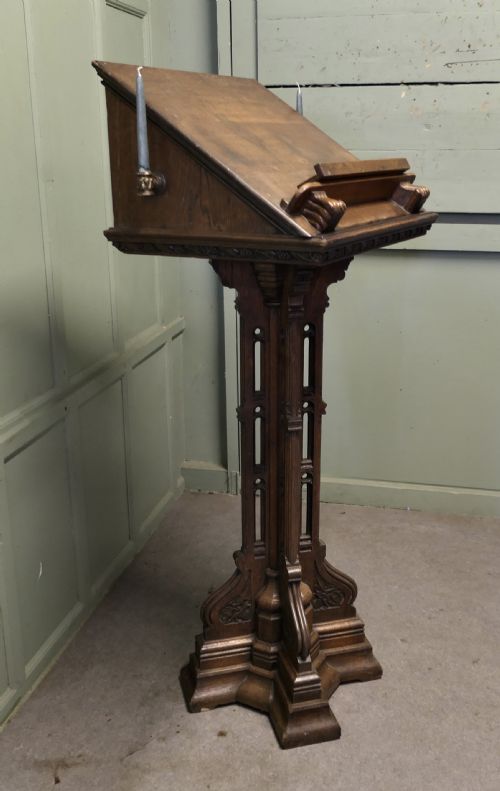
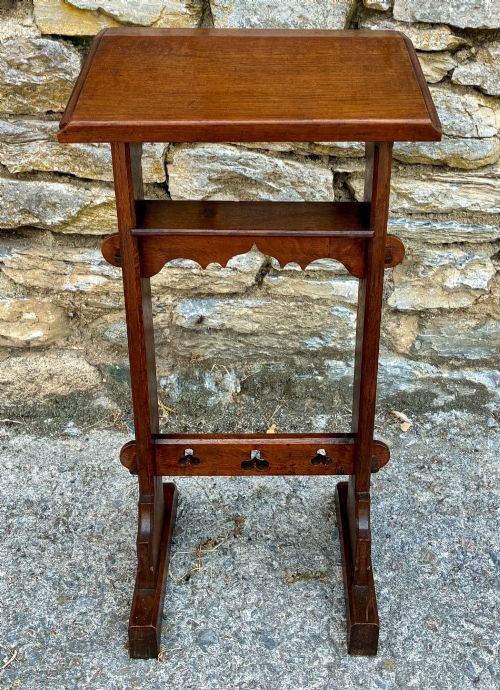
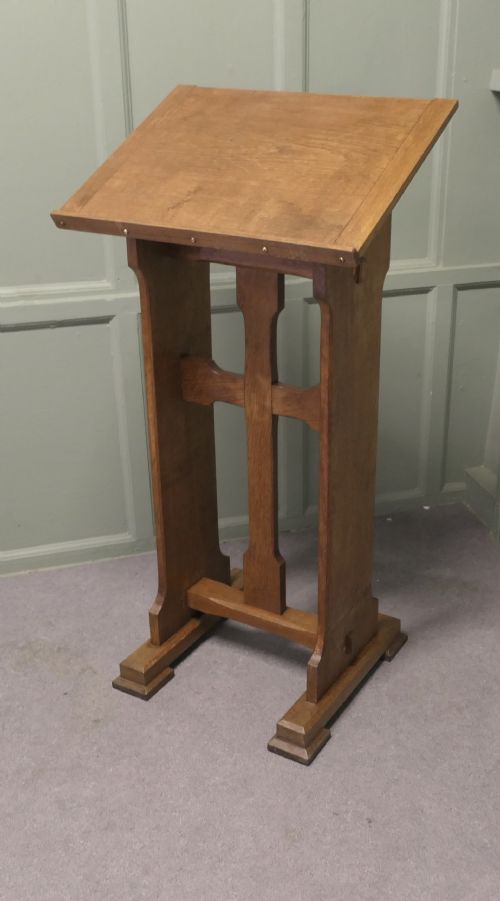
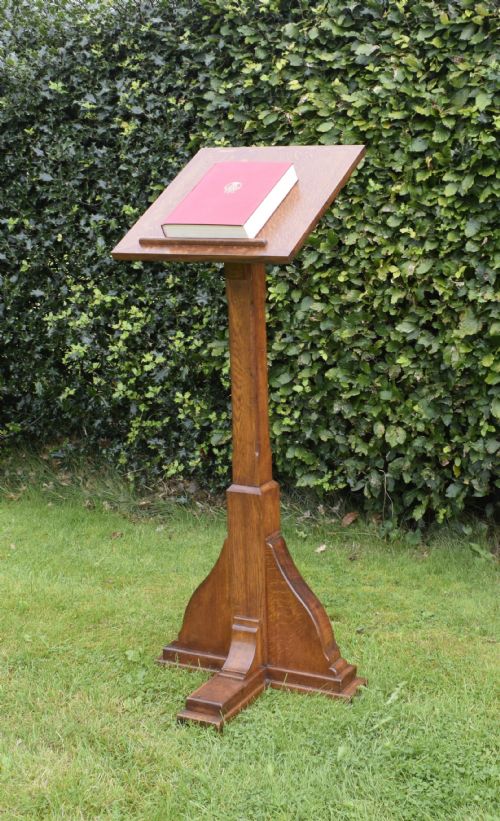
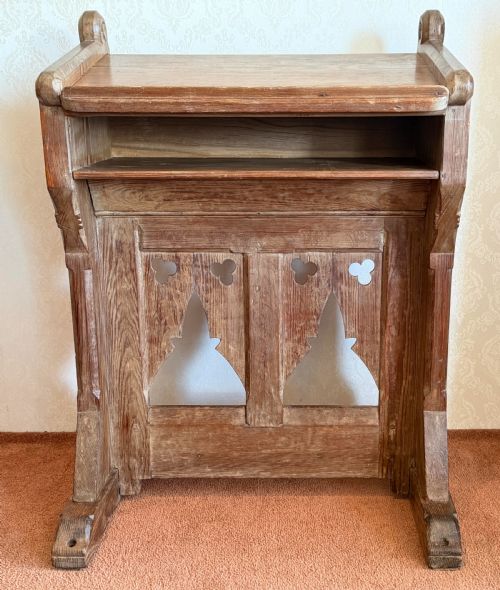
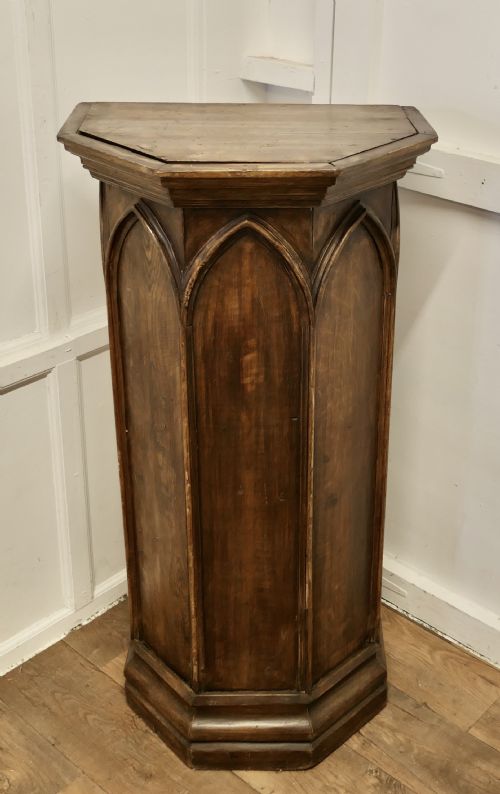
When you search for an antique church podium, you are looking at utilitarian stands and reading desks originally built for ecclesiastical or institutional spaces. Most examples on this page are carved oak lecterns and reading stands originating from the nineteenth century up through the nineteen-thirties. You will frequently encounter robust reading desks alongside smaller portable reading stands and greeting stations.
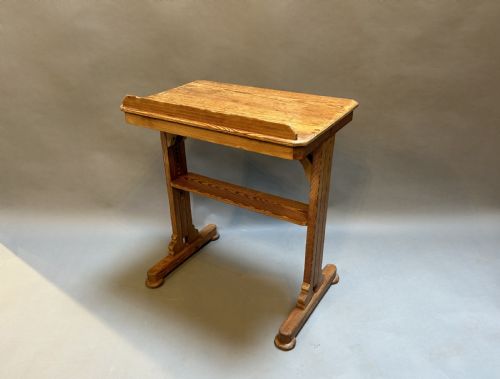
The selection ranges from vernacular pine pieces to elaborate Gothic Revival furniture featuring carved detail and brass work. Oak is the dominant timber, often showing rich golden tones typical of Arts and Crafts design or dark patination from the Victorian era. These sturdy items now find new life as restaurant greeter stations, reception desks, and domestic reading surfaces.
How they were made
Makers relied principally upon solid oak and pine, choosing timber for structural endurance and weight to prevent tipping during service. Carpenters joined heavy planks using traditional framing techniques, shaping surfaces with hand chisels and planes.
Metal components such as brass work provided functional hinges, brackets, and book rests that complemented the dense grain of the wood. Carved ornamentation, particularly in the Gothic Revival style, was worked directly into the solid timber rather than applied as separate veneer.
At least one nineteenth century oak eagle stands ready to support a heavy missal on its outstretched wings.
What varies in quality
The standard of a piece rests on the ambition of its carpentry and the depth of its carved detail. Simpler pine utility tables show straightforward joinery, whereas nineteenth century oak lecterns often display crisp architectural mouldings and sculptural carving.
Proportion and timber selection drive the character of each stand. Pieces retaining their original brass fittings and honest surface patination stand apart from heavily restored or altered examples.
The Antique Church Podium Glossary
- Lectern
- A tall desk with a slanted top designed to hold a book for reading aloud. These stands formed a central fixture in church chancels before finding wider secular use.
- Gothic Revival
- An architectural and design style drawing on medieval forms, pointed arches, and heavy carved tracery. This aesthetic defined much nineteenth century ecclesiastical furniture.
- Arts and Crafts
- A design movement prioritising traditional craftsmanship, visible construction, and simple utility over mass production. Pieces from this tradition emphasise the natural grain of golden oak.
- Reading Stand
- A smaller adjustable or fixed support for books and menus, often scaled for desktop or tabletop placement. They share the angled platform characteristic of larger podiums.
- Patina
- The surface sheen and colour developed by wood and brass through decades of handling and exposure to light. It serves as a primary indicator of genuine age.
Antique Church Podium: Frequently Asked Questions
What is an antique church podium used for today?
These pieces function brilliantly in contemporary settings as restaurant greeter stations, reception desks, or domestic reading stands. Their slanted surfaces hold books, menus, or notes at a comfortable working angle.
Their substantial height and presence also make them striking architectural statements in hallways or studies.
How do I tell oak from pine pieces?
Oak is a dense, heavy hardwood showing pronounced grain patterns and medullary rays, often carrying a deep golden or dark brown tone. Pine is a softer softwood with a lighter colour and more uniform, straight grain.
Pine items tend to have a simpler vernacular appearance compared to the formal carving found on oak examples.
Are these lecterns adjustable?
Most pieces listed here are fixed stands built with rigid framing to ensure absolute stability during use. While some reading desks feature angled platforms, they generally lack modern mechanical adjustment mechanisms.
Their fixed geometry reflects the permanent nature of their original ecclesiastical placement.
How do I care for antique wood podiums?
Maintain the timber by applying natural beeswax sparingly to nourish the grain and preserve the surface patination. Keep the pieces away from direct heat sources and strong sunlight to prevent the wood from drying out.
Dust regularly with a soft cloth to protect the carved details and brass fittings.