
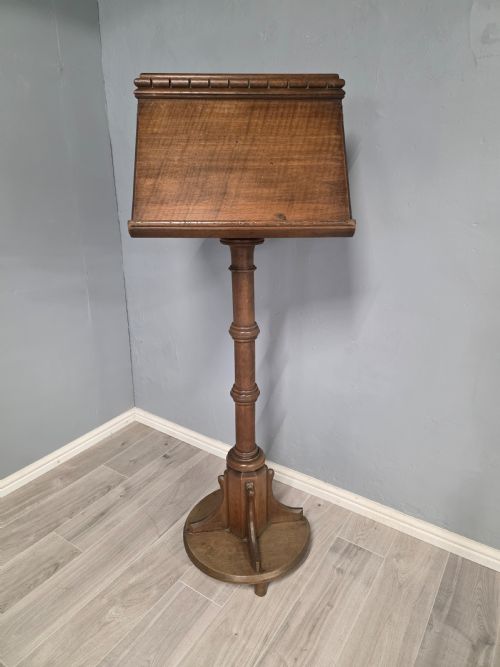


Oak Gothic Bible Stand
These oak gothic bible stand pieces bring architectural presence and devotional history directly into a room.
Oak Gothic Bible Stand
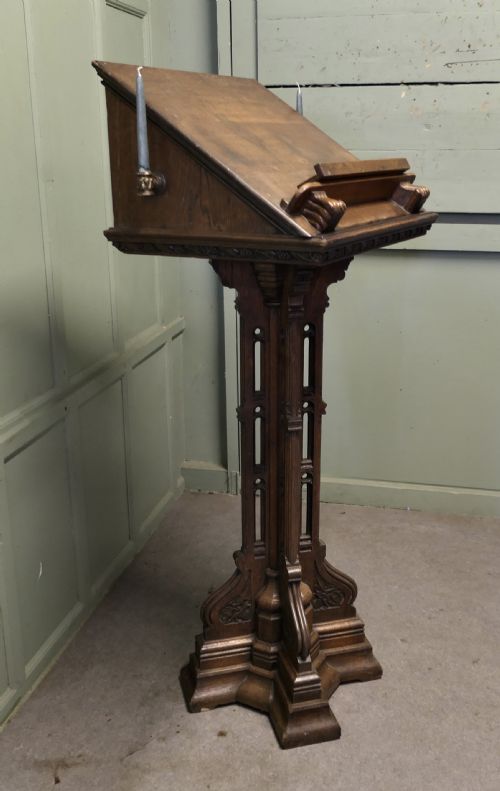
An oak gothic bible stand is a specialised form of furniture designed to support sacred texts or reading materials in domestic and ecclesiastical settings. These reading pieces draw directly upon medieval architectural motifs and traditional joinery methods to create functional surfaces for heavy books.
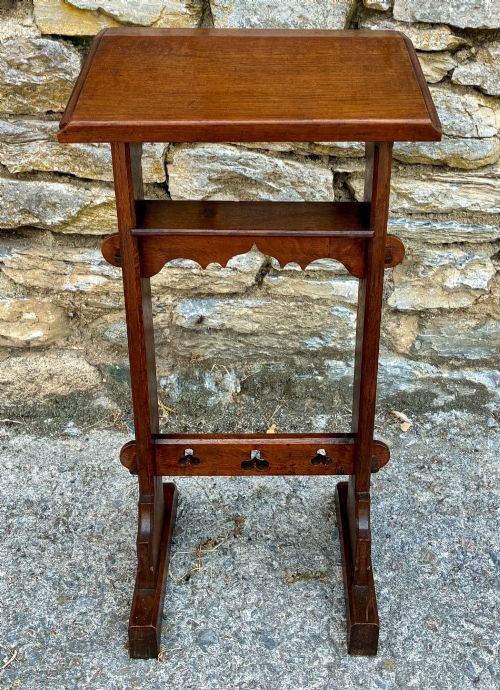
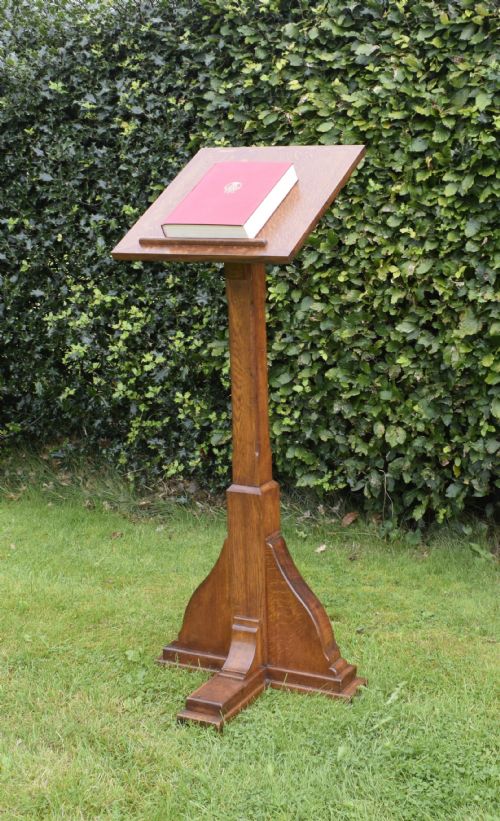
Buyers browsing this selection will most frequently encounter nineteenth-century church lecterns, Victorian gothic revival reading desks, and smaller arts and crafts book stands. The inventory spans the nineteenth century through the Edwardian period and the early twentieth century, encompassing various forms of reading stands and reception desks.
The forms range from compact table book stands to substantial floor-standing lecterns incorporating carved wooden eagles or sloping desk surfaces. Pine appears alongside oak in certain examples, reflecting the practical construction methods of period workshops.
How these pieces were made
Makers constructed these stands primarily using solid oak timbers, occasionally incorporating pine for secondary elements and brass for hinges or mountings. The joinery relies on traditional carpentry techniques suited to heavy timber, ensuring structural stability for substantial volumes.
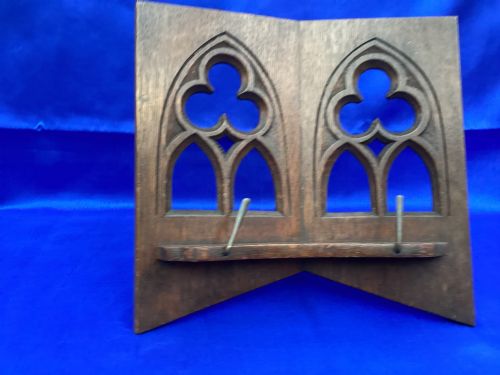
Carving defines the decorative vocabulary, featuring gothic revival motifs executed by hand across reading ledges, panels, and structural supports. Skilled artisans shaped freestanding forms like eagle lecterns and reading podiums with considerable attention to anatomical and architectural detail.
Several heavy wooden eagles stand ready here to hold your reading material.
What varies in quality
Quality in these pieces rests upon the ambition of the carving and the fidelity of the gothic revival styling. Superior examples display crisp, deep relief work on panels and supports, whereas simpler pieces rely on plain chamfered edges and minimal decoration.
The choice of form and secondary materials also distinguishes the range, from straightforward pine-backed stands to fully articulated arts and crafts reception desks and monumental carved eagle lecterns. The architectural coherence of the design dictates the visual impact of each piece.
The Oak Gothic Bible Stand Glossary
- Lectern
- A tall stand with a sloping bookrest used to hold a book for reading aloud. These reading supports appear in both church and domestic interiors.
- Gothic Revival
- An architectural and decorative style reviving medieval forms, featuring pointed arches and heavy timber construction. This aesthetic directly shapes the ornamentation on these stands.
- Arts and Crafts
- A design movement emphasising handcraftsmanship, simple construction, and traditional materials. Pieces from this tradition avoid excessive machine ornamentation in favour of honest joinery.
- Podium
- A small raised platform or stand designed to support a speaker's notes or a large book. These reading surfaces often incorporate storage compartments or adjustable bookrests.
Oak Gothic Bible Stand: Frequently Asked Questions
What is an oak gothic bible stand used for?
These stands primarily served to support large family bibles, missals, or service books during readings in homes and churches. The sloping desk surface held heavy volumes securely at a comfortable reading angle.
Today, buyers utilise them to display open art books, hold recipe volumes in kitchens, or serve as distinctive reception desks and podiums in studies.
How do I date an antique reading stand?
Dating relies on examining the timber, tool marks, and stylistic indicators such as Victorian gothic revival or arts and crafts details. Nineteenth-century examples often display hand-planed surfaces and traditional peg joinery.
Later pieces from the Edwardian era or the nineteen-twenties tend to show lighter construction methods and simpler decorative carving reflecting changing interior fashions.
Are these stands suitable for modern homes?
Their architectural presence makes them striking focal points in studies, hallways, or spacious living rooms. They offer practical utility as book displays or standing desks while adding historical character.
Placing them requires adequate floor space, particularly for larger floor-standing lecterns or eagle forms that command a significant footprint.
What materials are used in these pieces?
Solid oak forms the primary material across the vast majority of pieces, prized for its durability and rich grain. Secondary timbers such as pine occasionally appear in internal or structural framework.
Brass components such as hinges, book rails, or candle arms are frequently integrated into the design to provide functional metallic contrast.