


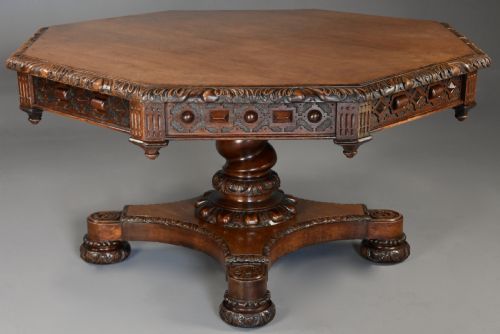

Gothic Oak Hall Table
A gothic oak hall table brings architectural weight and heavy carving into an entranceway, offering a sturdy surface shaped by nineteenth-century revival movements.
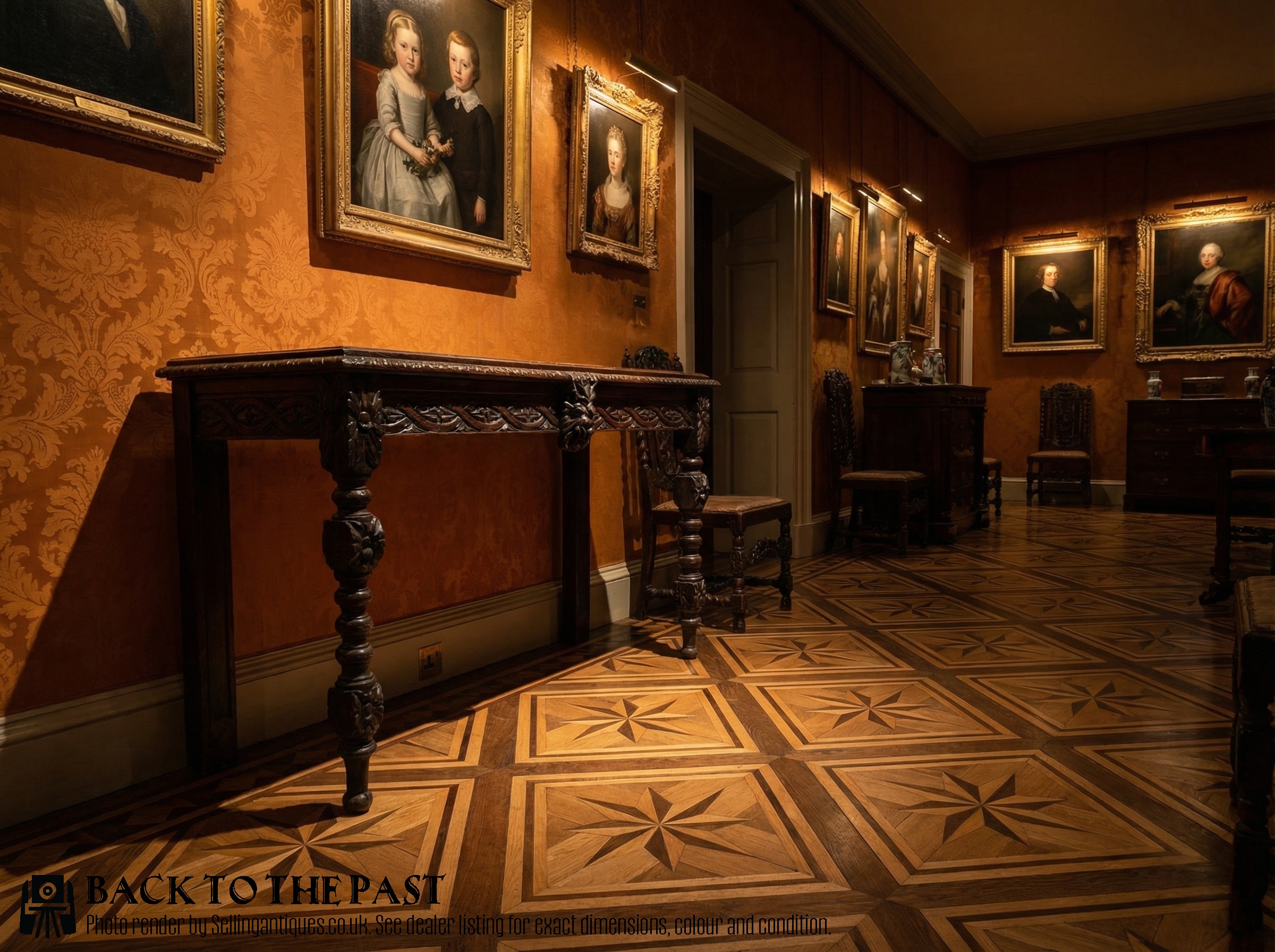
Gothic Oak Hall Table
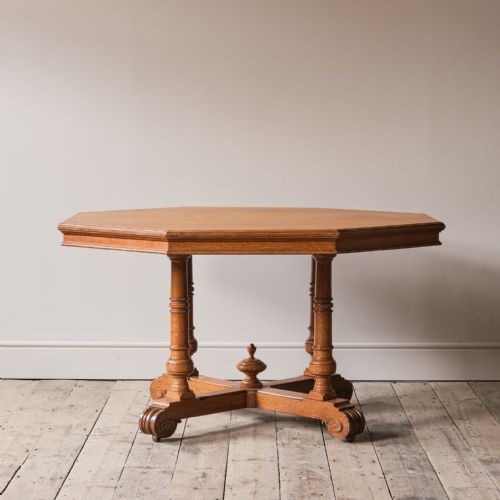
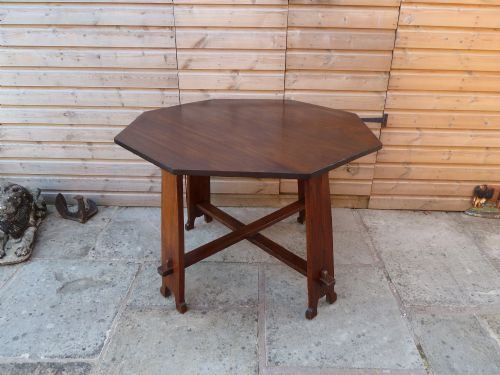
A gothic oak hall table sits comfortably in narrow entranceways and reception rooms, providing a practical surface with distinct medieval architectural references. These pieces emerge primarily from the nineteenth century, spanning Victorian, Arts and Crafts, and Gothic Revival movements.
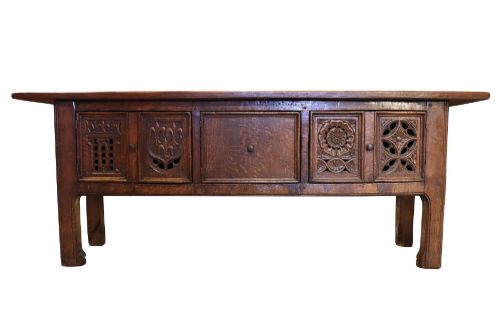
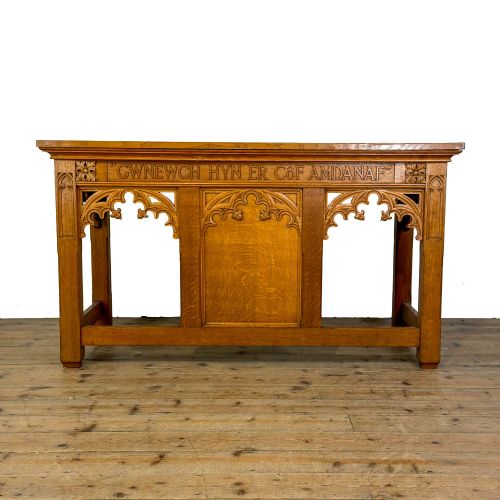
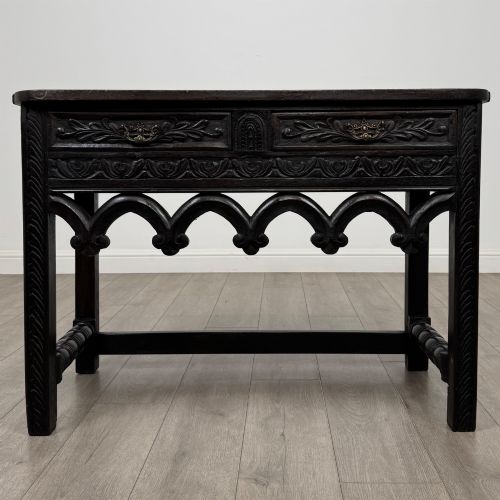
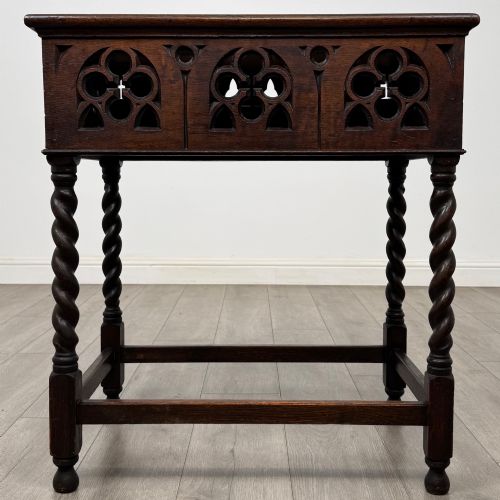
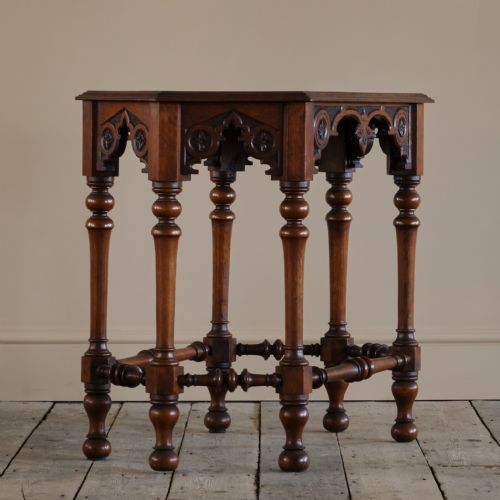
Most examples found here combine heavy structural timber with characteristic details such as tracery, pointed arches, and deep relief carving. Alongside dedicated hall tables, buyers frequently encounter related side tables, console tables, and serving pieces sharing the same dark aesthetic.
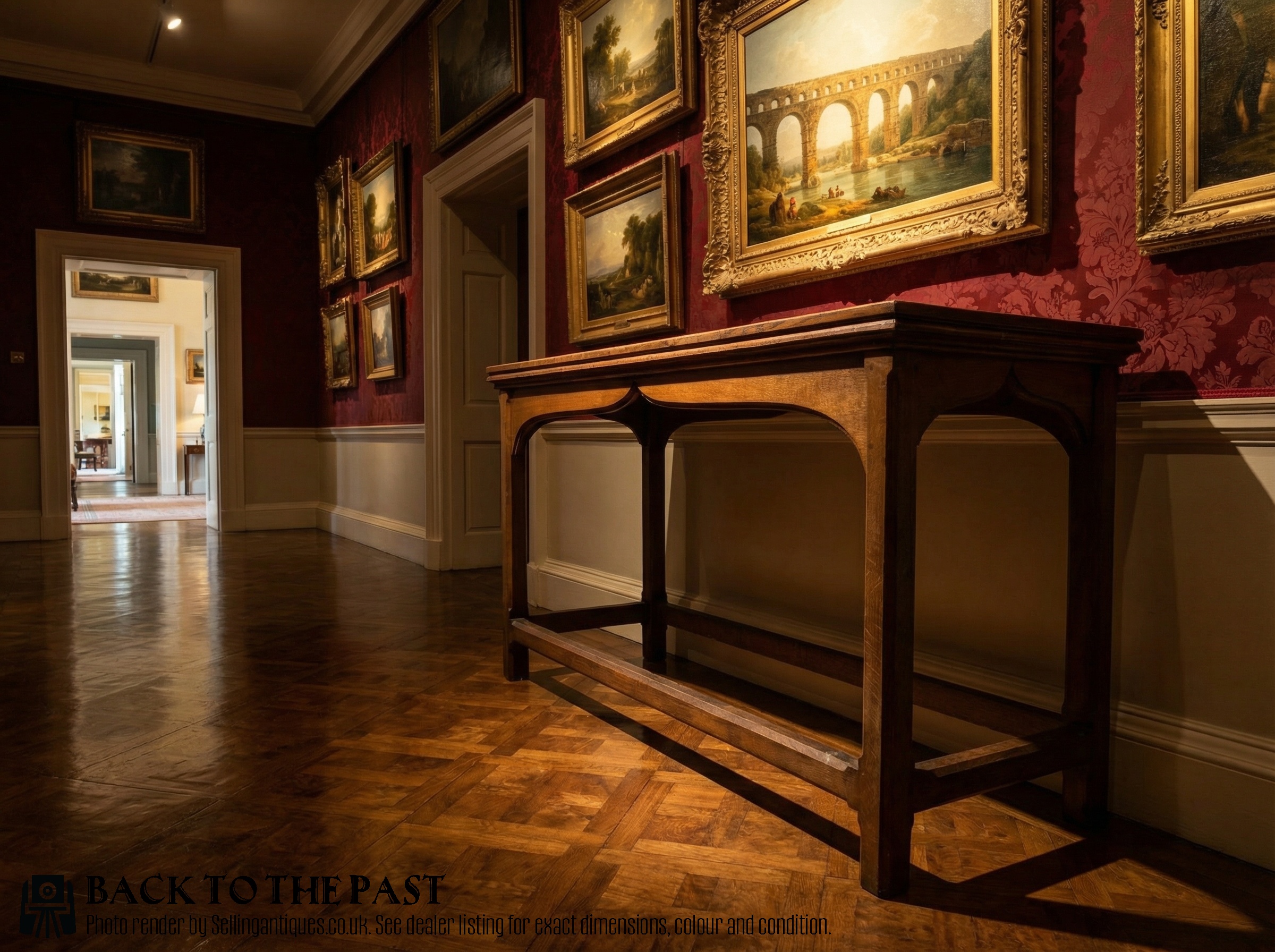
How They Were Made
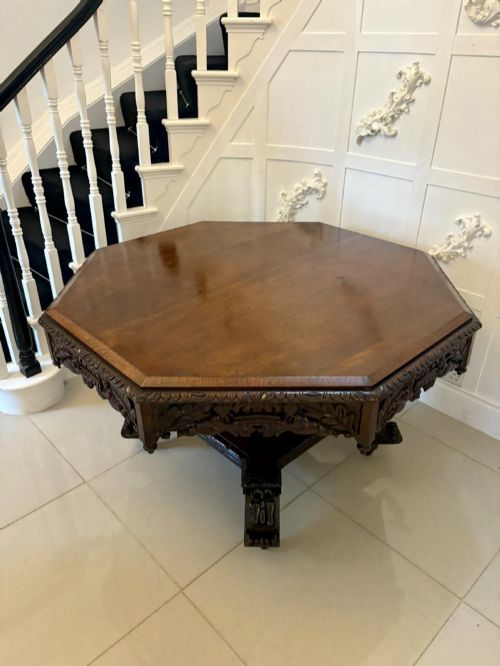
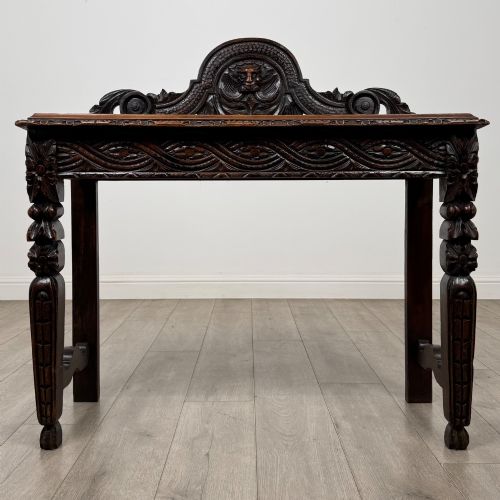
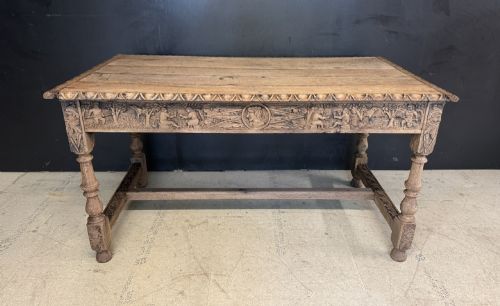
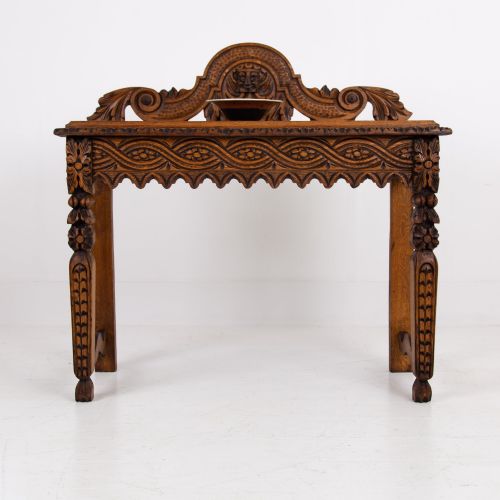
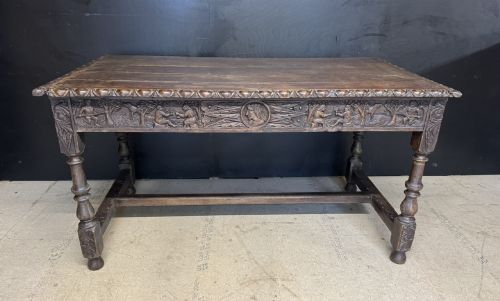
Cabinetmakers relied on solid oak as the primary structural and decorative material, sometimes augmented by ebonised wood or brass mounts. Surfaces were frequently treated with extensive hand carving to produce deep mouldings, figural greenman motifs, and geometric panels.
Joinery techniques prioritised durability, utilising heavy frames and sturdy legs to support substantial tabletops. Timber finish varied from honey-toned oak to darker, wax-polished surfaces accumulated over generations of use.
Watch closely for hidden greenmen glaring out from beneath the tabletop, keeping a watchful wooden eye on your post.
What Varies in Quality
Quality rests principally in the depth and sharpness of the hand carving, where crisply defined tracery and detailed figural work distinguish superior examples from simpler production. The choice of timber also dictates overall merit, with dense, highly figured solid oak holding greater presence than plainer boards.
Proportion and structural integrity separate robust examples from the rest, particularly in narrow formats designed specifically for hallways. Integration of secondary elements, such as fitted drawers and original brass hardware, elevates the standing of an individual piece.

The Gothic Oak Hall Table Glossary
- Gothic Revival
- An architectural and decorative style drawing inspiration from medieval design, featuring pointed arches, quatrefoils, and heavy vertical lines. This aesthetic dominated much of nineteenth-century furniture production.
- Greenman
- A sculptural motif depicting a human face entwined with or emerging from foliage and vines. It appears frequently in carved wood ornamentation during the Victorian period.
- Tracery
- Openwork stonework patterns translated into wooden furniture panels, mimicking the stone window designs of medieval churches. It forms a core decorative element on revival side tables.
- Refectory Table
- A long, narrow dining or serving table traditionally used in monasteries and large halls. In later periods, makers adapted these sturdy forms for domestic use.
- Credence Table
- A small medieval-style side table featuring folded linen panels or heavy bracket supports. These items served ecclesiastical or domestic display functions.
Gothic Oak Hall Table: Frequently Asked Questions
Where should I place a gothic oak hall table?
These pieces suit entrance halls, narrow corridors, and spacious landings where their architectural lines can anchor the space. Their narrow proportions allow them to sit flat against walls without obstructing pathways.
They also function effectively in reception rooms as display surfaces or serving tables. Pair them with simple walls to let the heavy timber work stand out.
How do I clean and maintain antique oak furniture?
Dust the surface regularly with a soft, dry cloth to prevent grit accumulation in the deep carvings. Avoid modern silicone sprays that can damage the antique wax finish over time.
Apply a traditional beeswax polish sparingly once or twice a year to nourish the timber. Keep the furniture away from direct heat sources and strong sunlight to prevent wood splitting.
What is the difference between a hall table and a side table?
Hall tables are specifically built with narrow proportions to fit transit spaces and entryways without blocking movement. They often feature drawers for storing household keys and small items.
Side tables generally offer deeper surfaces intended for general placement against living room or dining room walls. Both forms share similar stylistic details in nineteenth-century revival furniture.
How can I tell the period of a carved oak table?
Examine the construction methods beneath the top and inside any drawers for tool marks and joint types. Nineteenth-century revival pieces often mix medieval motifs with Victorian cabinetmaking techniques.
Look at the patina and wear patterns around the edges and feet to understand the age of the timber. Stylistic clues such as Arts and Crafts simplicity or heavy Gothic Revival carving help narrow down the decade.