
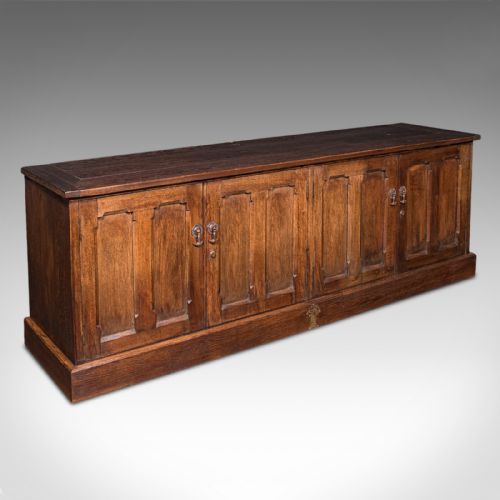


Gothic Oak Dresser Base
A gothic oak dresser base is a heavy, timber-built storage piece defined by pointed arches, tracery and robust joints, brought into rooms that need weight and character.
Gothic Oak Dresser Base
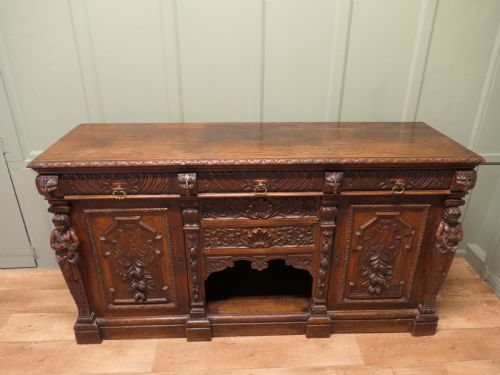
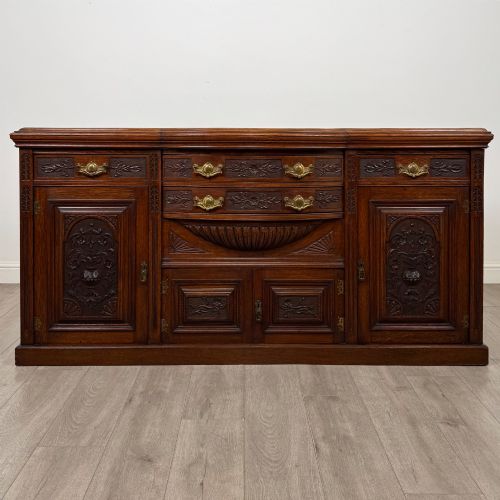
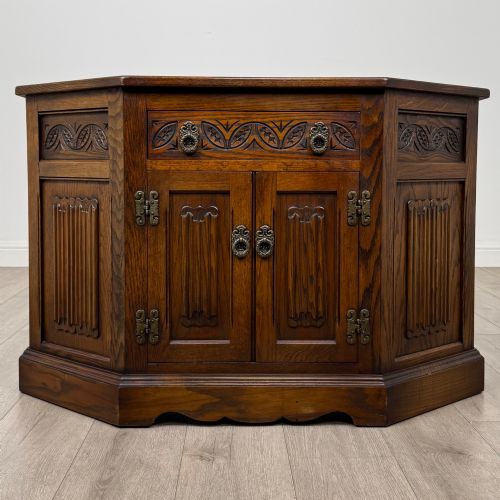
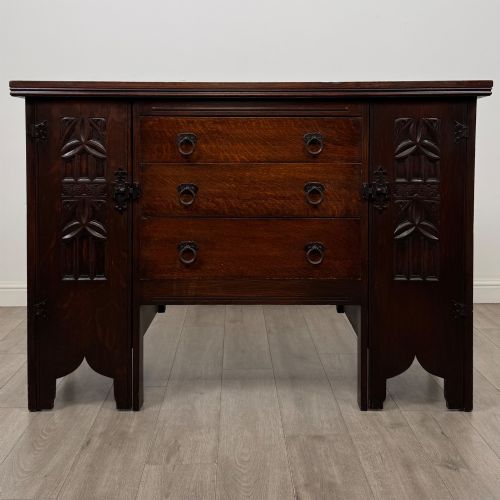
A gothic oak dresser base is a substantial timber sideboard or low storage cabinet built with architectural motifs drawn from medieval buildings. The versions encountered most frequently on this page date from the Victorian period and the nineteenth century, often carrying deep paneling, heavy mouldings, and structural carvings.
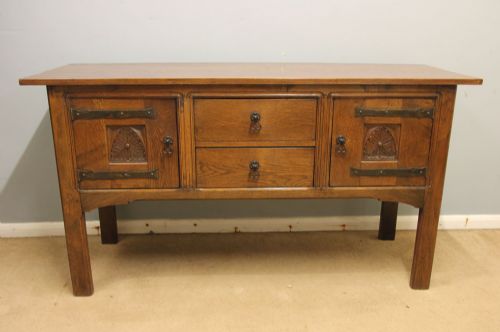
Makers adapted these low forms from earlier domestic furniture, resulting in pieces classified variously as sideboards, cupboards, and dresser bases. The overall silhouette remains low and horizontal, designed to stand against a dining room or hallway wall while providing heavy enclosed storage behind panelled doors.
How they were made
The primary material across these listings is solid oak, selected for its density, durability, and deep grain. Workshops constructed these carcases using traditional joinery, framing heavy panels within solid timber stiles and rails to accommodate the natural movement of the wood over decades.
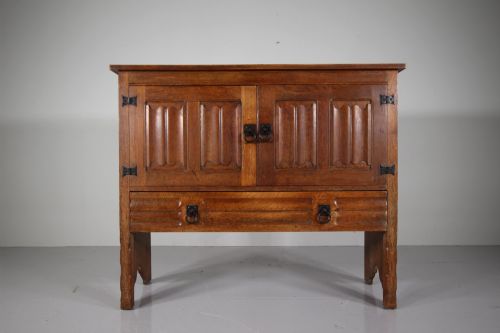
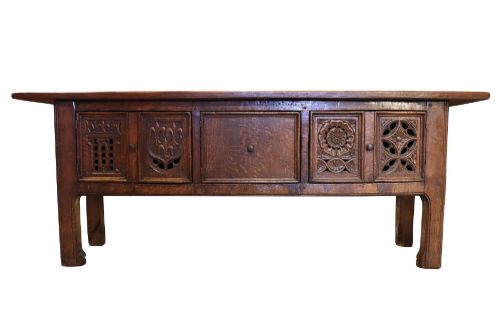
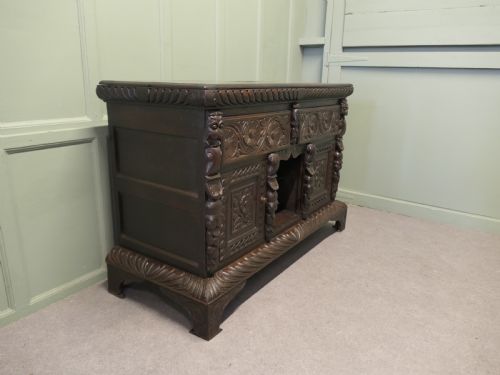
Metalwork played a functional and decorative role, with brass and iron used for hinges, drop handles, and escutcheons. Carvers worked directly into the solid oak timbers, executing linenfold patterns, tracery, and green man masks with hand gouges and chisels.
Several pieces feature grinning Green Man masks carved directly into the oak doors, keeping a watchful wooden eye on the dining room.
What varies in quality
The distinction between a standard workshop piece and a finer example lies in the depth and precision of the carved ornament. Crisp undercut mouldings, well-proportioned linenfold panels, and carefully balanced hardware elevate a piece above simpler, later vernacular furniture.
Timber selection and structural integrity also dictate the standing of a piece. Dense, quarter-sawn oak with consistent figuring commands attention, while heavily restored carcases or replacement backs alter the physical integrity of the construction.
The Gothic Oak Dresser Base Glossary
- Dresser base
- A low cabinet or sideboard designed with cupboards and drawers beneath a solid top, omitting the upper plate racks of a traditional kitchen dresser.
- Linenfold
- A style of woodcarving that imitates vertical folds of folded fabric, commonly seen on Tudor and revival cabinet doors.
- Green Man
- A sculptural mask carved into wood or stone depicting a human face surrounded by or sprouting foliage, frequently found on revival furniture.
- Gothic Revival
- An architectural and decorative style drawing inspiration from medieval forms, pointed arches, and ecclesiastical tracery.
- Strawberry Hill
- A specific sub-style of Gothic Revival originating from Horace Walpole's villa, known for lighter, whimsical ogee arches and delicate ornamentation.
Gothic Oak Dresser Base: Frequently Asked Questions
How do I date a gothic oak dresser base?
Examine the construction methods visible inside the cupboards and drawers, noting whether hand-cut dovetails or machine-sawn components were used. The style of carving and the treatment of the oak timbers also help separate early nineteenth-century pieces from later revival work.
Hardware and hinges provide further clues to the period. Original iron or brass fittings match the technology of the workshop era, whereas replaced screws and modern fixings indicate subsequent maintenance.
Where should I place a dresser base in my home?
Because of their low profile and heavy timber construction, these pieces suit dining rooms, wide hallways, or living spaces where they can anchor a large wall. Their enclosed cupboards provide practical storage for heavy tableware or linens.
Ensure the room has stable humidity levels to protect the solid oak timber. Placing the piece away from direct heat sources prevents the wood panels from splitting or warping over time.
What is the difference between a sideboard and a dresser base?
In historical terminology, these terms often overlap, as seen in pieces catalogued as both sideboards and dresser bases. Generally, a dresser base derives from vernacular kitchen furniture traditions, while a sideboard evolved specifically for the formal dining room.
Both forms offer low horizontal storage with top surfaces suited for display. The distinction usually rests on regional naming conventions and the specific architectural mouldings applied by the maker.
How do I care for antique oak furniture?
Maintain the timber by applying traditional beeswax sparingly and buffing it with a soft cloth to preserve the natural lustre of the oak. Avoid commercial silicone polishes, which can build up on the surface and dull the grain.
Keep the piece out of direct sunlight to prevent the oak from fading unevenly. Regular dusting with a dry lint-free cloth is sufficient for daily maintenance.