





Edwardian Gothic Sideboard
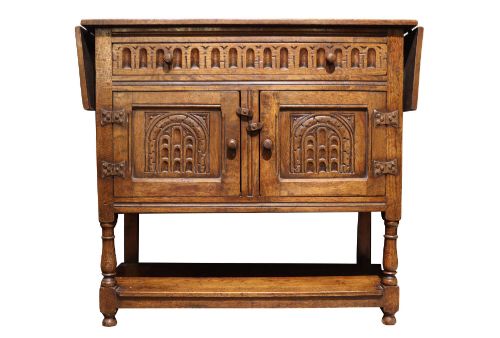
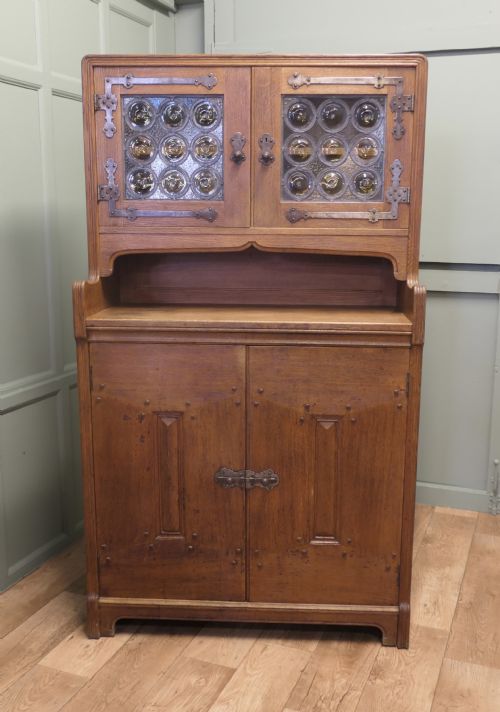
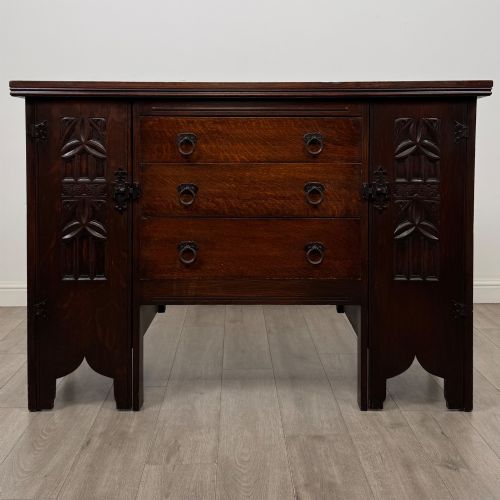
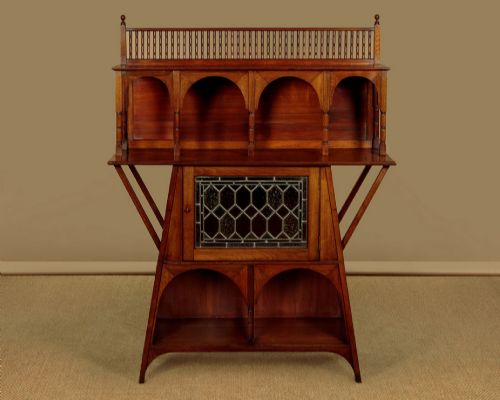
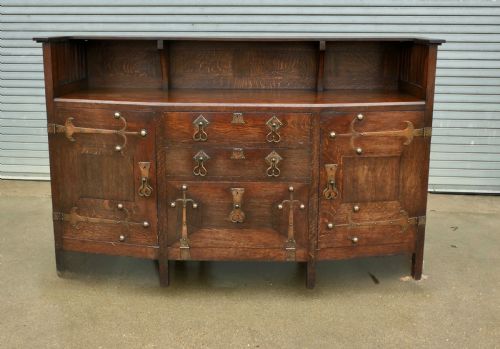
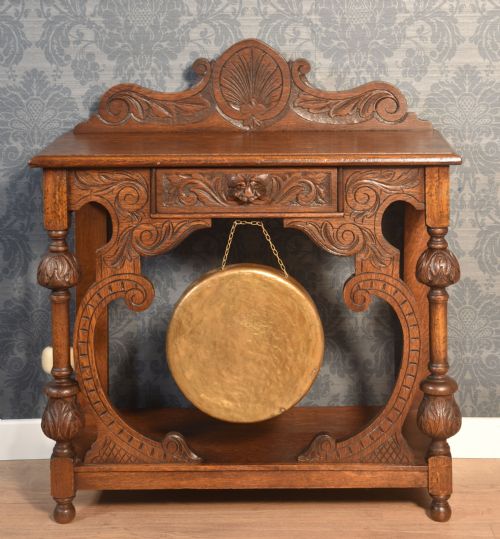
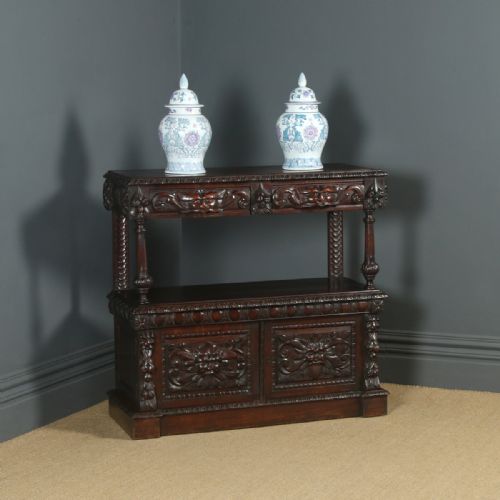
These heavy timbers and dark carvings give an edwardian gothic sideboard its unmistakable weight and presence in a dining room.
Edwardian Gothic Sideboard
An edwardian gothic sideboard combines the heavy, ecclesiastical lines of the Gothic Revival with the practical storage needs of domestic dining rooms. Buyers seeking this form encounter robust pieces intended for formal entertaining, often drawing on earlier Victorian ideas.
The pieces on this page span several decades and stylistic crossovers, including Arts and Crafts interpretations and Aesthetic Movement cabinets. Oak dominates the selection, frequently paired with carved details and substantial proportions suited to large interiors.
Materials and construction
Cabinetmakers relied heavily on solid oak for these carcasses, sometimes working in walnut or mahogany for specific display cabinets and sideboards. Timber selection prioritized straight-grained boards capable of taking deep relief carvings.
Metal hardware played a crucial role in the construction, utilising brass, iron, copper, and lead for hinges, handles, and decorative leaded glass panels. Ceramic elements occasionally appeared in tile inserts, while glass featured prominently in display doors.
Listings feature oak as the primary timber, complemented by walnut and mahogany across various cabinet forms.
Evaluating craftsmanship
The distinction between standard production and exceptional workshop output lies in the depth and crispness of the carving, particularly on figural motifs like Green Man masks. Superior examples show careful hand-tooling rather than shallow, mechanical shaping.
Construction methods determine long-term durability, with superior pieces utilising traditional joinery in the drawers and carcase rather than surface fixings. The integration of designer provenance, such as pieces associated with Liberty or specific makers, elevates the standing of the furniture.
Liberty & Co.·Leonard Wyburd·John Moyr Smith
The Edwardian Gothic Sideboard Glossary
- Gothic Revival
- A style drawing inspiration from medieval architecture and church design, featuring pointed arches and heavy mouldings. This aesthetic heavily influences the carved panels found on these sideboards.
- Arts and Crafts
- A design movement prioritising traditional craftsmanship, natural materials, and simple utility over mass production. Pieces from this tradition often show exposed joinery and honest construction.
- Aesthetic Movement
- A late nineteenth-century design current focusing on visual beauty rather than narrative meaning or strict historical revival. Cabinets from this group incorporate refined lines and artistic brass hardware.
- Green Man
- A sculptural motif depicting a human face emerging from or entwined with foliage and vines. It appears frequently as a carved detail on heavy oak furniture of this period.
Edwardian Gothic Sideboard: Frequently Asked Questions
How do I clean an oak sideboard?
Dust regularly with a dry, soft cloth to prevent dirt accumulation in the deep crevices of the carving. Avoid silicone-based polishes that can build up on the wood surface over time.
Feed the timber periodically with a traditional beeswax to maintain the natural moisture and sheen of the oak. Keep the furniture away from direct heat sources and strong sunlight to prevent timber splitting.
Where should I place this sideboard?
These substantial pieces require a wall with sufficient load-bearing capacity and enough floor space to accommodate their depth. Dining rooms and large hallways offer the ideal environment for their proportions.
Ensure the room has stable humidity levels to protect the solid timber and any incorporated glass or metal elements. Position the piece where its carved details catch natural light effectively.
What is a Green Man carving?
A Green Man is a decorative architectural and furniture motif showing a face surrounded by or sprouting leaves and vines. It symbolizes rebirth and the cycle of growth in nature.
In these sideboards, the motif usually appears on central drawer fronts or cupboard doors as a bold relief carving. It links domestic furniture back to medieval stonework traditions.
How do I distinguish Edwardian from Victorian pieces?
Edwardian furniture generally exhibits slightly lighter proportions and softer interpretations of historical styles compared to heavier Victorian counterparts. The integration of Arts and Crafts influences often points toward the later period.
Look at the hardware, secondary timbers, and overall scale to help determine the manufacturing decade. Overlapping stylistic revivals mean construction methods often provide the clearest guide to age.