
20th Century Oak Sideboard
A 20th century oak sideboard anchors a dining room with honest timber and enduring utility, bringing substance to daily life.
Understanding the pieces
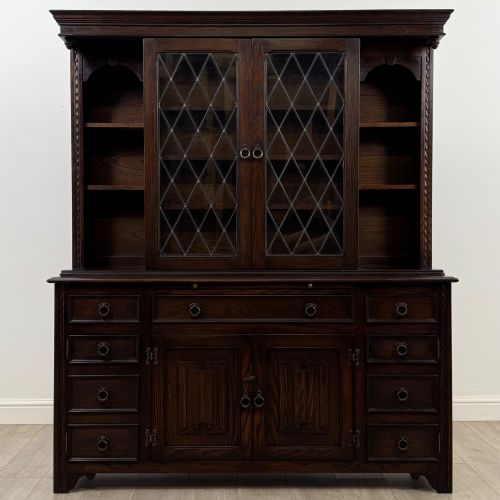
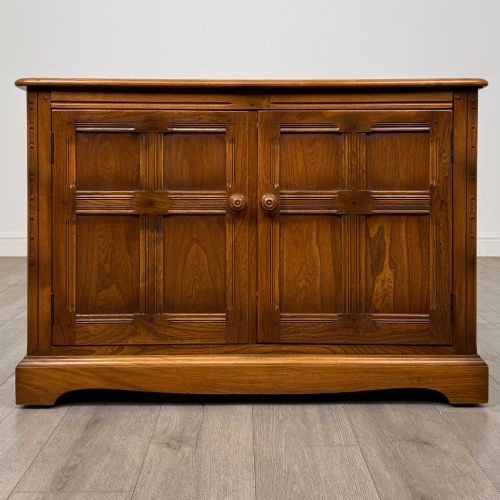
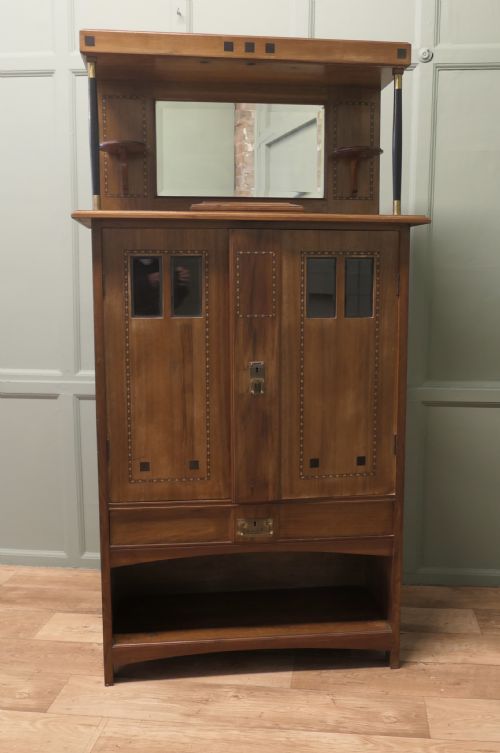
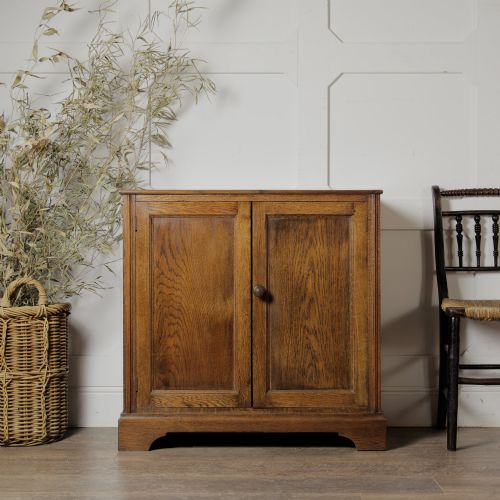
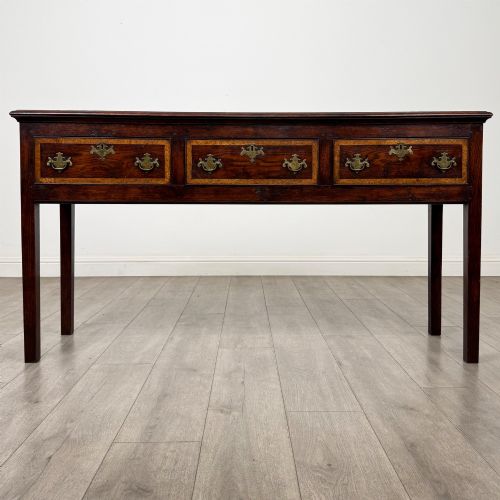
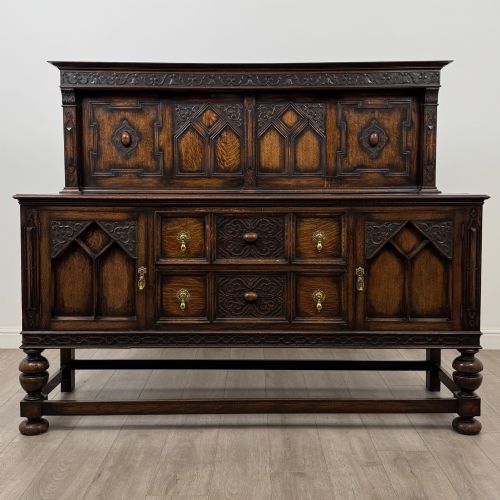
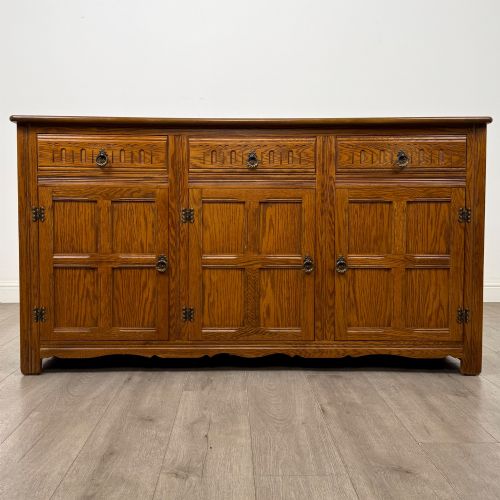
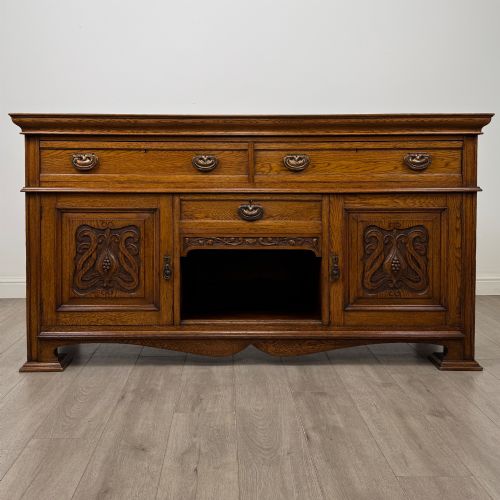
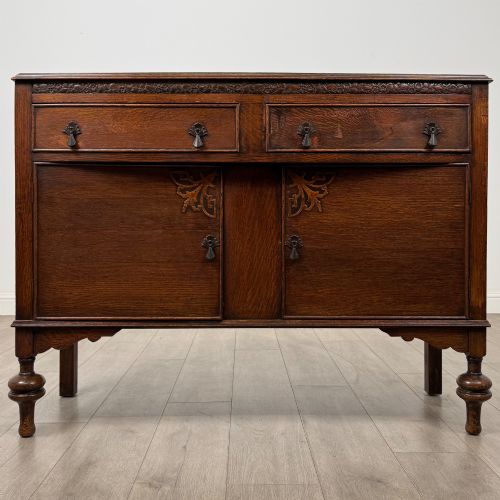
Every 20th century oak sideboard meets a practical need for storage while displaying the distinct character of its period. You will frequently encounter Edwardian examples alongside pieces reflecting Jacobean Revival, Gothic Revival, English Country, Arts and Crafts, Art Nouveau, and Art Deco styles.
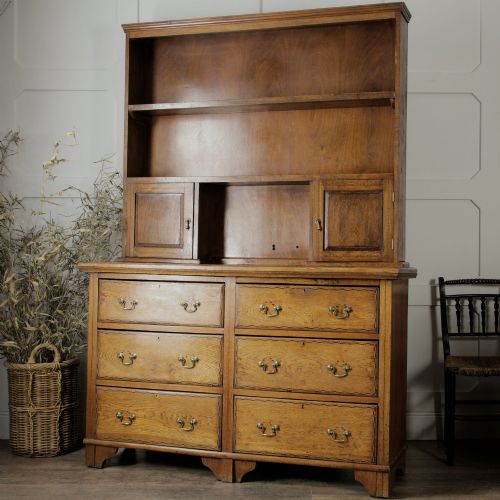
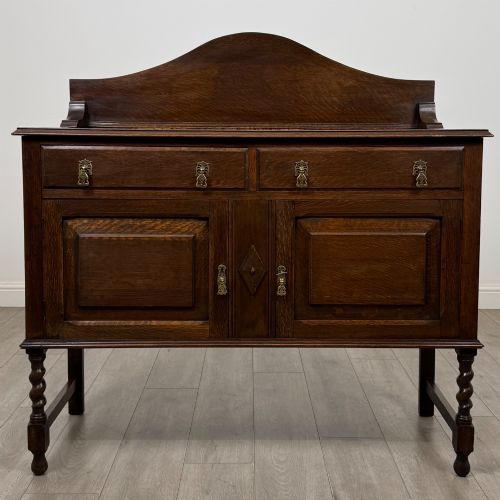
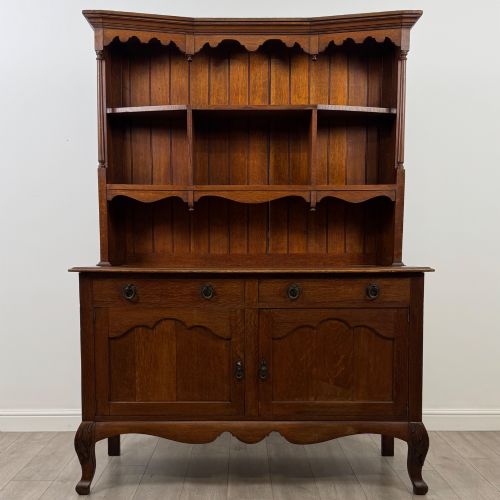
The form spans straightforward sideboards, larger dresser bases, and variants fitted with plate racks or barley twist supports. Golden oak and darker native timber finishes appear regularly across these practical domestic pieces.
Materials and construction
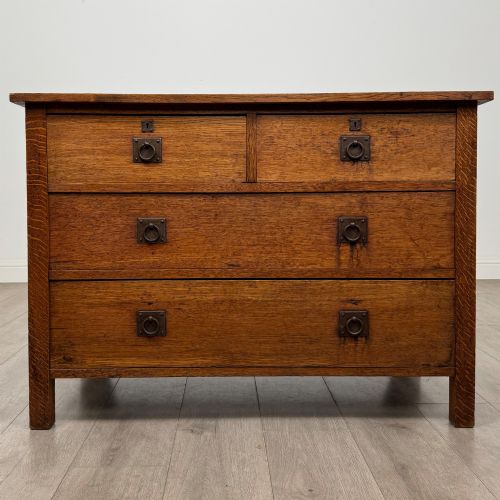
Makers built these pieces primarily from solid oak, sometimes highlighted with iron and metal hardware for hinges, handles, and structural bracing. Carpenters utilised traditional joinery methods to ensure stability across heavy sideboards and dresser bases.
Surface treatments range from plain golden oak polishing to detailed carving, depending on whether the piece follows a clean modern line or a revivalist aesthetic.
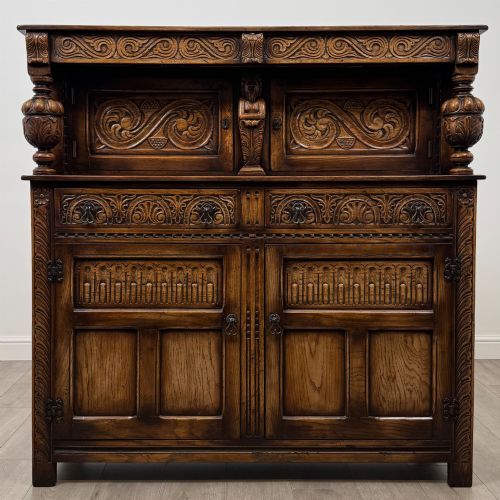
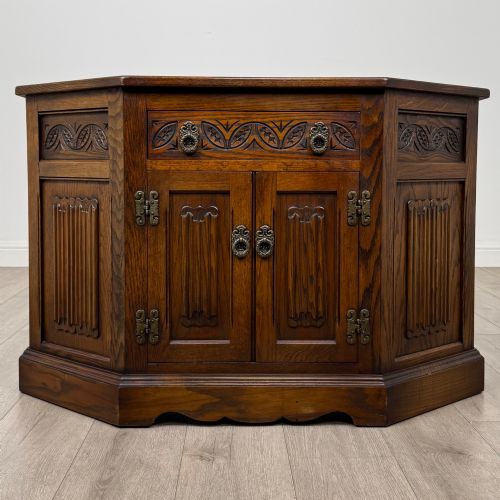
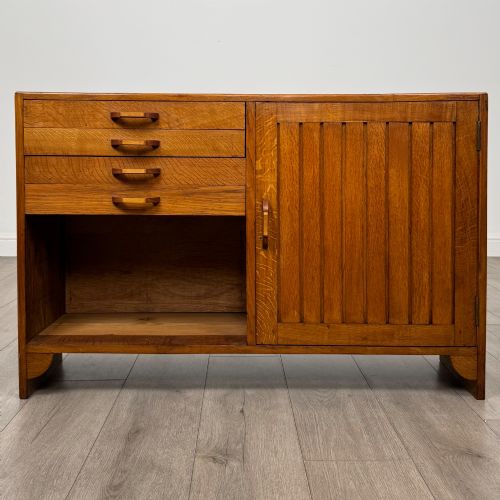
The archive reveals Edwardian sideboards spanning revival styles, Arts and Crafts designs, and Art Deco forms.
Separating the grades
Quality rests upon the selection of the timber, the depth of the grain in golden oak, and the crispness of any applied carving. Pieces designated as fine quality exhibit superior structural tightness and more thoughtful proportions.
Simpler workshop output relies on straightforward function, whereas higher-grade examples incorporate considered stylistic details such as specialised metal fittings or refined barley twist turnings.
The 20th Century Oak Sideboard Glossary
- Golden oak
- A bright, warm timber tone favoured in Edwardian furniture production. It highlights the natural grain patterns of the wood.
- Jacobean Revival
- A design style mimicking 17th-century heavy panelling, turning, and rectilinear framing. It brings architectural weight to later sideboards.
- Barley twist
- A spiral turning technique used on table legs and sideboard supports. This decorative feature adds dynamic movement to solid oak furniture.
- Dresser base
- The lower section of a kitchen or dining storage unit, often fitted with drawers and cupboards. Some examples include an upper plate rack.
- Arts and Crafts
- A movement prioritising visible construction, honest materials, and plain utility over excessive ornamentation. It celebrates the inherent qualities of oak.
Frequently Asked Questions
How do I clean a vintage oak sideboard?
Dust the timber regularly with a soft, dry cloth to prevent dirt build-up in the grain and carved sections.
Apply a traditional beeswax polish occasionally to nourish the oak and maintain a gentle, protective sheen.
Where should I place a sideboard at home?
Position the piece against a dining room wall where it provides accessible storage for tableware, linen, and serving dishes.
Keep the timber away from direct heat sources and strong sunlight to prevent the oak from drying out or fading.
How do I identify a Jacobean style piece?
Look for heavy turned supports, geometric moulding, and panelled cupboard doors that reference seventeenth-century joinery traditions.
These details give the oak sideboard an austere, architectural presence distinct from smoother Art Deco or Edwardian designs.
What is the difference between an Edwardian and Art Deco sideboard?
Edwardian versions often lean towards revival styles like Jacobean or Gothic influences, featuring rich grain and carved elements.
Art Deco examples prioritize streamlined forms, geometric simplicity, and smooth surfaces that reflect early twentieth-century modernism.