





Gothic Oak Chest
A gothic oak chest brings centuries of heavy timber, traceried panels and dark ironwork directly into a modern room.
Gothic Oak Chest
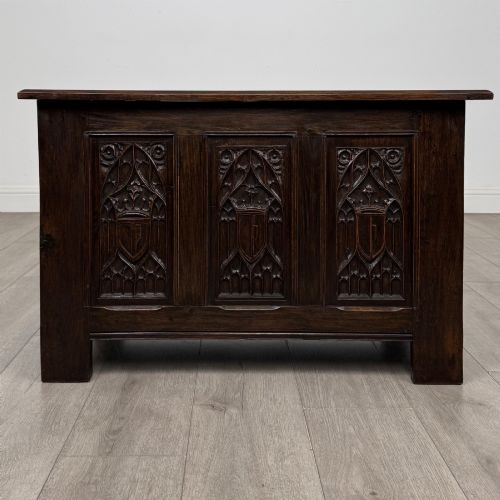
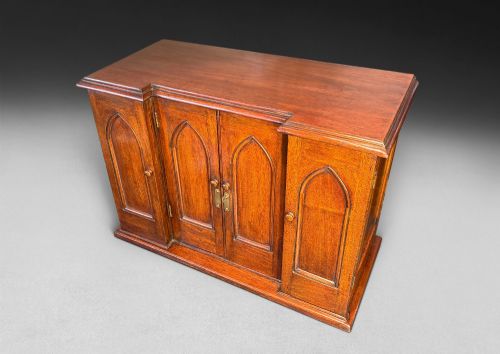
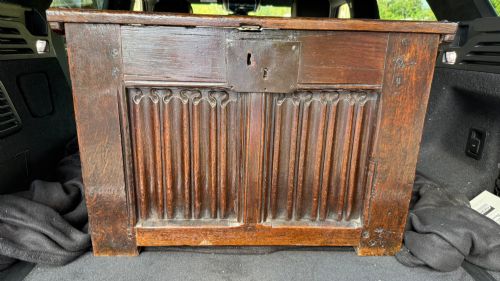
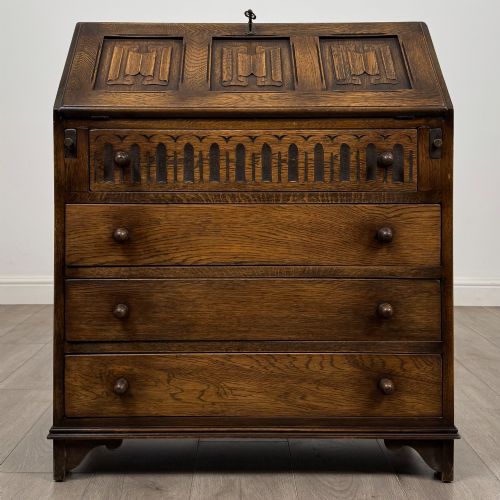
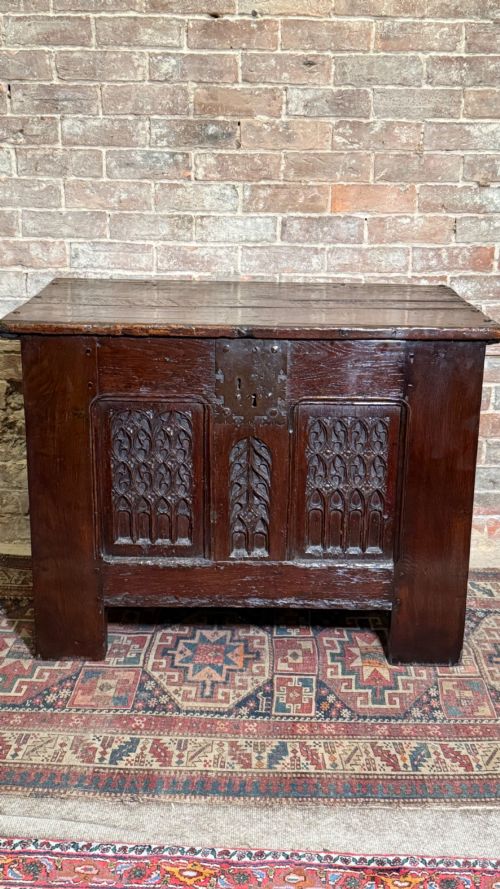
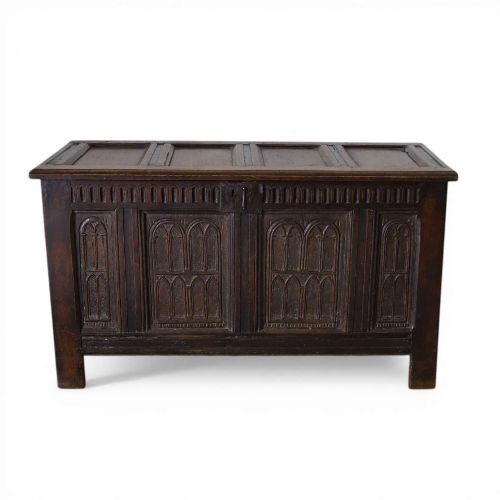
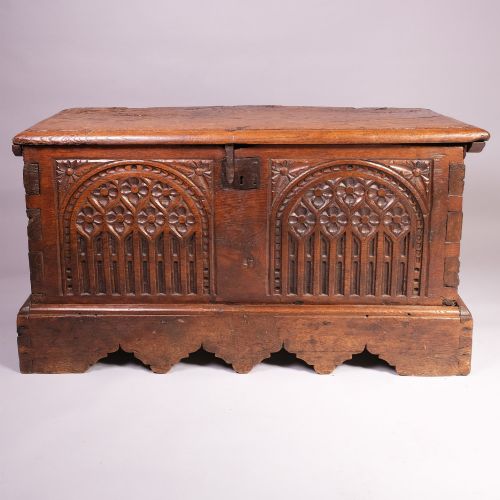
When you search for a gothic oak chest, you encounter heavy timber storage pieces that span from medieval plank coffers to nineteenth-century revival interpretations. The examples on this page range from sixteenth-century ecclesiastical coffers with linenfold carving to Victorian Gothic Revival chests of drawers fitted with brass and iron hardware.
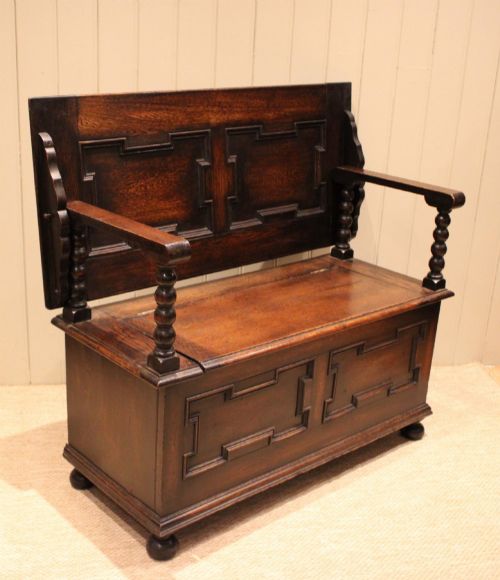
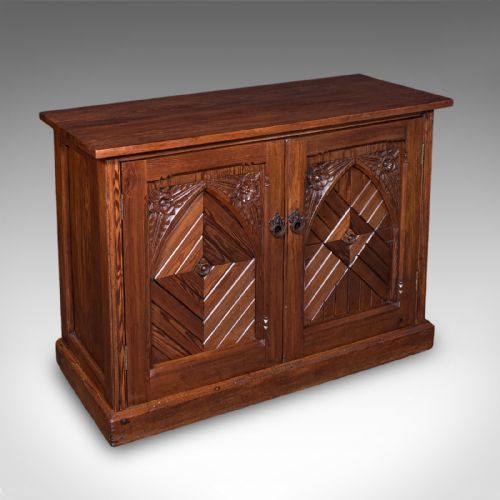
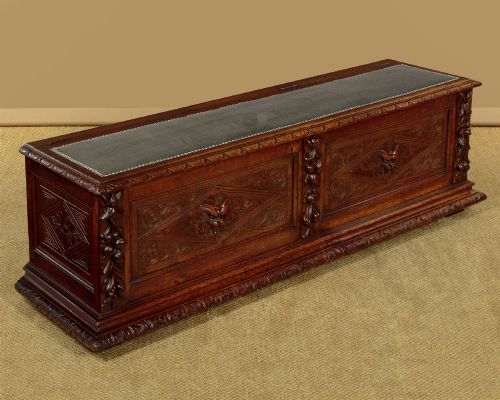
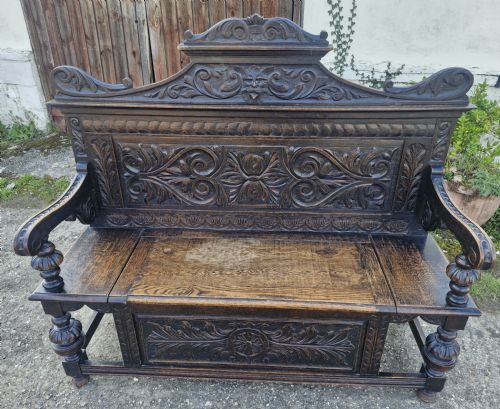
The primary forms take shape as robust coffers, plank chests, and monumental storage boxes often associated with monastic foundations, parish churches, and wealthy households. Alongside these traditional forms appear nineteenth-century adaptations including hall benches, bedside chests, and specialised cabinets.
Origins stretch across English, French, Spanish, and continental workshops, showing periods from the late medieval era through the Tudor age and into the Victorian revival. Buyers meet both authentic early survivors with simple peg construction and later revival pieces displaying elaborate tracery and grotesque carvings.
Timber and Construction Methods
The dominant material across these listings is solid oak, frequently paired with secondary woods such as elm, pollard oak, and chestnut, alongside durable iron and brass for strapwork hinges and lock plates. Carpenters of the early periods relied on thick cleft planks joined by wooden pegs and reinforced with heavy wrought iron bands.
Carving techniques evolved from simple chip-carved geometric patterns and folded linen panels to deep relief work depicting saints, tracery, and grotesque green man faces. Later nineteenth-century makers utilised steam-pressed mouldings and applied ornamentation while retaining the dark patination and sturdy proportions of the historical originals.
Gothic Oak Chest Retail Price Guide 2026
Typical asking prices for gothic oak chest among the pieces listed under this phrase on Sellingantiques today, from the lower quarter to the upper quarter. They describe what is for sale here now, not the wider market.
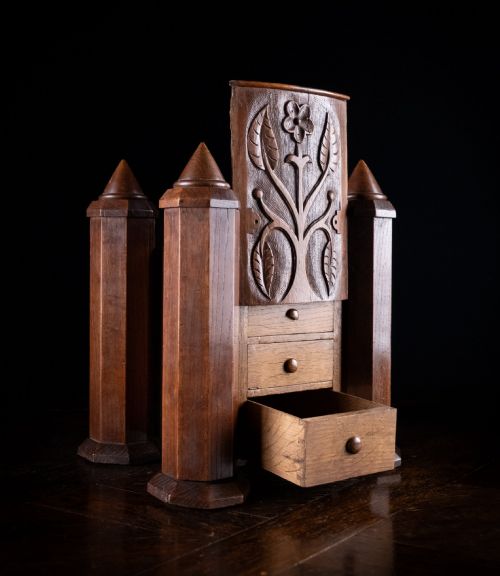
Secret drawers hidden behind elaborately carved Gothic panels rewarded curious owners with concealed storage for coin and correspondence.
Assessing Depth of Workmanship
Quality rests in the integrity of the original timber and the crispness of the hand-carved details, distinguishing vernacular country pieces from urban commission work. Superior examples display deeply undercut tracery, original iron strapwork, and minimal structural timber replacement.
Proportion and surface patination further divide the range, as pieces retaining their deep, untouched wax finish and early forged hardware command greater attention. The depth of the relief carving on panels and the complexity of stile-and-rail joinery separate standard production items from master-carved ecclesiastical furniture.
Gillows·Jack Grimble·AWN Pugin
The Gothic Oak Chest Glossary
- Coffer
- A heavy wooden chest traditionally used for storing valuables, documents, or vestments. Early examples feature plain plank construction secured with iron straps.
- Linenfold
- A style of carved wooden panelling popular in the Tudor period that resembles vertically folded lengths of cloth. This motif appears frequently on sixteenth-century church and domestic furniture.
- Tracery
- Architectural stonework-style openwork patterns of intersecting ribs used to decorate the wooden panels of Gothic furniture. Cabinet makers adapted stone window designs into wood relief carvings.
- Green Man
- A sculptural architectural ornament depicting a human face emerging from or entwined with foliage. Victorian Gothic revival pieces frequently incorporate this motif into drawer fronts and bench backs.
- Pillar Chest
- A tall, narrow chest of drawers designed with architectural columns or pilasters framing the drawer fronts. These pieces often draw inspiration from nineteenth-century design publications.
Gothic Oak Chest: Frequently Asked Questions
How do I spot a true sixteenth-century coffer?
Authentic sixteenth-century pieces display hand-riven oak planks secured with wooden trunnels rather than modern steel screws. The tool marks left by adzes and pit saws remain visible on the interior surfaces.
Ironwork on early coffers is typically hand-forged with irregular shapes and secured through slotted staples. Surfaces show deep, natural patination built up over centuries of handling.
Were these chests used as seating?
Many heavy coffers served dual purposes as both storage containers and benches in great halls and churches. The flat tops provided sturdy surfaces for sitting or resting objects.
Over time, makers adapted this dual function directly into hall benches and monks benches with hinged backs. The interior compartments remained practical for storing household textiles and garments.
What is the difference between a coffer and a chest?
A coffer strictly refers to a box constructed with frame-and-panel or thick plank techniques featuring a hinged lid opening from the top. Early medieval versions often lacked internal compartments entirely.
Chest generally describes forms that incorporate drawers beneath or within the main storage compartment. Victorian examples frequently evolved the basic box into multi-drawer configurations.
How do I care for antique oak furniture?
Maintain antique oak by applying a traditional beeswax polish sparingly to nourish the dry wood fibres. Avoid placement near direct heat sources or in fluctuating humidity to prevent timber splitting.
Clean surfaces gently with a soft, dry cloth rather than modern liquid chemical sprays. Regular gentle waxing preserves the historic dark patination without building up sticky residue.