



Rustic Carved Coffer
A rustic carved coffer provides sturdy storage with centuries of handmade character, bringing tactile warmth and history directly into your hallway or living space.
Rustic Carved Coffer
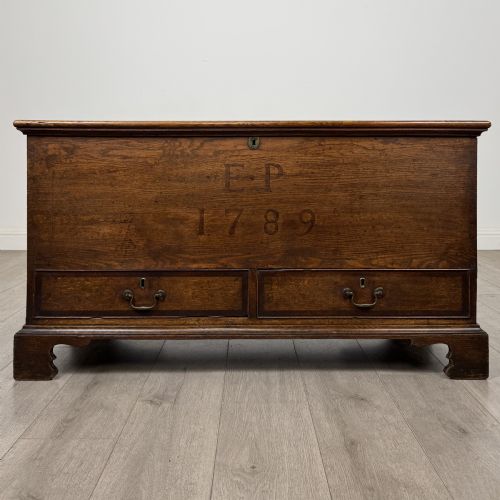
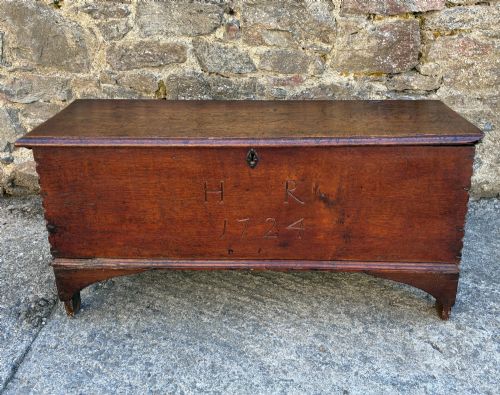
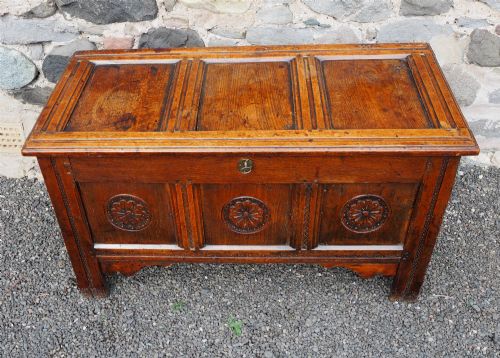
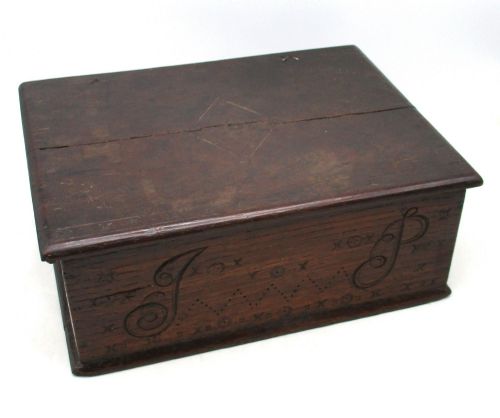
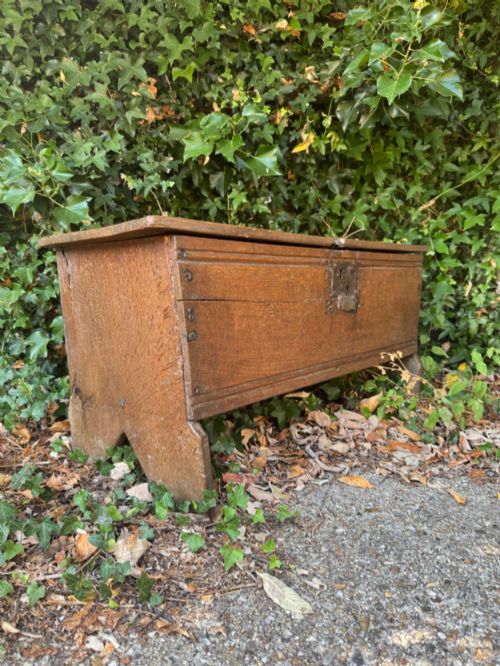
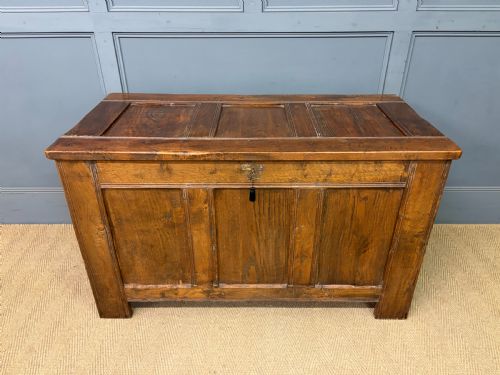
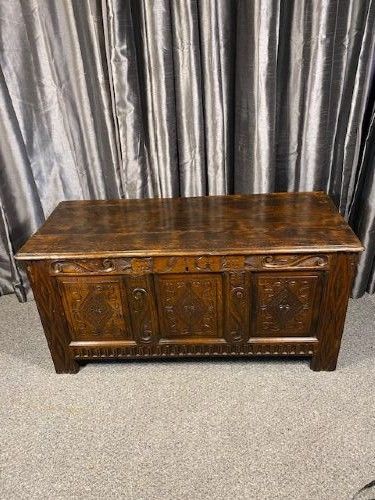
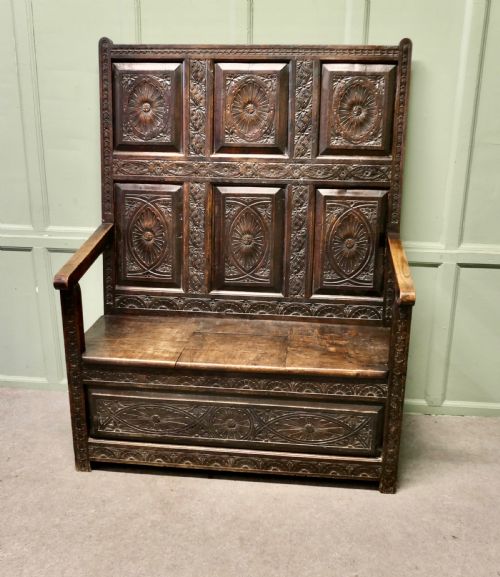
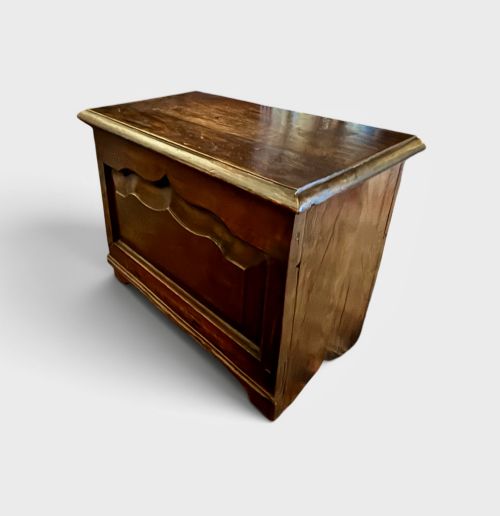
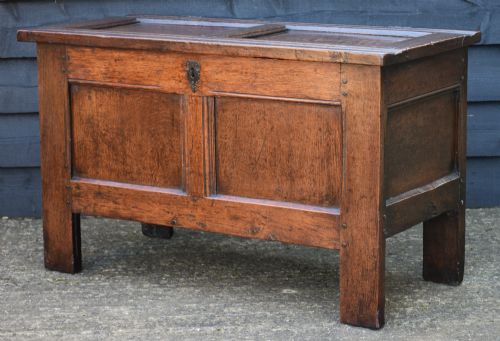
A rustic carved coffer is a heavy wooden storage chest built for domestic utility, commonly found spanning the seventeenth and eighteenth centuries alongside later nineteenth-century examples. These pieces range from compact Bible boxes and document chests to monumental dowry trunks and box-seated settles.
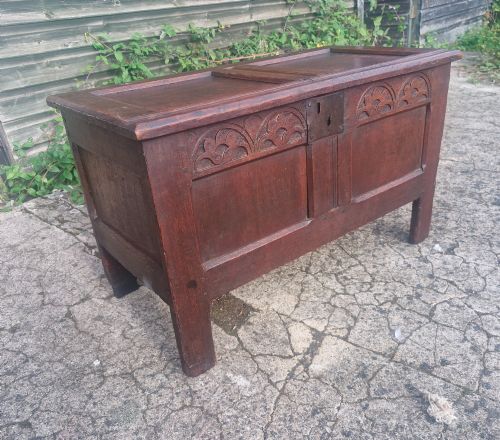
The versions most frequently met on this page are constructed from solid oak in English country styles, though French provincial pieces, Indian damchiyas, and Welsh regional variants also appear regularly. Their primary function remains straightforward storage, manifested through hinged lids and deep interior compartments designed for blankets, linens, and valuables.
Materials and construction methods
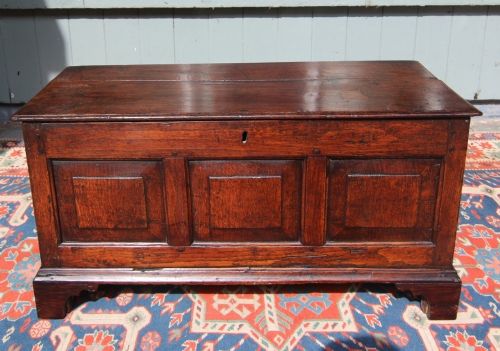
Makers relied primarily on solid oak, supplemented by teak, pine, burr elm, and paint, joined using traditional panel construction and sturdy pegging. Iron and brass hardware, including heavy hinges, corner brackets, and intricate locks, reinforced the structural integrity of these large boxes.
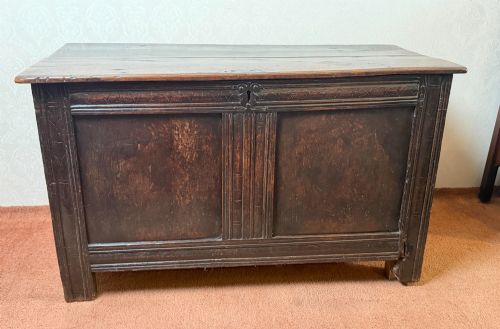
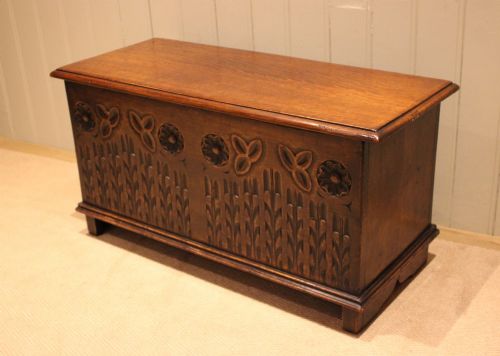
Surface decoration relies heavily on hand carving, utilising chip-carved geometric motifs, panelled fronts, and low-relief patterns executed directly into the timber. The integration of wrought iron binding on dowry chests provided both physical security and a distinct visual contrast to the natural grain of the wood.
Rustic Carved Coffer Retail Price Guide 2026
Typical asking prices for rustic carved coffer among the pieces listed under this phrase on Sellingantiques today, from the lower quarter to the upper quarter. They describe what is for sale here now, not the wider market.
Early Welsh joiners thoughtfully carved secret compartments inside for hiding spare groats from wandering tax collectors.
Distinctions in build and finish
Quality in these chests rests upon the selection of timber and the ambition of the joinery, distinguishing heavy planking and tightly fitted panels from more utilitarian utility boxes. Superior pieces exhibit crisp, deep hand carving and well-proportioned framing that maintains stability across centuries of use.
The presence of original ironwork, untouched surface patination, and intact locking mechanisms elevates certain examples above simpler formats. Variations in regional joinery traditions and the complexity of the carved details further separate standard provincial storage from exceptional workshop output.
Jack Grimble
The Rustic Carved Coffer Glossary
- Coffer
- A large wooden chest with a hinged lid, traditionally used for storing household valuables, linens, and dry goods. These heavy receptacles form the foundation of early domestic furniture.
- Mule chest
- A storage chest featuring one or more drawers built into the base beneath the main interior compartment. This form bridges the evolution between the simple coffer and the modern chest of drawers.
- Bible box
- A small, portable desk or storage box featuring a sloped or flat lid, originally designed for safeguarding sacred texts and writing materials. They often sit upon tables or specialised stands.
- Damchiya
- An elaborately carved traditional Indian dowry chest or storage cabinet, frequently reinforced with iron banding and fitted with specialised locking mechanisms. These pieces hail from regions such as Rajasthan.
- Settle
- A wooden bench featuring high backs and solid enclosed sides, often incorporating a box seat beneath the hinged bench top for dual storage and seating. They were placed near hearths to block draughts.
Rustic Carved Coffer: Frequently Asked Questions
What is a rustic carved coffer used for today?
These chests serve primarily as functional storage for blankets, bulky linens, and seasonal items in living rooms and entryways. Their robust flat lids also allow them to function as display surfaces or impromptu benches.
Placing one at the foot of a bed or beneath a window utilises their deep internal capacity while keeping heavy items concealed. The solid wooden construction ensures they easily withstand daily domestic interaction.
How do I tell a seventeenth-century coffer from an eighteenth-century one?
Seventeenth-century examples typically display heavier framework, starker panel construction, and characteristic geometric chip carving or simpler stile-and-rail joinery. The timber often shows deeper patination and broader tool marks from hand-cleaving.
Eighteenth-century pieces introduce softer proportional balance, finer mouldings, and occasionally incorporated drawer bases such as mule chests. Examining the interior construction and hinge types helps clarify the manufacturing era.
Are these chests heavy to move?
Solid timber construction utilising thick oak, teak, or iron reinforcement makes these pieces exceptionally heavy and robust. Moving them generally requires two people to ensure safety for both the carriers and the antique.
The weight stems from dense heartwood and substantial panel thicknesses designed to secure heavy contents securely. Once positioned, their sheer mass keeps them firmly anchored in place.
What is the difference between a coffer and a mule chest?
A standard coffer opens exclusively from the top lid, providing access to a single deep storage well. This represents the older, simpler form of household chest.
A mule chest integrates one or more external drawers beneath the main compartment, offering easier access to smaller items without disturbing the items piled on top. This hybrid design became popular during the Georgian period.