
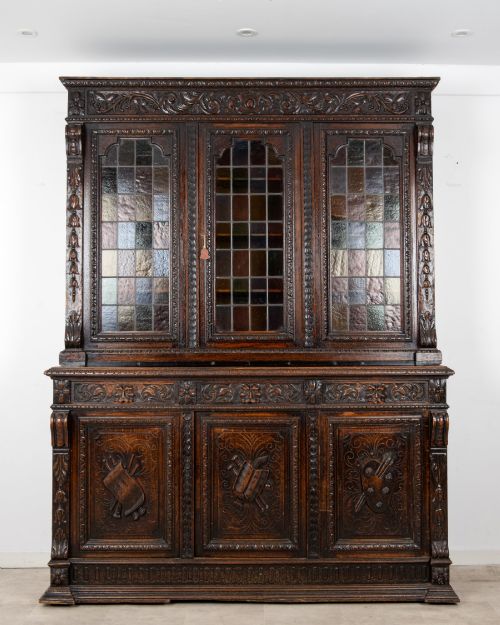
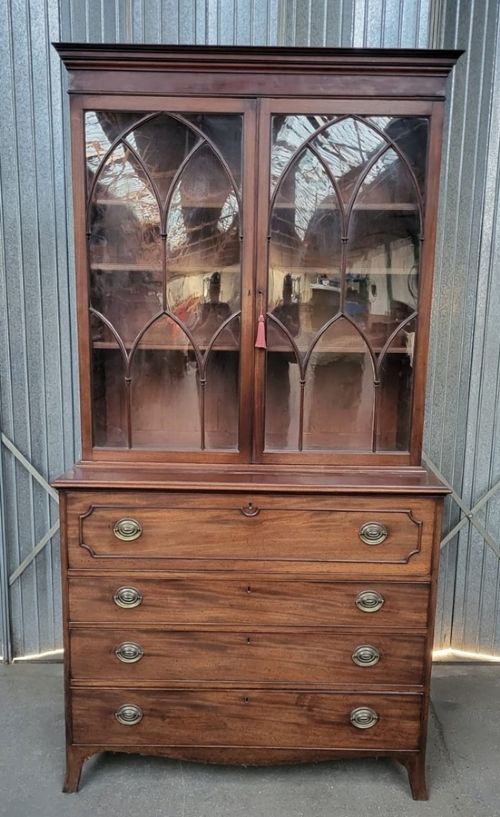
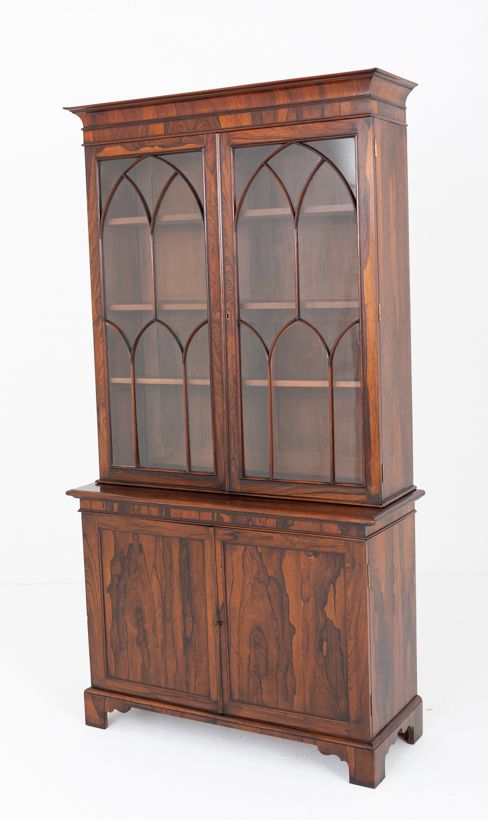

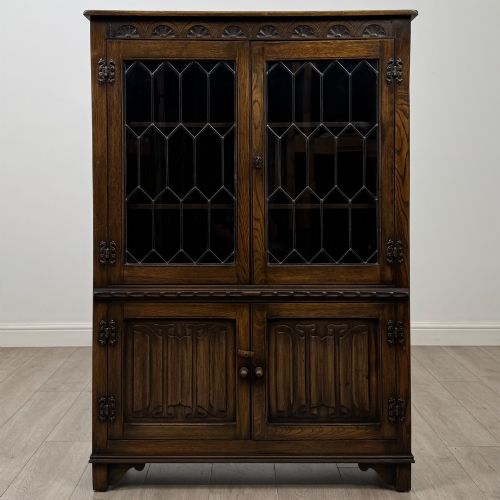
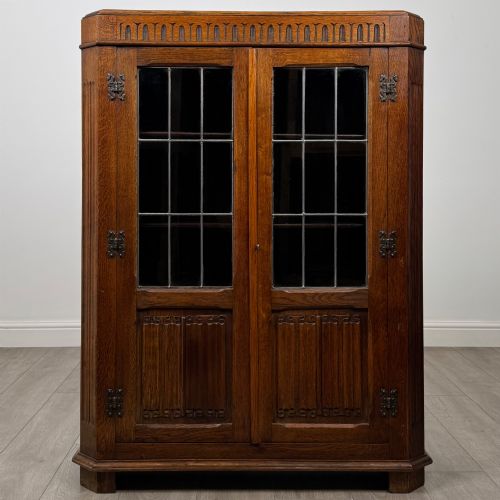
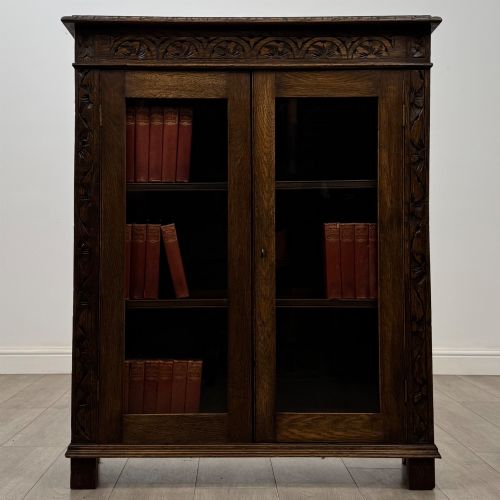
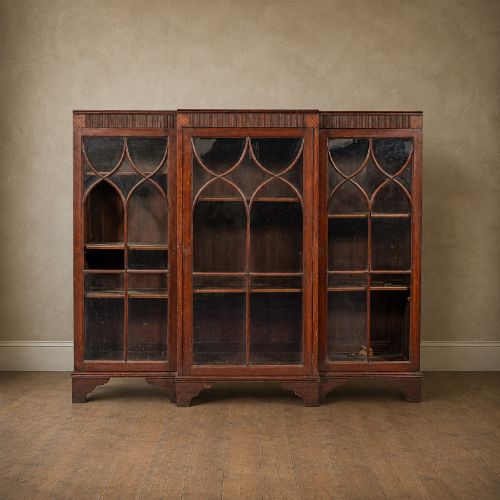
Gothic Glazed Cabinet
A gothic glazed cabinet brings architectural line and transparency to a room, storing books or porcelain behind leaded or clear panes.
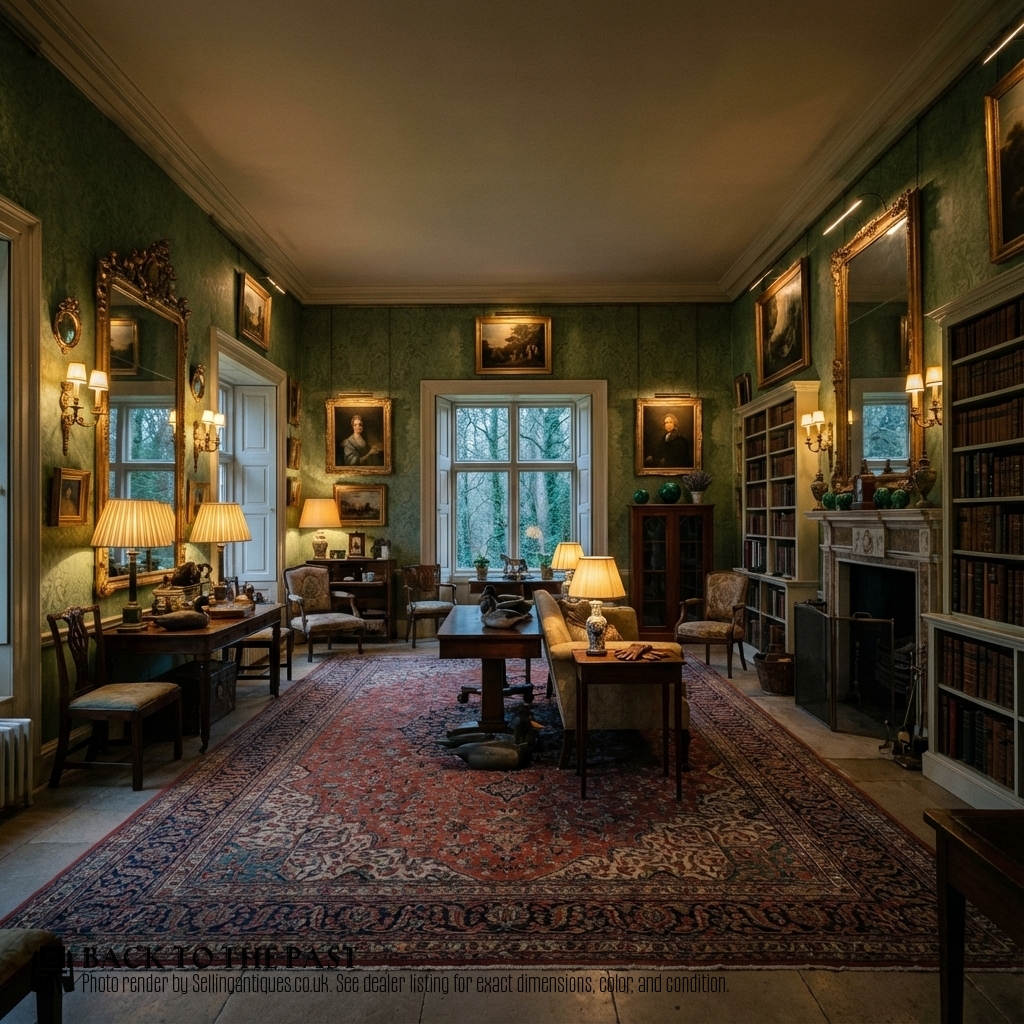
Gothic Glazed Cabinet
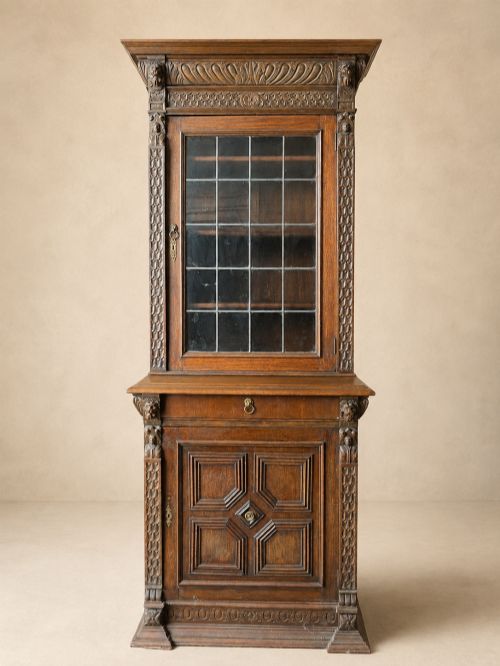
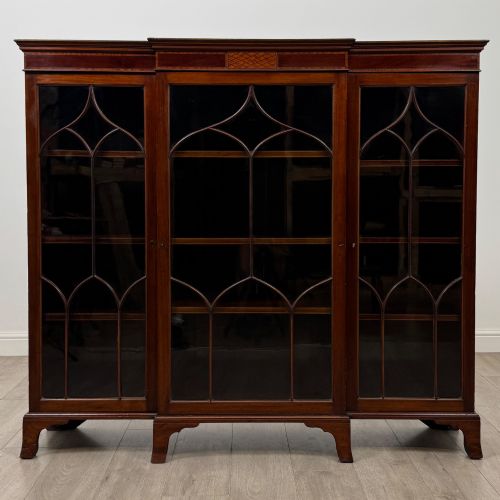
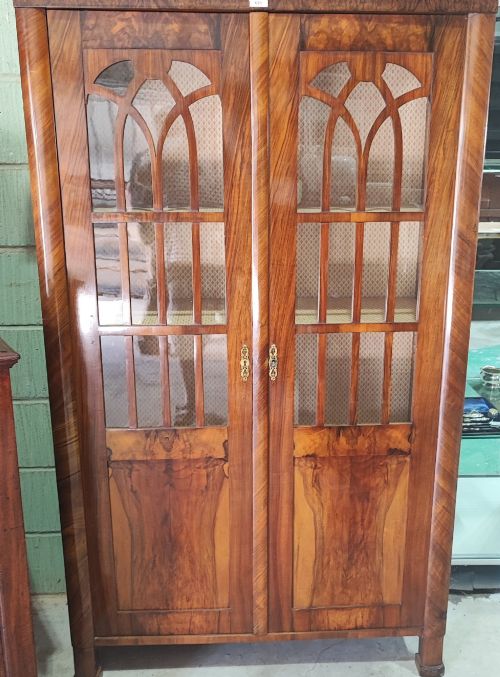
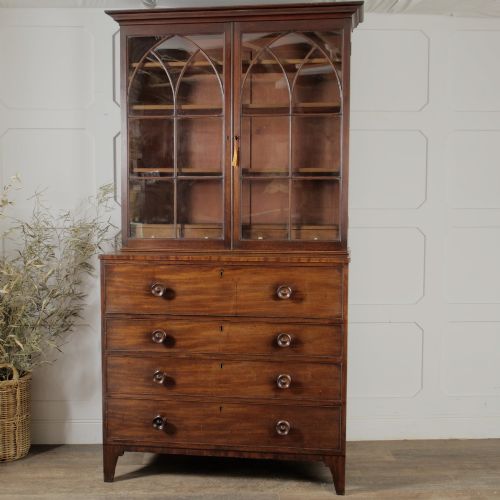
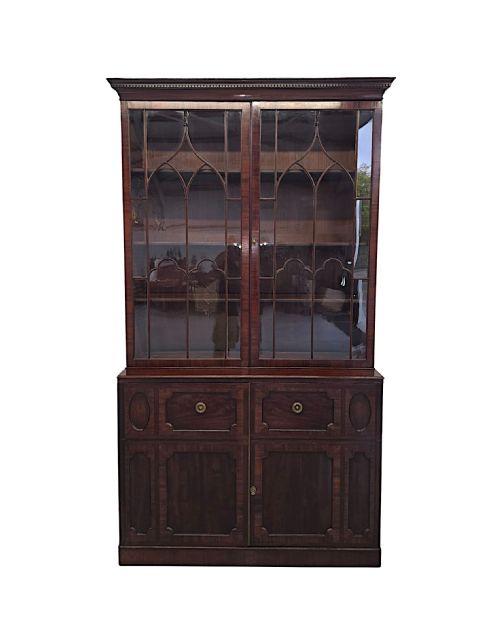
A gothic glazed cabinet unites architectural framing with transparent display, serving as a bookcase, display cabinet, or secretaire. Pieces emerge from periods spanning the Georgian era, the Regency period, and the nineteenth century, running through the Victorian age into Edwardian times.
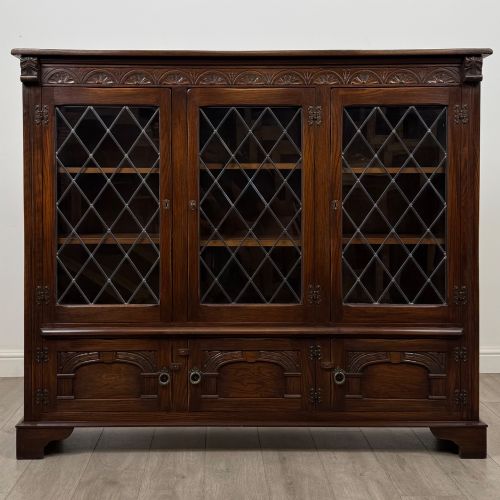
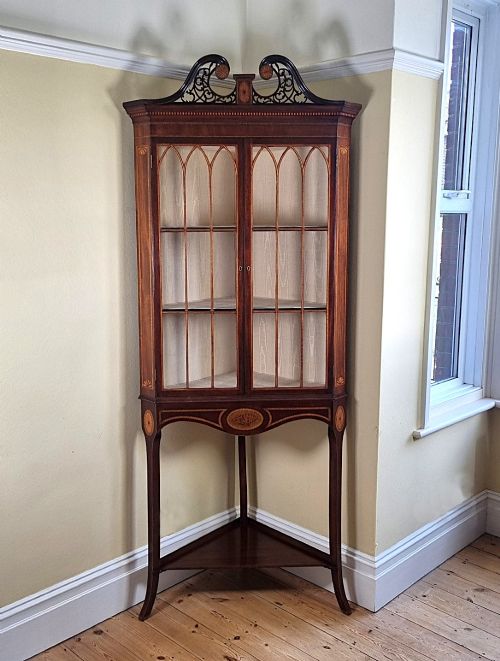
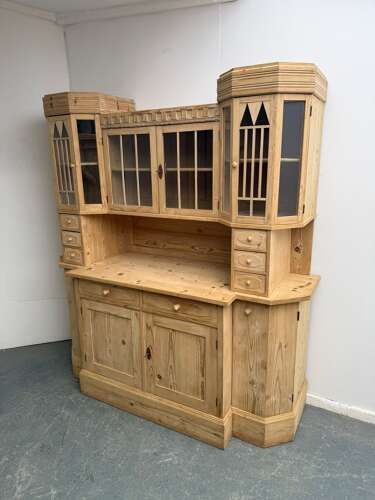
The form appears in varied configurations, from slim oak bookcases and corner cabinets to large breakfront libraries and two-part cupboards. Makers built them for utility in studies and drawing rooms, housing volumes and collections behind glazed doors.
Oak and mahogany dominate the offerings, often enriched with brass, lead, and glass panels. Pieces display stylistic echoes of Gothic revival, George III design, and Victorian craftsmanship.
Materials and Construction
Cabinet makers relied heavily on timber such as oak, mahogany, rosewood, and walnut, selecting solids and veneers to suit the structural demands of tall bookcases and wide breakfronts. Carved details and moulded cornices give these pieces their architectural weight.
Glazing requires slender timber bars or lead cames to hold the glass panes securely within the door frames. Brass fittings, hinges, and occasional panel inserts complete the hardware of the cabinet body.
Gothic Glazed Cabinet Retail Price Guide 2026
Typical asking prices for gothic glazed cabinet among the pieces listed under this phrase on Sellingantiques today, from the lower quarter to the upper quarter. They describe what is for sale here now, not the wider market.
Glass, brass, lead, and iron appear frequently as secondary materials in these glazed cabinets and bookcases.
Judging Quality and Execution
The refinement of the timber figure and the crispness of carved mouldings separate standard production from superior cabinet work. Dense grains in mahogany, figured walnut, and richly carved oak indicate careful material selection by the maker.
Proportion and the integration of glazing bars dictate the visual success of the piece. Well-proportioned breakfronts and balanced door divisions show deliberate design rather than mass assembly.
Jas Shoolbred·Gillows
The Gothic Glazed Cabinet Glossary
- Breakfront
- A piece of furniture where the central section projects forward from the flanking outer sections. This arrangement adds depth and visual rhythm to large bookcases and cabinets.
- Secretaire
- A cabinet incorporating a pull-down writing drawer fitted with small drawers and pigeonholes. It combines desk functionality with upper bookcase storage.
- Linenfold
- A style of carved wooden panelling resembling folded fabric or linen. It frequently appears on oak cabinet doors from revival periods.
- Cames
- Slender strips of cast lead used to hold together individual panes of glass in leaded windows and cabinet doors. They allow for geometric and patterned glazing.
- Marquetry
- The art of applying decorative veneer pieces in wood and other materials to form geometric patterns or pictures. It decorates the surfaces of fine cabinet work.
Gothic Glazed Cabinet: Frequently Asked Questions
What is a gothic glazed cabinet?
It is an architectural storage piece featuring glass doors and pointed arch motifs or structural details derived from Gothic architecture. These cabinets function primarily as bookcases or display units.
They appear in timbers like oak, mahogany, and walnut, reflecting design influences from the Georgian period through the Victorian Gothic Revival.
How do I style a gothic glazed cabinet?
Place the cabinet against a neutral wall to let the timber tone and glass framing stand out as architectural elements. Use the internal shelves for books, ceramics, or collected objects.
Ensure adequate clearance for doors that open outward, particularly with wider breakfront or corner formats.
Are these cabinets used for books or display?
They serve both purposes depending on the internal configuration and the depth of the shelves. Many examples function as libraries or secretaire bookcases with writing drawers.
Others provide dedicated display space behind glass for porcelain and decorative objects.
How do I identify a Victorian gothic piece?
Look for heavy carved oak, pointed arch glazing bars, and deep cornices characteristic of the nineteenth-century Gothic Revival style. These elements distinguish them from lighter Georgian or Edwardian designs.
Construction details and secondary timbers also help confirm the nineteenth-century date of manufacture.