




Gothic Brass Chandelier
These gothic brass chandeliers bring heavy ecclesiastical weight and structured medieval verticality into domestic spaces through cast metal and glass.
Gothic Brass Chandelier
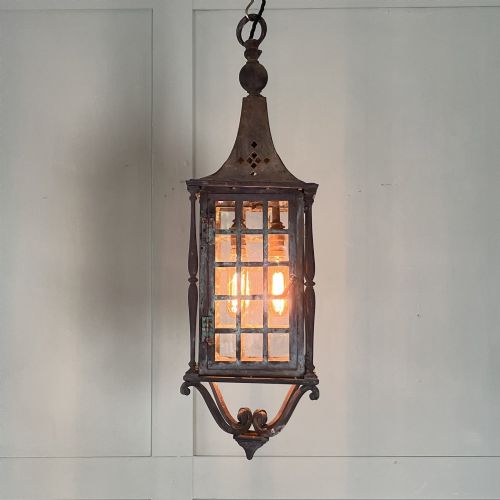
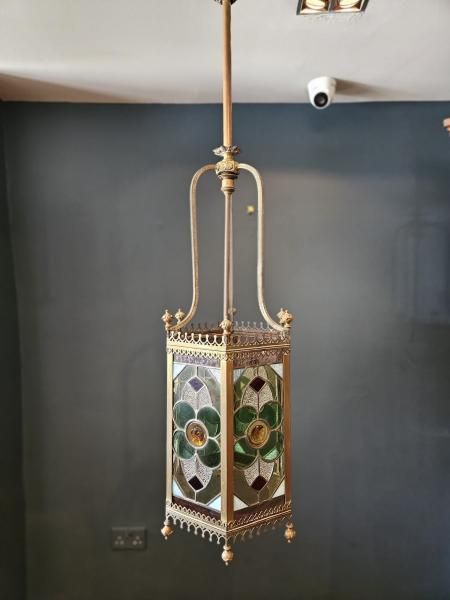
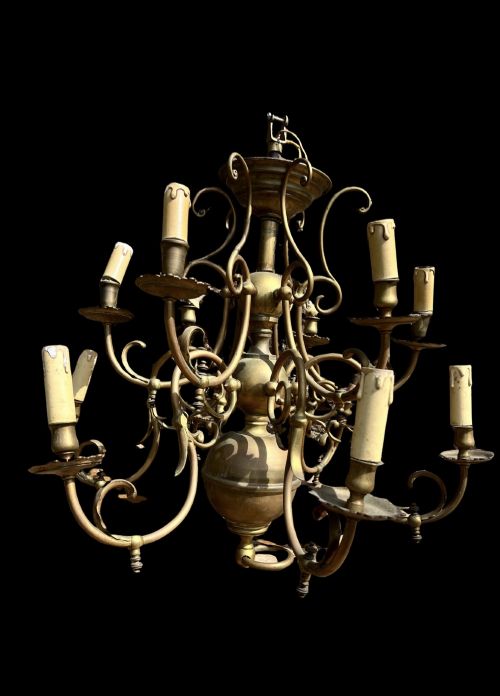
A gothic brass chandelier provides significant overhead illumination through multi-branched frames or suspended lanterns. These pieces span the nineteenth and early twentieth centuries, drawing heavily on Victorian Gothic and Arts and Crafts idioms.
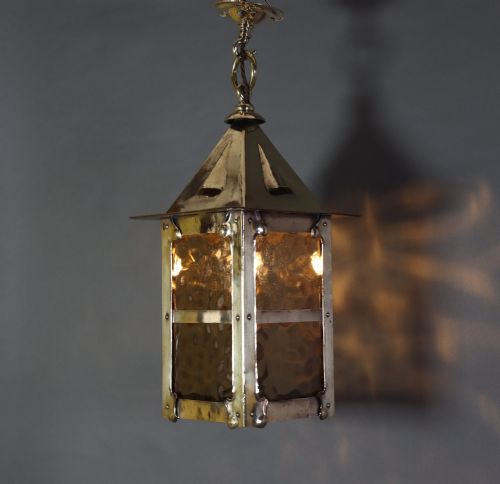
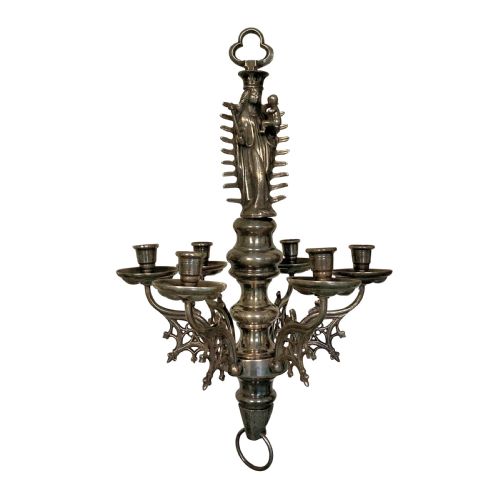
The forms range from single lantern pendants to grand multi-light gasoliers and branch fixtures. Pieces frequently incorporate ecclesiastical styling, reflecting church and cathedral lighting traditions adapted for domestic halls and reception rooms.
Materials and Construction
Makers utilised cast and spun brass, often combined with wrought iron, bronze, and gilt or silver plating to achieve varied surface finishes. Structural components rely on mechanical joints, heavy suspension chains, and robust fixings capable of supporting substantial metal weight.
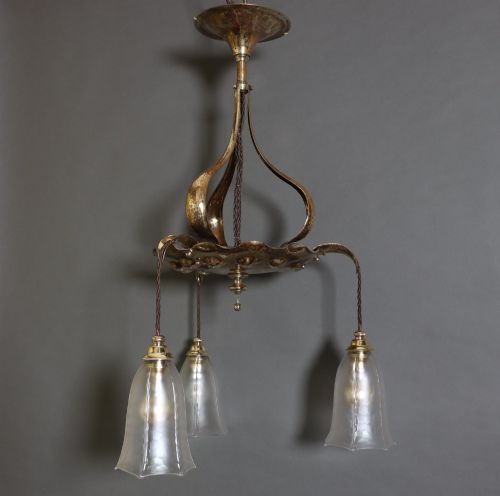
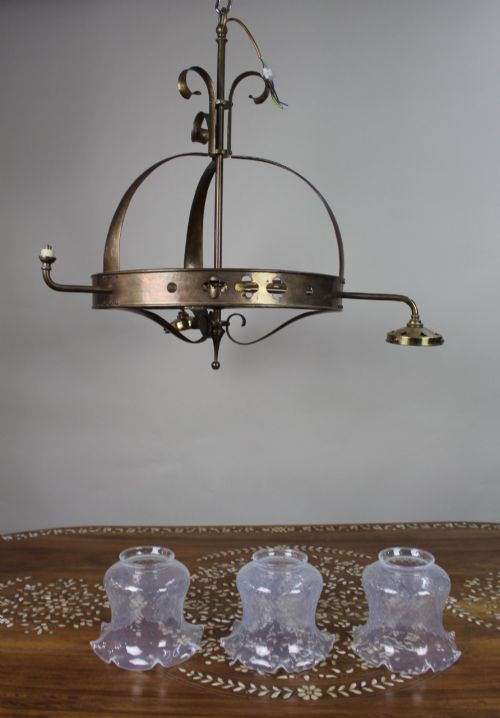
Lighting elements integrate specialised glass components, including opalescent glass shades, leaded glass panels, and plain glass globes. These diffusers soften the initial gas or electric light source while maintaining the architectural integrity of the metal frame.
The inventory records pieces originating from English, French, and Flemish workshops working in various gothic revival styles.
Assessing Quality
Quality rests upon the crispness of the brass casting and the depth of surface chasing. Finer examples display meticulous detailing in the tracery and mounts, whereas simpler iterations rely on standard cast components.
The integration of secondary materials dictates overall merit. Fixtures incorporating original opalescent or leaded glass shades demonstrate higher design ambition than those fitted with generic replacements.
Joseph Wilmotte
The Gothic Brass Chandelier Glossary
- Gasolier
- A ceiling-mounted lighting fixture designed to burn coal gas, featuring hollow arms that supply gas burners. Many survive converted to electricity.
- Lantern pendant
- A hanging light enclosed in glazed panels within a rigid metal framework. This form protects the flame or bulb from drafts in high hallways.
- Opalescent glass
- A milky, semi-translucent glass that diffuses light with a soft glow. It appears frequently in Arts and Crafts lighting fixtures.
- Tracing
- Ornamental openwork pierced through metal plates, mimicking stone window designs found in medieval architecture. This detail defines the gothic aesthetic.
- Ceiling rose
- A decorative circular moulding or plate affixed to the ceiling from which a chandelier suspends. They distribute weight and conceal wiring or gas pipes.
Gothic Brass Chandelier: Frequently Asked Questions
How do I hang a heavy gothic brass chandelier safely?
Suspension requires anchoring directly into ceiling joists or using a designated load-bearing metal brace. Given the substantial weight of cast brass and glass, professional installation ensures structural security.
Electrical conversion also demands careful handling to manage modern wiring within antique metal channels. A qualified electrician can adapt older gas fittings for contemporary power.
Were these chandeliers originally gas or electric?
Most nineteenth-century pieces started as gasoliers burning coal gas piped through hollow brass arms. By the early twentieth century, manufacturers produced similar gothic designs built specifically for electricity.
Over time, nearly all surviving gas fixtures underwent conversion to electrical wiring. This adaptation allows modern use while preserving the original metalwork.
How do I clean a brass and glass chandelier?
Dust the metal surfaces gently with a soft dry cloth to prevent grime accumulation. Avoid harsh chemical polishes that strip away historical patination and aged surface tones.
Glass shades and panels detach easily for washing in warm soapy water. Dry them thoroughly before reattaching them to the brass frame.
How do I distinguish Victorian Gothic from Arts and Crafts pieces?
Victorian Gothic examples lean heavily into ornate ecclesiastical decoration, sharp tracery, and complex multi-branch arrangements. They often carry a heavier, darker presence derived from revival church architecture.
Arts and Crafts pieces emphasise simpler construction, visible fixings, and hand-hammered surfaces inspired by honest craftsmanship. Their design prioritizes structural utility over decorative excess.