



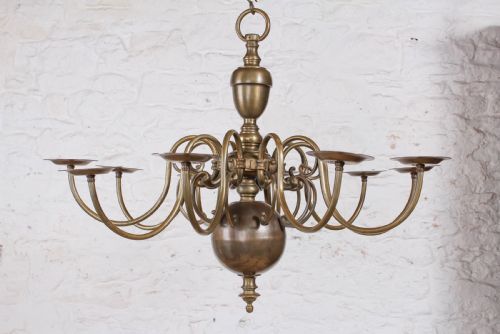
Dutch Brass Chandelier
These robust dutch brass chandelier designs bring enduring warmth and formal symmetry to period interiors.
What they are
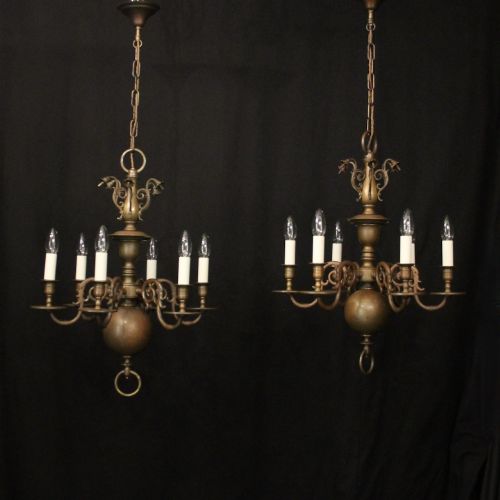
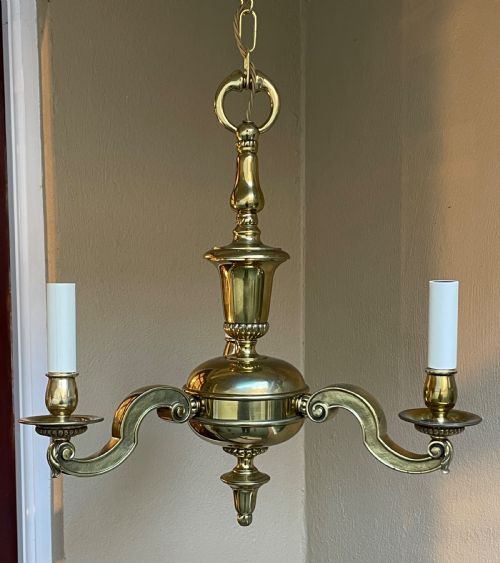
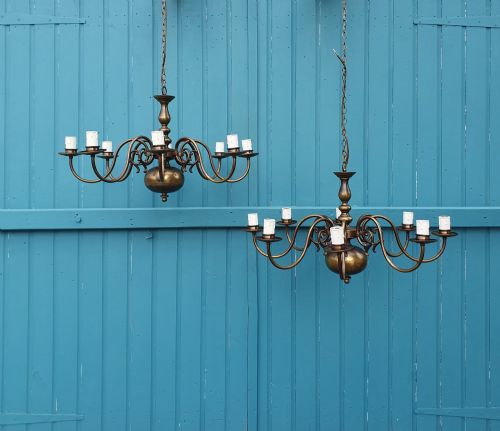
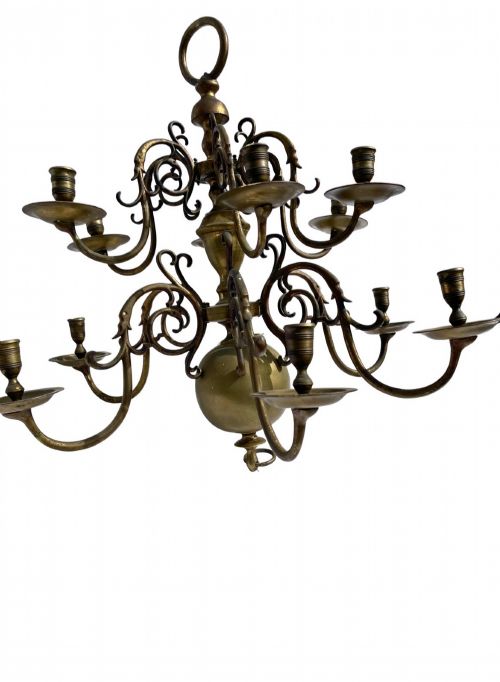
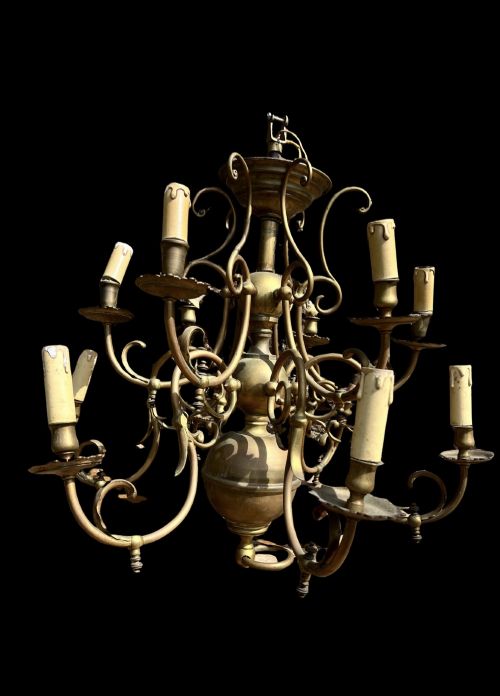
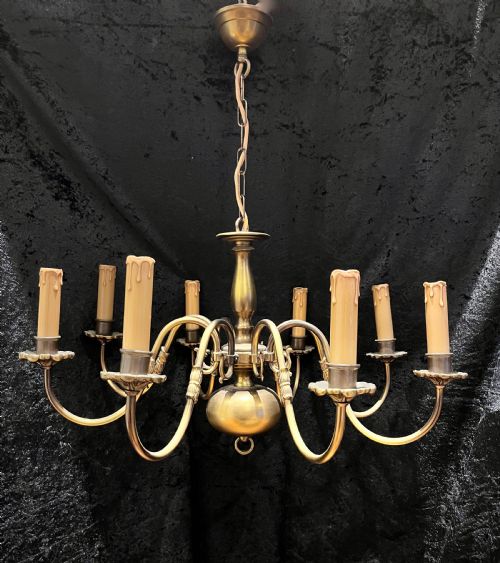
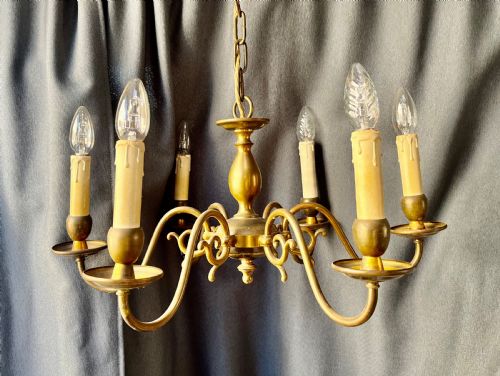
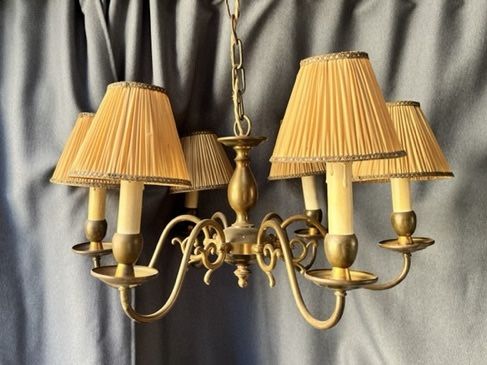
A dutch brass chandelier combines heavy cast and spun metal components with sweeping scroll arms to project classic seventeenth-century proportion into domestic rooms. These hanging fixtures appear in configurations ranging from compact four-branch formats to grand multi-tier assemblies spanning twelve arms or more.
The selections encountered here span eighteenth-century originals alongside later revivals from the Victorian, Edwardian, and early twentieth-century eras. Regional variants encompass Flemish Baroque styles and Dutch Colonial interpretations alongside direct copies modelled on seventeenth-century archetypes.
Buyers choose a dutch brass chandelier to anchor high ceilings in dining rooms, hallways, and drawing rooms with substantial metalwork and traditional multi-tiered profiles. These fittings work equally well in period properties and contemporary spaces seeking a strong historical focal point.
How they were made
Construction relies upon solid brass cast in sections, often incorporating turned central stems and hand-finished scroll arms. Individual branches attach to central hubs using threaded fittings or traditional peg-and-socket joints designed to bear the weight of multiple candle sockets or conversion burners.
Surfaces frequently display hand-engraved decoration on wider components like central balusters or drip pans, executed with simple graving tools. Joints and fixings show the hand-filed adjustments typical of workshop production before mass-standardisation.
Retail Price Guide 2026
Typical UK retail prices for dutch brass chandelier, calculated from the Sellingantiques database of over a million retail prices indexed since 2003. This retail price guide relies exclusively on Sellingantiques data; no external sources or auction records are used, so the figures do not describe the wider market.
Listings feature solid brass items spanning Edwardian, Georgian, and twentieth-century eras with arm counts ranging from four-branch forms to twelve-branch two-tier layouts.
What varies in quality
Heavier metal gauge and thicker casting sections distinguish the most substantial examples from lighter commercial reproductions. The presence of crisp, deep chasing and hand-engraved detailing rather than shallow machine stamping marks out the superior tier of production.
Proportion and arm symmetry dictate visual balance, where well-spaced multi-tier arrangements maintain structural harmony across complex twelve-branch or two-tier structures. Complete matching components across pairs and original suspension loops further separate standard decorative items from exceptional survivals.
The Dutch Brass Chandelier Glossary
- Scroll arm
- A curved branch extending outward from the central stem to hold a light source. These sweeping members give the fixture its characteristic silhouette.
- Two-tier
- A configuration featuring branches arranged on two distinct vertical levels around the central stem. This tiered layout allows for high branch counts without excessive horizontal spread.
- Drip pan
- A wide saucer-shaped disc positioned beneath the candle socket to catch melting wax. On these fixtures, they often feature engraved borders.
- Chasing
- The technique of hammering and punching decorative patterns directly into the surface of the brass. This hand-work adds texture and light reflection to cast elements.
- Baluster
- The shaped central column of the chandelier around which the tiers and arms revolve. It provides both structural support and visual weight.
Frequently Asked Questions
How do I hang a heavy brass chandelier safely?
Suspension requires a ceiling joist or dedicated structural noggins capable of supporting the combined weight of the solid metal fixture and its fittings. Professional installation using steel chain rated well above the weight of the chandelier ensures safe mounting.
Electrical wiring must be routed securely through the hollow central stem without compromising original structural components. Modern ceiling roses should be selected to bear the downward load independently of the electrical connection.
Can these chandeliers be converted for modern electricity?
Most examples have been adapted for electric lighting by running internal wiring through the central stem to dummy candle tubes or lamp holders. Conversion work respects the original construction by utilising existing channels where possible.
Original gasolieres and candle-burning variants often accept small SES lamps with flame-shaped bulbs to mimic historical light output. Reversible conversions allow collectors to maintain the structural integrity of older metalwork.
How do I clean solid brass without damage?
Dusting with a dry microfibre cloth removes surface particles without disturbing the protective oxide layer that accumulates over decades. Avoid harsh chemical polishes that strip away historical patination and leave bright, unnatural patches.
Warm water with a mild soap applied on a damp cloth suffices for removing grease from dining room placements. Thorough drying prevents water spots from forming on polished surfaces.
How do I distinguish eighteenth-century pieces from later revivals?
Eighteenth-century examples typically show irregular hand-cast surfaces, pegged joints, and individual hand-finishing marks across every component. The brass alloy itself often displays a warmer, deeper tone developed through centuries of exposure.
Twentieth-century revivals produced around nineteen-twenty or nineteen-thirty often feature more uniform casting methods, standardised threading, and cleaner interior channels. Archival evidence shows strong revival movements mirroring these seventeenth-century forms well into the modern era.