
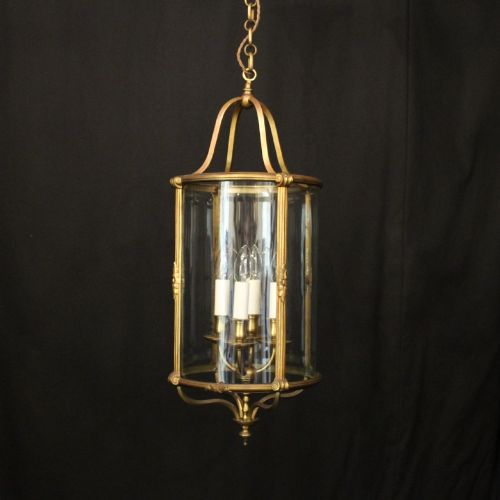
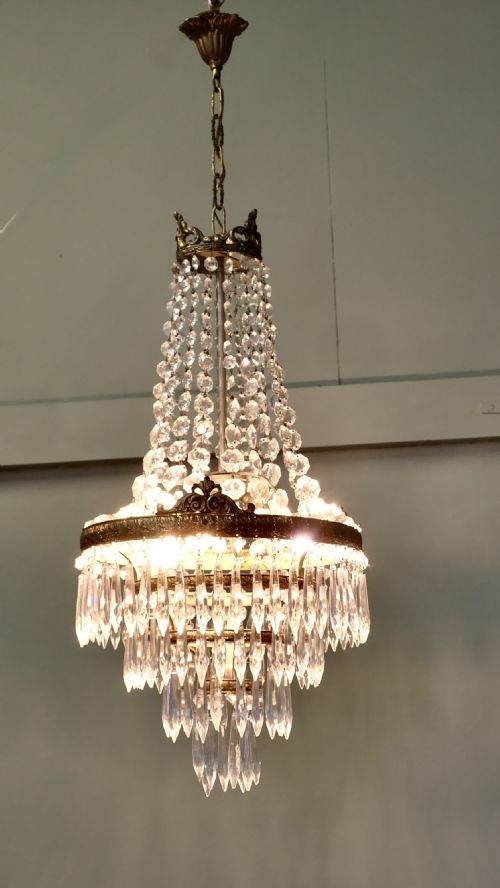
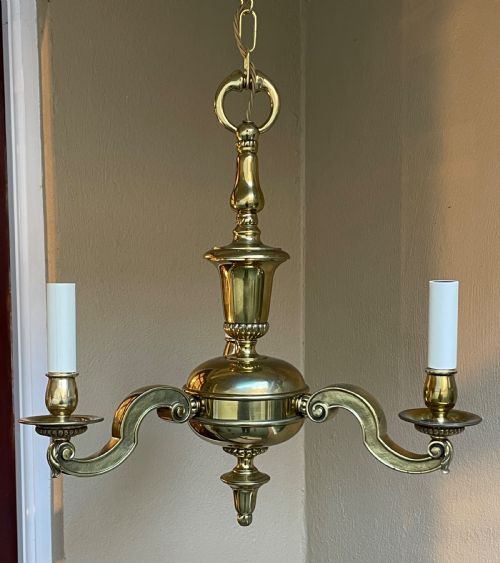
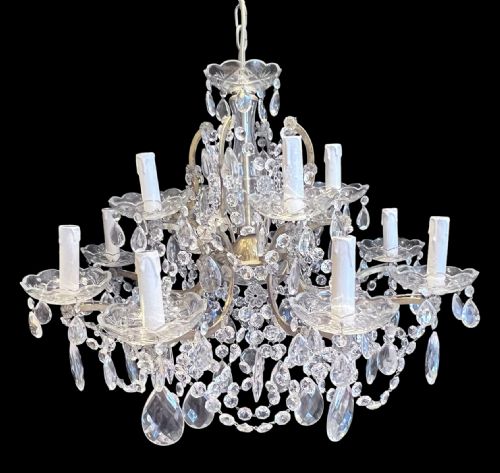

Classic Brass Chandelier
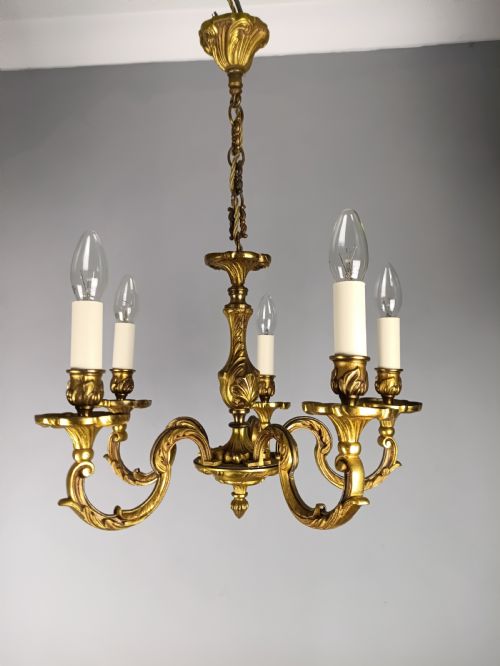
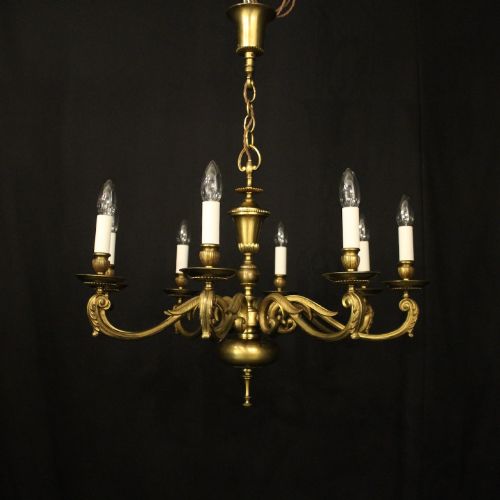
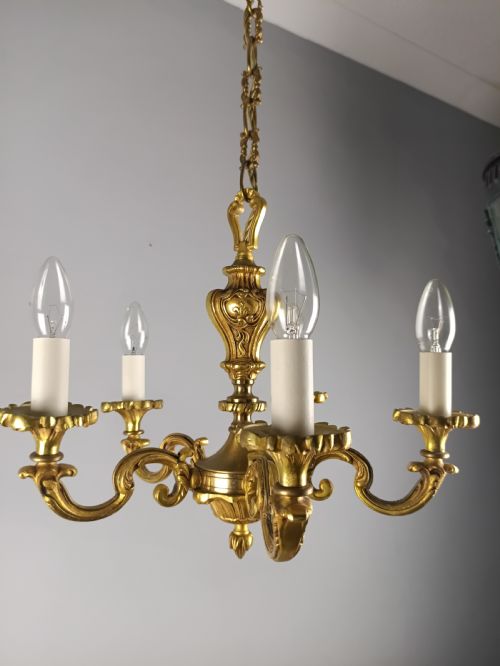
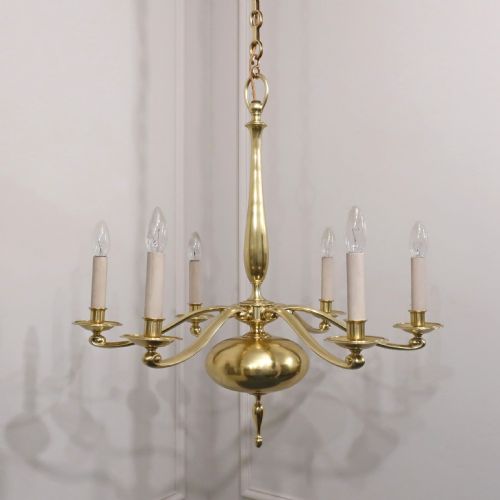
A classic brass chandelier brings structural warmth and focused overhead illumination to a room, drawing the eye upwards with its polished metal arms and reflective fittings.
Identifying a classic brass chandelier
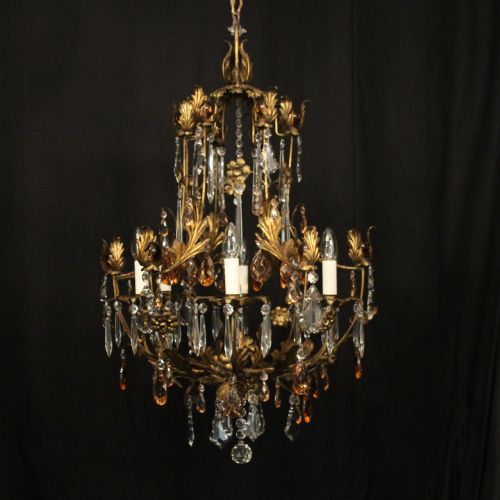
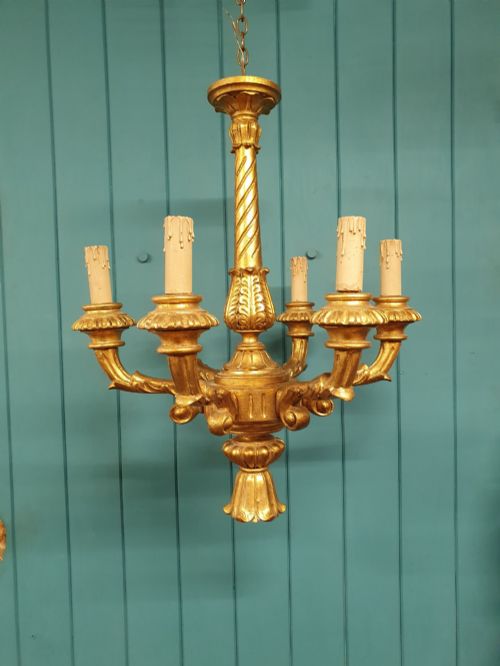
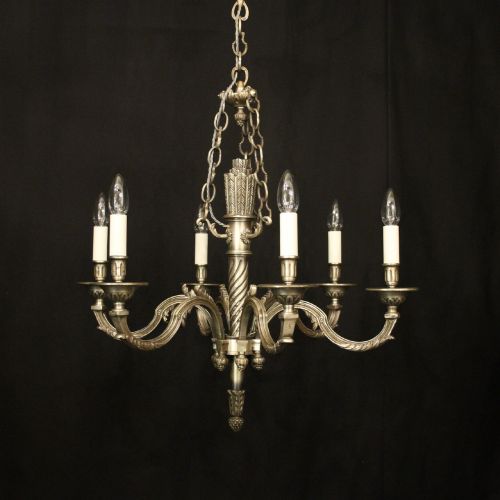
The materials recorded across these pieces encompass solid brass, gilt bronze, crystal, glass, and fabric elements, reflecting the diverse manufacturing priorities of different decades. Pieces span from the late nineteenth century into the early twentieth century, including items dated around 1890 and 1930 alongside Edwardian and broader twentieth-century examples.
Buyers encountering this selection will find structural variations that range from cast classical compositions to simpler multi-branch ceiling lights. Each piece demonstrates how makers adapted traditional lighting forms for domestic spaces using durable metalwork and decorative hanging components.
Materials and construction methods
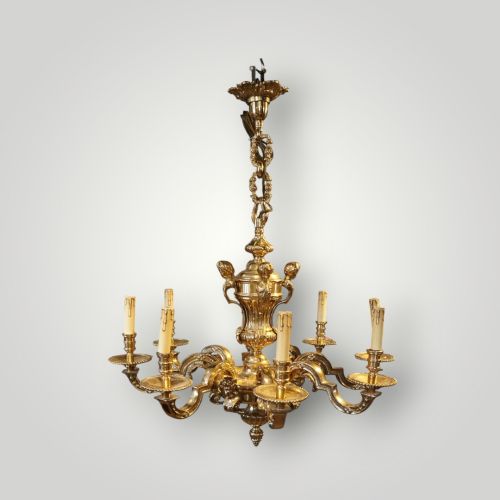
Construction relies heavily on brass and gilt bronze, utilising casting and metal-forming techniques to create the structural branches, central columns, and decorative fixings. Solid brass components provide the foundational strength required to support multi-armed configurations safely from the ceiling.
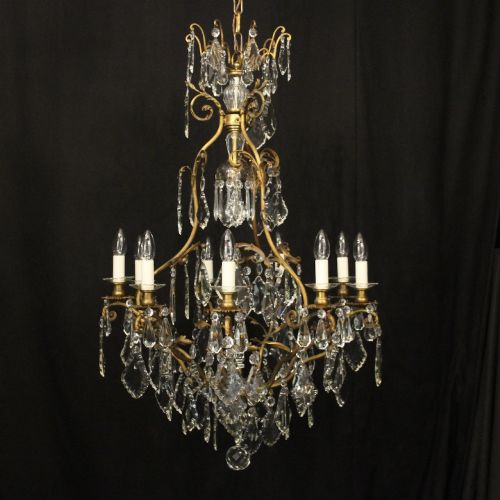
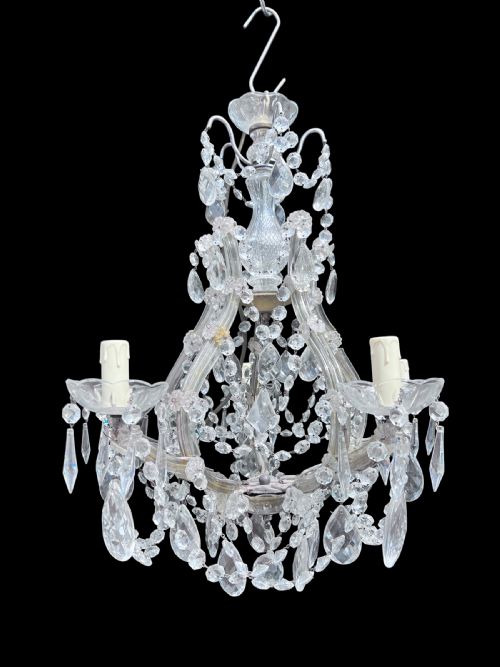
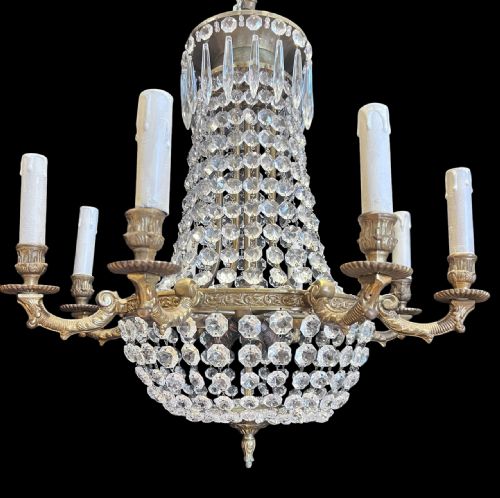
Many examples incorporate secondary materials such as glass and crystal drops or shades, alongside fabric elements that soften the direct output of the bulbs or candles. These varied elements are assembled mechanically, combining threaded joints, cast sockets, and suspension loops to ensure structural integrity.
Current site listings combine solid brass, gilt bronze, glass, and fabric materials across pieces dated from 1890 up to 1930.
Assessing quality and craftsmanship
Quality in these fixtures is distinguished by the crispness of the metal casting and the finishing of the brass or gilt bronze surfaces. Finer examples display deliberate detailing in the junction points and decorative motifs, whereas simpler items prioritize utilitarian branch arrangements over ornamental flourish.
The integration of secondary materials like crystal and glass also dictates the overall standard of the piece, with higher-grade components offering greater clarity and more precise cutting. Heavier gauge metalwork and robust multi-tier engineering separate substantial architectural pieces from lighter domestic variants.
G.E.C
The Classic Brass Chandelier Glossary
- Branch
- An individual arm extending from the central column of a chandelier to support a light source. Multi-branch configurations define the primary lighting capacity of the fixture.
- Gilt bronze
- Bronze metal treated with a thin layer of gold or gold-coloured alloy to impart a rich, reflective surface finish. This material appears on decorative antique light fittings.
- Cast brass
- Brass formed by pouring molten alloy into a mould to create intricate structural or decorative parts. This technique allows for repeatable, ornate shapes on chandelier arms.
- Tier
- A horizontal level or ring of lights arranged vertically on a multi-level chandelier. Two-tier designs increase the physical presence and illumination spread of the object.
Frequently Asked Questions
How many arms do these chandeliers have?
The chandeliers listed across this category feature varied arm counts, commonly including configurations with five branches or up to twelve arms arranged across multiple tiers.
Larger multi-arm variants provide broader illumination spans suited to substantial reception rooms, while more compact three-branch forms fit modest ceiling heights.
What periods do these chandeliers come from?
The pieces span the late nineteenth and early twentieth centuries, with specific examples recorded from around 1890 and 1930 alongside Edwardian era productions.
Stylistic influences reach even further back, drawing on Georgian and French Chateau aesthetics adapted by makers working decades later.
What materials are used in their construction?
Primary construction utilises brass, solid brass, and gilt bronze to form the main body, central stem, and branching arms of each lighting fixture.
Additional materials include glass, crystal, and fabric components which are integrated into the design for refraction and light diffusion.
How do I identify a classical style chandelier?
Classical style brass chandeliers are characterised by symmetrical branching layouts, traditional mounting loops, and ornamentation derived from historical architectural periods.
They rely on enduring metalwork traditions rather than transient modern forms, maintaining a formal silhouette designed for central room placement.