



Five Arm Chandelier
A five arm chandelier brings proportion and warmth to a room, offering distinct period character through varied metal and crystal formations.
What a five arm chandelier is
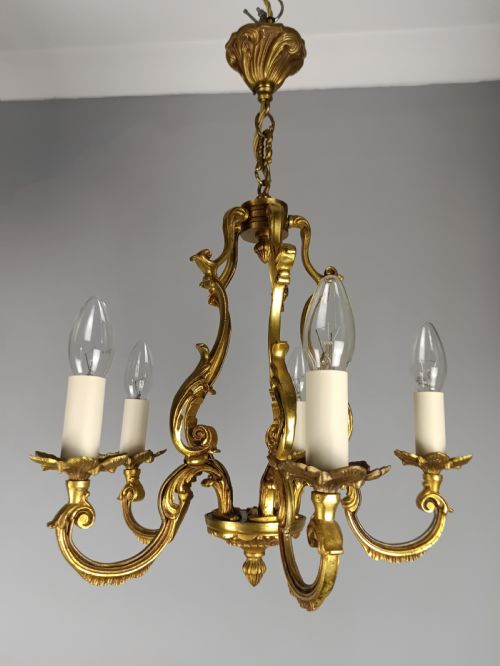
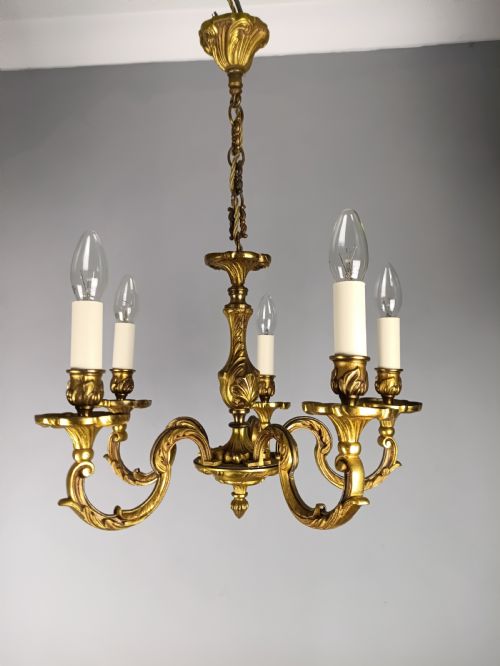
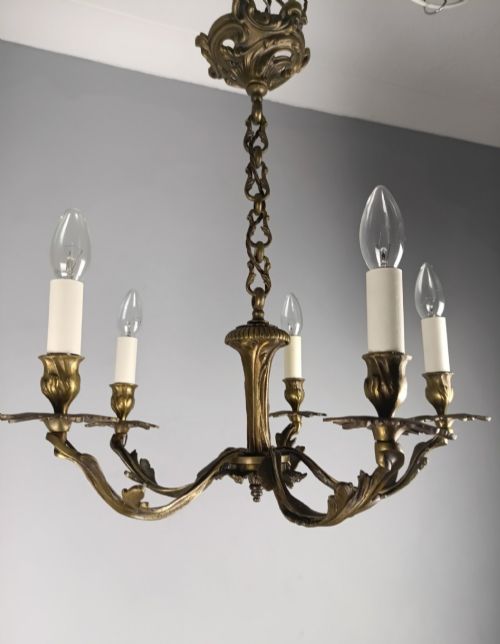
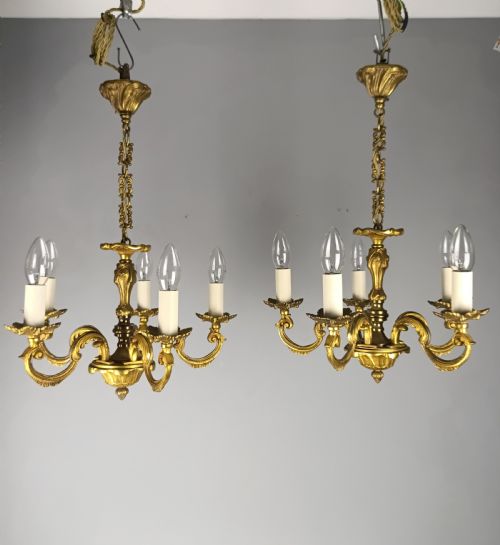
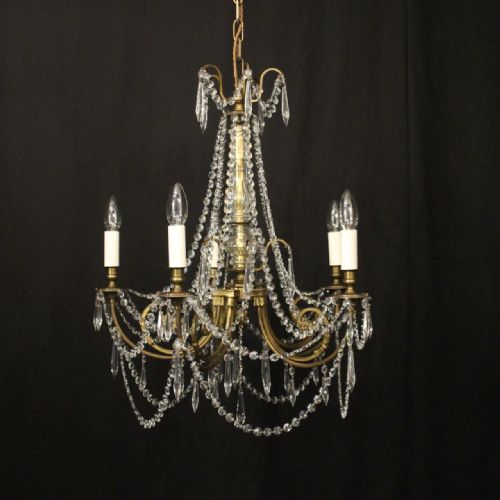
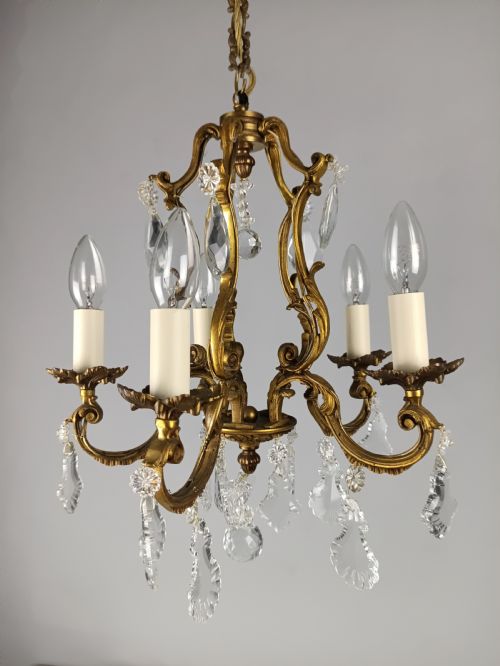
A five arm chandelier provides balanced illumination through five distinct branching lights, appearing frequently in French and Edwardian examples from the early twentieth century. These fixtures embody traditional forms designed to anchor a room with steady overhead light.
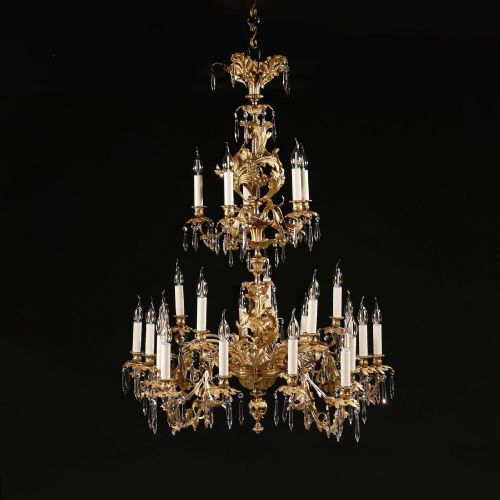
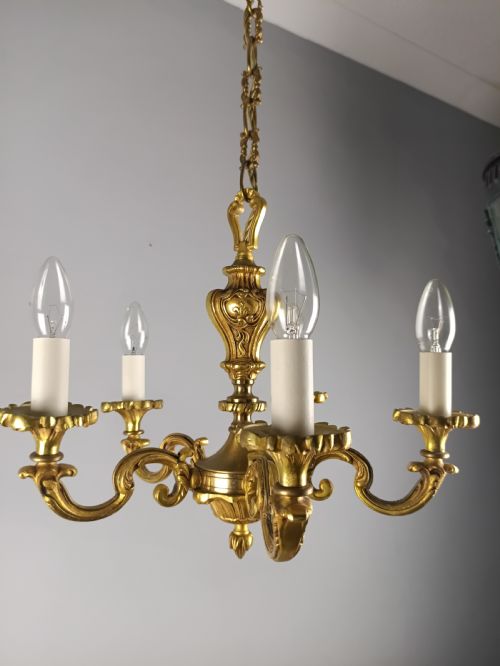
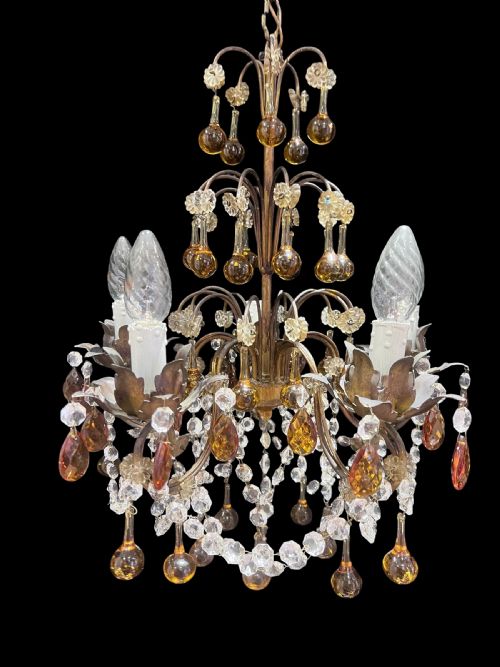
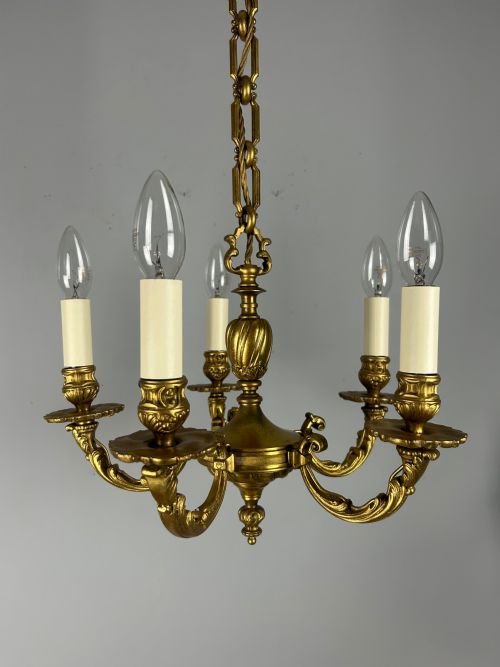
The pieces seen on this page draw from periods including nineteen-twenty, nineteen-thirty, and the Edwardian era. French variants frequently incorporate crystal drops, swags, and gilded finishes, while domestic Edwardian designs focus on straightforward brass construction.
How they were made
Makers constructed these fixtures using cast or spun metals such as brass, gilt brass, gilded bronze, and patinated bronze. Metal components provided the structural backbone for the branching arms and central stems.
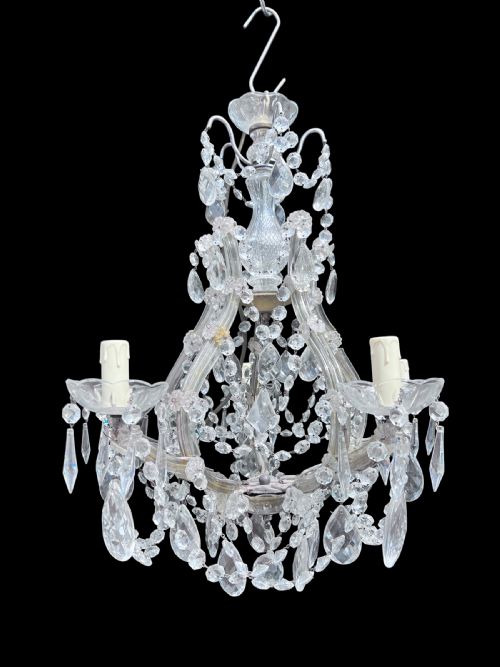
Craftsmen integrated glass and crystal elements, including moulded drips and hanging crystals, to catch and refract light. These components were assembled by hand, securing glass drops to metal frames with wire loops or pins.
Retail Price Guide 2026
Typical UK retail prices for five arm chandelier, calculated from the Sellingantiques database of over a million retail prices indexed since 2003. This retail price guide relies exclusively on Sellingantiques data; no external sources or auction records are used, so the figures do not describe the wider market.
Some early twentieth-century examples come equipped with long drips designed to catch theoretical wax from non-existent electric bulbs.
What varies in quality
Quality separates through the crispness of metal casting and the clarity of the glass or crystal used. Finer examples display deeply chased bronze or brass work alongside high-refraction crystal rather than plain moulded glass.
The integration of decorative details such as swags, long drips, and original gilding dictates the refinement of a piece. Superior chandeliers maintain harmonious proportions between the branching arms and the central body, presenting an unified aesthetic.
Petitot
The Five Arm Chandelier Glossary
- Gilt brass
- Metal treated with a thin layer of gold or gold-coloured wash to impart a bright, reflective surface. This finish appears frequently on French chandeliers.
- Patinated bronze
- Bronze that has developed a darkened surface sheen through oxidation or chemical treatment. It offers a muted contrast to polished brass or bright gilt.
- Crystal glass
- High-clarity glass containing lead oxide, which increases brilliance and weight. It is shaped into drops and prisms that scatter light.
- Swag
- A decorative chain or garland of crystals draped between points on the chandelier frame. This ornament defines French chateau and rococo styles.
Frequently Asked Questions
What rooms suit a five arm chandelier?
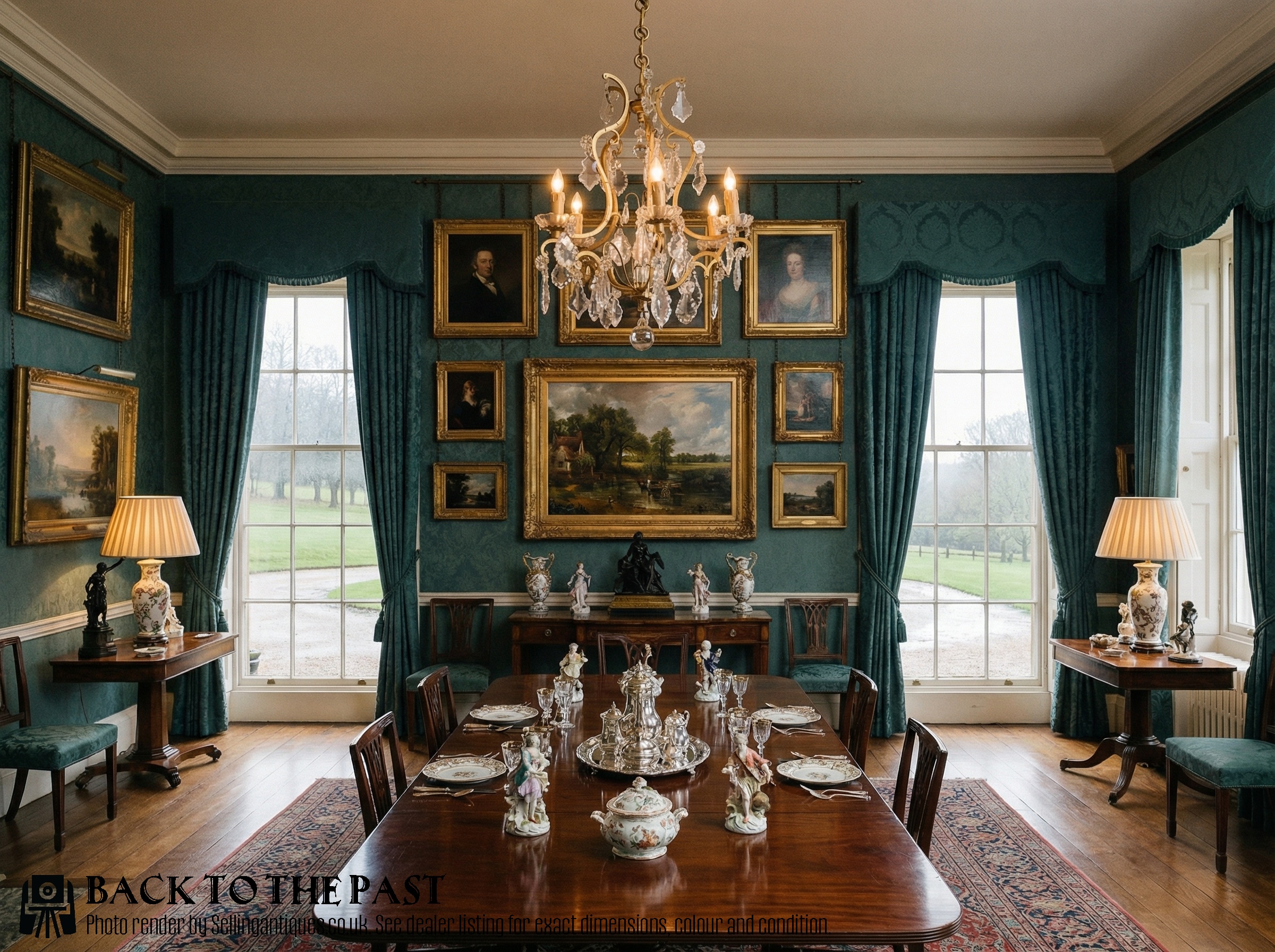
These chandeliers suit medium-sized rooms, dining spaces, or entrance halls where five branching lights provide sufficient illumination without overwhelming the space. Their proportions make them adaptable for period properties and traditional interiors.
Lower ceilings accommodate smaller variations, particularly those measuring around twelve inches, while larger rooms benefit from fixtures paired with long drips or crystal swags.
How do I distinguish Edwardian from French chandeliers?
Edwardian chandeliers generally feature restrained brass or bronze work with simpler lines and minimal ornamentation. They reflect domestic British tastes of the early twentieth century.
French chandeliers embrace rococo styles and chateau aesthetics, utilising gilt brass, bronze, and extensive crystal drops with decorative swags and shaped drips.
What is the difference between brass and bronze?
Brass is an alloy of copper and zinc, yielding a bright golden tone when polished. It forms the primary metal for many Edwardian and early twentieth-century frames.
Bronze is an alloy of copper and tin, valued for its strength and ability to take a rich patinated finish. Both metals provide sturdy structural support for five branching arms.