

Traditional Brass Chandelier
A traditional brass chandelier brings warmth and heavy metal presence to a room, casting direct downward illumination through tiers of glass and crystal.

Traditional Brass Chandelier
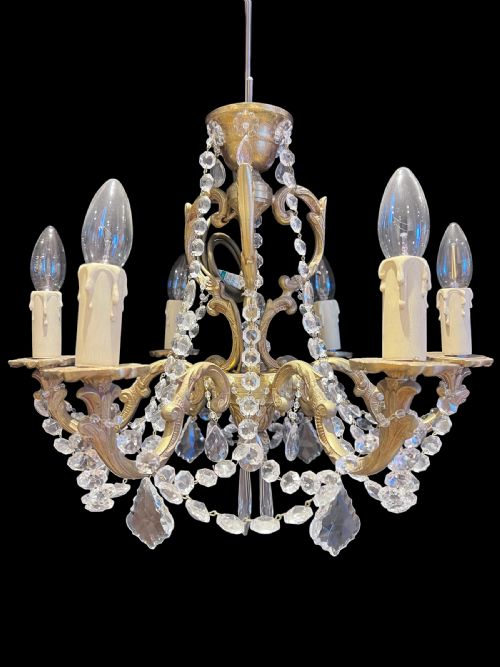
A traditional brass chandelier is a hanging ceiling light built primarily from brass, bronze, or copper, often ornamented with glass drops and crystal lustres. These fixtures span multiple periods, including the Victorian era, the Edwardian period, and the early twentieth century, alongside revival forms stretching back to earlier styles.
Materials and construction
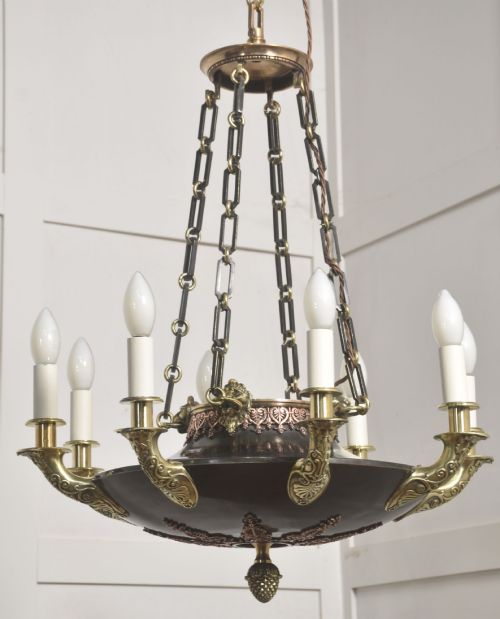
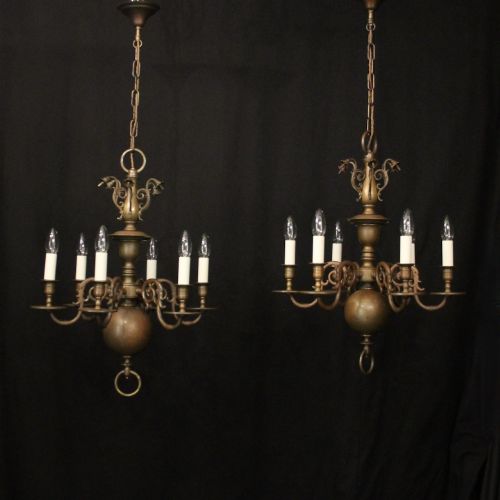
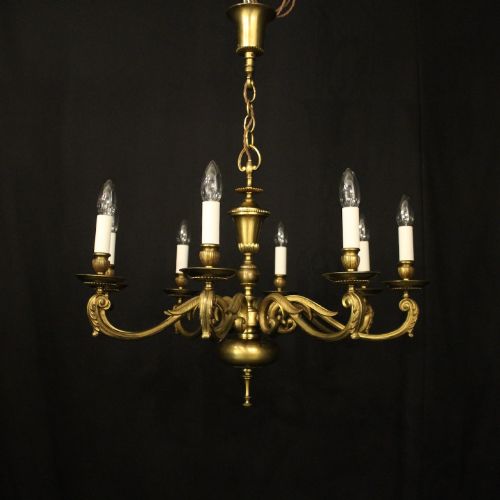
Makers constructed these fixtures using cast and spun brass, gilt bronze, and copper, frequently pairing the metal framework with cut glass or crystal elements. Frames were often gilded or patinated to achieve deep surface textures.
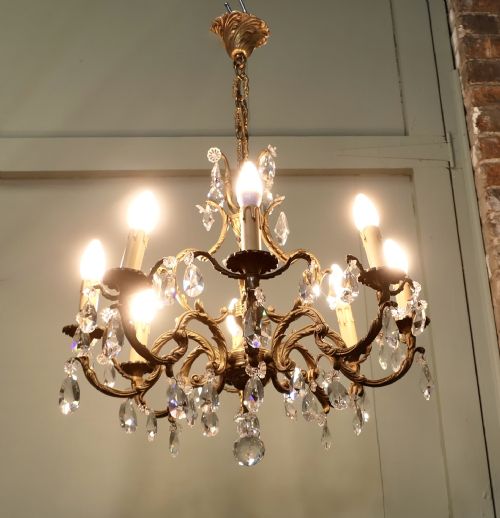
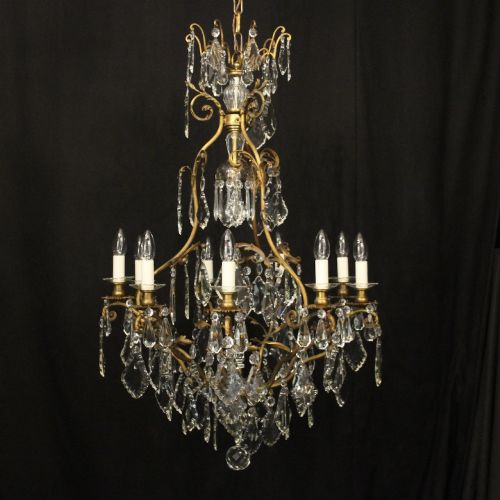
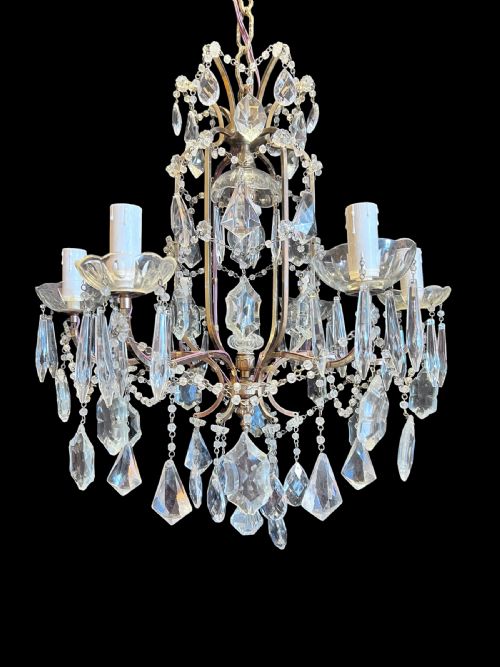
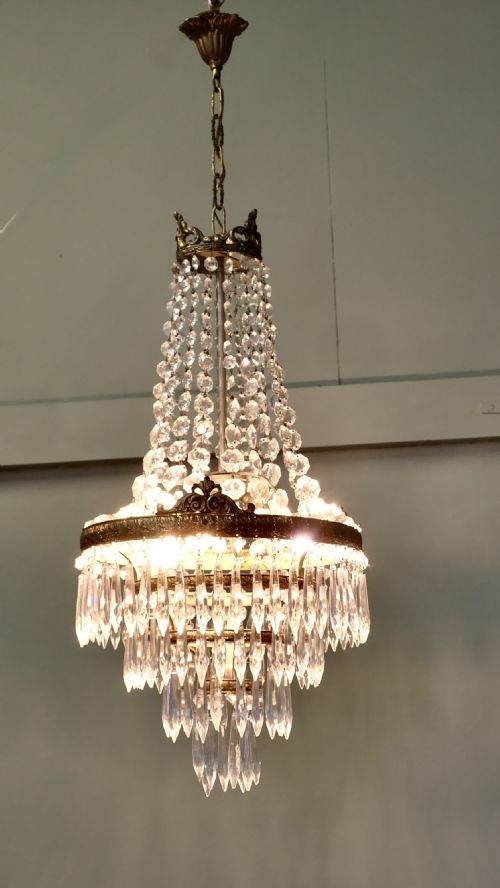
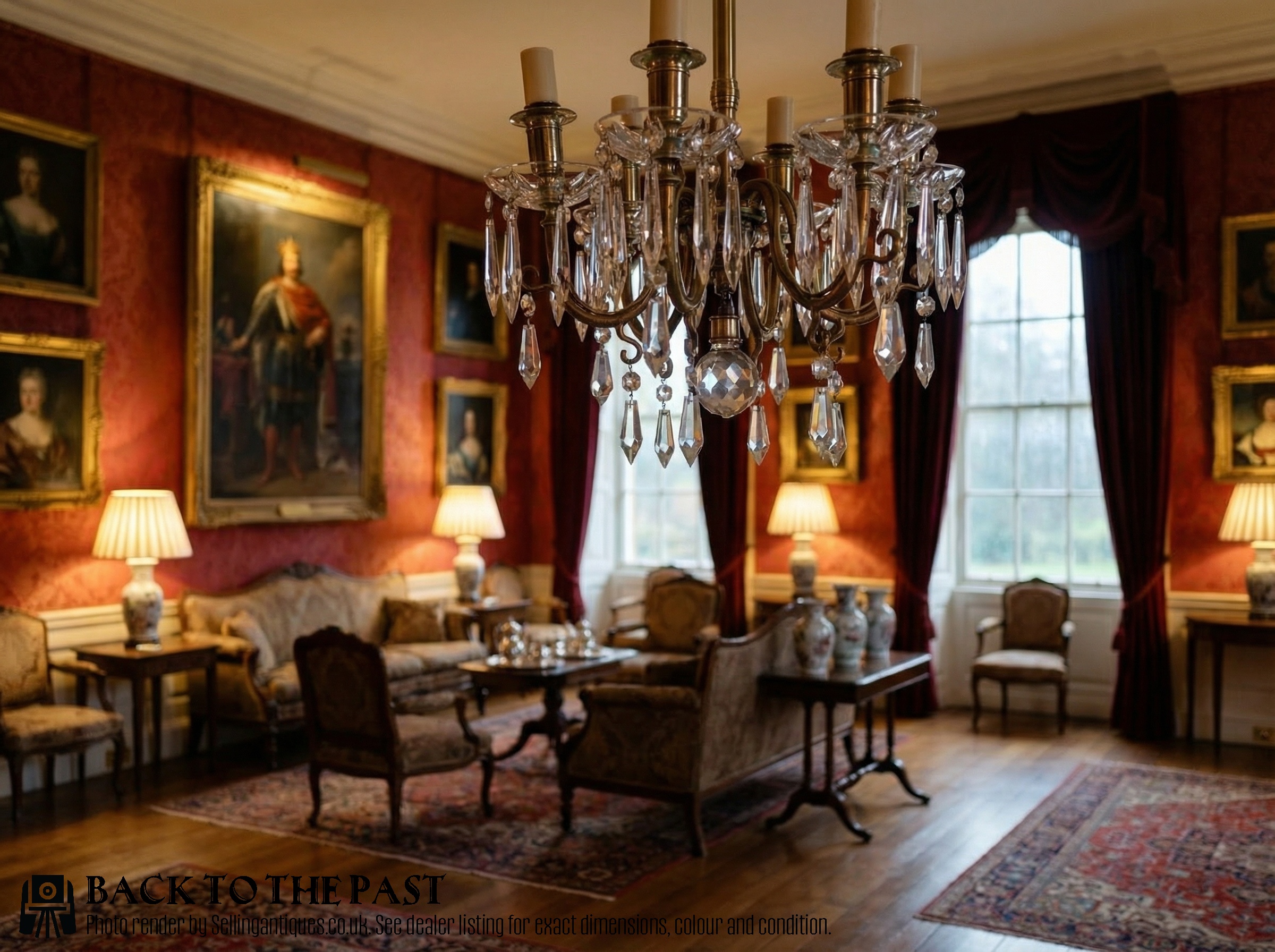
Crystals and glass lustres are pinned directly to the brass arms or suspended in tent and waterfall configurations, catching and refracting the light from multiple bulbs or simulated candles.
Traditional Brass Chandelier Retail Price Guide 2026
Typical asking prices for traditional brass chandelier among the pieces listed under this phrase on Sellingantiques today, from the lower quarter to the upper quarter. They describe what is for sale here now, not the wider market.
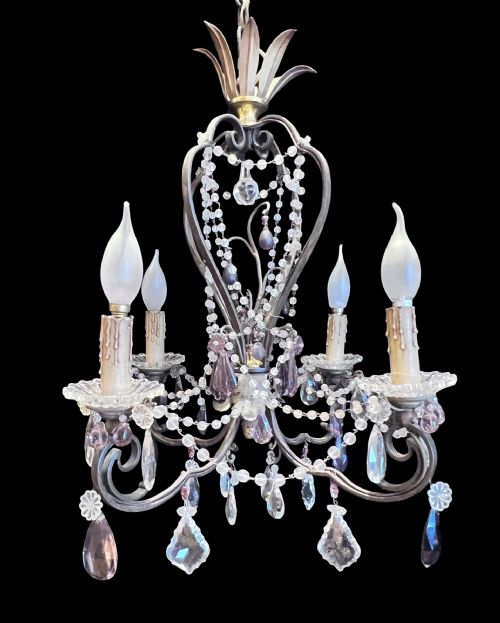
Several chandeliers include coloured crystals tucked among the clear glass drops, adding sudden flashes of amethyst and tone to the refraction.
Judging quality and craftsmanship
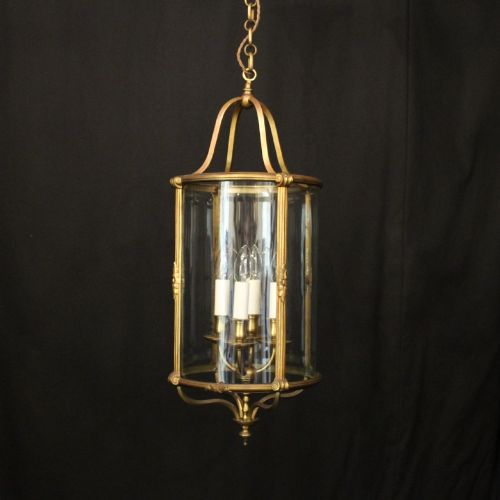
Quality rests in the crispness of the brass casting and the weight of the metal components, where finer pieces display sharp chased details rather than soft, smoothed surfaces. The integration of the glass elements, from hand-cut crystal lustres to convex lantern panels, dictates the overall brilliance of the fixture.
Proportion and arm count also define the tier of a piece, with balanced multi-tier configurations and original gilding marking out superior examples from simpler utilitarian hanging lights.
The Traditional Brass Chandelier Glossary
- Lustre
- A cut glass pendant or drop hung from the arms of a chandelier to refract light. Lustres are commonly faceted to scatter illumination across a room.
- Hall lantern
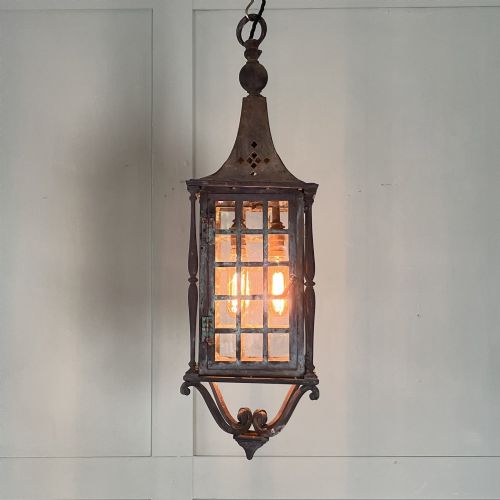
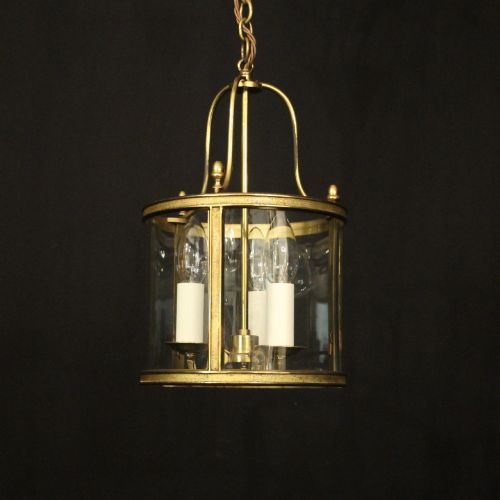
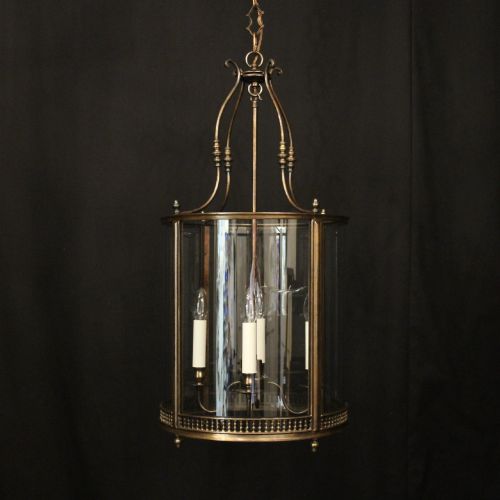
- An enclosed ceiling light designed specifically for entryways and corridors. These fixtures use brass or bronze frames fitted with glass panels.
- Plafonnier
- A shallow ceiling-mounted light fixture sitting close to the surface. They often feature cut glass bowls held within metal mounts.
- Gilt bronze
- Metal cast in bronze and treated with a gold-coloured surface finish. This technique provides a rich, durable metallic sheen.
Traditional Brass Chandelier: Frequently Asked Questions
How do I clean a crystal chandelier?
Cleaning requires a soft cloth dampened with a mild solution of warm water and gentle soap, wiping each crystal and brass arm individually. Avoid harsh chemical sprays that can strip the gilt surface from the metal frame.
Take care to support dangling crystals from beneath while cleaning to prevent undue strain on the mounting pins and delicate brass wiring.
Can these chandeliers take modern bulbs?
Most antique fixtures accept standard candle-style SES or SES-compatible LED bulbs that mimic the warm glow of historical lighting. Rewiring is frequently updated to meet contemporary electrical safety standards.
Consult a qualified electrician to verify that the ceiling junction box can support the combined weight of the brass frame and glass crystals.
What is an Empire revival chandelier?
An Empire revival piece draws upon the neoclassical design motifs popular during the early nineteenth century, featuring symmetrical lines and classical ornamentation. These fixtures often incorporate tent-and-waterfall crystal arrays beneath a central crown.
Such designs were frequently produced during the late Victorian and Edwardian periods as interior decorators sought grand historical aesthetics.
Where should a hall lantern be hung?
Hall lanterns suit entrance hallways, stairwells, and high-ceilinged landings where vertical space allows the fixture to hang freely. Their enclosed glass sides protect the internal light source from drafts.
Ensure the bottom of the lantern clears head height while remaining low enough to serve as a primary focal point upon entry.