




Brass Multi Arm Light
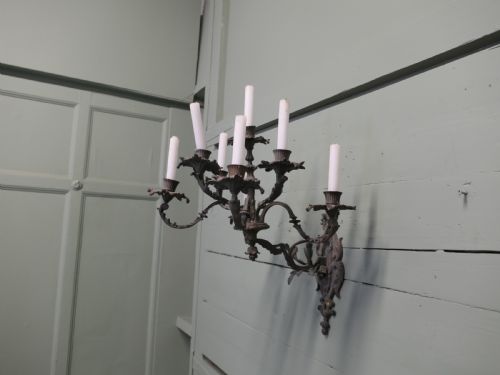
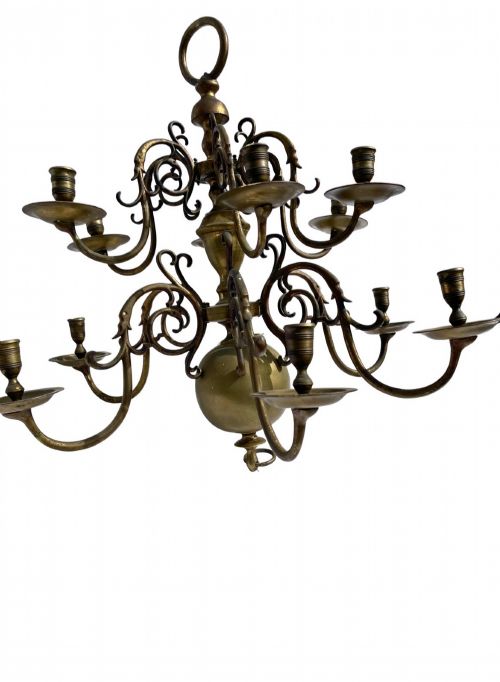
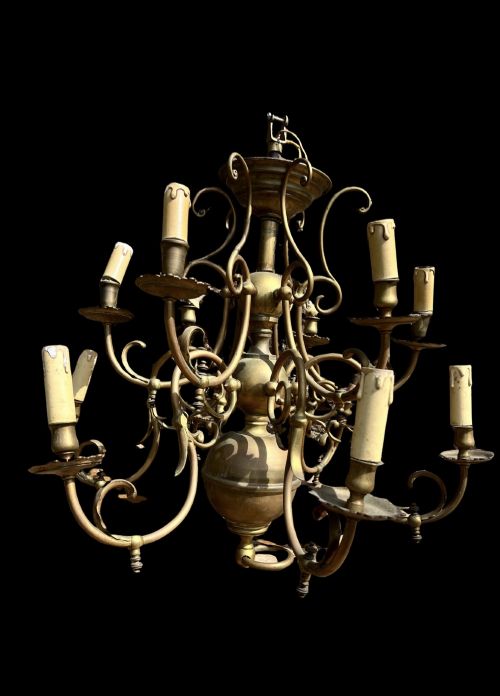
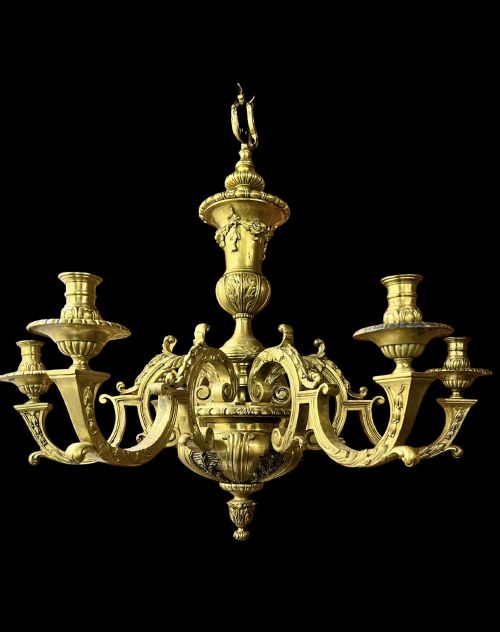
A brass multi arm light brings weight and complex illumination to a room, drawing the eye upwards through multiple branching points of metal.
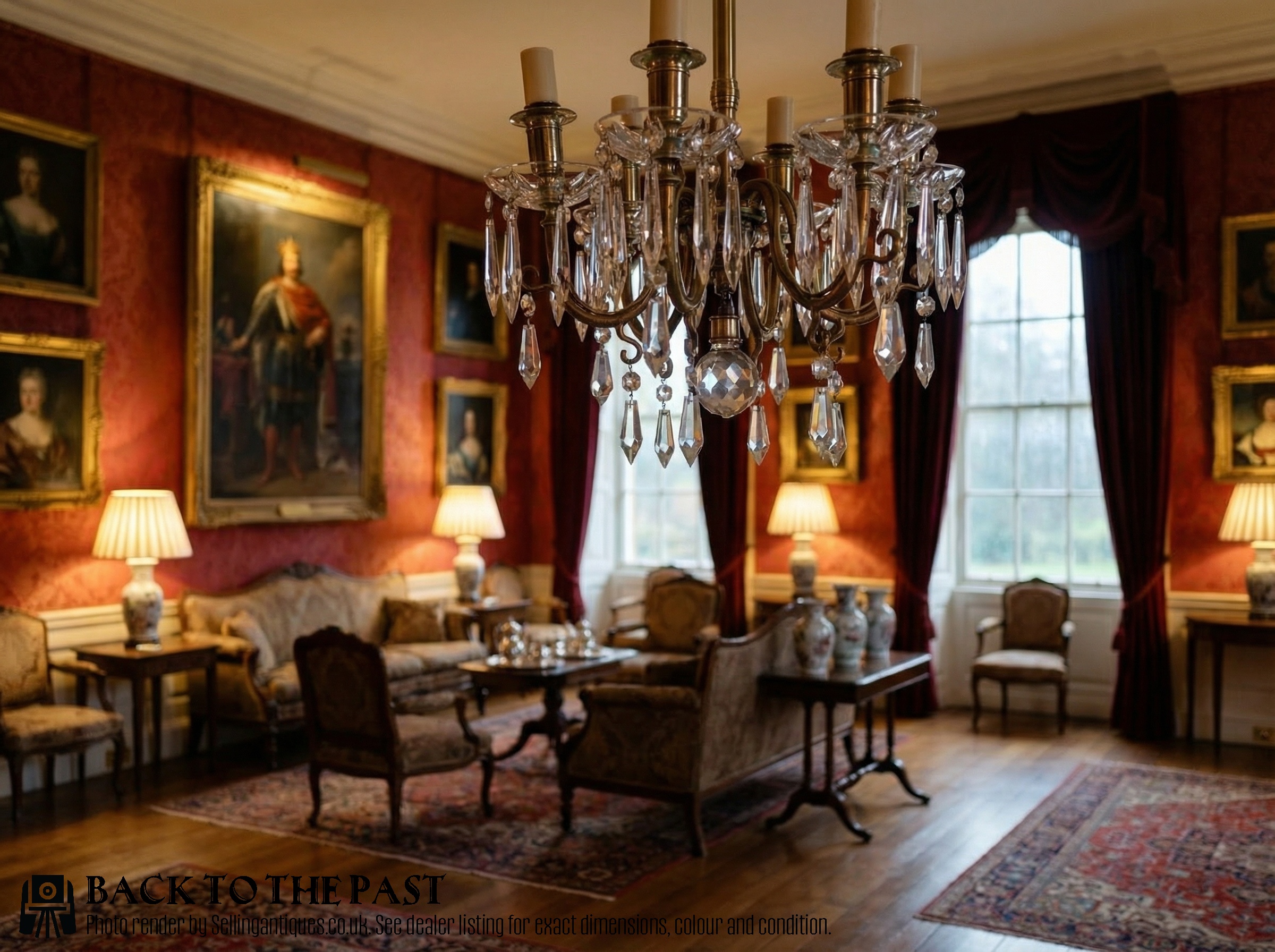
Brass Multi Arm Light
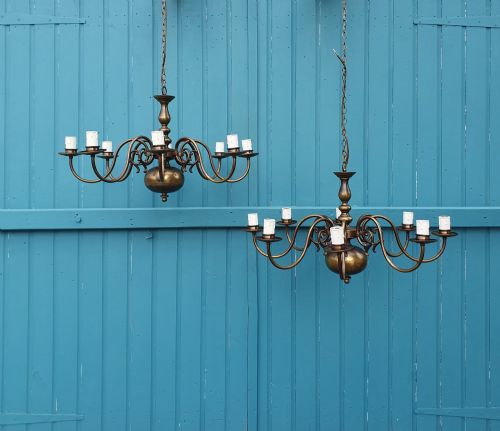
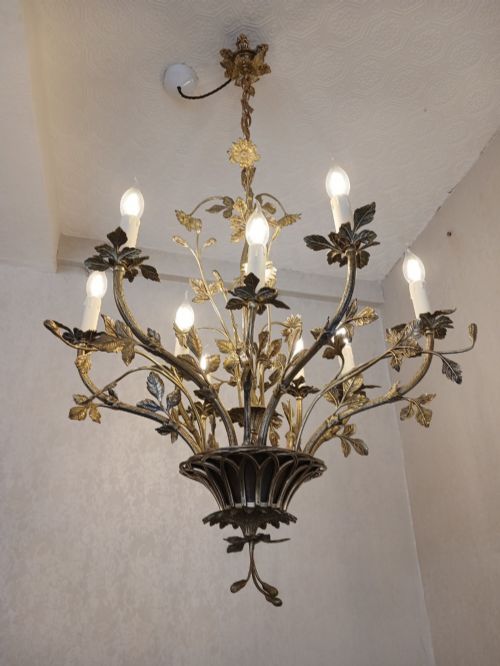
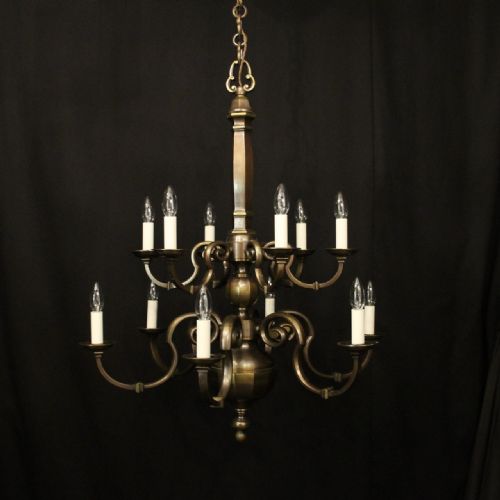
A brass multi arm light encompasses large chandeliers, wall sconces, candelabra and ceiling lights spanning periods from the nineteenth century through the Edwardian era and into the early twentieth century. These pieces emerge from diverse regional traditions, including French chateau designs, Dutch baroque revivals, Gothic forms and English country styles.
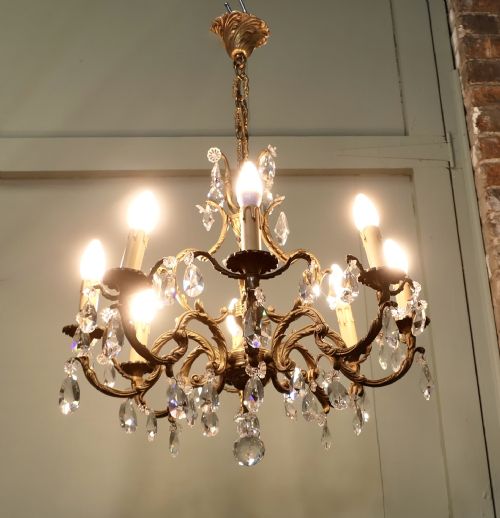
The buyer meets multi arm configurations most frequently on this page, taking the form of candelabra, floor lamps and substantial chandeliers carrying numerous lights. Many examples incorporate hanging crystal lustres, glass drops or coloured teardrops that refract the illumination across the room.
Origins stretch across Britain, France, Italy and the Netherlands, utilising metalwork traditions that favor scrolling arms, heavy cast bronze bodies and detailed subsidiary branches. The forms range from compact five light fixtures to massive ballroom chandeliers holding over forty lights.
Materials and Construction
Makers formed the structural bodies primarily from cast brass, bronze, gilt-brass and ormolu, utilising metal casting techniques to create scrolling arms and heavy supporting rings. Gilded finishes and bronzed patinations were applied to the metal surfaces to achieve distinct tonal qualities.
Cut glass, crystal and moulded glass components appear extensively as drops, lustres, beads and shades, suspended from the metal frames via wire pins. These transparent elements interact directly with the metal armature to multiply the spread of light.
Brass Multi Arm Light Retail Price Guide 2026
Typical asking prices for brass multi arm light among the pieces listed under this phrase on Sellingantiques today, from the lower quarter to the upper quarter. They describe what is for sale here now, not the wider market.
Listings feature brass, bronze, crystal and gilt-bronze materials across nineteenth-century, Edwardian and 1920s periods.
Assessing Quality
Quality rests upon the crispness of the metal casting and the weight of the primary brass or bronze framework, where finer pieces display deep, hand-finished chasing rather than flat, uniform machine surfaces. The integrity of the arm junctions and the thickness of the metal determine the structural stability of multi arm arrangements.
The grade of the hanging elements defines the upper tiers, with hand-cut crystal drops showing sharp facets and high clarity compared to pressed glass alternatives. The harmony between the original gilding, the retention of matching crystal components and the complexity of the scrollwork separates standard production from exceptional work.
Joseph Wilmotte·RENE MATHIEU
The Brass Multi Arm Light Glossary
- Ormolu
- Gilded bronze produced by applying an amalgam of gold and mercury to a bronze base, creating a durable golden surface finish. This technique was widely utilised in French lighting fixtures.
- Lustre
- A cut glass or crystal pendant hung from the arms or crown of a light fixture to catch and refract illumination. These pieces often feature faceted edges.
- Candelabra
- A branched candlestick holder designed to support multiple candles simultaneously. Many antique examples were later adapted for electrical wiring.
- Gasoliere
- A lighting fixture specifically engineered to distribute gas fuel to multiple burners before the widespread adoption of electricity. They frequently retain complex valve keys and heavy drop stems.
- Birdcage
- A cage-like metal frame enclosing the central stem of a chandelier, constructed from curved brass or gilt-bronze straps. Glass drops are often draped across the exterior wires.
Brass Multi Arm Light: Frequently Asked Questions
How do I clean an antique brass light?
Dust the metal and crystal components gently using a soft, dry brush to prevent accumulation. Avoid harsh chemical polishes that strip away historical patination from the brass.
For glass drops, remove them individually if necessary and wash them in lukewarm soapy water before drying thoroughly. Reattach each piece carefully to its original wire pin.
Can these old lights be wired for modern electricity?
Most multi arm fixtures from the nineteenth and early twentieth centuries have already been adapted for modern electrical standards. Professional rewiring ensures the internal channels and candle tubes meet current safety requirements.
Consult a qualified electrician to inspect the internal wiring paths of heavy bronze and brass frames. They can integrate appropriate lamp holders without altering the exterior appearance.
How do I determine the right size for a room?
Measure both the floor area and the ceiling height to gauge the appropriate scale for a multi arm fixture. Large rooms with high ceilings can support heavy multi-tier chandeliers with numerous arms.
Smaller spaces require compact sconces or low-arm chandeliers that maintain clearance below the sweep of the metal branches. Consider the reach of the arms relative to surrounding furniture.
What distinguishes Edwardian lighting from earlier styles?
Edwardian pieces often blend traditional forms with lighter decorative schemes, drawing on Georgian and French motifs adapted for urban homes. The metalwork tends to be refined and symmetrical.
Earlier nineteenth-century pieces, such as Gothic revival or Empire designs, display heavier casting, darker patinations and more architectural ornamentation. Baroque revivals emphasise dramatic scrolling arms and exuberant mass.