




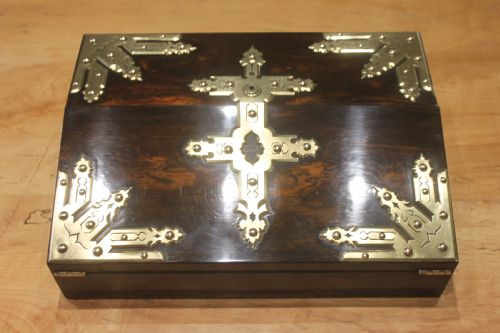


Gothic Brass Bound Box
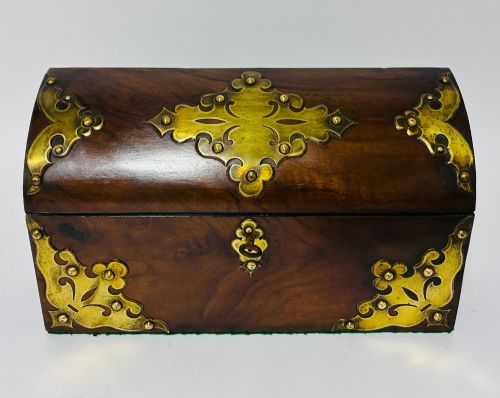
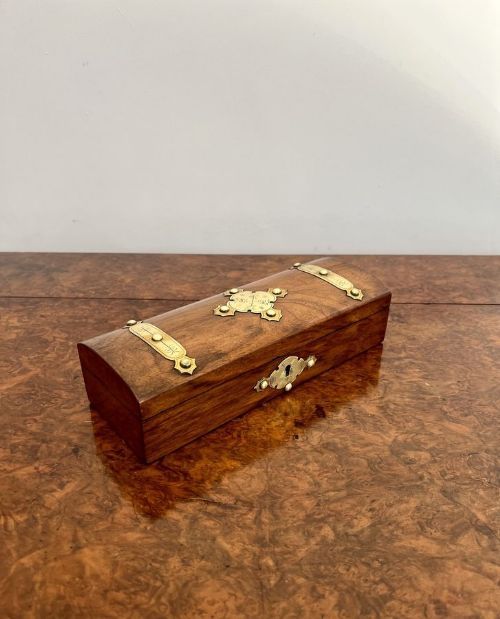
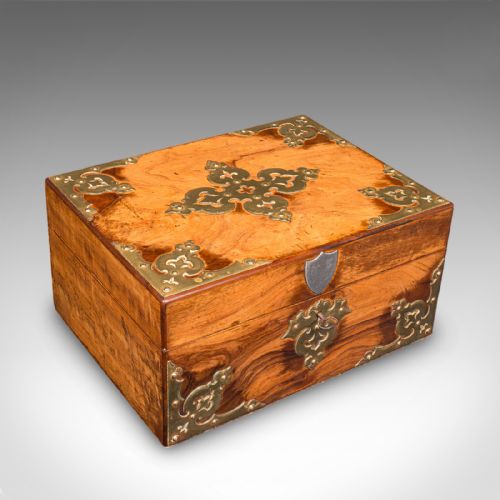
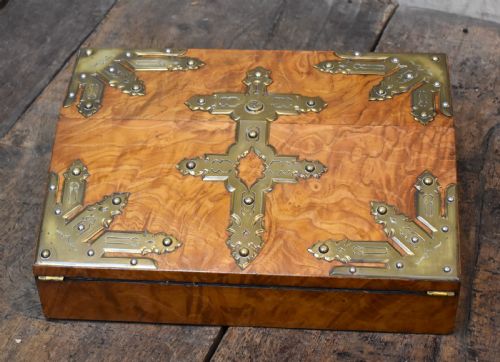
These gothic brass bound box examples are sturdy nineteenth-century containers built to hold letters, stationery and valuables.
Gothic Brass Bound Box
When you search for a gothic brass bound box, you encounter nineteenth-century writing slopes, stationery boxes, tea caddies and decorative caskets. These pieces emerge primarily from the Victorian era, spanning decades such as eighteen sixty, eighteen seventy, eighteen eighty, eighteen ninety and nineteen hundred.
The objects take several forms, including dome top boxes, lapdesks, desk sets and jewellery boxes. Walnut, burr walnut, coromandel and amboyna wood form the structural body of these pieces, alongside oak, mahogany and satinwood.
Makers and retailers such as Briggs of Piccadilly and Rodman and Company of Belfast appear in this tradition, alongside pieces designed in the Gothic Revival style and Gothic taste.
Materials and construction
The construction relies on dense timbers like coromandel, walnut and amboyna wood, often selected for rich burr figuring on the exterior surfaces. Cabinetmakers line these interiors with velvet, leather or contrasting woods.
Heavy brass banding, mounts and corner straps reinforce the structure, secured by pins or screws. Inlays of mother of pearl or glass also feature on select surfaces to decorate the exterior.
Lock mechanisms and hinges are brass, fitted flush into the timber to operate writing slopes, stationery cases and hinged lids.
Gothic Brass Bound Box Retail Price Guide 2026
Typical asking prices for gothic brass bound box among the pieces listed under this phrase on Sellingantiques today, from the lower quarter to the upper quarter. They describe what is for sale here now, not the wider market.
The listings show Victorian pieces utilising brass, burr walnut, coromandel, mother of pearl and glass across writing slopes, tea caddies and stationery boxes.
Judging the quality
Quality rests on the choice of timber and the precision of the brass work. Selecting finely figured burr walnut or coromandel separates standard containers from more ambitious commissions.
The integration of brass straps, hinges and corner reinforcement demonstrates the skill of the cabinetmaker. Substantial brass work fitted cleanly into the timber indicates higher workshop standards.
Interior fittings, such as fitted stationery partitions, secret drawers or matched glass inkwells, mark out more elaborate writing slopes and desk accessories.
Briggs 27 Piccadilly London·Rodman and Co of Belfast
The Gothic Brass Bound Box Glossary
- Gothic Revival
- An architectural and decorative style drawing inspiration from medieval forms. This aesthetic influences the pointed arches, heavy brass mounts and structural rigidity seen in nineteenth-century furnishings.
- Coromandel
- A dense, heavily figured timber imported from Asia. Cabinetmakers utilise this dark wood for luxury Victorian boxes and writing slopes.
- Writing Slope
- A portable desk with a hinged, slanted lid that opens to reveal a writing surface and compartments for paper and ink.
- Stationery Box
- A desk accessory designed to hold envelopes, writing paper and letters upright in internal wooden dividers.
- Burr Walnut
- Wood taken from a growth or burl on a walnut tree, yielding a swirling, marbled grain pattern highly prized for box veneers.
Gothic Brass Bound Box: Frequently Asked Questions
What is a gothic brass bound box used for?
These boxes served domestic and professional purposes in nineteenth-century homes and offices. They held correspondence, stationery, jewellery or tea.
Writing slopes provided a portable slant surface for writing letters while storing paper and pens inside the carcass.
How do I identify a Victorian gothic brass bound box?
Look for heavy brass straps, corner pieces and hinges contrasting against dark timbers like walnut, coromandel or mahogany. Gothic Revival details include pointed arches and medieval architectural motifs.
Dates typically fall within the nineteenth century, ranging from eighteen fifty through to nineteen hundred.
What woods were used for these boxes?
Cabinetmakers utilised dense exotic and domestic hardwoods for durability and appearance. Coromandel, walnut, burr walnut, amboyna wood, oak, mahogany and satinwood appear frequently.
These timbers often featured decorative grain patterns or high-gloss finishes.
Are these boxes English or Scottish?
Origin locations vary across the British Isles, with specific pieces linked to London retailers or Belfast firms. Maker marks or retailer inscriptions on locks and interior surfaces help confirm origin.
Many examples remain attributed simply to nineteenth-century English or Scottish workshops.