



Ornate Brass Mounted Box
An ornate brass mounted box brings heavy timber, tactile metalwork and centuries of storage history straight onto a tabletop.
Ornate Brass Mounted Box
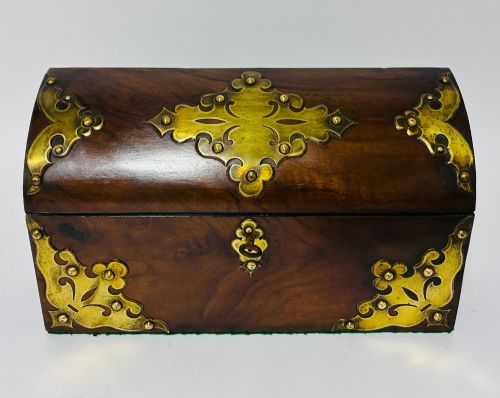
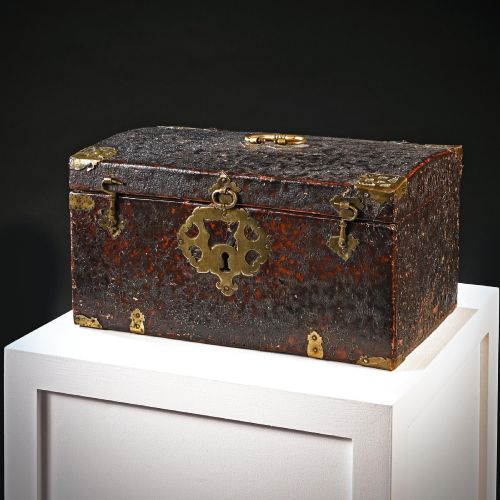
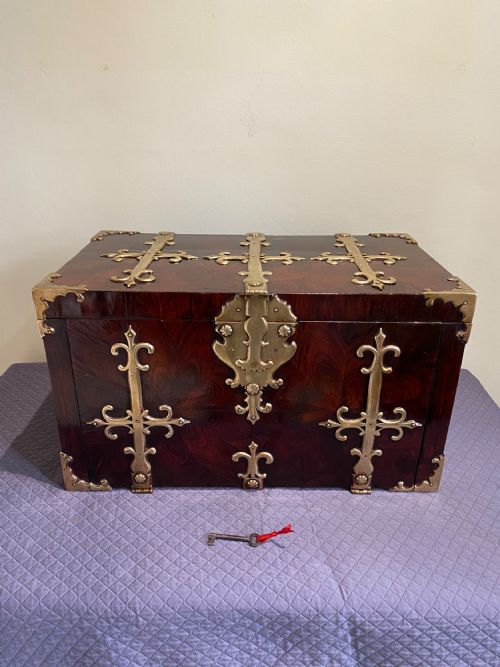
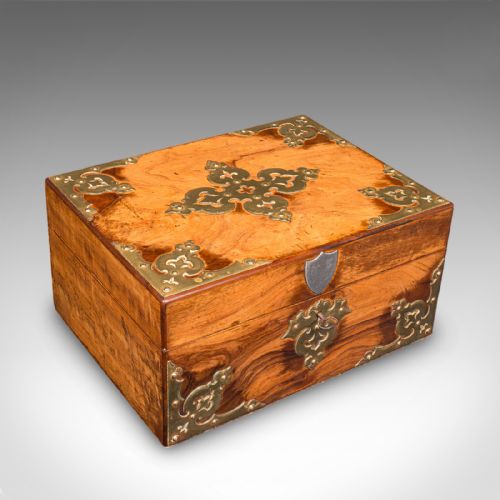
When you search for an ornate brass mounted box, you encounter a varied selection of strongboxes, tea caddies, jewellery cases and travelling chests spanning several centuries. These pieces combine robust structural timber with decorative metal mounts, strapwork and corner guards.
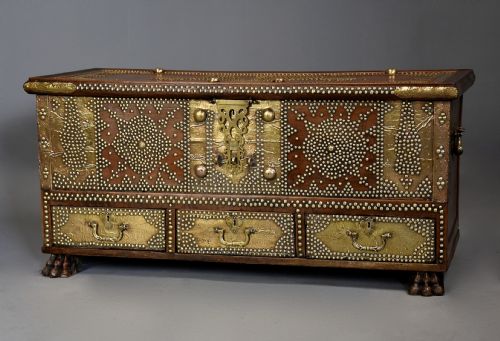
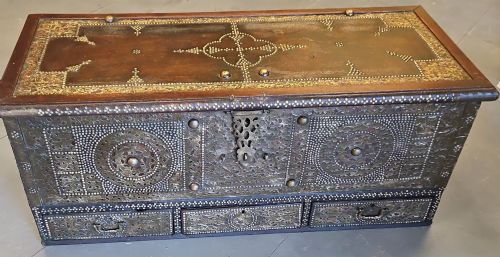
You are most likely to meet Victorian examples on this page, alongside earlier seventeenth and eighteenth-century coffers and travelling trunks. Forms range from compact desktop workboxes and tea caddies up to larger Zanzibar traders chests and miniature cofre fortes.
Origins stretch across Britain, Europe, and the Middle East, taking in Scottish walnut sewing cases, Danish oak dome top coffers, and Anglo-Indian colonial craftsmanship. Each piece reflects the specific storage needs and decorative tastes of its original period.
Materials and construction
Construction relies upon durable timbers such as oak, walnut, teak, kingwood, rosewood and coromandel, often paired with secondary woods and leather coverings. Makers shaped these dense materials into sturdy chests, cabinets and caddies built to withstand heavy daily use and transport.
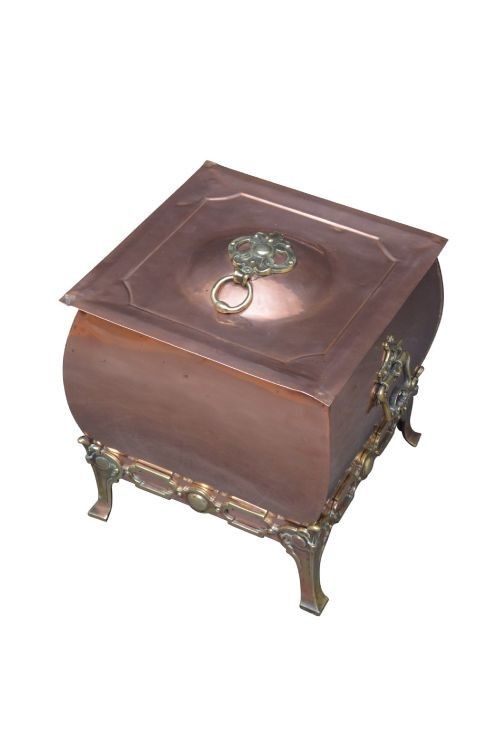
Brass provides the defining visual and structural reinforcement, appearing as heavy mountings, corner brackets, studded decoration and bound edges. Artisans frequently integrated iron handles, copper elements and ormolu mounts to secure lids and corners while adding intricate surface pattern.
Ornate Brass Mounted Box Retail Price Guide 2026
Typical asking prices for ornate brass mounted box among the pieces listed under this phrase on Sellingantiques today, from the lower quarter to the upper quarter. They describe what is for sale here now, not the wider market.
Listings here feature boxes constructed from oak, walnut, teak, kingwood, rosewood, coromandel, leather, copper and iron.
Judging quality and craftsmanship
Quality reveals itself in the precision of the joinery and the integration of the metal mounts into the wooden body. Finer boxes display flush brass work, tightly fitted dovetail joints and well-chosen timber grains such as burr walnut or kingwood.
The sophistication of the decorative programme separates standard utility containers from exceptional items. Elaborate brass studding, chased ormolu mounts, and specialised internal compartments elevate the status of a piece far above simple utilitarian storage.
The Ornate Brass Mounted Box Glossary
- Coffer
- A heavy wooden chest, often dome-topped, used historically for storing valuables and travel goods. These sturdy boxes frequently feature iron or brass reinforcement along the edges and lid.
- Tea Caddy
- A small container specifically designed for storing loose tea leaves, often fitted with internal compartments and a secure lock. They appear in fine timbers with decorative mounts.
- Ormolu
- Gilded bronze applied as decorative mounts and feet on high-status nineteenth-century furniture and decorative boxes. The technique gives a rich gold-coloured metallic finish.
- Bijouterie Table
- A glazed display table mounted on legs, designed to showcase small decorative objects and jewellery. These pieces utilise fine timbers and elaborate metal mounts.
Ornate Brass Mounted Box: Frequently Asked Questions
What were ornate brass mounted boxes used for?
These boxes served secure, practical functions for storing high-value items such as jewellery, documents, currency, tea and sewing equipment during travel or at home.
Larger versions functioned as travelling chests or traders trunks for merchants on the move, while smaller caddies and cabinets remained static on desks and dressing tables.
How do I date an antique wooden box?
Dating relies on observing the combination of timber species, construction methods like dovetailing, and the specific style of the brass mounts.
Victorian pieces often showcase exotic veneers like burr walnut and coromandel, whereas seventeenth and eighteenth-century examples lean towards heavier oak, leather coverings, and simple iron or brass strapwork.
Where were these brass mounted boxes made?
Production spans workshops across Britain, Denmark, Scotland, and the Middle East, reflecting international trade and regional woodworking traditions.
Zanzibar and Middle Eastern traders chests bring distinct regional carving and brass studwork, while Scottish and English makers favoured Gothic Revival walnut and rosewood.
How should I care for a brass mounted box?
Keep wooden surfaces nourished with appropriate wax polishes and protect the metal mounts from excessive moisture to prevent tarnishing and corrosion.
Avoid placing antique boxes in direct sunlight or near heat sources to prevent the timber and decorative veneers from splitting or warping.