
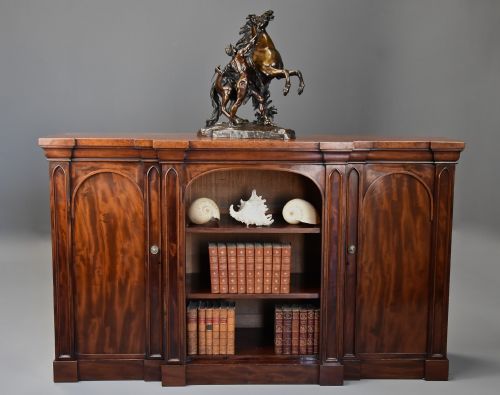


Gothic Arched Bookcase
A gothic arched bookcase brings pointed architectural glazing and deep timber character into a room.

Gothic Arched Bookcase
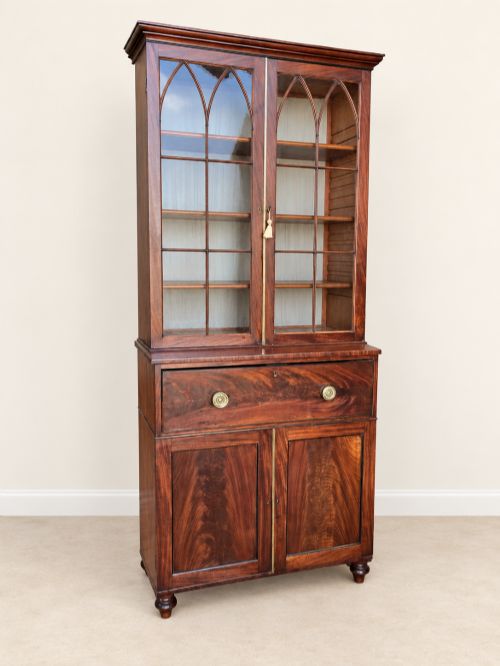
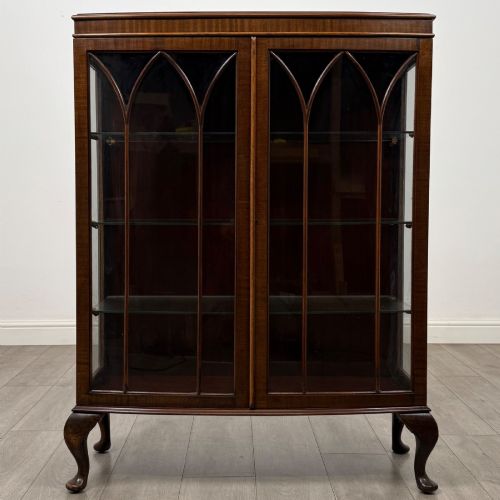
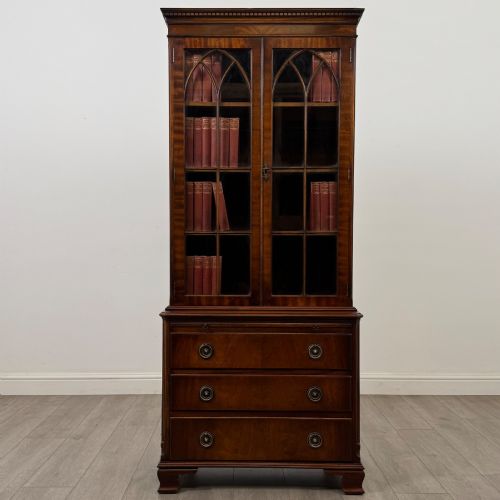
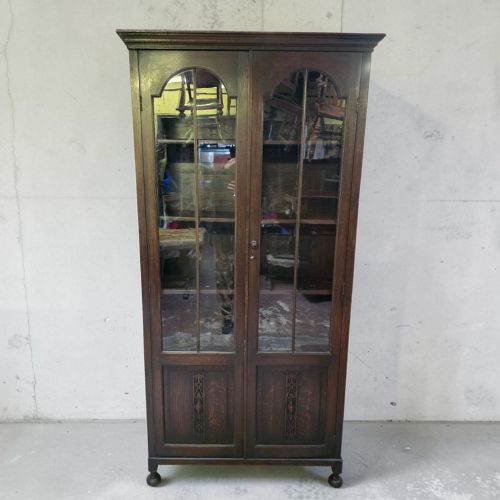
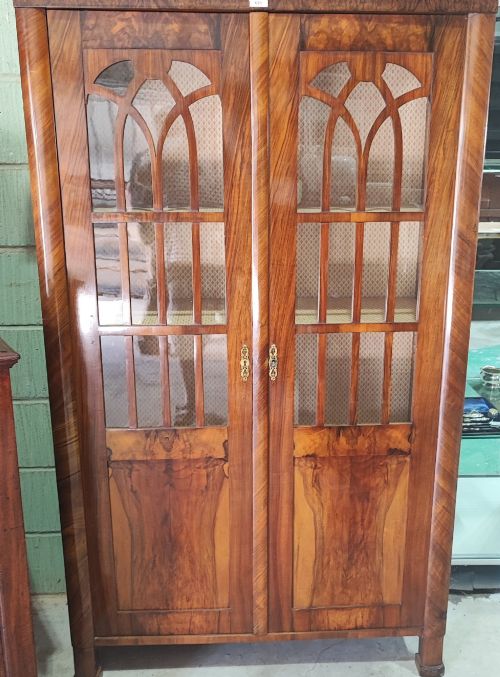
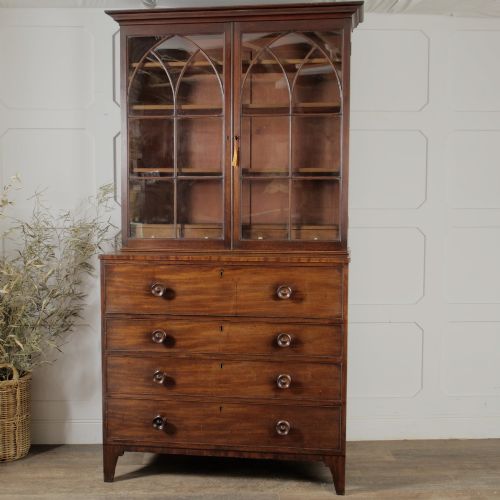
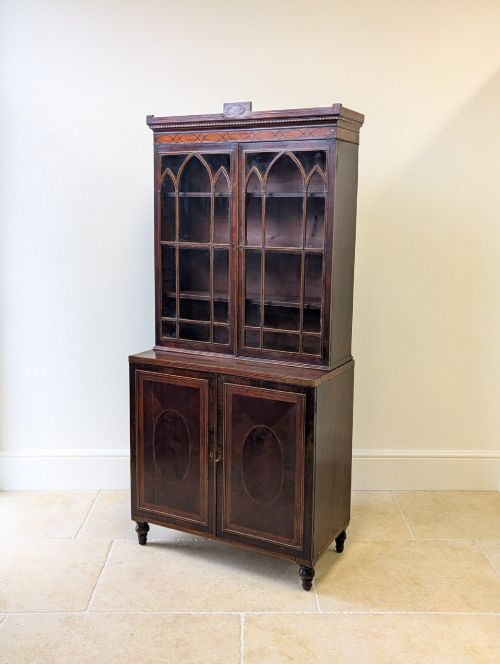
A gothic arched bookcase provides tall shelving enclosed by glazed or panelled doors shaped with pointed arches. These pieces combine practical storage with the striking vertical lines characteristic of Gothic Revival and related nineteenth-century designs.
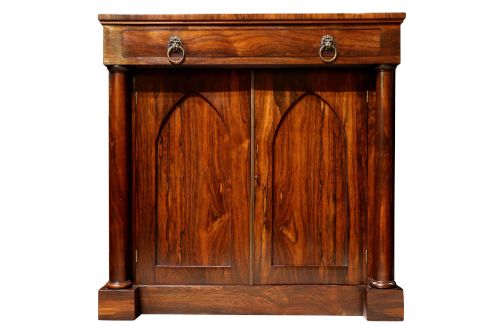
The versions most commonly met on this page span the Georgian, Regency, and Victorian periods, constructed primarily in dense hardwoods like mahogany and rosewood. Formats range from breakfront bookcases and display cabinets to compact chiffoniers and side cabinets incorporating Gothic influence.
What varies in quality
The distinction between standard examples and finer pieces lies in the crispness of the timber carving and the complexity of the architectural glazing bars forming the arches. Subtle details such as figuration in the mahogany veneer and original brass hardware elevate the standing of an individual cabinet.
Proportion and scale also dictate quality, as custom breakfront designs or unusual forms demonstrate a higher level of commission work compared to standard production pieces.
Listings feature mahogany, rosewood, walnut, oak, pine, and brass across Georgian, Regency, Victorian, and Edwardian periods.
The Gothic Arched Bookcase Glossary
- Breakfront
- A cabinet design where the central section projects forward from the flanking wings. This format creates depth and visual balance across large library bookcases.
- Glazing bar
- A narrow strip of wood or metal holding glass panes within a window or cabinet door. In gothic pieces, these bars intersect to form pointed arches.
- Chiffonier
- A low sideboard or cabinet featuring shelves or enclosed storage below. Nineteenth-century examples often incorporate panelled doors with gothic motifs.
- Secretaire
- A desk form featuring a pull-down writing flap concealing small drawers and pigeonholes. These are frequently integrated into the upper structure of tall bookcases.
Gothic Arched Bookcase: Frequently Asked Questions
How do I date a gothic arched bookcase?
Dating relies on timber selection, structural proportions, and the specific characteristics of the Gothic Revival style. Earlier pieces from the Georgian and Regency eras tend to show restrained classical proportions combined with pointed glazing.
Later Victorian and 1890 examples often display heavier oak construction or more elaborate revival ornamentation. Comparing the secondary timbers inside the drawers provides further clues to the period.
Are these bookcases suitable for modern rooms?
These cabinets offer practical vertical storage for books and display items while adding strong architectural presence to an interior. Their deep wood tones anchor contemporary or traditional spaces alike.
Careful placement away from direct heat sources protects the antique timber and veneer from splitting. Ensuring adequate wall clearance allows doors with projecting architectural mouldings to open fully.
What is the difference between a display cabinet and a bookcase?
Display cabinets generally feature glass panels on the sides as well as the doors to showcase objects from multiple angles. Bookcases traditionally focus on front-facing glazed or solid doors enclosing adjustable book shelving.
Many nineteenth-century pieces blur this distinction by combining library storage below with display space above. Both forms utilise similar gothic arched glazing patterns.
How should I care for antique mahogany and rosewood?
Regular dusting with a dry, soft cloth maintains the finish without building up unnecessary residue. Maintaining stable room humidity prevents the timber and veneer from drying out or warping over time.
Harsh chemical polishes should be avoided in favour of traditional beeswax applied sparingly. Professional restoration is best consulted for any structural repairs to hinges or glazing bars.