


Golden Wood Nightstand
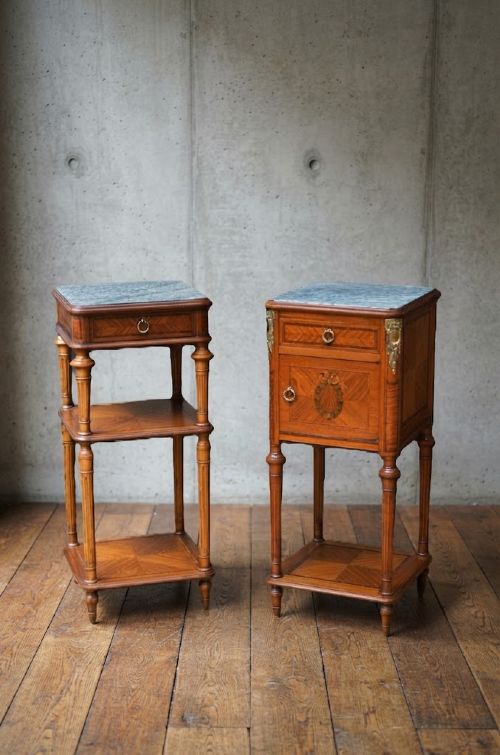
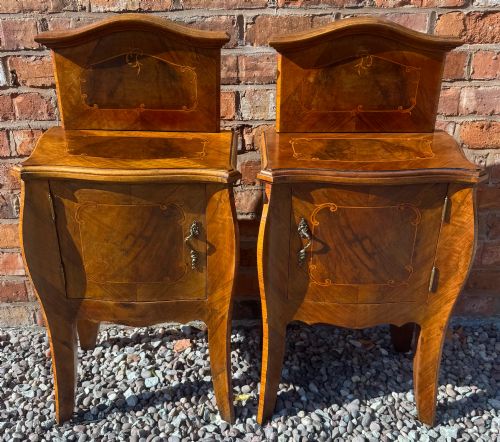
These golden wood nightstand examples range from Victorian satinwood cabinets to Art Deco maple bed units, bringing warmth and compact utility to bedside spaces.
Golden Wood Nightstand
A golden wood nightstand encompasses compact bedroom furniture designed to sit beside a bed, taking the form of bedside cabinets, tables, lamp stands, and pot cupboards. The selection relies heavily on nineteenth-century Victorian pieces and 1930s designs, offering enclosed storage or open surfaces.
The materials that create this golden appearance include satinwood, satin birch, burr elm, and maple, often displaying warm yellow and amber tones. Makers shaped these timbers into bowfront cabinets, marble-topped cupboards, and occasional tables suited to period bedrooms.
Many items appear as matched pairs, particularly among the Victorian satinwood pieces and the Art Deco groups. Single pedestals and headboards with attached cabinets also feature, providing diverse configurations for modern homes.
How they were made
Cabinet makers utilised choice timbers such as satinwood, walnut, and burr elm, often applying them as veneers over secondary woods to highlight natural grain patterns. Intricate inlay work using boxwood and darker woods frequently decorates the surfaces of Victorian and revival pieces.
Structural elements incorporated brass for handles, hinges, and gallery rails, while certain nineteenth-century examples integrated fitted marble tops for durability. Construction methods relied on traditional joinery suited to small-scale pedestals and bedside cupboards.
Some nineteenth-century nightstands doubled as discrete indoor plumbing depositories before modern plumbing arrived.
What varies in quality
The refinement of the timber selection and veneer matching defines the upper tier of these pieces, particularly where figured satinwood or burr elm displays striking movement. Superior examples show meticulous attention to inlaid detailing and balanced proportions across pairs.
Original hardware, intact marble surfaces, and well-preserved structural joinery distinguish finer specimens from heavily restored or altered items. The integration of maker attributions, such as Gillows, adds notable distinction to specific cabinets.
Gillows
The Golden Wood Nightstand Glossary
- Satinwood
- A durable tropical hardwood known for its golden-yellow sheen and lustrous grain, frequently favored for fine nineteenth-century cabinet making. It takes a high polish that accentuates its reflective qualities.
- Bowfront
- A curved cabinet front that swells outward in the centre, creating a softer profile than flat-fronted furniture. This shape appears regularly on Victorian bedside pieces.
- Marquetry
- The art of applying decorative veneer pieces in wood, shell, or ivory to form geometric or pictorial designs on a surface. It demands high precision from the craftsman.
- Pot cupboard
- A small bedside cabinet originally designed to house a chamber pot behind a single door. Many now serve as general bedside storage or lamp tables.
- Burr elm
- Wood harvested from the growth excrescences on elm trees, producing a dense, swirling grain pattern rich in texture. It provides a highly decorative surface for table tops and cabinet doors.
Golden Wood Nightstand: Frequently Asked Questions
How do I clean satinwood furniture?
Satinwood benefits from gentle dusting with a soft, dry cloth to prevent micro-abrasions on the polished surface. Avoid harsh chemical cleaners or excess moisture, which can damage the delicate veneer.
Period wax applied sparingly helps nourish the timber and maintain its natural golden lustre without building up heavy residues.
Are these nightstands sold in pairs?
Many listings feature matched pairs of bedside cabinets, particularly among the nineteenth-century satinwood and Art Deco selections. Single tables and cabinets also appear for asymmetric room layouts.
Checking individual descriptions confirms whether a piece is offered independently or as part of a matching pair.
How do I date a wooden nightstand?
Dating relies on examining the timber species, construction techniques, and stylistic revival markers such as Neo-Classical or Louis XV influences. Nineteenth-century examples often employ solid secondary woods with hand-cut dovetails.
Design cues like Art Deco geometric lines or Victorian bowfronts help place pieces within specific decades from the 1850s through to the 1930s.