

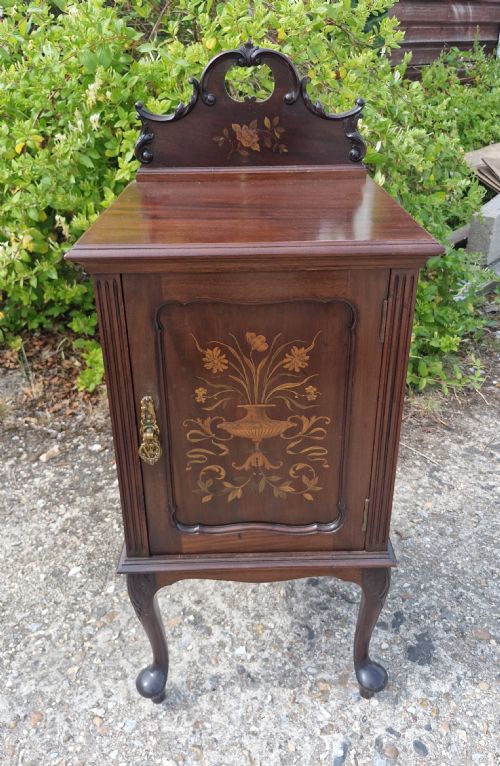


Antique Wood Locker
An antique wood locker provides private bedside storage, turning up most often in mahogany and walnut across the Georgian and Victorian eras.
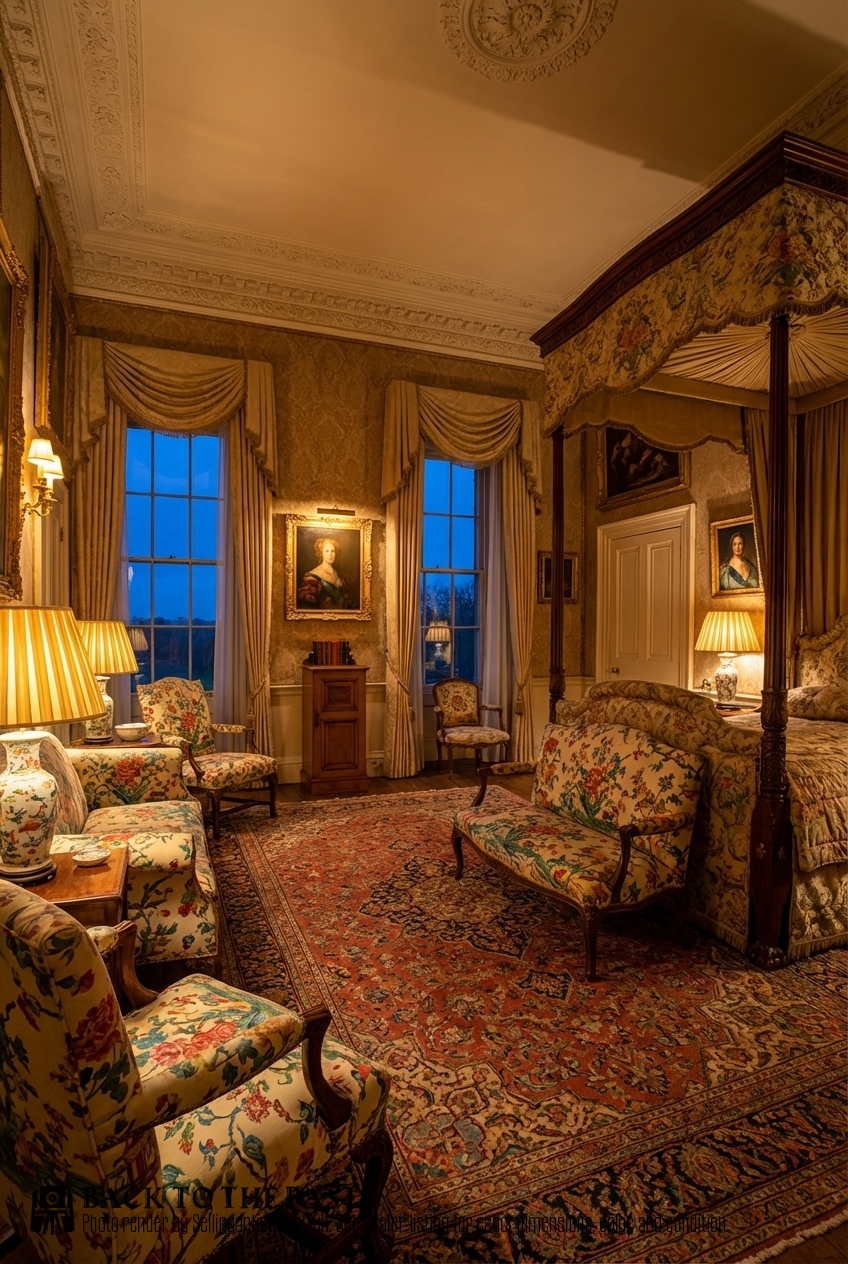
Antique Wood Locker
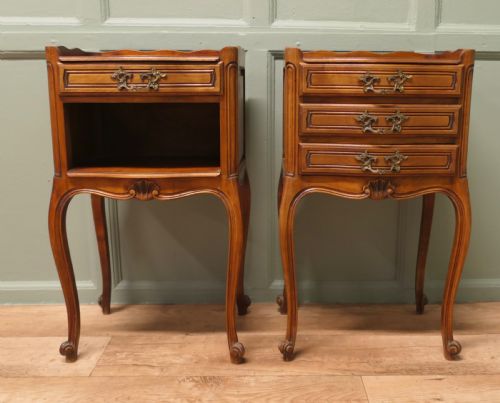
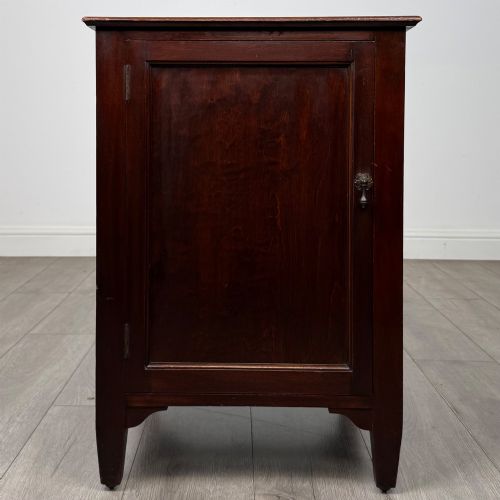
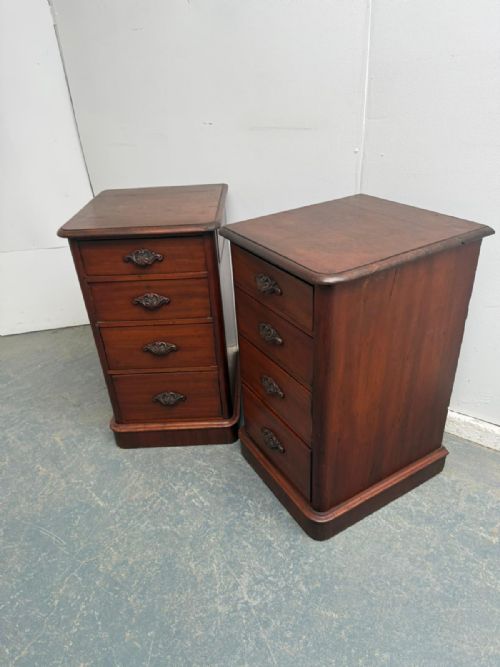
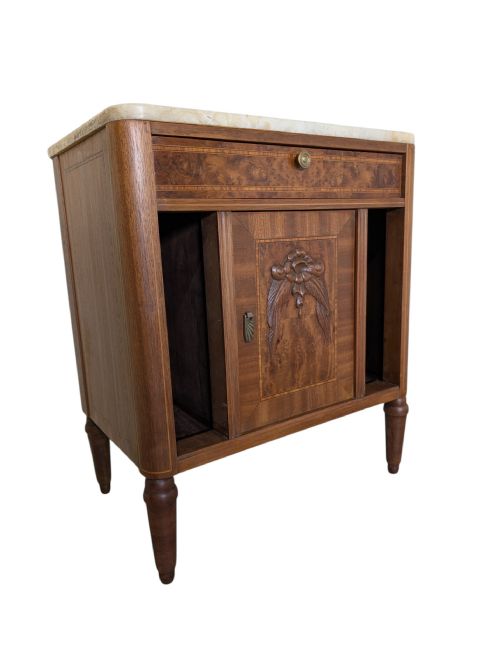
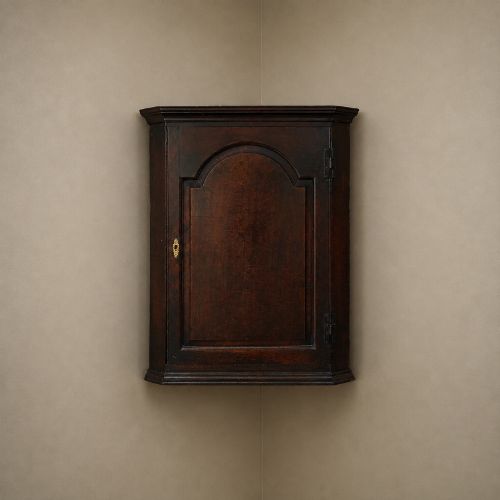
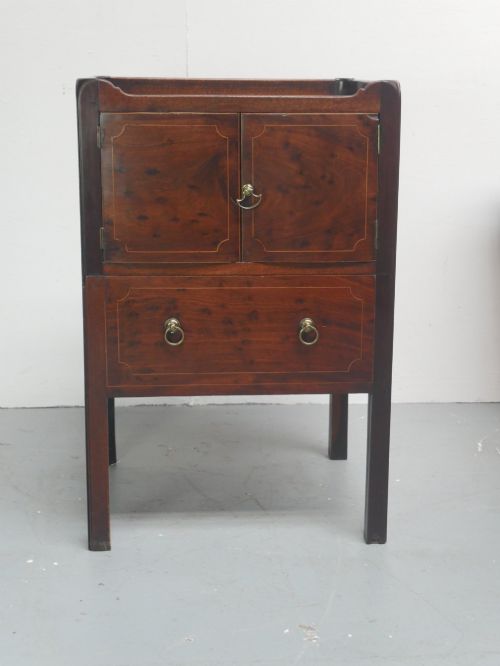
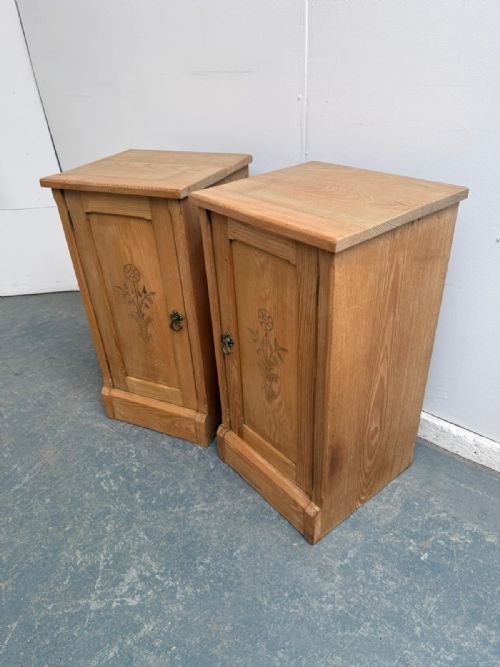
When buyers search for an antique wood locker, they encounter bedside cabinets, small chests of drawers, and pot cupboards designed to hold chamber pots or night essentials. These pieces date from the Georgian period through to the 1930s, appearing in various timbers such as oak, mahogany, walnut, and satinwood.
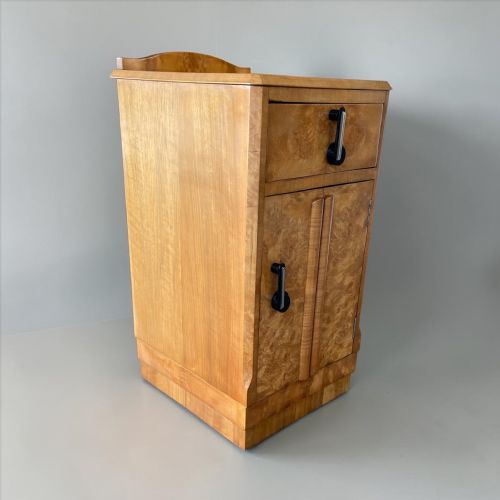
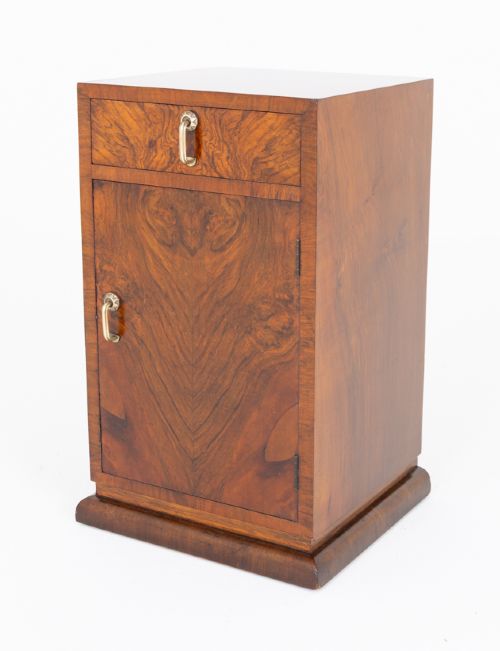
The most common formats on this page are Victorian and Edwardian bedside cabinets in mahogany or walnut, alongside Art Deco tables from the 1930s. Makers also produced corner cupboards and side cabinets in smaller dimensions suited for bedrooms.
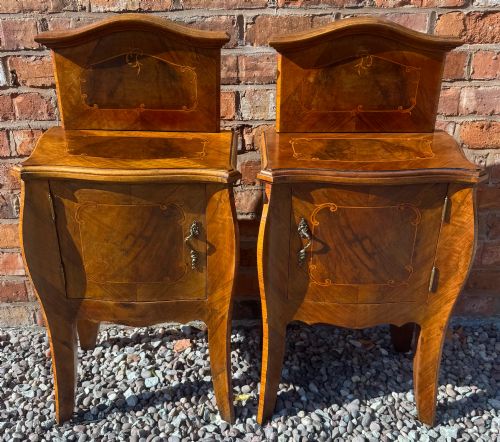
Pieces range from simple oak cupboards to highly decorated French parquetry tables and satinwood cabinets with inlaid details. Buyers select them for functional bedside storage that carries period character.
How they were made
Cabinet makers utilised solid timbers like oak and mahogany for structural strength, often applying veneers of walnut, flame mahogany, or burr walnut to visible surfaces. Drawer construction typically involved hand-cut dovetails, while carcases relied on traditional mortise and tenon joints.
Surface finishes depended on the period, ranging from traditional wax and polish on Georgian and Victorian pieces to high-gloss treatments on later Art Deco designs. Brass handles, hinges, and occasional marble tops completed the construction of these bedside pieces.
Listings feature bedside cabinets spanning from the Georgian period through to 1930 Art Deco designs, constructed in mahogany, walnut, oak, and satinwood.
What varies in quality
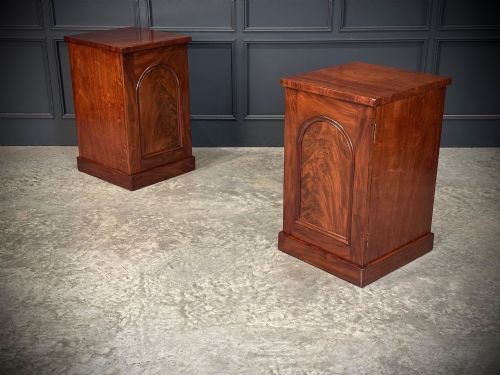
Quality rests primarily on the selection of timber and the precision of the cabinet work, such as the tightness of the dovetail joints in the drawers. Matched pairs command higher regard than single pieces, particularly when the grain pattern on flame mahogany or burr walnut mirrors across both doors or drawer fronts.
Maker attribution elevates a piece significantly, as seen in items bearing stamps from known firms like Heal's, Gillows, or Holland & Sons. Finer pieces also display subtle details like intricate inlay, fine brass hardware, and well-executed parquetry.
Heals·Holland & Sons·Gillows·Betty Joel
The Antique Wood Locker Glossary
- Pot cupboard
- A small bedside cabinet originally built to enclose a chamber pot behind a single door. These pieces often include a small shelf inside.
- Parquetry
- Geometric wood mosaic work used for decorative veneer patterns on tabletops and cabinet doors. This technique appears frequently on continental pieces from the early twentieth century.
- Dovetail
- An interlocking wood joint formed by interlocking wedge-shaped fingers. Hand-cut dovetails indicate traditional craftsmanship in drawer construction.
- Flame mahogany
- A distinct grain pattern derived from the branch junctions of the mahogany tree, resembling flickering flames. Cabinet makers prized this figure for drawer fronts and door panels.
- Inlay
- Contrasting woods, metals, or shells inserted into depressions in the wood surface to create decorative motifs. Satinwood cabinets often feature delicate stringing and floral inlay.
Antique Wood Locker: Frequently Asked Questions
What is an antique wood locker used for?
These compact cabinets served historically as bedside storage for personal items and chamber pots. Today they function practically as bedside tables with enclosed cupboard space or small drawers.
Their modest proportions allow them to fit easily beside modern beds or serve as small side tables in tighter spaces.
How do I tell Victorian from Georgian pieces?
Georgian pieces generally display simpler, heavier carcases in solid mahogany or oak with minimal decoration. Victorian examples often introduce richer veneers, turned legs, and more elaborate brass fittings.
Examining the drawer construction and internal secondary woods also helps establish the correct period of manufacture.
Are bedside lockers usually sold as pairs?
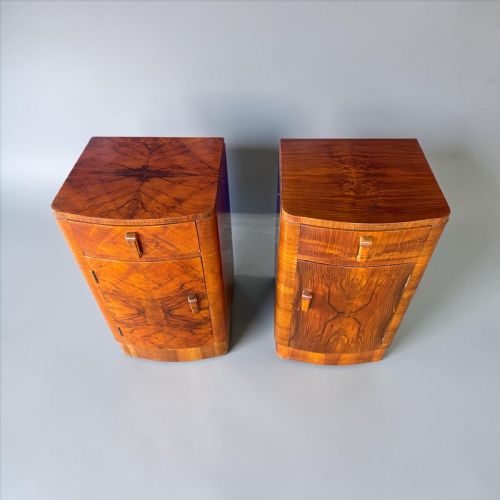
Many Victorian and Edwardian cabinets survive as matched pairs because bedrooms traditionally accommodated twin bedside tables. Single pieces are also common, particularly from the Georgian era.
Matching pairs hold greater appeal for symmetrical bedroom layouts.
How should I care for a waxed wood surface?
Maintain waxed surfaces by applying a quality beeswax polish sparingly and buffing with a soft cloth. Avoid placing these cabinets in direct sunlight or near heat sources to prevent the wood from drying out.
Using coasters and mats protects the polished top from moisture and heat damage.