



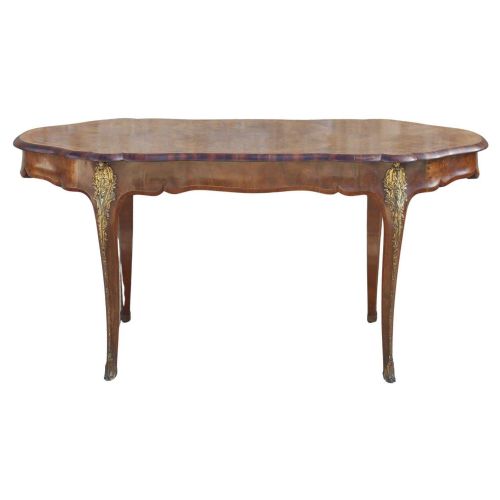


Golden Walnut Desk
A golden walnut desk brings warm tone and rich grain to a study, uniting practical writing space with striking period character.
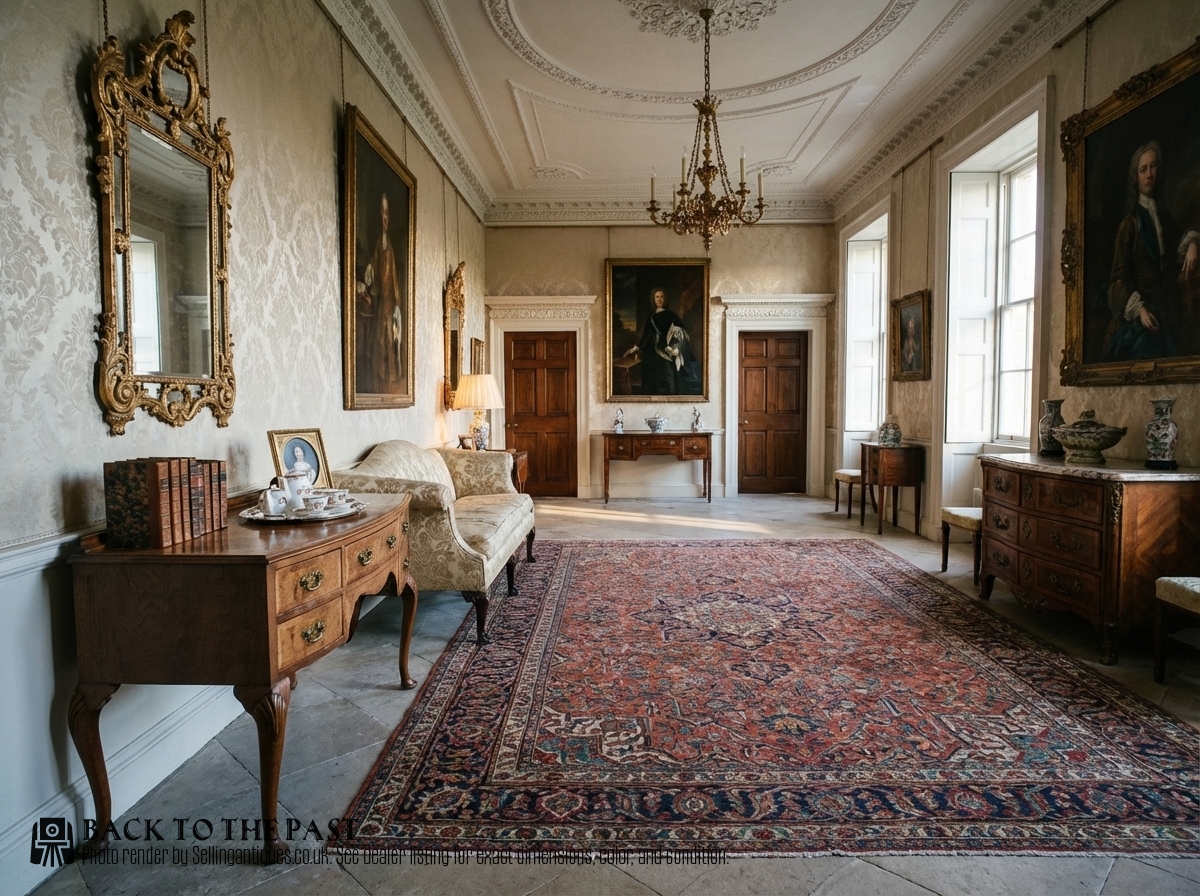
Golden Walnut Desk
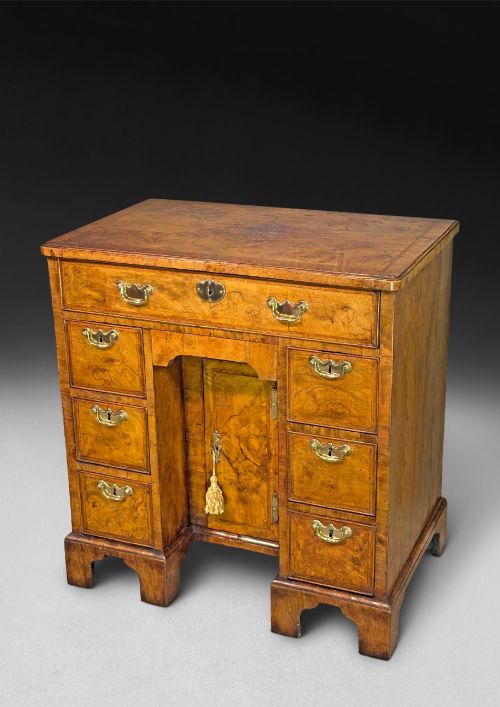
A golden walnut desk spans several distinct eras, appearing in Georgian kneehole forms, Victorian Davenport designs, and streamlined Art Deco writing tables. Buyers seeking this phrase encounter pieces shaped by changing domestic habits, from grand pedestal writing stations to compact boudoir setups.
The materials and construction reflect the natural figure of the timber, frequently utilising burr walnut veneers over solid carcases. Makers paired the warm honeyed tones of the wood with brass hardware, leather writing surfaces, and occasional satinwood or ormolu highlights.
Originating predominantly from English and continental workshops, these items serve as functional writing desks, bureau plats, and bonheur de jour tables. The surviving examples demonstrate the enduring appeal of golden walnut across the eighteenth, nineteenth, and early twentieth centuries.
What varies in quality
The visual impact of a golden walnut desk depends heavily on the selection and matching of the burr walnut veneer across the primary surfaces. Superior examples display symmetrical grain patterns and careful preservation of the warm golden timber tone without excessive darkening.
Construction standards are evident in the execution of internal drawers, the choice of secondary timbers, and the presence of maker attribution or specialised hardware like Bramah locks. Finer pieces maintain original structural integrity and uncompromised surface patination.
Golden Walnut Desk Retail Price Guide 2026
Typical asking prices for golden walnut desk among the pieces listed under this phrase on Sellingantiques today, from the lower quarter to the upper quarter. They describe what is for sale here now, not the wider market.
Listings feature golden walnut pieces spanning the Georgian, Victorian, and Edwardian eras, incorporating materials like brass, leather, and burr walnut.
Charles Tozer·Harry and Lou Epstein·Maples of London·Morison of Edinburgh·James Winter and Son
The Golden Walnut Desk Glossary
- Burr walnut
- A specialised timber veneer harvested from the growth excrescences of walnut trees, yielding highly decorative swirling grain patterns. It forms the primary decorative surface on many high-end Victorian and Georgian desks.
- Davenport
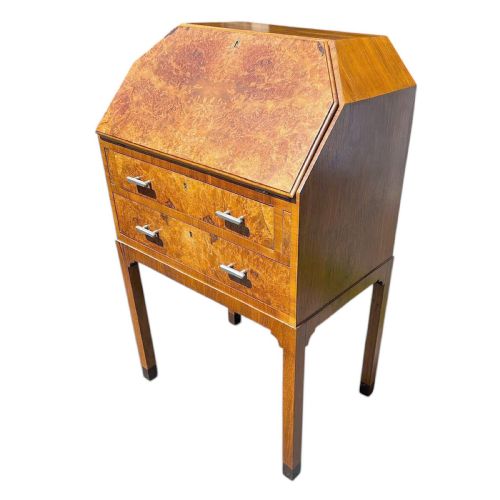
- A compact pedestal desk featuring a sloped, hinged writing surface above a set of drawers opening to one side. This form gained immense popularity during the Victorian period for use in smaller rooms.
- Kneehole desk
- A flat-topped writing table featuring a central recess for the user's legs, flanked by pedestals containing multiple drawers. Georgian examples often conceal a small central cupboard within this recess.
- Bonheur de jour
- A light lady's writing desk featuring a small superstructure of shelves and drawers above the main work surface. These pieces emerged in France during the eighteenth century and saw revival popularity in the nineteenth century.
- Bureau plat
- A freestanding writing table fitted with one or more rows of drawers beneath the top. These formal desks typically lack the superstructure of a bureau and were designed to stand centrally in a room.
Golden Walnut Desk: Frequently Asked Questions
How do I date a walnut desk?
Dating relies on architectural style, construction methods, and hardware details like locks and handles. Georgian pieces feature different proportions and joinery compared to Victorian or Edwardian revivals.
Examining secondary timbers inside drawers and the presence of maker signatures can help narrow down the period. Many items span the nineteenth century, reflecting shifting tastes in domestic furniture design.
Were these desks used for writing letters?
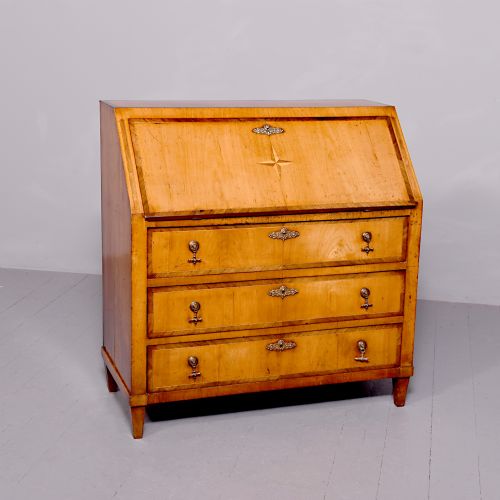
Yes, writing desks, slopes, and Davenport tables served as the primary stations for correspondence before modern communication. Interiors typically incorporate pigeonholes, small drawers, and stationery compartments.
Many styles include fold-down lids or inset leather surfaces designed specifically for holding paper and ink. These compartments kept writing implements organised within domestic studies and drawing rooms.
How should I care for golden walnut?
Maintaining walnut furniture involves keeping pieces away from direct sunlight and maintaining stable room humidity. Natural wax polishes applied sparingly help nourish the timber and preserve the surface finish.
Avoid using harsh chemical sprays or placing damp items directly onto the wood veneer. Gentle dusting with a soft cloth prevents accumulation without wearing down the historic patina.