




Golden Satinwood Credenza
A golden satinwood credenza brings striking figure and warmth to a room, offering refined storage through classic cabinet forms.

Golden Satinwood Credenza
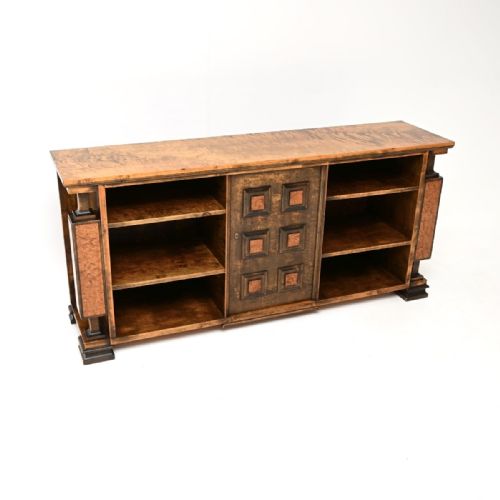
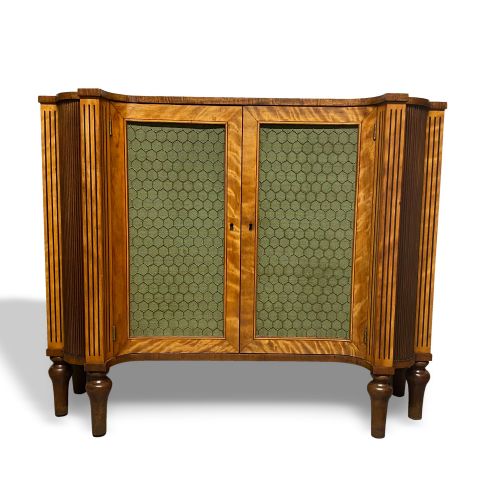
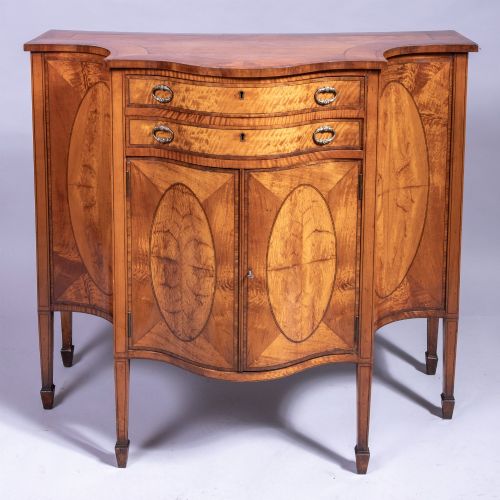
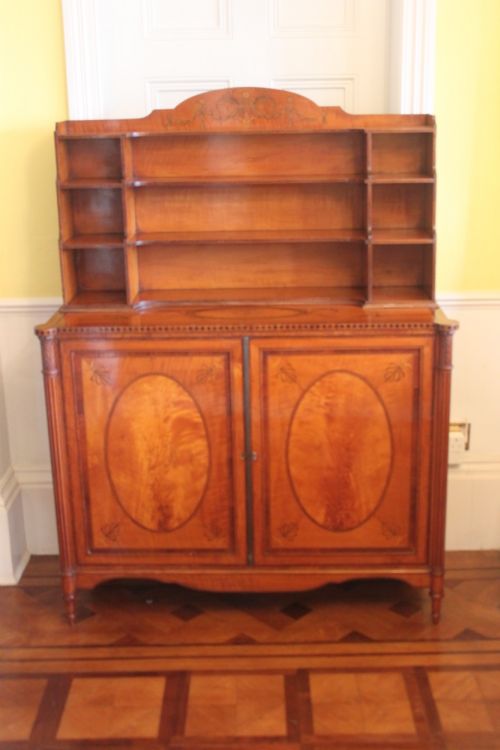
When you search for a golden satinwood credenza, you encounter low display cabinets, commodes, and sideboards built for formal rooms. These pieces originate across the eighteenth, nineteenth, and early twentieth centuries, spanning periods from Georgian and Victorian to Edwardian and Art Deco.
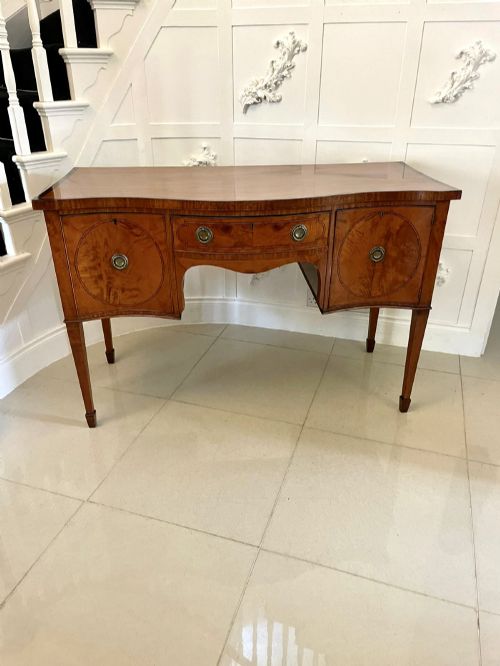
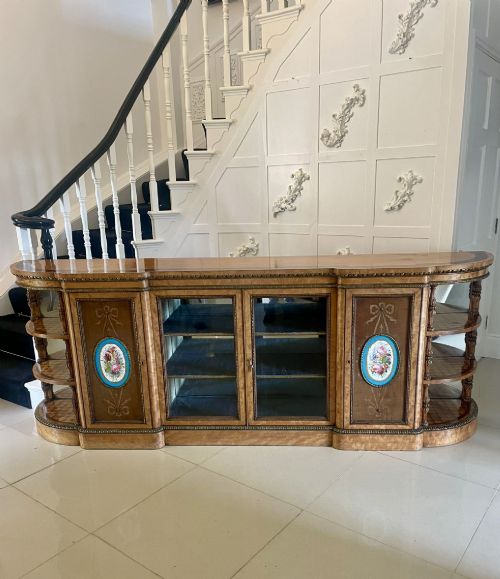
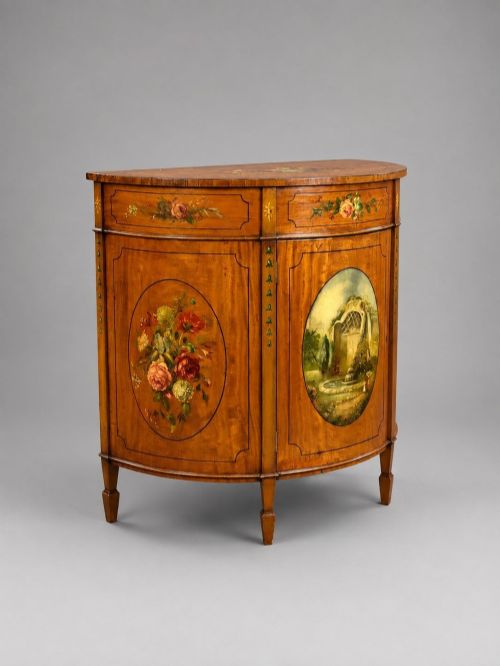
You meet various forms on this page, including demi-lune commodes, serpentine sideboards, and glazed display cabinets. Sheraton Revival and Adam Revival styles dominate the selection, bringing classical symmetry and refined proportions to domestic interiors.
The material gives these cabinets their characteristic shimmer, often enhanced by contrasting wood inlays or delicate painted panels. Pieces range from straightforward English side cabinets to elaborate French and Anglo-Indian variants.
Materials and construction methods
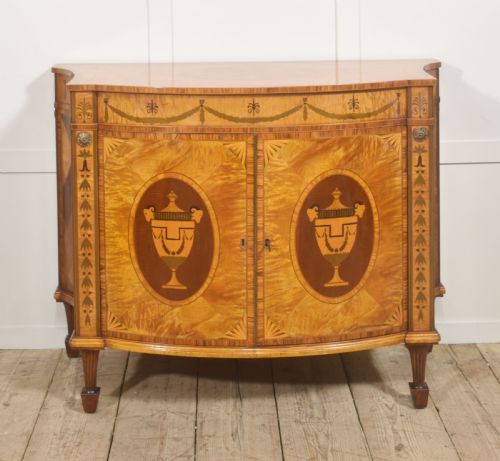
Cabinetmakers utilised satinwood veneers over sturdy timber carcases, often selecting figured grains to create shimmering panels on doors and drawer fronts. Wood inlay and marquetry define the surface decoration, incorporating contrasting timbers to form geometric or floral motifs.
Mounts in cast brass and ormolu accent the edges, framing glass panels and structural corners on grander display pieces. Painted details, including classical scenes and floral garlands, frequently embellish the satinwood surfaces, particularly on Edwardian and revival pieces.
Materials recorded across the selection include satinwood, walnut, birch, ormolu, brass, glass, and painted surfaces.
Distinguishing quality across the range
The fineness of the marquetry and the intensity of the satinwood figure dictate the visual impact of a piece. Crisp handling of painted panels and precise jointing distinguish master workshops from standard commercial production.
Ornate additions such as fire-gilded ormolu mounts and heavy cast brass hardware elevate the status of a cabinet. The integrity of the underlying carcase and the preservation of the original polished surface remain central to a piece's standing.
James Hicks·Lamb of Manchester·Edmond Poteau
The Golden Satinwood Credenza Glossary
- Satinwood
- A dense tropical hardwood known for its golden colour and lustrous, reflective grain. It serves as the primary surface veneer for refined eighteenth and nineteenth-century case furniture.
- Marquetry
- The art of applying decorative veneer pieces to a structural carcase to form detailed pictures or geometric patterns. Makers use various tinted and natural woods to achieve tonal contrast.
- Ormolu
- Gilded bronze used for decorative mounts, feet, and keyhole escutcheons on high-status cabinets. The technique involves applying a gold amalgam to cast brass or bronze.
- Demi-lune
- A half-moon shape characteristic of commodes and side cabinets designed to sit flat against a wall. This form allows for curved doors and sweeping top surfaces.
- Credenza
- A low cabinet intended for storage and display, frequently fitted with glass doors or flanking display sections. The form evolved from dining room serving pieces into general drawing-room furniture.
Golden Satinwood Credenza: Frequently Asked Questions
What is a satinwood credenza?
A satinwood credenza is a low storage and display cabinet veneered in lustrous golden tropical hardwood. These pieces typically feature panelled doors, glass fronts, or decorative marquetry.
Craftsmen built them across the Georgian, Victorian, and Edwardian eras for formal reception rooms. They function as both surface display areas and enclosed storage for dining or living spaces.
How do I identify a Sheraton Revival piece?
Sheraton Revival furniture draws inspiration from eighteenth-century neoclassical designs, characterised by straight tapered legs and symmetrical proportions. These pieces frequently employ satinwood veneers accented with contrasting wood inlay.
Makers working around nineteen hundred utilised these classical motifs to create lighter, elegant cabinetry that contrasted with heavier Victorian forms.
Are painted satinwood cabinets original?
Painted decoration on satinwood furniture appears frequently on Edwardian and revival pieces, featuring floral swags, ribbons, or classical figures. These painted panels were applied by period workshops to enhance the decorative appeal of the golden timber.
Examining the integration of the paintwork with the surrounding veneer helps determine whether the decoration belongs to the original period of manufacture.